Measured Biology
The Measured Biology of Dendrobium
Dendrobium nobile
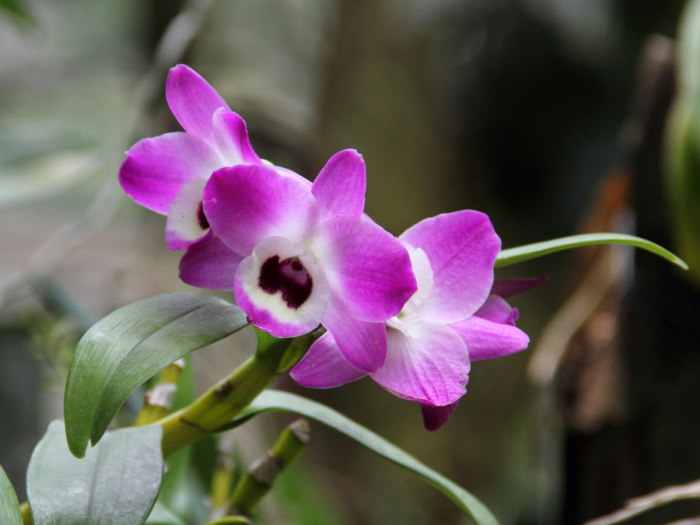
Dendrobium nobile — Shi Hu (石斛) — is among the most prized of all orchids in the East Asian materia medica, a botanical so esteemed that classical herbalists ranked it among the "nine immortal herbs." Unusually, the part used is not a root but the succulent, jointed stem, harvested from a plant that grows lithophytic and epiphytic across the misty cliffs and tree limbs of China and the Himalayan foothills — drawing its moisture from air and stone rather than soil. This origin is written into its character: Dendrobium is a profoundly moistening, restorative botanical, sweet and gently cooling on the palate, the very picture of a "yin-nourishing" tonic in the classical sense. GGG NATURAL carries it as a potent 10:1 extract of the stem, a concentration of the fleshy tissue's natural reserves of fluid and substance. In the apothecary's lineage Dendrobium sits in the clarity family — a quiet, replenishing tonic rather than a stimulant. Where many herbs push, Dendrobium fills: it is the botanical of restored moisture, settled mind, and supple vitality. It belongs to the tradition of refined longevity tonics — the herbs taken not in crisis but in cultivation, to keep the body's wells full and its faculties bright. A scholar's herb, in the most literal sense.
In the body
Dendrobium's affinity is first and foremost with the body's digestive and fluid-balance systems — in the apothecary's mapping it tones the digestive terrain, supporting the moisture and ease on which comfortable digestion depends. The stem is naturally rich in polysaccharides, the long-chain plant sugars that give the tissue its characteristic mucilaginous, fluid-holding quality; these polysaccharide structures are the established basis of its standing as a moistening, hydrating tonic, nourishing the body's own mucosal surfaces and supporting its native fluid balance rather than forcing it. This is structure and function in the truest sense: the plant supplies a substrate the body recognizes and puts to its own use. Alongside the polysaccharides, Dendrobium carries dendrobine, a characteristic sesquiterpene alkaloid, together with trace phenethylamine-class alkaloids — the compound classes behind its gentle, clarifying tone and its traditional standing as a constitutional tonic. These alkaloids engage the body's nervous and immune systems in a balancing register, supporting the body's natural resilience and a calm, settled clarity of mind rather than acting as a sharp stimulant. The overall signature is replenishment: moisture for the digestive and mucosal terrain, steadiness for the nervous system, and a grounded vitality that supports focus, endurance, and the body's own composure. For pets it serves the same role — a dilute, body-weight-scaled tonic supporting moisture balance, vitality, and the nervous and immune systems' natural function; in the Plants line, a dilute drench supporting vigor and rooting.
The molecules, measured
The active compounds in Dendrobium, the proteins each is measured to engage, and — where a real, exact-match assay exists — the strength of that binding.
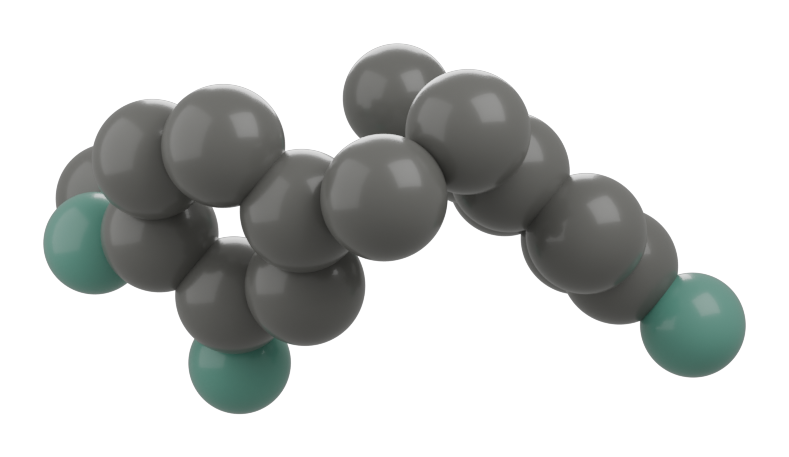
Moscatilin
PubChem ↗Measured to act on
Glycogen synthase kinase-3 beta
A versatile signaling enzyme involved in energy storage, cell structure, and growth.
Glycogen synthase kinase-3 beta
A versatile signaling enzyme involved in energy storage, cell structure, and growth.
c-Jun N-terminal kinase
A signaling enzyme that helps cells respond to stress and coordinate their activity.
MAP kinase p38
A signaling enzyme that relays stress and inflammatory cues within the cell.
Gigantol
PubChem ↗Measured to act on
Calmodulin-1
A small calcium-sensing protein that relays calcium signals throughout the cell.
Calmodulin
A small calcium-sensing protein that relays calcium signals throughout the cell.
RAC-alpha serine/threonine-protein kinase
A central signaling enzyme governing cell growth, survival, and metabolism.
Focal adhesion kinase 1
A signaling enzyme that senses how cells attach to and move within their surroundings.
Maltase-glucoamylase
An intestinal enzyme that breaks dietary starch down into simple sugars.
Tyrosine-protein phosphatase non-receptor type 1
An enzyme that helps regulate insulin and leptin signaling inside cells.
Aldo-keto reductase family 1 member B1
The enzyme that converts glucose into sorbitol, the first step in sugar metabolism.
Nitric oxide synthase, inducible
An enzyme that produces nitric oxide as part of the immune and inflammatory response.
The classical record
What tradition carried
Dendrobium (Shi Hu, 石斛) is a cornerstone of classical East Asian herbalism, where it has been recorded for well over a thousand years as a premier yin-and-fluid-nourishing tonic — traditionally placed among the most treasured restorative botanicals and named in the old reckonings as one of the "nine immortal herbs." In that lineage it was the herb of replenished moisture, brightened faculties, and gentle constitutional support, valued by scholars and elders alike for cultivating clarity and supple vitality over time. GGG NATURAL carries Dendrobium in this classical TCM lineage — the moistening stem-tonic of the orchid cliffs — offered as a concentrated 10:1 extract in the same tradition of refined longevity herbs from which it descends.