Measured Biology
The Measured Biology of He Shou Wu (Fo-Ti)
Polygonum multiflorum
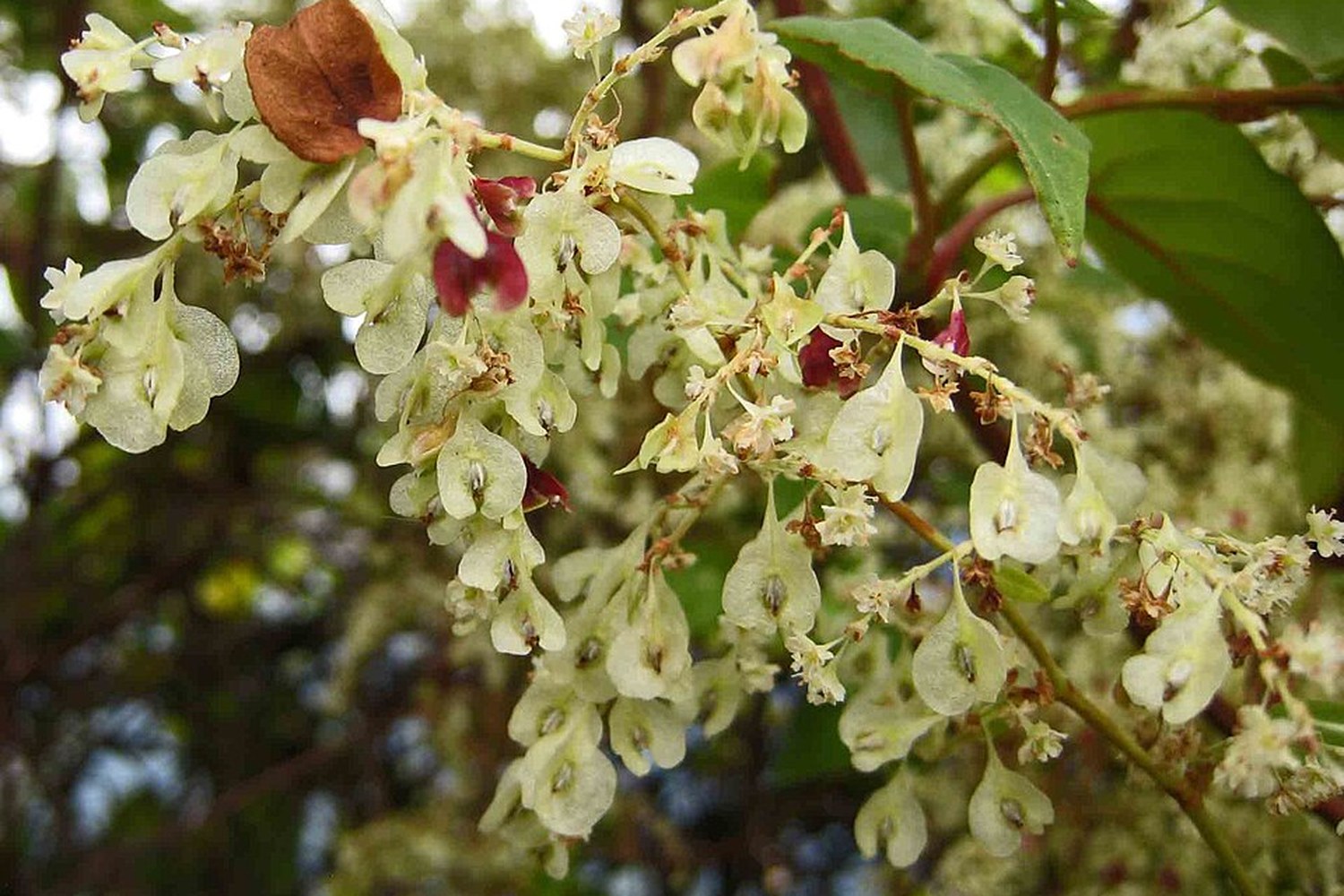
He Shou Wu (何首乌, Polygonum multiflorum), known in the West as Fo-Ti, is the prepared root of a climbing knotweed native to the mountain provinces of central and southern China — and one of the most storied tonic roots in the entire East Asian materia medica. Its name carries its legend: "the Mr. He whose hair turned black," a folk testament to a root long regarded as a restorer of deep vitality and the dark luster of youth. In the apothecary it is a longevity root in the truest classical sense — not a stimulant that pushes the body, but a deep, replenishing tonic that nourishes the body's constitutional reserves, what the East Asian tradition calls jing: the foundational essence held in the Kidney system from which stamina, structural strength, and the resilience of aging are drawn. It belongs to the same elite circle of jing-tonics as rehmannia, cistanche, and eucommia — roots prized for slow, accumulating, foundational nourishment rather than quick effect. We carry it as a potent 10:1 concentrated extract of the cured (prepared) root — a meaningful distinction, because the traditional curing process is what transforms the raw root into a refined tonic. It is a root of patience and depth: bitter, grounding, and constitutional. He Shou Wu is also a root that commands respect. Unlike the gentle food-grade tonics, it carries real intrinsic potency in its constituents, which is precisely why the lineage always called for the prepared root, taken in modest amounts and in measured courses. This is a scholar's root — used with the same precision and reverence that defines its place in the tradition.
In the body
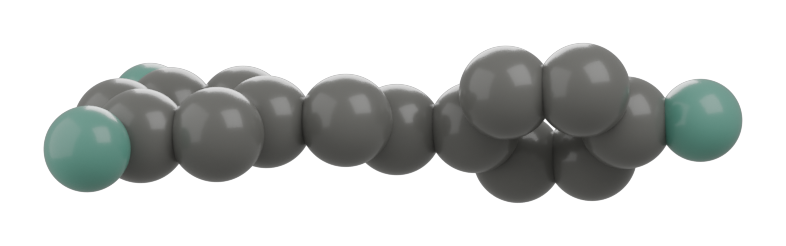
He Shou Wu engages the body's deepest constitutional systems — in the language of the tradition, the Kidney and Liver, the seat of essence and the reservoirs of long-term vitality, blood, and structural reserve. This is the territory of foundational stamina, endurance, and the supple strength the body draws on across the arc of aging. It is classically associated with the radiance and vitality of the hair, a visible expression of the deeper essence the root is said to nourish, and with the body's capacity to maintain its own reserves of energy and resilience over time. Its place in the apothecary is as a tonic to the systems that hold the body's long-term strength — supporting healthy aging, daily vitality, and the immune system's natural function as the body's own systems renew themselves. At the molecular level, the prepared root is distinguished above all by its stilbene glycosides — a class of polyphenolic compounds (the same broad family that includes resveratrol) that engage the body's own redox balance and support its natural antioxidant systems as they manage everyday oxidative wear. Alongside the stilbenes, the root carries phospholipids (lecithin), polysaccharides, and a complement of anthraquinone compounds (emodin, physcion, chrysophanol, rhein) that give the root its characteristic bitterness and grounding character. These compound classes are the molecular substrate of the root's traditional reputation as a deep nourisher of essence — engaging the body's antioxidant and metabolic systems rather than acting on any single organ in isolation. Because of this same intrinsic potency, He Shou Wu is a root for measured, short courses at modest amounts — the prepared root, taken with care, as the tradition has always counseled.
The molecules, measured
The active compounds in He Shou Wu (Fo-Ti), the proteins each is measured to engage, and — where a real, exact-match assay exists — the strength of that binding.
Emodin
PubChem ↗Measured to act on
Casein kinase II subunit alpha
A constantly active signaling enzyme involved in cell growth and stress responses.
Protein tyrosine phosphatase type IVA 3
A regulatory enzyme that removes phosphate tags involved in cell signaling and movement.
Aldo-keto reductase family 1 member B1
An enzyme that converts glucose into sorbitol as part of cellular sugar handling.
Estrogen receptor
The main estrogen receptor, governing reproductive, bone, and tissue functions.
Estrogen receptor beta
A second estrogen receptor that fine-tunes hormone signaling across many tissues.
Cytochrome P450 1A1
A liver enzyme that processes environmental compounds and certain plant molecules.
Serine/threonine-protein kinase pim-1
A signaling enzyme involved in cell survival and growth.
Protein deacetylase HDAC6
An enzyme that edits proteins to manage cellular cleanup and the cell internal scaffolding.
Alpha-ketoglutarate-dependent dioxygenase FTO
An enzyme that edits chemical marks on RNA, helping regulate metabolism.
Physcion (Parietin)
PubChem ↗Measured to act on
Neutrophil elastase
An enzyme released by immune cells that helps break down debris during the inflammatory response.
Thioredoxin reductase 1, cytoplasmic
An enzyme that helps keep cells in antioxidant balance against oxidative stress.
Thioredoxin reductase 2, mitochondrial
An antioxidant enzyme that protects the cell's energy factories from oxidative stress.
Tissue alpha-L-fucosidase
An enzyme that trims fucose sugars from molecules as part of normal cellular recycling.
Chrysophanol
PubChem ↗Measured to act on
Neutrophil elastase
An enzyme released by immune cells that helps break down debris during the inflammatory response.
Thioredoxin reductase 1, cytoplasmic
An enzyme that helps keep cells in antioxidant balance against oxidative stress.
Prostaglandin G/H synthase 1
The everyday enzyme making prostaglandins that protect the stomach lining and support normal blood flow.
Prostaglandin G/H synthase 2
The enzyme that drives the body's inflammatory response, producing the signals behind heat and swelling.
Rhein
PubChem ↗Measured to act on
Alpha-ketoglutarate-dependent dioxygenase FTO
An enzyme that edits chemical marks on RNA, helping regulate metabolism.
RNA demethylase ALKBH5
An enzyme that erases chemical marks on RNA, helping the cell fine-tune which messages get used.
Acetylcholinesterase
The enzyme that clears acetylcholine after a nerve signal fires, resetting communication between nerves.
Cholinesterase
A companion enzyme that helps break down acetylcholine and related signaling molecules.
Plectin
A large scaffolding protein that links a cell's internal skeleton together, giving tissues their structural strength.
Resveratrol
PubChem ↗Measured to act on
Amyloid-beta precursor protein
A membrane protein in brain cells whose fragments play a role in neural signaling and structure.
Ribosyldihydronicotinamide dehydrogenase [quinone]
An enzyme involved in processing quinones, part of the body's cellular detoxification machinery.
Prostaglandin G/H synthase 2
The enzyme that drives the body's inflammatory response, producing the signals behind heat and swelling.
Aromatase
The enzyme that converts androgens into estrogen, the body main estrogen source.
Prostaglandin G/H synthase 1
The everyday enzyme making prostaglandins that protect the stomach lining and support normal blood flow.
Gallic acid
PubChem ↗Measured to act on
Polypeptide N-acetylgalactosaminyltransferase 2
An enzyme that attaches sugar groups to proteins, shaping how they fold and function.
Amyloid-beta precursor protein
A membrane protein in brain cells whose fragments play a role in neural signaling and structure.
The classical record
What tradition carried
He Shou Wu has been a cornerstone of classical East Asian herbalism for well over a thousand years, recorded in the great compendia of the tradition and elevated by the 16th-century master Li Shizhen in his Bencao Gangmu (Compendium of Materia Medica) as a premier tonic to the Kidney and Liver and a restorer of essence (jing) and blood. In that lineage it is grouped among the great jing-tonics — roots reserved for the deep, slow replenishment of the body's constitutional foundation, vitality, and the dark luster of the hair, taken always as the cured and prepared root rather than the raw. Its very name preserves the folk tale of Mr. He, whose graying hair was said to darken under the root's nourishment — a story that, across centuries of recorded use, became inseparable from its identity as the longevity root of the East Asian apothecary.