Measured Biology
The Measured Biology of Agaricus Blazei
Agaricus blazei Murill
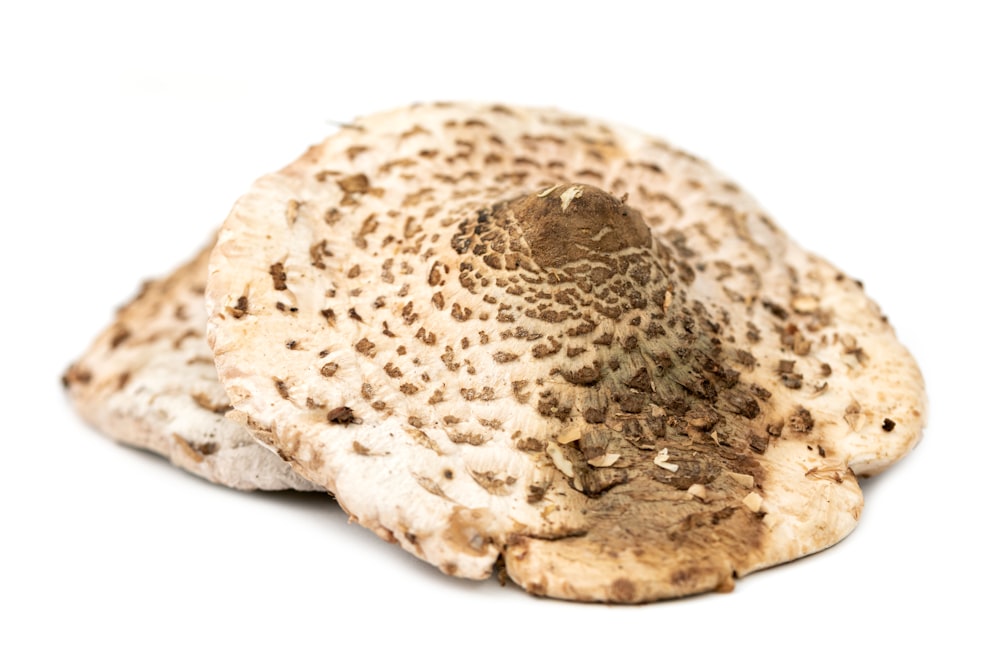
Agaricus blazei Murill is a sun-loving mushroom of Brazilian origin, native to the warm coastal highlands where it was first noted thriving in rich, mineral soils. Known across the world's herbal markets as the almond mushroom for its faintly sweet, nutty aroma, it is a true culinary species — food-grade, cultivated, and gentle — yet it carries one of the most concentrated reserves of immune-supporting polysaccharides found anywhere in the fungal kingdom. At GGG NATURAL we offer it as a 10:1 fruiting-body extract: the whole, mature fruiting body reduced to its dense, water-soluble core, the form in which its character is most complete and most potent. In our apothecary it stands in the company of the great fungal allies — chaga, turkey tail, the polypores of the temperate forest — but Agaricus holds a place of its own as a warm-climate mushroom built for daily, sustaining use rather than ceremony. It is a quiet workhorse of vitality: not dramatic, but deep, the kind of botanical you take steadily across seasons to keep the body's own resilience well-supplied.
In the body
Agaricus blazei is, above all, a mushroom of the immune system — the body's standing network of surveillance, recognition, and self-regulation — which it engages not by force but by familiarity. Its defining constituents are its polysaccharides, and chiefly the beta-glucans: long, branched chains of glucose woven into the fungal cell wall in a molecular architecture the mammalian body has been reading for as long as it has eaten and lived among fungi. The body's innate immune cells carry receptors shaped to recognize precisely these beta-glucan patterns; when they meet them, the immune system's own machinery of recognition is engaged and toned, the way a well-kept instrument responds to a familiar hand. This is structure speaking to structure — the plant nourishing the body's native intelligence rather than overriding it. Alongside the beta-glucans sit a broader family of water-soluble polysaccharides and proteoglycan fractions that make the hot-water extract its proper form: these are the constituents that lift cleanly into a tea or a warm infusion, which is why Agaricus is prepared in water rather than spirit. Through this same polysaccharide chemistry it lends quiet support to the gut barrier — the membrane interface where so much of immune education happens — and to the steady, daily vitality that GGG NATURAL frames as its target system: not a spike of stimulation but a grounded reserve of energy and resilience that the body draws on at its own pace. It carries no aromatic oil, no phenolic or saponin load, no sharp principle — only the clean, well-tolerated polysaccharide fraction, which is why it sits so comfortably in long, steady use across people, and as a dilute tonic for plants and animals alike.
The molecules, measured
The active compounds in Agaricus Blazei, the proteins each is measured to engage, and — where a real, exact-match assay exists — the strength of that binding.
Ergosterol
PubChem ↗Measured to act on
Nitric oxide synthase, inducible
An enzyme immune cells switch on to make nitric oxide, a signaling molecule of the inflammatory response.
UDP-glucuronosyltransferase 1A1
A liver enzyme that tags compounds with sugar so the body can clear them.
Solute carrier organic anion transporter family member 1B1
A liver transporter that pulls compounds from the blood into liver cells for processing.
Solute carrier organic anion transporter family member 1B3
A liver transporter that ferries compounds from the bloodstream into liver cells for processing.
Ergosterol peroxide (5,8-epidioxy-ergosta-6,22-dien-3-ol)
PubChem ↗Measured to act on
Nitric oxide synthase, inducible
An enzyme immune cells switch on to make nitric oxide, a signaling molecule of the inflammatory response.
Aldo-keto reductase family 1 member B1
An enzyme that converts excess glucose into sorbitol, part of how cells handle sugar.
Bile acid receptor
A sensor that reads bile acid levels and helps govern fat and cholesterol balance.
Linoleic acid
PubChem ↗Measured to act on
Prostaglandin G/H synthase 1
The everyday enzyme making prostaglandins that protect the stomach lining and support normal blood flow.
Prostaglandin G/H synthase 2
The enzyme that drives the body's inflammatory response when tissue is stressed.
Peroxisome proliferator-activated receptor gamma
A master switch that governs how fat cells store energy and respond to nutrients.
Peroxisome proliferator-activated receptor alpha
A nuclear sensor that helps the liver burn fats for energy.
Peroxisome proliferator-activated receptor delta
A sensor in muscle that helps cells use fat as fuel.
Free fatty acid receptor 1
A receptor that senses dietary fats and helps regulate insulin release.
Free fatty acid receptor 4
A receptor that detects omega fatty acids and is involved in calming inflammatory signaling.
Polyunsaturated fatty acid lipoxygenase ALOX15
An enzyme that converts fatty acids into signaling molecules that help resolve inflammation.
Aromatase
The enzyme that converts androgens into estrogen, balancing the body's sex hormones.
Aldo-keto reductase family 1 member C3
An enzyme involved in shaping active steroid hormones from their precursors.
Androgen receptor
The receptor through which testosterone and related hormones signal to cells.
Estrogen receptor
The receptor through which estrogen signals, governing many reproductive and tissue functions.
Sterol O-acyltransferase 1
An enzyme that packages cholesterol into a storable form inside cells.
Fatty acid-binding protein, adipocyte
A shuttle protein that carries fatty acids around inside fat cells.
Fatty acid-binding protein, heart
A shuttle protein that moves fatty acids to fuel the heart and muscle.
Predicted binding geometry
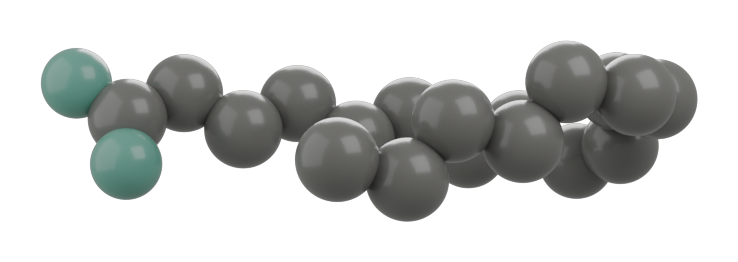
Beyond the measured affinities, we computed the fit ourselves. We docked Linoleic acid into the AlphaFold-predicted structure of Peroxisome proliferator-activated receptor alpha using AutoDock Vina, and recorded the best pose.
Linoleic acid → Peroxisome proliferator-activated receptor alpha
-6.43 kcal/molOur own computation · AutoDock Vina blind dock into AlphaFold model AF-Q07869 (ordered domain, pLDDT ≥ 70), PubChem 3D conformer CID 5280450. A predicted binding geometry and energy — more negative is a tighter predicted fit — reported alongside, not in place of, the measured values above.
The classical record
What tradition carried
Agaricus blazei is a relative newcomer to the recorded herbal canon compared with the millennia-old polypores, and its lineage is honest about that: it entered wide cultivation and study only after its identification in the Brazilian highlands, where it was a prized local food mushroom long before it traveled. From Brazil it was carried into the great mushroom-cultivating traditions of East Asia, where it took the name himematsutake and was folded into the long lineage of East Asian functional-mushroom practice that prizes the fungal fruiting body as a tonic for daily vitality and constitutional strength. It thus belongs to two streams at once — the indigenous food-and-vigor wisdom of its native ground, and the classical Asian tonic tradition that recognized in every potent mushroom a means of supporting the body's deep, sustaining energies. At GGG NATURAL we carry it in that second framing: a culinary mushroom honored as a vitality tonic, taken steadily and gently in the manner the tradition prescribes.