Measured Biology
The Measured Biology of Albizia
Albizia julibrissin
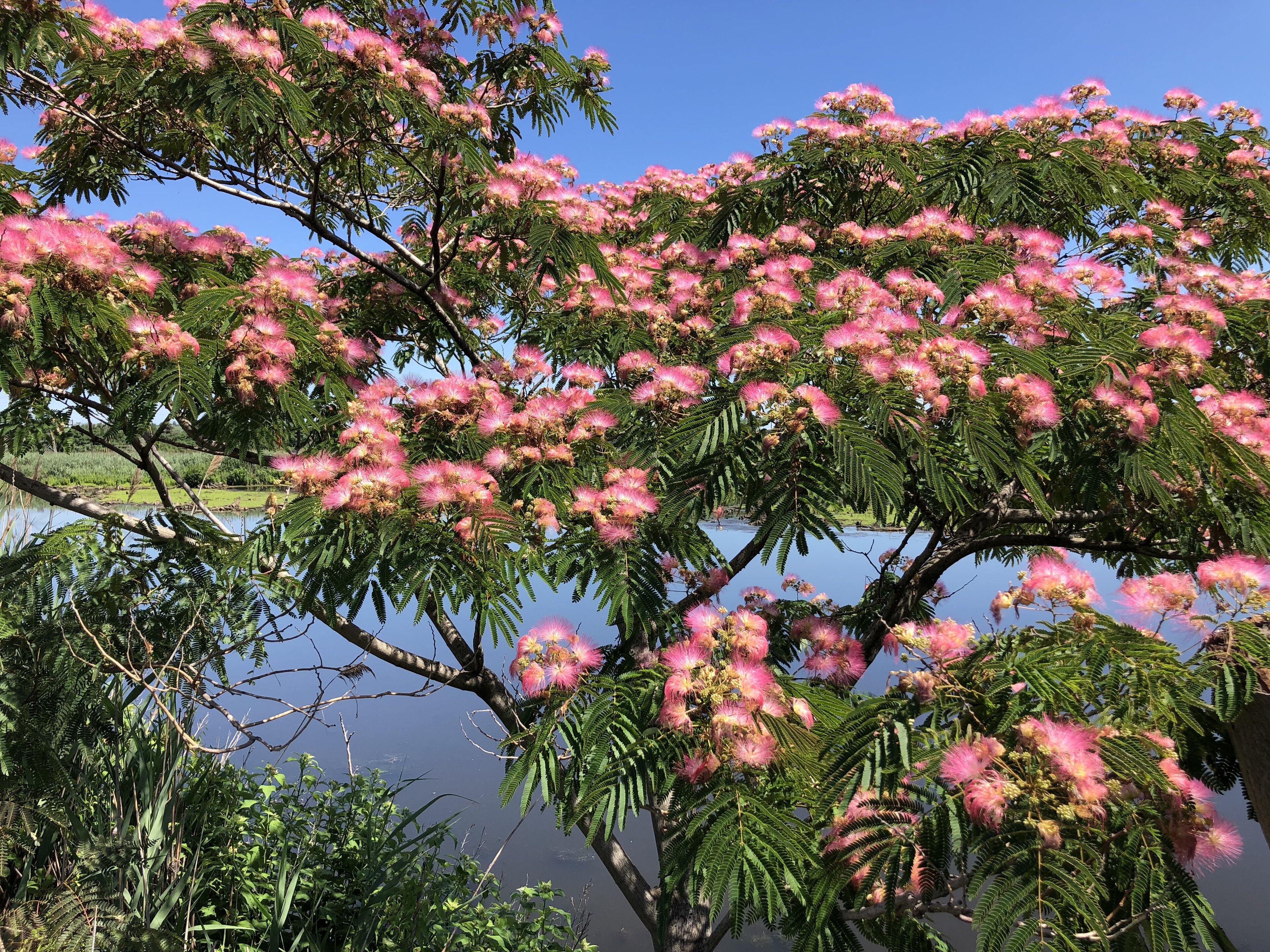
Albizia julibrissin is the bark and flower of the silk tree — the feathery, pink-plumed mimosa whose leaves fold inward at dusk, a botanical gesture that earned it, across China, Korea, and Japan, the name "the tree of collective happiness." In the classical materia medica it carries two faces from a single tree: the bark, He Huan Pi (合欢皮), and the blossom, He Huan Hua (合欢花) — the calming, spirit-settling parts that GGG NATURAL prepares as a concentrated 10:1 extract. (The seeds and pods are deliberately excluded; this is a seed-free bark-and-flower preparation, the traditional safety distinction that defines our material — the classical apothecary always set the calming bark and flower apart from the rest of the tree.) Sweet in flavor and gentle in nature, Albizia is the archetypal nervine of the East Asian apothecary — not a sedative that dulls, but a tonic that restores ease to a mind held too tightly. Its place in the lineage is precise: where other herbs build the body's vital reserves, Albizia tends to the shen, the settled clarity of an unburdened mind. It is the herb of grounded calm and lifted spirit, of a nervous system returned to its own steady rhythm.
In the body
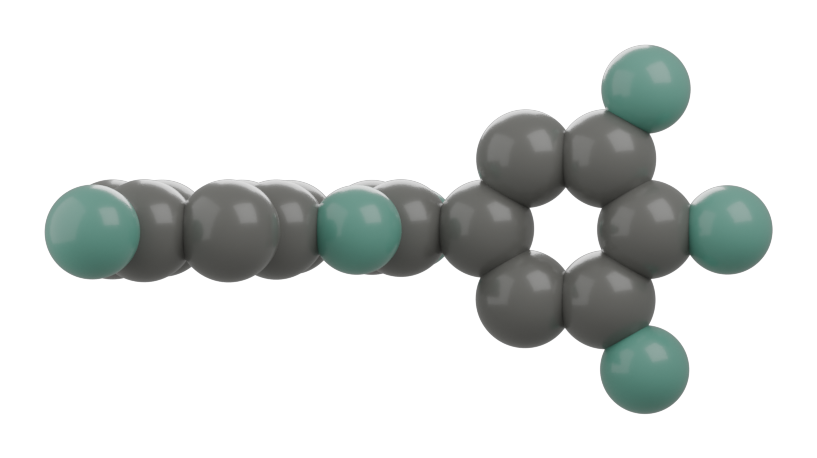
Albizia speaks first to the nervous system — the body's own architecture of calm, focus, and emotional steadiness. In our framing it nourishes the system that governs ease: supporting a settled, grounded mind, clear and unclouded focus, and the body's natural capacity to return to balance after the day has pulled it taut. This is structure-and-function work — Albizia feeds the terrain on which clarity and restful calm are built; it does not act upon the mind as a drug would, it tones the system that holds it. At the molecular level, silk tree bark is genuinely characterized by a family of triterpenoid saponins — the julibrosides — alongside flavonoids (including quercetin and its glycosides) and lignan glycosides. Triterpenes and flavonoids are among the most studied compound classes in botanical nervines, recognized broadly for the way they engage the body's own signaling and antioxidant systems — the intrinsic mechanisms by which the body maintains equilibrium and supports a healthy response to everyday stress. The sweet, mild constituents of the bark and flower are what the tradition reads as spirit-settling: a botanical input the nervous system recognizes and uses to support its own steadiness, its own clarity, its own quiet. The body knows how to be calm; Albizia nourishes the system that remembers how.
The molecules, measured
The active compounds in Albizia, the proteins each is measured to engage, and — where a real, exact-match assay exists — the strength of that binding.
Quercetin
PubChem ↗Measured to act on
Microtubule-associated protein tau
A protein that stabilizes the internal tracks neurons use to transport materials along their length.
Aldo-keto reductase family 1 member B1
An enzyme that converts excess glucose into sorbitol, part of normal sugar metabolism.
Cytochrome P450 1B1
A liver-family enzyme that helps the body break down compounds, including hormones and environmental substances.
Menin/Histone-lysine N-methyltransferase MLL
A complex that places chemical marks on DNA-packaging proteins, helping govern which genes are switched on.
Kaempferol
PubChem ↗Measured to act on
Neuraminidase
An enzyme that cleaves sialic acid sugars, involved in how cells and viruses interact at their surfaces.
Cytochrome P450 3A4
A major liver enzyme that processes a wide range of compounds the body takes in.
Cytochrome P450 2C9
A liver enzyme that helps break down and process many compounds and natural substances.
Cellular tumor antigen p53
A guardian protein that monitors cell health and coordinates the response to cellular damage.
Dipeptidyl peptidase 4
An enzyme that trims small signaling peptides, part of how the body regulates blood-sugar hormones.
Myricetin
PubChem ↗Measured to act on
Replicase polyprotein 1ab
A viral protein the coronavirus uses to copy itself once inside a host cell.
Cytochrome P450 3A4
A major liver enzyme that processes a wide range of compounds the body takes in.
Microtubule-associated protein tau
A protein that stabilizes the internal tracks neurons use to transport materials along their length.
3-hydroxyacyl-CoA dehydrogenase type-2
An enzyme involved in breaking down fatty acids for energy inside the cell's mitochondria.
Quercitrin (quercetin-3-O-rhamnoside)
PubChem ↗Measured to act on
Aldo-keto reductase family 1 member B1
An enzyme that converts excess glucose into sorbitol, part of normal sugar metabolism.
Arginase
An enzyme that processes the amino acid arginine, a key step in the body's nitrogen-clearing urea cycle.
Bifunctional epoxide hydrolase 2
An enzyme that breaks down fatty-acid signaling molecules involved in blood-vessel and inflammatory balance.
Solute carrier organic anion transporter family member 2B1
A transporter that ferries compounds across cell membranes, helping the body absorb and distribute substances.
Isoquercitrin (isoquercetin, quercetin-3-O-glucoside)
PubChem ↗Measured to act on
Xanthine dehydrogenase/oxidase
The enzyme that produces uric acid as the body breaks down purines from cells and food.
Intestinal-type alkaline phosphatase
A gut enzyme that removes phosphate groups, helping regulate digestion and the intestinal lining.
Hyperoside (quercetin-3-O-galactoside)
PubChem ↗Measured to act on
2-5A-dependent ribonuclease
An enzyme that cuts RNA as part of the cell's built-in antiviral defense network.
Lysosomal alpha-glucosidase
An enzyme inside the cell's recycling centers that breaks down stored glycogen into usable glucose.
Neuraminidase
An enzyme that cleaves sialic acid sugars, involved in how cells and viruses interact at their surfaces.
The classical record
What tradition carried
Albizia is a pillar of classical TCM, where it has been recorded for well over a millennium as a shen-settling botanical — an herb that calms the spirit and lifts the disposition. The bark (He Huan Pi) and flower (He Huan Hua) are entered separately in the classical materia medica, the bark traditionally regarded as moving and invigorating the blood while the flower is prized for soothing a constrained, restless mind; both carry the poetic name "tree of collective happiness," reflecting their long folk and clinical use for emotional steadiness and contentment. The herb spread through the apothecaries of Korea and Japan along the same lineage. GGG NATURAL carries Albizia in this received tradition — the sweet, gentle nervine of the East Asian canon — preparing only the calming bark and flower in keeping with the way the classical practitioners distinguished the spirit-settling parts of the tree from the rest.