root
Albizia
Albizia julibrissin
Also known as
Suitable For
The bark of the silk tree (Mimosa) — a gentle nervine that eases emotional tension and lifts the mood. Long known as the "tree of happiness," used to restore calm and emotional steadiness.
What it nourishes in the body
The body systems this herb is traditionally understood to support — resolved through our knowledge graph, where the classical record and modern biology are read together. Structure and function, never a claim of treatment.
Where measure and tradition agree
Albizia is measured to engage this system in human binding data — and the recorded tradition named it for it independently. Two evidence systems arriving at the same place, separately, is our highest standard. See the research →
Engages the body’s own cannabinoid system
Albizia is measured to engage the endocannabinoid system — the master regulator the body runs on its own cannabinoids. Characterization, not a clinical claim. The endocannabinoid bridge →
10:1 Concentrated Extract
Whole-plant. Small-batch. Potent.
How to take it
1/4 tsp (up to 1 tsp) in hot water, tea, coffee, a smoothie, or food, once daily — begin with light doses; our extracts are very potent.
Whole plant, never isolated
Concentrated extracts of the whole botanical — the way the body recognizes it.
Cited to measured biology
Every action we describe traces to the compound and its measured target.
Structure & function
We describe what an herb nourishes — never a claim to treat disease.
Secure checkout
Encrypted payment and human verification on every order.
The Botanical
Albizia, in depth
Character
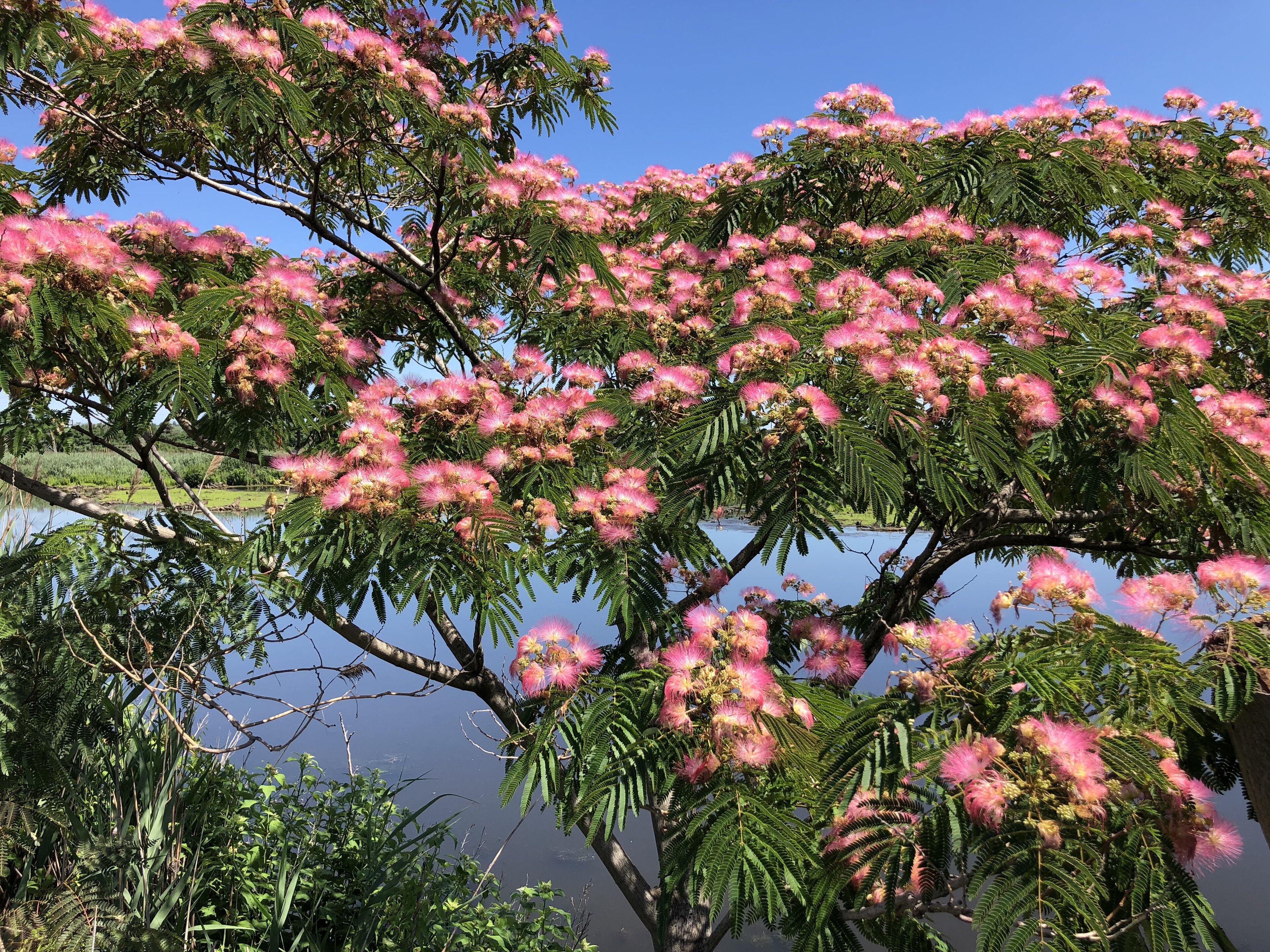
Albizia julibrissin is the bark and flower of the silk tree — the feathery, pink-plumed mimosa whose leaves fold inward at dusk, a botanical gesture that earned it, across China, Korea, and Japan, the name "the tree of collective happiness." In the classical materia medica it carries two faces from a single tree: the bark, He Huan Pi (合欢皮), and the blossom, He Huan Hua (合欢花) — the calming, spirit-settling parts that GGG NATURAL prepares as a concentrated 10:1 extract. (The seeds and pods are deliberately excluded; this is a seed-free bark-and-flower preparation, the traditional safety distinction that defines our material — the classical apothecary always set the calming bark and flower apart from the rest of the tree.) Sweet in flavor and gentle in nature, Albizia is the archetypal nervine of the East Asian apothecary — not a sedative that dulls, but a tonic that restores ease to a mind held too tightly. Its place in the lineage is precise: where other herbs build the body's vital reserves, Albizia tends to the shen, the settled clarity of an unburdened mind. It is the herb of grounded calm and lifted spirit, of a nervous system returned to its own steady rhythm.
In the Body
Albizia speaks first to the nervous system — the body's own architecture of calm, focus, and emotional steadiness. In our framing it nourishes the system that governs ease: supporting a settled, grounded mind, clear and unclouded focus, and the body's natural capacity to return to balance after the day has pulled it taut. This is structure-and-function work — Albizia feeds the terrain on which clarity and restful calm are built; it does not act upon the mind as a drug would, it tones the system that holds it. At the molecular level, silk tree bark is genuinely characterized by a family of triterpenoid saponins — the julibrosides — alongside flavonoids (including quercetin and its glycosides) and lignan glycosides. Triterpenes and flavonoids are among the most studied compound classes in botanical nervines, recognized broadly for the way they engage the body's own signaling and antioxidant systems — the intrinsic mechanisms by which the body maintains equilibrium and supports a healthy response to everyday stress. The sweet, mild constituents of the bark and flower are what the tradition reads as spirit-settling: a botanical input the nervous system recognizes and uses to support its own steadiness, its own clarity, its own quiet. The body knows how to be calm; Albizia nourishes the system that remembers how.
The Tradition
Albizia is a pillar of classical TCM, where it has been recorded for well over a millennium as a shen-settling botanical — an herb that calms the spirit and lifts the disposition. The bark (He Huan Pi) and flower (He Huan Hua) are entered separately in the classical materia medica, the bark traditionally regarded as moving and invigorating the blood while the flower is prized for soothing a constrained, restless mind; both carry the poetic name "tree of collective happiness," reflecting their long folk and clinical use for emotional steadiness and contentment. The herb spread through the apothecaries of Korea and Japan along the same lineage. GGG NATURAL carries Albizia in this received tradition — the sweet, gentle nervine of the East Asian canon — preparing only the calming bark and flower in keeping with the way the classical practitioners distinguished the spirit-settling parts of the tree from the rest.
The flower
Albizia,
as it actually grows.
Albizia julibrissin — the silk tree, he huan, 'collective happiness'; its pink powderpuff flowers and bark steeped in Chinese tradition to calm and lighten the spirit.
How to Use
Across the Three Kingdoms
One herb, prepared once, serving people, pets, and plants from a single botanical practice — each with its own measure and care.
People
Benefit
clear focus and a calm, settled mind — plus restful calm
How to Use
1/4 tsp (up to 1 tsp) in hot water, tea, coffee, a smoothie, or food, once daily — begin with light doses; our extracts are very potent.
Pets
Dogs & companion animals
Benefit
Calming, mood-balancing botanical that supports a settled nervous system and restful demeanor.
How to Use
Offer a small amount of the dilute bark/flower extract or powder mixed into food, scaled to body weight; start low and build up gradually.
By Animal
Cats
Bark/flower extract not ASPCA-listed as toxic to cats; toxicity is seed/pod-only. Not an aromatic/phenolic herb, so no glucuronidation concern.
Dogs
Mimosa/silk tree not ASPCA-listed as toxic to dogs; the neurotoxin risk is in seeds/pods, absent from a dilute bark/flower tonic.
Horses
Not ASPCA-listed as toxic to horses; seed/pod neurotoxin is the only documented hazard and is absent from the bark/flower extract. See competition note.
Birds
Well tolerated as a dilute, body-weight-scaled tonic; introduce gradually, starting with a small amount.
⚑ Sport horses: FEI/USEF expressly forbid herbal products used to affect performance in a calming/tranquilising manner. Albizia is a recognized calming (shen-settling) herb — treat as a competition-relevant flag and withdraw before sanctioned FEI/USEF competition.
Safety
GGG's product is a DILUTE hot-water extract/powder of Albizia BARK (He Huan Pi) and FLOWER (He Huan Hua) — the calming parts — not the seeds or seed pods, which is the key safety distinction. Documented Albizia toxicity (a gingkotoxin-type neurotoxin causing tremors/convulsions in livestock and dogs) is confined to the SEEDS/PODS at quantity; it does not apply to a dilute bark/flower tonic, and the ASPCA does not list the tree as toxic to cats, dogs, or horses. Conditional caveats (do NOT downgrade a healthy animal for these): Albizia is sedating, so it can add to the effect of other sedatives, anxiolytics, anesthesia, or CNS depressants — pause before any procedure requiring anesthesia and use care alongside other calming meds. It traditionally invigorates/moves the blood, so avoid in pregnancy and discontinue before any surgery or in animals with a bleeding tendency. Introduce at a low dose in animals with pre-existing liver or kidney disease and involve a veterinarian. Use only the seed-free bark/flower preparation; never feed raw pods or seeds. Confirm no xylitol or other excipients in any flavored carrier.
Source: ASPCA Toxic and Non-Toxic Plant Database (Albizia julibrissin / silk tree not listed as toxic to cats, dogs, horses); IVIS Guide to Poisonous House and Garden Plants — Albizia julibrissin (seed/pod neurotoxin); peer-reviewed pharmacology of Albizia julibrissin (PMC12386540); Herbal Reality Albizia monograph (sedative interaction, pregnancy/blood-moving caution); FEI Clean Sport Prohibited List + USEF Drugs & Medications guidelines (calming-herb prohibition).
Plants
Garden, soil & foliage
Benefit
vegetative vigor, strong rooting, and resilient new growth
How to Use
Dilute 1/8 to 1/4 teaspoon per gallon of water. Foliar feed at the lighter rate, or soil drench at the fuller rate, about once a month or every other feeding. Best worked in through vegetative growth, as the plant builds leaf, stem, and root.
Best for
Vegetative growthSafety
A dilute extract in the GGG Plants line; always dilute and start light.
Source: GGG Plants line formulation
Structure-and-function guidance for nutrition and vitality. Not intended to diagnose, treat, cure, or prevent any disease. Introduce one botanical at a time and notice how the body responds. Some plants interact with medication; if you are pregnant, nursing, or on a prescription, know the interaction before you begin.
What's inside
Albizia,
down to the molecule.
The signature compound of Albizia, rendered from its real structure in bronze and glass — the precise thing the plant carries, given the dignity it has earned.
The evidence chain
From the plant to the molecule to the body — traced.
Not a claim — a chain. Every link below traces to a primary record. This is what Albizia is, measured.
The plant
Albizia
which governs
An enzyme that converts excess glucose into sorbitol, part of normal sugar metabolism.
serving the system
Nervous · Liver
and the tradition independently agrees — measured binding
The recorded herbal lineage names Albizia a nervous herb. Independently, its compounds are measured to bind proteins of that system. Tradition and molecule, arrived at separately, converge — the strongest evidence we hold.
Structure and function only. The chain describes the plant’s characterized chemistry and traditional use — not a claim to treat, cure, or prevent any disease.
How it works
How Albizia works in the body
A herb is never one thing — it is a community of compounds, each meeting the body in its own way. These are the active molecules in Albizia and the proteins each one is measured to engage: the precise points where the plant meets your biology. So you see not just that it works, but how.
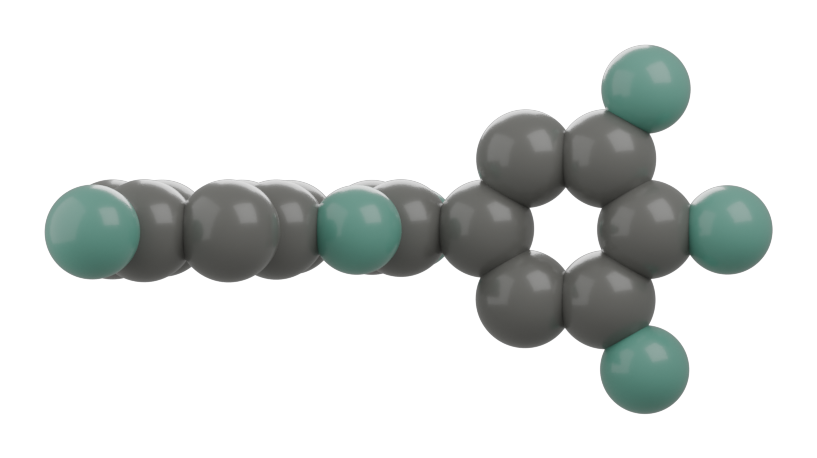
Quercetin
PubChem ↗Measured to act on
A protein that stabilizes the internal tracks neurons use to transport materials along their length.
Concentrated in brain, skeletal musclestructure resolved ↗
An enzyme that converts excess glucose into sorbitol, part of normal sugar metabolism.
Concentrated in adrenal glandstructure resolved ↗
A liver-family enzyme that helps the body break down compounds, including hormones and environmental substances.
A complex that places chemical marks on DNA-packaging proteins, helping govern which genes are switched on.
Measured in the lab
Real measurements from binding studies. A tighter fit means the compound meets its target more readily — the figure in grey is the actual measured value.
Binds very tightly to Amine oxidase [flavin-containing] A · IC50 10 nM
Binds very tightly to Aromatase · IC50 12 nM
Binds very tightly to Aldo-keto reductase family 1 member B1 · IC50 14.8 nM
Binds very tightly to Enoyl-acyl-carrier protein reductase · Ki 22 nM
Binds very tightly to Cytochrome P450 1B1 · Ki 23 nM
Binds very tightly to Serine/threonine-protein kinase pim-1 · Kd 25 nM
— and 108 more measured targets, each traced to its source.
Kaempferol
PubChem ↗Measured to act on
An enzyme that cleaves sialic acid sugars, involved in how cells and viruses interact at their surfaces.
A major liver enzyme that processes a wide range of compounds the body takes in.
Concentrated in liverstructure resolved ↗
A liver enzyme that helps break down and process many compounds and natural substances.
Concentrated in liverstructure resolved ↗
A guardian protein that monitors cell health and coordinates the response to cellular damage.
An enzyme that trims small signaling peptides, part of how the body regulates blood-sugar hormones.
Concentrated in parathyroid gland, intestine, placenta, prostatestructure resolved ↗
Measured in the lab
Real measurements from binding studies. A tighter fit means the compound meets its target more readily — the figure in grey is the actual measured value.
Binds very tightly to Carbonic anhydrase 7 · Ki 25 nM
Binds very tightly to Aryl hydrocarbon receptor · IC50 28 nM
Binds very tightly to Cytochrome P450 1B1 · Ki 43 nM
Binds tightly to CDGSH iron-sulfur domain-containing protein 1 · Ki 132 nM
Binds tightly to Carbonic anhydrase 12 · Ki 146 nM
Binds tightly to Casein kinase II subunit alpha 3 · Ki 210 nM
— and 35 more measured targets, each traced to its source.
Myricetin
PubChem ↗Measured to act on
A viral protein the coronavirus uses to copy itself once inside a host cell.
A major liver enzyme that processes a wide range of compounds the body takes in.
Concentrated in liverstructure resolved ↗
A protein that stabilizes the internal tracks neurons use to transport materials along their length.
Concentrated in brain, skeletal musclestructure resolved ↗
An enzyme involved in breaking down fatty acids for energy inside the cell's mitochondria.
Measured in the lab
Real measurements from binding studies. A tighter fit means the compound meets its target more readily — the figure in grey is the actual measured value.
Binds very tightly to Muscleblind-like protein 1 · Kd 0.25 nM
Binds very tightly to Pyruvate kinase PKM · EC50 0.51 nM
Binds very tightly to Acetylcholinesterase · IC50 12 nM
Binds very tightly to Cytochrome P450 1B1 · Ki 27 nM
Binds tightly to Phosphatidylinositol 4,5-bisphosphate 3-kinase catalytic subunit alpha isoform · Kd 170 nM
Binds tightly to Phosphatidylinositol 4,5-bisphosphate 3-kinase catalytic subunit gamma isoform · Kd 170 nM
— and 47 more measured targets, each traced to its source.
Quercitrin (quercetin-3-O-rhamnoside)
PubChem ↗Measured to act on
An enzyme that converts excess glucose into sorbitol, part of normal sugar metabolism.
Concentrated in adrenal glandstructure resolved ↗
An enzyme that processes the amino acid arginine, a key step in the body's nitrogen-clearing urea cycle.
An enzyme that breaks down fatty-acid signaling molecules involved in blood-vessel and inflammatory balance.
Concentrated in liverstructure resolved ↗
A transporter that ferries compounds across cell membranes, helping the body absorb and distribute substances.
Concentrated in liverstructure resolved ↗
Measured in the lab
Real measurements from binding studies. A tighter fit means the compound meets its target more readily — the figure in grey is the actual measured value.
Binds to Genome polyprotein · IC50 1.7 µM
Isoquercitrin (isoquercetin, quercetin-3-O-glucoside)
PubChem ↗Measured to act on
The enzyme that produces uric acid as the body breaks down purines from cells and food.
Concentrated in liver, intestine, breaststructure resolved ↗
A gut enzyme that removes phosphate groups, helping regulate digestion and the intestinal lining.
Concentrated in intestinestructure resolved ↗
Hyperoside (quercetin-3-O-galactoside)
PubChem ↗Measured to act on
An enzyme that cuts RNA as part of the cell's built-in antiviral defense network.
An enzyme inside the cell's recycling centers that breaks down stored glycogen into usable glucose.
An enzyme that cleaves sialic acid sugars, involved in how cells and viruses interact at their surfaces.
Cited science · not claims
Everything we publish about these plants traces to a primary source — the compounds to PubChem, ChEMBL, and BindingDB, the traditional uses to named, dated herbals. We describe what a plant is and what it is understood to nourish — the body’s own systems, structure and function only. We do not claim it treats, cures, or prevents any disease, and nothing here is a substitute for professional care. See our method & sources →
These statements have not been evaluated by the Food and Drug Administration. Not intended to diagnose, treat, cure, or prevent any disease.
Works alongside
Other herbs that share Albizia's terrain
Different plants reaching the same systems of the body — the convergence our genome engine maps. These nourish the terrain Albizia supports: