root
Licorice
Glycyrrhiza glabra
Also known as
Suitable For
Glycyrrhiza glabra — a harmonizing root whose glycyrrhizin supports adrenal function and soothes the digestive tract. Used across nearly every herbal tradition as the synergist that unifies and amplifies a formula.
What it nourishes in the body
The body systems this herb is traditionally understood to support — resolved through our knowledge graph, where the classical record and modern biology are read together. Structure and function, never a claim of treatment.
Where measure and tradition agree
Licorice is measured to engage these systems in human binding data — and the recorded tradition named it for them independently. Two evidence systems arriving at the same place, separately, is our highest standard. See the research →
Engages the body’s own cannabinoid system
Licorice is measured to engage the endocannabinoid system — the master regulator the body runs on its own cannabinoids. Characterization, not a clinical claim. The endocannabinoid bridge →
10:1 Concentrated Extract
Whole-plant. Small-batch. Potent.
How to take it
1/4 tsp (up to 1 tsp) in hot water, tea, coffee, a smoothie, or food, once daily — begin with light doses; our extracts are very potent.
Whole plant, never isolated
Concentrated extracts of the whole botanical — the way the body recognizes it.
Cited to measured biology
Every action we describe traces to the compound and its measured target.
Structure & function
We describe what an herb nourishes — never a claim to treat disease.
Secure checkout
Encrypted payment and human verification on every order.
The Botanical
Licorice, in depth
Character
Licorice (Glycyrrhiza glabra) is the great harmonizer of the herbal world — a sweet, golden root whose Latin name, from the Greek glykys (sweet) and rhiza (root), declares its nature plainly: the sweet root. Native to the open soils of southern Europe and western Asia, it has been gathered, peeled, and decocted for so long that nearly every major tradition reserves a place for it. In the East Asian pharmacopoeia it is 甘草, gān cǎo, the "sweet herb," and it carries a singular distinction: across countless classical formulas it appears not as the lead botanical but as the conductor — the root added to unify disparate herbs, soften the harsh, and carry the whole formula into balance. This is its character. Licorice is not a soloist; it is the one that makes an ensemble sing.
Cultivated and wild-harvested as a deep, persistent taproot, licorice belongs to the legume family and concentrates its sweetness and its substance below ground, where the plant stores the resources of seasons. GGG NATURAL carries it as a potent 10:1 extract of the root — the form in which its harmonizing, grounding nature is most fully expressed. Within our formulary it sits at the heart of the vitality kingdom: a root prized less for any single dramatic gesture than for the way it tones, sweetens, and brings the whole into accord. It is, fittingly, one of the most universally esteemed botanicals on earth — the synergist that herbalists across millennia reached for to complete a blend.
In the Body
Licorice engages two of the body's deep, quiet systems: the digestive tract and the adrenal-renal axis that governs stamina and the body's own response to daily demand. As a demulcent root, it is rich in mucilaginous polysaccharides that bring a soothing, coating quality to the gut lining — supporting the digestive tract's own comfort and the natural integrity of its mucosal surfaces. This is the demulcent's gift: not to act upon the tissue, but to provide the slick, nourishing substance the body recognizes and uses to keep its own surfaces supple and at ease.
Its most distinctive constituent is glycyrrhizin, a triterpenoid saponin of remarkable intensity of sweetness, which carries the metabolite glycyrrhetinic acid. This triterpene class is what links licorice to the body's adrenal and cortisol-handling system — the axis that modulates how the body stewards its own steroid hormones, its sodium-potassium balance, and its capacity to meet demand with sustained energy. By engaging this axis, licorice has earned its place among the adaptogenic and adrenal-supporting roots: it nourishes the body's natural resilience system, supporting steady, daily vitality and endurance rather than a spike. Alongside the triterpene saponins, the root carries a broad family of flavonoids — antioxidant compounds that support the body's own balanced, healthy inflammatory response across the digestive and adrenal tissues it touches. Because this same glycyrrhizin engages the body's mineral-balancing pathways so directly, licorice is honored as a potent, grounding tonic taken in measured amounts — the molecular reason our extract is offered in small, deliberate doses.
The Tradition
Few roots are so universally recorded. Nicholas Culpeper, in his 1653 English Physician, set licorice under the gentle dominion of Mercury and praised it as a sweet, opening root for the chest and the passages of the body — the herbalist's standby for soothing demulcent work. The Old English Herbals and the later Thomsonian system carried it forward as a softening, harmonizing agent folded into countless preparations. Yet its highest station belongs to classical East Asian herbalism, where gān cǎo (甘草) is described as entering all twelve channels and is among the most frequently used herbs in the entire materia medica — the great harmonizer added to moderate, unify, and sweeten a formula, reconciling herbs that would otherwise pull against one another. From the apothecaries of Europe to the formula traditions of Asia, licorice is the root every lineage reached for to make a blend whole.
The root
Licorice,
as it actually grows.
Glycyrrhiza glabra — the sweet root the old Chinese formularies called the great harmonizer, woven into more remedies than any other to round and reconcile the rest.
How to Use
Across the Three Kingdoms
One herb, prepared once, serving people, pets, and plants from a single botanical practice — each with its own measure and care.
People
Benefit
immune resilience and deep, daily vitality — plus digestive comfort
How to Use
1/4 tsp (up to 1 tsp) in hot water, tea, coffee, a smoothie, or food, once daily — begin with light doses; our extracts are very potent.
Pets
Dogs & companion animals
Benefit
Soothing demulcent root that supports a calm, comfortable throat, gut lining, and adrenal/stress balance.
How to Use
A small pinch of the dilute hot-water extract or powder stirred into food, scaled to body weight; use intermittently (a short course, not daily long-term) rather than continuously.
By Animal
Cats
Not ASPCA-toxic to cats; small amounts of the dilute extract are tolerated. Keep doses tiny — feline metabolism handles less, and the extract's sugar is non-ideal for cats.
Dogs
Not ASPCA-toxic to dogs; a small body-weight-scaled amount of the dilute extract is well tolerated as a short-course demulcent tonic in a healthy dog.
Horses
Well tolerated as a dilute, body-weight-scaled tonic; introduce gradually, starting with a small amount.
Birds
Avian sources (Lafeber) flag glycyrrhizic acid in birds — hypertension, edema, potassium depletion plus high sugar load. Tiny, intermittent, vet-guided amounts only; not a casual perch tonic.
⚑ Sport horses: Licorice/glycyrrhizin is not currently named on the FEI Equine Prohibited Substances List or USEF banned/controlled list, but herbal products can trigger positives and glycyrrhizin alters electrolyte/cortisol handling — withdraw before FEI/USEF competition and confirm against the current list.
Safety
Licorice's active glycyrrhizin (and its metabolite glycyrrhetinic acid) inhibits 11β-hydroxysteroid dehydrogenase-2, producing a dose- and duration-dependent pseudoaldosterone effect: with high amounts or prolonged daily use it can raise blood pressure and cause potassium loss (hypokalemia), sodium/water retention, and edema in any species. Keep doses small and intermittent (avoid continuous long-term feeding) and stop and consult a vet if appetite, energy, or urination change. CONDITIONAL caveats: avoid or use only under veterinary direction in animals with hypertension, heart disease, kidney or liver disease, diabetes (the extract carries natural sugars), or pregnancy. Licorice can potentiate corticosteroids and interact with diuretics, digoxin/cardiac glycosides, ACE inhibitors, insulin, warfarin, and drugs cleared by the liver — defer to the prescribing vet for animals on any of these. Start low and watch. As with any new tonic, introduce one ingredient at a time so reactions are attributable.
Source: ASPCA Toxic and Non-Toxic Plant List (Glycyrrhiza glabra not listed as toxic to cats/dogs/horses); peer-reviewed reviews of licorice-induced pseudoaldosteronism via 11β-HSD2 inhibition (Frontiers in Nutrition 2021, PMC8484325; PMC8369979); Lafeber Pet Birds (licorice root cautionary, glycyrrhizic acid); FEI Equine Prohibited Substances List and USEF 2026 Guidelines & Rules for Drugs and Medications.
Plants
Garden, soil & foliage
Benefit
vegetative vigor, strong rooting, and resilient new growth
How to Use
Dilute 1/8 to 1/4 teaspoon per gallon of water. Foliar feed at the lighter rate, or soil drench at the fuller rate, about once a month or every other feeding. Best worked in through vegetative growth, as the plant builds leaf, stem, and root.
Best for
Vegetative growthSafety
A dilute extract in the GGG Plants line; always dilute and start light.
Source: GGG Plants line formulation
Structure-and-function guidance for nutrition and vitality. Not intended to diagnose, treat, cure, or prevent any disease. Introduce one botanical at a time and notice how the body responds. Some plants interact with medication; if you are pregnant, nursing, or on a prescription, know the interaction before you begin.
What's inside
Licorice,
down to the molecule.
The signature compound of Licorice, rendered from its real structure in bronze and glass — the precise thing the plant carries, given the dignity it has earned.
The evidence chain
From the plant to the molecule to the body — traced.
Not a claim — a chain. Every link below traces to a primary record. This is what Licorice is, measured.
The plant
Licorice
serving the system
Digestive · Kidney
and the tradition independently agrees — measured binding
The recorded herbal lineage names Licorice a endocrine and respiratory herb. Independently, its compounds are measured to bind proteins of those systems. Tradition and molecule, arrived at separately, converge — the strongest evidence we hold.
Structure and function only. The chain describes the plant’s characterized chemistry and traditional use — not a claim to treat, cure, or prevent any disease.
How it works
How Licorice works in the body
A herb is never one thing — it is a community of compounds, each meeting the body in its own way. These are the active molecules in Licorice and the proteins each one is measured to engage: the precise points where the plant meets your biology. So you see not just that it works, but how.
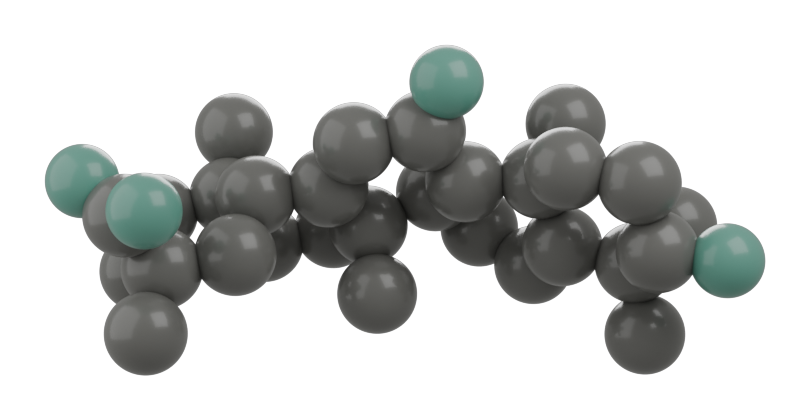
18beta-Glycyrrhetinic acid (enoxolone)
PubChem ↗Measured to act on
An enzyme in tissues like fat and liver that activates the stress hormone cortisol.
Concentrated in liverstructure resolved ↗
A kidney enzyme that switches off cortisol, helping the body manage salt and fluid balance.
Concentrated in kidney, salivary gland, intestinestructure resolved ↗
A signaling enzyme involved in skin cell growth and how cells respond to their environment.
A structural protein that forms the scaffold giving each cell nucleus its shape and stability.
Measured in the lab
Real measurements from binding studies. A tighter fit means the compound meets its target more readily — the figure in grey is the actual measured value.
Binds very tightly to 11-beta-hydroxysteroid dehydrogenase type 2 · IC50 1.2 nM
Binds very tightly to 11-beta-hydroxysteroid dehydrogenase 1 · IC50 2 nM
Binds tightly to Protein kinase C eta type · Kd 250 nM
Binds tightly to Lactoylglutathione lyase · Ki 290 nM
Binds tightly to Solute carrier organic anion transporter family member 1B1 · Ki 290 nM
Binds tightly to Solute carrier organic anion transporter family member 1B3 · Ki 420 nM
— and 4 more measured targets, each traced to its source.
Liquiritigenin
PubChem ↗Measured to act on
A receptor that reads the hormone estrogen, helping govern reproductive and other tissues.
Concentrated in adrenal gland, ovary, testisstructure resolved ↗
The building-block protein of the internal scaffolding that gives cells shape and moves their parts.
Measured in the lab
Real measurements from binding studies. A tighter fit means the compound meets its target more readily — the figure in grey is the actual measured value.
Binds very tightly to Estrogen receptor beta · EC50 37 nM
Binds tightly to Aromatase · IC50 340 nM
Binds to Neuraminidase · IC50 2.07 µM
Binds to Acetylcholinesterase · IC50 9.1 µM
Glabridin
PubChem ↗Measured to act on
The copper enzyme that makes melanin, the pigment that colors skin and hair.
Concentrated in skin 1structure resolved ↗
A mushroom enzyme used in the lab as a stand-in to study how skin pigment forms.
Measured in the lab
Real measurements from binding studies. A tighter fit means the compound meets its target more readily — the figure in grey is the actual measured value.
Binds very tightly to Tyrosinase · IC50 90 nM
Binds to Cytochrome P450 3A4 · Ki 7 µM
Cited science · not claims
Everything we publish about these plants traces to a primary source — the compounds to PubChem, ChEMBL, and BindingDB, the traditional uses to named, dated herbals. We describe what a plant is and what it is understood to nourish — the body’s own systems, structure and function only. We do not claim it treats, cures, or prevents any disease, and nothing here is a substitute for professional care. See our method & sources →
These statements have not been evaluated by the Food and Drug Administration. Not intended to diagnose, treat, cure, or prevent any disease.
Works alongside
Other herbs that share Licorice's terrain
Different plants reaching the same systems of the body — the convergence our genome engine maps. These nourish the terrain Licorice supports: