bark
Eucommia
Eucommia ulmoides
Also known as
Suitable For
The bark of a hardy tree, rich in lignans and iridoid glycosides. Long valued in the East Asian tradition as a deep tonic for bone, tendon, and lower-back vitality.
What it nourishes in the body
The body systems this herb is traditionally understood to support — resolved through our knowledge graph, where the classical record and modern biology are read together. Structure and function, never a claim of treatment.
10:1 Concentrated Extract
Whole-plant. Small-batch. Potent.
How to take it
1/4 tsp (up to 1 tsp) in hot water, tea, coffee, a smoothie, or food, once daily — begin with light doses; our extracts are very potent.
Whole plant, never isolated
Concentrated extracts of the whole botanical — the way the body recognizes it.
Cited to measured biology
Every action we describe traces to the compound and its measured target.
Structure & function
We describe what an herb nourishes — never a claim to treat disease.
Secure checkout
Encrypted payment and human verification on every order.
The Botanical
Eucommia, in depth
Character
Eucommia ulmoides is a living relic — the sole surviving species of an ancient lineage of trees, hardy and slow-growing, native to the mountain forests of central China. It is the bark we work with: a thick, fibrous, sweet-flavored cortex that, when torn, reveals fine silvery threads of natural latex (gutta-percha) drawn between the broken edges, the tree's signature of resilient, elastic structure made visible. In the classical canon it is Du Zhong (杜仲), and it sits among the most revered of the structural tonics — a bark prized not for any single dramatic action but for the deep, patient, foundational support it lends to the body's framework. Where many herbs are leaves and flowers that move and lighten, Eucommia is bark: dense, grounding, architectural. It carries the character of the tree itself — upright, enduring, supple under load — and it has been carried in the herbal tradition for that reason for well over a thousand years.
In our apothecary Eucommia stands as a vitality and structural tonic, a 10:1 extract of the bark whose place in the lineage is unambiguous: it is the herb of the lower back, the bones, the tendons, and the connective fabric that holds the standing body together. It is sweet, warming, and constitutional — meant for daily, accumulating use rather than acute reach. It is the herb you turn to when the conversation is about long-term strength, structural integrity, and the kind of grounded stamina that comes from a frame that is well-nourished from the inside.
In the Body
Eucommia's affinity is with the body's skeletal and structural systems — bone, tendon, ligament, the connective tissue of the lower back and joints — and, through the classical kidney-and-liver framing, with the deep reserves of vitality that sustain a strong, upright frame. It is a tonic for the architecture of the body: the herb the tradition reaches for to support suppleness in the tendons, density and integrity in the bone, and grounded strength through the lumbar region. Alongside this structural work it has a long-recognized association with the body's own circulatory system and its natural balance — a gently warming, vitalizing character that supports steady daily energy and endurance rather than a sharp stimulant lift.
The established chemistry of Eucommia bark is built on two principal classes, and they map cleanly onto its structural and vitalizing reputation. The first is its lignans — a family of polyphenolic compounds that act as antioxidant constituents, helping support the body's own resilience against everyday oxidative stress and lending the connective and vascular tissues a steadying, supportive tone. The second is its iridoid glycosides, the class that gives Eucommia much of its distinctive identity; these compounds are associated in the structural tonics with support for the body's own bone- and connective-tissue maintenance and for the healthy function of its circulatory system. The bark also carries chlorogenic acid and related phenolic acids — water-soluble polyphenols that are part of its antioxidant profile and its support for the body's vascular tissues — and the characteristic gutta-percha latex, the elastic biopolymer that is the visible emblem of the supple-yet-strong quality the herb is named for. Taken together, these constituents are not acting upon any condition; they are nourishing the body's own systems for building, maintaining, and toning its structural framework and its healthy internal balance.
The Tradition
Eucommia is Du Zhong (杜仲), one of the foundational structural tonics of classical East Asian herbalism, where it has been recorded and used for well over a millennium. In that tradition it is classified among the tonic barks that strengthen the lower back, the bones and tendons, and the body's deep constitutional reserves — the kidney-and-liver framing the classics use for the systems governing structure, standing strength, and vitality. It was held in such regard that it was reserved for sustained, daily tonic use rather than brief intervention, and it appears consistently in the materia medica as a premier remedy for a sturdy, well-supported frame. We carry it in exactly that spirit: a structural and vitality tonic whose authority rests on the long, unbroken record of human practice that first named the silver threads in its bark as the sign of supple, enduring strength.
The tree
Eucommia,
as it actually grows.
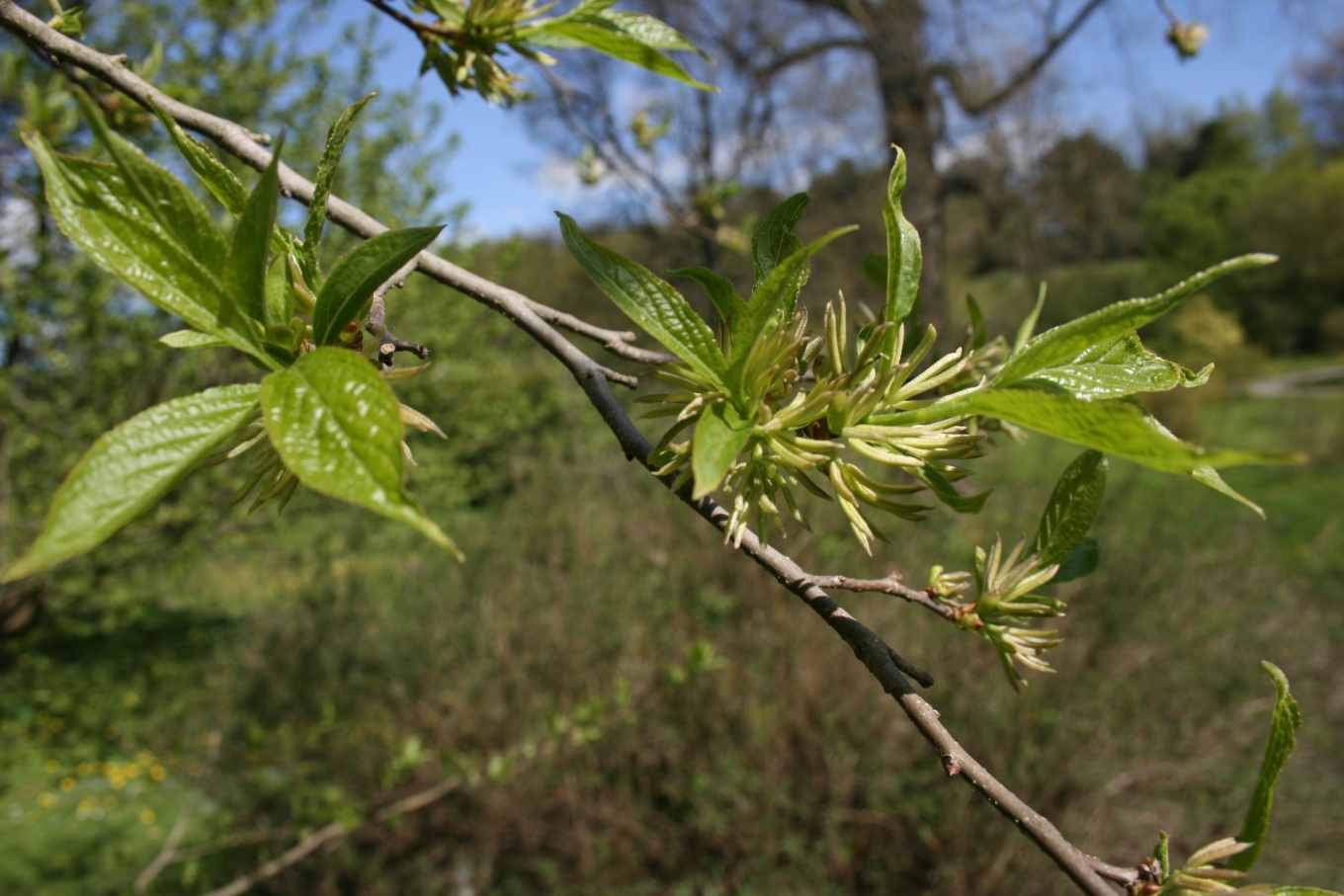
Eucommia ulmoides — du zhong, the hardy tree whose bark, when snapped, draws fine silvery threads; a prized tonic for the lower back and knees in the old texts.
Sten Porse · CC BY-SA 3.0 · Wikimedia Commons
How to Use
Across the Three Kingdoms
One herb, prepared once, serving people, pets, and plants from a single botanical practice — each with its own measure and care.
People
Benefit
immune resilience and deep, daily vitality
How to Use
1/4 tsp (up to 1 tsp) in hot water, tea, coffee, a smoothie, or food, once daily — begin with light doses; our extracts are very potent.
Pets
Dogs & companion animals
Benefit
A traditional deep-tonic bark long valued for joint, bone, and connective-tissue vitality.
How to Use
Offer a small amount of the dilute hot-water extract or powder stirred into food, scaled to body weight; start low and give intermittently rather than as a daily high dose.
By Animal
Cats
Phenolics here are water-soluble dietary polyphenols (chlorogenic acid), not eugenol-type volatile phenols, so no glucuronidation/essential-oil trap; well-tolerated at tonic doses.
Dogs
Well-tolerated tonic bark; not on ASPCA toxic list; rat repeat-dose studies show wide safety margin at tonic-scale intake.
Horses
No iodine, no glycyrrhizin, no irritant saponin load; dilute extract is gentle. Mild hypotensive action is a dose/med caveat, not a toxicity in a healthy horse.
Birds
Well tolerated as a dilute, body-weight-scaled tonic; introduce gradually, starting with a small amount.
⚑ Sport horses: FEI/USEF: not a specifically named banned substance, but Eucommia has documented hypotensive/vasodilator pharmacological action, so a herbal preparation could trigger the "natural substance with a pharmacological effect" / controlled-medication principle. Observe a conservative withdrawal before competition and disclose to the team veterinarian.
Safety
Eucommia is a low-toxicity, food-homologous tonic bark (rat maximum tolerated dose ~1200 mg/kg; a 28-day repeat-dose study at up to 1200 mg/kg/day showed no acute toxicity on clinical signs, histopathology, or serum chemistry), and it is not listed on the ASPCA toxic-plant database for any species — hence "good" for healthy animals in moderate use across cats, dogs, and horses. The class is NOT downgraded for the following conditional risks, which apply only to specific situations: (1) it is a mild hypotensive/vasodilator (chlorogenic acid + lignans), so it can stack additively with antihypertensive drugs, sedatives, or other blood-pressure-lowering agents — avoid in animals already hypotensive or on cardiovascular medication; (2) theoretical additive antiplatelet/antioxidant effect means discontinue 1-2 weeks before elective surgery; (3) although used in pregnancy in traditional human practice, there is no controlled reproductive-safety data in companion animals, so withhold from pregnant or lactating pets unless a veterinarian directs otherwise; (4) start low and monitor in animals with pre-existing kidney or liver disease and any animal on chronic medication. Use the dilute water extract (which carries the water-soluble phenolics and iridoids), not the raw bark latex (gutta-percha) or concentrated material. Always introduce one new botanical at a time and consult a veterinarian for animals on medication or with chronic disease.
Source: ASPCA Toxic and Non-Toxic Plant database (no Eucommia entry, searched cats/dogs/horses lists); peer-reviewed safety assessment of E. ulmoides leaf extract (rat MTD ~1200 mg/kg, 28-day no acute toxicity) and antihypertensive pharmacology reviews (ScienceDirect S1756464622001992, PMC9434109, drugs.com NPP monograph); PFAF / natural-medicinal-herbs monographs (hypotensive, vasodilator, gutta-percha latex content); FEI Equine Prohibited Substances List clean-sport principle.
Plants
Garden, soil & foliage
Benefit
whole-cycle vigor, resilience, and a living root zone
How to Use
Dilute 1/8 to 1/4 teaspoon per gallon of water. Foliar feed at the lighter rate, or soil drench at the fuller rate, about once a month or every other feeding. Used the entire way, through both vegetative growth and bloom.
Best for
Whole cycle — growth & bloomSafety
A dilute extract in the GGG Plants line; always dilute and start light.
Source: GGG Plants line formulation
Structure-and-function guidance for nutrition and vitality. Not intended to diagnose, treat, cure, or prevent any disease. Introduce one botanical at a time and notice how the body responds. Some plants interact with medication; if you are pregnant, nursing, or on a prescription, know the interaction before you begin.
What's inside
Eucommia,
down to the molecule.
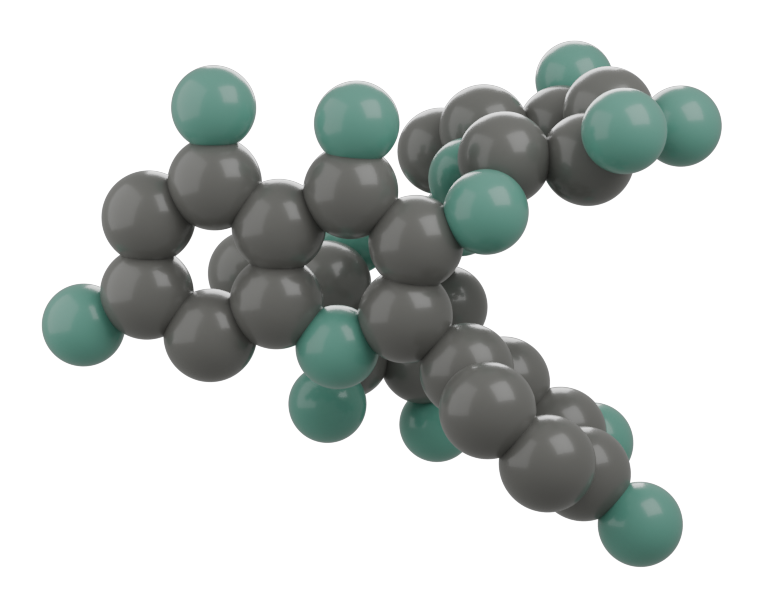
The signature compound of Eucommia, rendered from its real structure in bronze and glass — the precise thing the plant carries, given the dignity it has earned.
The evidence chain
From the plant to the molecule to the body — traced.
Not a claim — a chain. Every link below traces to a primary record. This is what Eucommia is, measured.
The plant
Eucommia
which governs
An enzyme that converts excess glucose into sorbitol, part of normal sugar metabolism.
serving the system
Musculoskeletal · Endocrine
and the tradition independently agrees
Named for these systems in the recorded herbal lineage (Culpeper 1653, TCM, and cross-cultural materia medica) — tradition and the molecule, arrived at separately, converge.
Structure and function only. The chain describes the plant’s characterized chemistry and traditional use — not a claim to treat, cure, or prevent any disease.
How it works
How Eucommia works in the body
A herb is never one thing — it is a community of compounds, each meeting the body in its own way. These are the active molecules in Eucommia and the proteins each one is measured to engage: the precise points where the plant meets your biology. So you see not just that it works, but how.
Chlorogenic acid
PubChem ↗Measured to act on
A viral enzyme HIV uses to insert its genetic material into a host cell's DNA.
An enzyme that dials down insulin and growth signaling by removing phosphate tags.
An enzyme that converts glucose into sorbitol as part of cellular sugar handling.
Concentrated in adrenal glandstructure resolved ↗
Measured in the lab
Real measurements from binding studies. A tighter fit means the compound meets its target more readily — the figure in grey is the actual measured value.
Binds very tightly to Tyrosine-protein phosphatase non-receptor type 1 · IC50 100 nM
Binds tightly to Histone deacetylase · Ki 135 nM
Binds tightly to Aldo-keto reductase family 1 member B1 · IC50 300 nM
Binds to Aldo-keto reductase family 1 member B10 · IC50 7.9 µM
Quercetin
PubChem ↗Measured to act on
A structural protein that stabilizes the internal scaffolding of nerve cells.
Concentrated in brain, skeletal musclestructure resolved ↗
An enzyme that converts excess glucose into sorbitol, part of how cells handle sugar.
Concentrated in adrenal glandstructure resolved ↗
A liver-type enzyme that processes hormones and environmental compounds.
An enzyme that breaks down messenger chemicals like serotonin in the nervous system.
Concentrated in intestinestructure resolved ↗
Measured in the lab
Real measurements from binding studies. A tighter fit means the compound meets its target more readily — the figure in grey is the actual measured value.
Binds very tightly to Amine oxidase [flavin-containing] A · IC50 10 nM
Binds very tightly to Aromatase · IC50 12 nM
Binds very tightly to Aldo-keto reductase family 1 member B1 · IC50 14.8 nM
Binds very tightly to Enoyl-acyl-carrier protein reductase · Ki 22 nM
Binds very tightly to Cytochrome P450 1B1 · Ki 23 nM
Binds very tightly to Serine/threonine-protein kinase pim-1 · Kd 25 nM
— and 108 more measured targets, each traced to its source.
Rutin
PubChem ↗Measured to act on
A viral surface enzyme the flu uses to release new virus particles from infected cells.
The enzyme that produces uric acid as the body breaks down purines.
Concentrated in liver, intestine, breaststructure resolved ↗
Measured in the lab
Real measurements from binding studies. A tighter fit means the compound meets its target more readily — the figure in grey is the actual measured value.
Binds very tightly to Tyrosinase · IC50 0.856 nM
Binds very tightly to Beta-secretase 1 · IC50 3.8 nM
Binds very tightly to Acetylcholinesterase · IC50 12 nM
Binds very tightly to Muscarinic acetylcholine receptor M5 · Ki 35.13 nM
Binds to Neuromedin-U receptor 2 · EC50 1.2 µM
Binds to Genome polyprotein · IC50 2.1 µM
— and 5 more measured targets, each traced to its source.
Cited science · not claims
Everything we publish about these plants traces to a primary source — the compounds to PubChem, ChEMBL, and BindingDB, the traditional uses to named, dated herbals. We describe what a plant is and what it is understood to nourish — the body’s own systems, structure and function only. We do not claim it treats, cures, or prevents any disease, and nothing here is a substitute for professional care. See our method & sources →
These statements have not been evaluated by the Food and Drug Administration. Not intended to diagnose, treat, cure, or prevent any disease.
Works alongside
Other herbs that share Eucommia's terrain
Different plants reaching the same systems of the body — the convergence our genome engine maps. These nourish the terrain Eucommia supports: