mushroom
Chaga
Inonotus obliquus
Also known as
Suitable For
A dense, slow-grown conk harvested from wild birch in the far north. It carries one of the highest antioxidant concentrations of any botanical, with a melanin- and polysaccharide-rich profile that supports immune resilience and cellular defense.
What it nourishes in the body
The body systems this herb is traditionally understood to support — resolved through our knowledge graph, where the classical record and modern biology are read together. Structure and function, never a claim of treatment.
Where measure and tradition agree
Chaga is measured to engage this system in human binding data — and the recorded tradition named it for it independently. Two evidence systems arriving at the same place, separately, is our highest standard. See the research →
10:1 Concentrated Extract
Whole-plant. Small-batch. Potent.
How to take it
1/4 tsp (up to 1 tsp) in hot water, tea, coffee, a smoothie, or food, once daily — begin with light doses; our extracts are very potent.
Whole plant, never isolated
Concentrated extracts of the whole botanical — the way the body recognizes it.
Cited to measured biology
Every action we describe traces to the compound and its measured target.
Structure & function
We describe what an herb nourishes — never a claim to treat disease.
Secure checkout
Encrypted payment and human verification on every order.
The Fungus
Chaga, in depth
Character
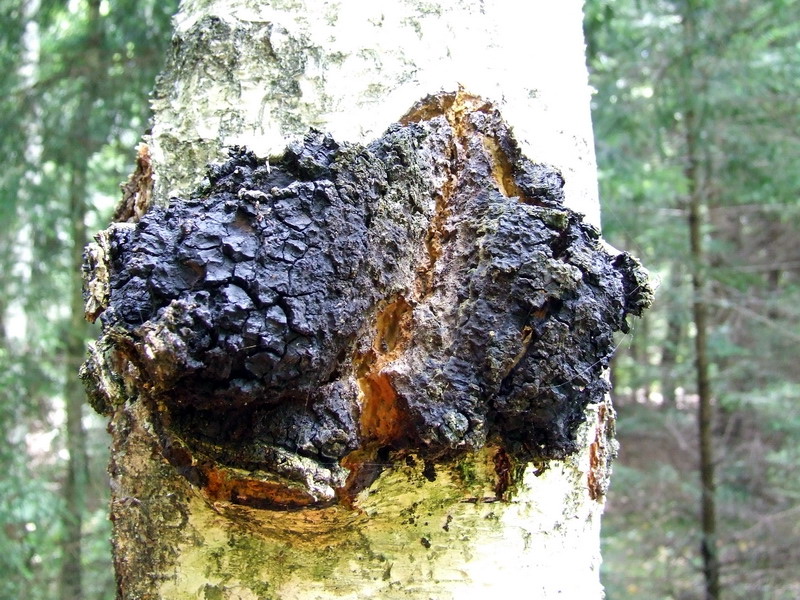
Chaga (Inonotus obliquus) is not a soft, gilled mushroom but a sterile conk — a dense, charcoal-black sclerotium that grows slowly over years on the wounded heartwood of living birch in the cold forests of the far north. Across Siberia and Northern Canada it draws its character from that union: a hard, brittle mass cracked open to reveal a rust-gold interior, carrying the resins of the birch it fed upon. Tradition named it 白桦茸, the "white-birch fungus," and the herbal world has long regarded it as one of the most concentrated botanicals on earth — its blackness the visible signature of an extraordinary melanin and antioxidant density unmatched by almost any other plant or fungus.
At GGG NATURAL we present Chaga as a 10:1 hot-water extract of the conk, earthy and grounding on the palate, in the lineage of the great tonic fungi. It is a vitality botanical in the truest sense: not a stimulant, not a quick lift, but a slow, deep, daily tonic whose strength mirrors the patience of its own growth. Where the birch endures the northern winter, Chaga is the embodiment of that endurance — a resilient organism that GGG offers as nourishment for the body's own resilience.
In the Body
Chaga's primary affinity is with the immune system — the body's natural intelligence for recognition, defense, and balance. It is exceptionally rich in established compound classes: beta-glucans and other polysaccharides, the fungal triterpenes characteristic of the tonic mushrooms (including betulinic acid drawn from its birch host), a dense fraction of melanin, and a broad spectrum of polyphenols. Beta-glucans and polysaccharides are the structural language the immune system reads — branched sugars the body recognizes and uses to support the immune system's own healthy, well-regulated function, and to tone the body's normal inflammatory balance rather than override it. This is the structure/function heart of Chaga: it engages the body's defenses by feeding the systems already in place, not by acting against any condition.
Its second signature is antioxidant capacity. Melanin, polyphenols, and triterpenes form one of the most concentrated antioxidant profiles of any botanical — compound classes that support the body's own cellular defenses against everyday oxidative stress and nourish the resilience of healthy tissue. Through this antioxidant and immune-toning character, Chaga supports steady, daily vitality and the body's grounded sense of strength: the systems of defense and renewal, well-nourished, expressing their own natural balance. A note of precision in keeping with its chemistry — Chaga is naturally high in oxalates, which is why GGG offers it as a dilute, measured tonic, and why those who are mindful of their oxalate intake or who support sensitive kidney and mineral-processing pathways may prefer to keep portions small.
The Tradition
Chaga's recorded use belongs to the cold northern reaches of the herbal world. In the folk traditions of Siberia, the Baltic, and the boreal peoples of Northern Europe and Russia, the birch conk was harvested through the long winters, broken down and steeped as a dark, earthy daily tea — valued for generations as a grounding tonic of strength and endurance for those living in the harshest climates. It carries a parallel lineage in classical East Asian practice, where the tonic fungi as a class — Reishi, Poria, and the birch mushroom among them — were honored as among the highest order of restorative botanicals, taken steadily over time to nourish vitality and constitutional resilience rather than for any acute purpose. It is this tradition of patient, daily tonic use across the northern and Eastern herbal lineages that GGG NATURAL carries forward.
The conk
Chaga,
as it actually grows.
Inonotus obliquus — the black, fire-charred conk that grows for years on living birch, its rusty interior simmered slow into the dark, earthy tea of the Siberian and Scandinavian forests.
Tocekas · CC BY-SA 3.0 · Wikimedia Commons
How to Use
Across the Three Kingdoms
One herb, prepared once, serving people, pets, and plants from a single botanical practice — each with its own measure and care.
People
Benefit
immune resilience and deep, daily vitality — plus immune support
How to Use
1/4 tsp (up to 1 tsp) in hot water, tea, coffee, a smoothie, or food, once daily — begin with light doses; our extracts are very potent.
Pets
Dogs & companion animals
Benefit
Antioxidant-rich (melanin, polyphenols, betulinic acid) tonic that supports a healthy immune response and normal inflammatory balance.
How to Use
Offer a small amount of the dilute hot-water extract or powder stirred into food, scaled to body weight (a pinch for cats/small dogs/birds, more for large dogs/horses). Start low, build slowly, and rotate (e.g. 6 weeks on/off) rather than dosing continuously.
By Animal
Cats
Water-extract tonic, well-tolerated; no eugenol/phenol or essential-oil burden that strains feline glucuronidation.
Dogs
Widely used as a canine immune/antioxidant tonic; no toxicity at supplemental doses in healthy dogs.
Horses
Used as an equine immune/metabolic tonic; non-aromatic, no iodine or glycyrrhizin load — fine for the healthy hindgut in moderate use.
Birds
Non-aromatic water extract — none of the volatile/essential-oil risk birds are sensitive to; species-specific avian data is limited, so introduce conservatively.
⚑ Sport horses: USEF cautions broadly against herbal tonics/powders; Chaga is not a named FEI/USEF banned substance, but verify the current FEI Prohibited Substances Database before competition and observe a withdrawal window — its glucose- and immune-modulating activity could draw scrutiny.
Safety
Chaga is a food-grade water-extract tonic mushroom, well-tolerated by healthy animals in moderate use; the cautions below are all CONDITIONAL, not reasons to avoid it in a healthy pet. Its main inherent concern is high oxalate content: animals with kidney disease, a history of calcium-oxalate bladder/kidney stones, or stone-prone breeds should avoid it (this is a water-soluble oxalate, so the dilute extract carries more oxalate than a defatted fraction would — keep portions small and ensure good hydration). Chaga can lower blood glucose, so use caution and veterinary oversight in diabetic/insulin-resistant animals or those on glucose-lowering drugs. It may have mild antiplatelet/anticoagulant activity — discontinue ~1-2 weeks before surgery and avoid combining with warfarin, clopidogrel, NSAIDs or other blood thinners without vet guidance. As an immunomodulator, review use in animals on immunosuppressants or with autoimmune disease. For pregnant, nursing, or medicated animals, use only under veterinary direction. Use only lab-tested, contaminant-free supplement-grade Chaga from verified Inonotus obliquus (avoid unverified raw wildcrafted material). Avian toxicology data for Chaga specifically is thin, so introduce conservatively in birds. Start low and watch for GI upset. The ASPCA APCC (888-426-4435) is the emergency resource for any suspected poisoning.
Source: ASPCA Animal Poison Control (APCC); AKC "Medicinal Mushrooms for Dogs"; WebMD Chaga safety/oxalate profile; Mad Barn Equine Feed Database (Inonotus obliquus); NAMA "Oxalates in Chaga" (M. Beug); FEI Prohibited Substances Database; USEF Guidelines & Rules for Drugs and Medications (herbal/natural caution).
Plants
Garden, soil & foliage
Benefit
whole-cycle vigor, resilience, and a living root zone
How to Use
Dilute 1/8 to 1/4 teaspoon per gallon of water. Foliar feed at the lighter rate, or soil drench at the fuller rate, about once a month or every other feeding. Used the entire way, through both vegetative growth and bloom.
Best for
Whole cycle — growth & bloomSafety
A dilute extract in the GGG Plants line; always dilute and start light.
Source: GGG Plants line formulation
Structure-and-function guidance for nutrition and vitality. Not intended to diagnose, treat, cure, or prevent any disease. Introduce one botanical at a time and notice how the body responds. Some plants interact with medication; if you are pregnant, nursing, or on a prescription, know the interaction before you begin.
What's inside
Chaga,
down to the molecule.
The signature compound of Chaga, rendered from its real structure in bronze and glass — the precise thing the plant carries, given the dignity it has earned.
The evidence chain
From the plant to the molecule to the body — traced.
Not a claim — a chain. Every link below traces to a primary record. This is what Chaga is, measured.
The plant
Chaga
which governs
A receptor inside cells that helps direct immune cell development and daily body rhythms.
serving the system
Immune · Digestive
and the tradition independently agrees — measured binding
The recorded herbal lineage names Chaga a immune herb. Independently, its compounds are measured to bind proteins of that system. Tradition and molecule, arrived at separately, converge — the strongest evidence we hold.
Structure and function only. The chain describes the plant’s characterized chemistry and traditional use — not a claim to treat, cure, or prevent any disease.
How it works
How Chaga works in the body
A herb is never one thing — it is a community of compounds, each meeting the body in its own way. These are the active molecules in Chaga and the proteins each one is measured to engage: the precise points where the plant meets your biology. So you see not just that it works, but how.
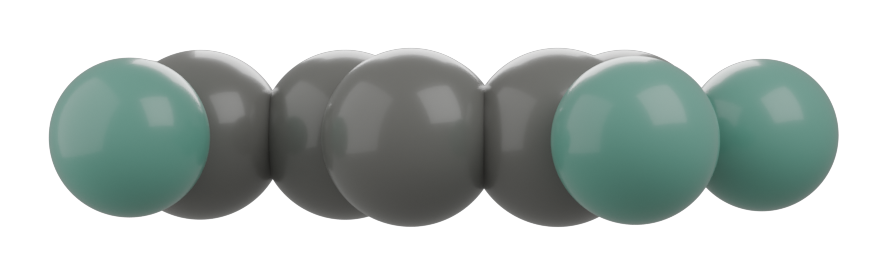
Betulinic acid
PubChem ↗Measured to act on
A receptor inside cells that helps direct immune cell development and daily body rhythms.
Concentrated in skeletal musclestructure resolved ↗
An enzyme that recycles the building blocks of DNA and cellular energy molecules.
Concentrated in cervixstructure resolved ↗
An enzyme that helps repair and copy DNA to keep the genetic code intact.
Concentrated in brainstructure resolved ↗
Measured in the lab
Real measurements from binding studies. A tighter fit means the compound meets its target more readily — the figure in grey is the actual measured value.
Binds tightly to Albumin · Kd 593 nM
Binds to G-protein coupled bile acid receptor 1 · EC50 1.04 µM
Binds to Tyrosine-protein phosphatase non-receptor type 1 · IC50 1.5 µM
Binds to Genome polyprotein · IC50 1.7 µM
Binds to Aldo-keto reductase family 1 member B10 · IC50 2 µM
Binds to Nuclear receptor ROR-gamma · IC50 2.2 µM
— and 5 more measured targets, each traced to its source.
Protocatechuic acid
PubChem ↗Measured to act on
An enzyme that balances carbon dioxide and acidity throughout the body's fluids.
Concentrated in stomach 1, choroid plexus, intestinestructure resolved ↗
An enzyme that helps manage carbon dioxide and acid-base balance in the blood.
Concentrated in intestine, bone marrowstructure resolved ↗
A bacterial enzyme in a pathway plants and microbes use that humans lack entirely.
Concentrated in kidneystructure resolved ↗
Measured in the lab
Real measurements from binding studies. A tighter fit means the compound meets its target more readily — the figure in grey is the actual measured value.
Binds tightly to Carbonic anhydrase 2 · Ki 470 nM
Binds tightly to M18 aspartyl aminopeptidase · IC50 479.4 nM
Binds tightly to Carbonic anhydrase 14 · Ki 690 nM
Binds to Carbonic anhydrase 1 · Ki 1.08 µM
Binds to Carbonic anhydrase 4 · Ki 2.45 µM
Binds to Carbonic anhydrase · Ki 3.21 µM
— and 6 more measured targets, each traced to its source.
Gallic acid
PubChem ↗Measured to act on
An enzyme that attaches sugar groups to proteins, shaping how they fold and function.
An adhesion protein that helps immune cells stick to blood vessel walls.
An adhesion protein that guides white blood cells to where they are needed.
Concentrated in lymphoid tissue, bone marrowstructure resolved ↗
A mushroom enzyme widely used in the lab to study how pigment forms.
Measured in the lab
Real measurements from binding studies. A tighter fit means the compound meets its target more readily — the figure in grey is the actual measured value.
Binds very tightly to Amyloid-beta precursor protein · EC50 1.7 nM
Binds very tightly to Alpha-(1,3)-fucosyltransferase 7 · IC50 60 nM
Binds tightly to Polypeptide N-acetylgalactosaminyltransferase 2 · Kd 924 nM
Binds to Polyphenol oxidase 4 · IC50 1.06 µM
Binds to Carbonic anhydrase 2 · Ki 2.25 µM
Binds to Carbonic anhydrase 1 · Ki 3.2 µM
— and 15 more measured targets, each traced to its source.
Syringic acid
PubChem ↗Measured to act on
A key enzyme in how cells extract energy from sugar.
Concentrated in skeletal muscle, tonguestructure resolved ↗
An enzyme that helps cells manage acidity, especially in low-oxygen tissue.
Concentrated in stomach 1structure resolved ↗
Measured in the lab
Real measurements from binding studies. A tighter fit means the compound meets its target more readily — the figure in grey is the actual measured value.
Binds to Carbonic anhydrase 2 · Ki 3.19 µM
Binds to Carbonic anhydrase 1 · Ki 4.15 µM
Binds to Carbonic anhydrase 5A, mitochondrial · Ki 6.34 µM
Binds to Carbonic anhydrase 6 · Ki 7.55 µM
Binds to Carbonic anhydrase 7 · Ki 7.81 µM
Binds to Carbonic anhydrase 9 · Ki 8.2 µM
— and 3 more measured targets, each traced to its source.
Cited science · not claims
Everything we publish about these plants traces to a primary source — the compounds to PubChem, ChEMBL, and BindingDB, the traditional uses to named, dated herbals. We describe what a plant is and what it is understood to nourish — the body’s own systems, structure and function only. We do not claim it treats, cures, or prevents any disease, and nothing here is a substitute for professional care. See our method & sources →
These statements have not been evaluated by the Food and Drug Administration. Not intended to diagnose, treat, cure, or prevent any disease.
Works alongside
Other herbs that share Chaga's terrain
Different plants reaching the same systems of the body — the convergence our genome engine maps. These nourish the terrain Chaga supports:
Immune