root
Asparagus Root
Asparagus cochinchinensis
Also known as
Suitable For
Asparagus cochinchinensis — a moistening root rich in steroidal saponins. It nourishes the lungs, supports hydration, and settles the mind for clear, calm thinking.
What it nourishes in the body
The body systems this herb is traditionally understood to support — resolved through our knowledge graph, where the classical record and modern biology are read together. Structure and function, never a claim of treatment.
Where measure and tradition agree
Asparagus Root is measured to engage these systems in human binding data — and the recorded tradition named it for them independently. Two evidence systems arriving at the same place, separately, is our highest standard. See the research →
10:1 Concentrated Extract
Whole-plant. Small-batch. Potent.
How to take it
1/4 tsp (up to 1 tsp) in hot water, tea, coffee, a smoothie, or food, once daily — begin with light doses; our extracts are very potent.
Whole plant, never isolated
Concentrated extracts of the whole botanical — the way the body recognizes it.
Cited to measured biology
Every action we describe traces to the compound and its measured target.
Structure & function
We describe what an herb nourishes — never a claim to treat disease.
Secure checkout
Encrypted payment and human verification on every order.
The Botanical
Asparagus Root, in depth
Character
Asparagus cochinchinensis — known in the classical East Asian materia medica as 天门冬, Tian Men Dong, "heavenly asparagus" — is a moistening tuberous root drawn from a climbing perennial of the lily family, cultivated across the temperate forests of China and Korea. Where the kitchen asparagus offers a slender spring spear, this is its medicinal cousin: a plump, translucent, sweet-fleshed root gathered for its juiciness, then steamed and cured into the deep, honeyed tuber the apothecary prizes. Its character is cooling, sweet, and profoundly hydrating — a yin tonic in the oldest sense, a root that carries moisture the way a reservoir carries water, replenishing what dryness and exertion draw down.
In the GGG lineage Asparagus Root holds the place of a quiet restorative: not a stimulant that drives the body forward, but a moistening tonic that refills the deeper wells of fluid and reserve. Its nature is twofold and unusually elegant — it nourishes the lungs and the body's hydration while settling the mind into a clear, unhurried calm. This is the root for the kind of clarity that comes from being well-watered and grounded rather than wound tight: focus born of composure. We offer it as a potent 10:1 extract, a concentration that asks for a light hand and rewards it with a sweet, settling depth.
In the Body
Asparagus Root engages first with the respiratory system, where its defining quality is moisture. As a classical yin-and-fluid tonic it works to nourish and tone the lungs and the body's hydration, lending suppleness to tissues that exertion, heat, and dry air leave parched — supporting the body's own moistening intelligence rather than overriding it. Alongside the respiratory work runs a nervine character: it supports a settled, grounded nervous tone, the physiological basis of clear focus and a calm, composed mind. The two threads are one root's gift — hydration and composure, the well-watered clarity of a system in balance.
At the molecular level, the established and characteristic constituents of this root belong to the steroidal saponins, a class well represented in Asparagus cochinchinensis by its furostanol-type members. These amphipathic, triterpene-like glycosides are the root's signature compound class and the reason its concentrated extract is treated with respect and dilution. The root also carries polysaccharides and mucilaginous fractions — the slippery, water-binding compounds that account for its moistening, demulcent feel on the tissues of the respiratory tract and that engage the body's own fluid balance and lining. These are structure-and-function relationships: the saponins and polysaccharides are the architecture; what they do is nourish, moisten, and tone the body's existing systems. Because the saponins are potent and concentration-dependent, the extract is meant to be taken light and dilute, building slowly — the hallmark of a true tonic rather than a forcing agent.
The Tradition
Asparagus Root is one of the venerable yin tonics of classical East Asian herbalism, recorded for well over a millennium as Tian Men Dong (天门冬), "heavenly asparagus." In that tradition it is classed among the moistening, fluid-replenishing roots — prized for nourishing the lungs, replenishing the body's deep fluids, and settling the mind into calm. It was gathered, steamed, and cured into translucent honeyed tubers, taken as a restorative for the dry and the depleted and as a tonic for clarity of mind. GGG NATURAL carries it within that unbroken lineage: a sweet, cooling, moistening root offered as a 10:1 extract in the way the old herbalists intended — light-handed, patient, and tonic.
The plant
Asparagus Root,
as it actually grows.
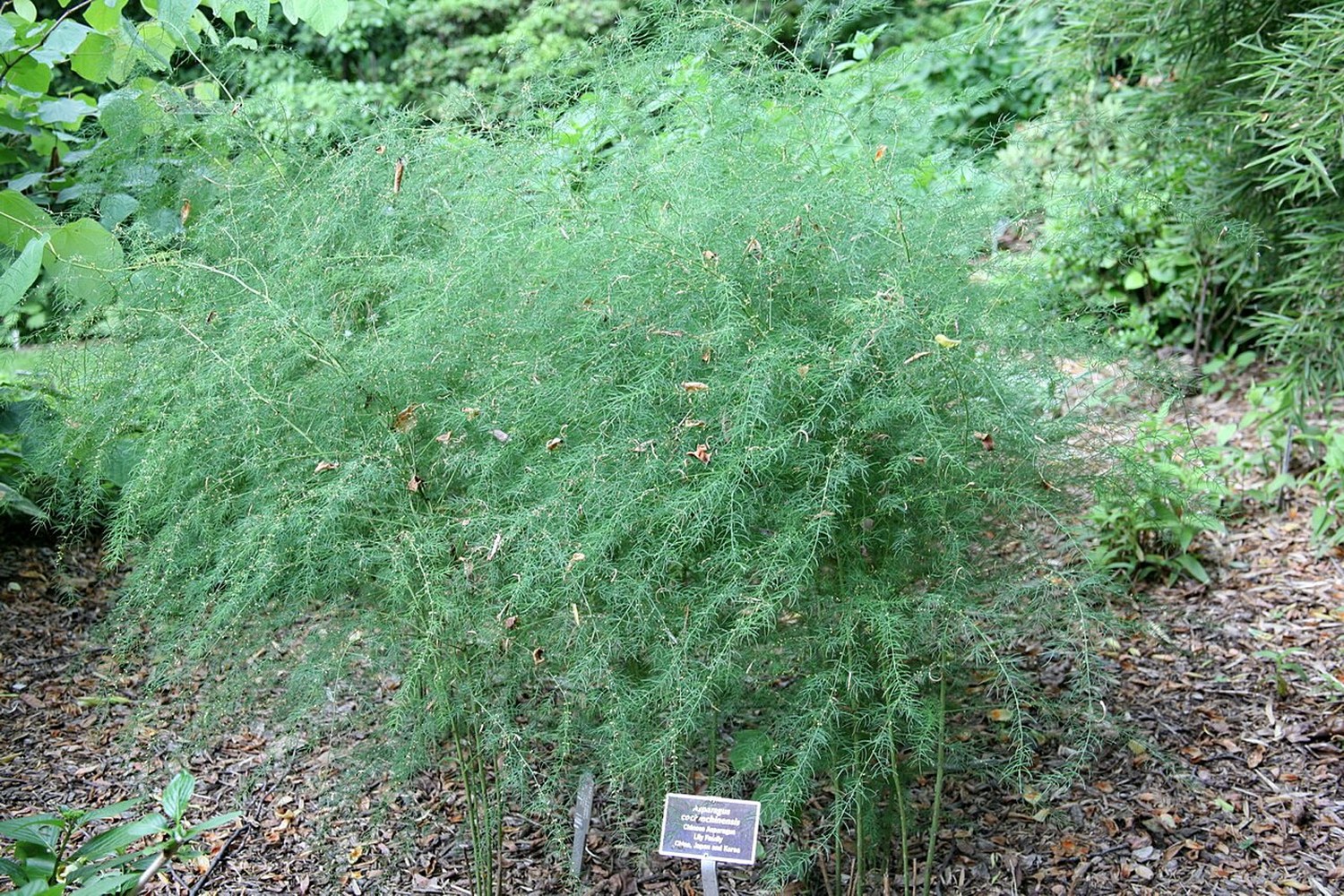
Asparagus cochinchinensis — tian men dong, the climbing asparagus whose translucent tuberous roots are candied and steeped as a moistening tonic in Chinese herbalism.
How to Use
Across the Three Kingdoms
One herb, prepared once, serving people, pets, and plants from a single botanical practice — each with its own measure and care.
People
Benefit
clear focus and a calm, settled mind — plus restful calm
How to Use
1/4 tsp (up to 1 tsp) in hot water, tea, coffee, a smoothie, or food, once daily — begin with light doses; our extracts are very potent.
Pets
Dogs & companion animals
Benefit
Supports respiratory comfort and moistening/yin-tonic balance as a traditional restorative root tonic.
How to Use
Stir a small pinch of the dilute powder/extract into food, scaled to body weight (start with a fraction of a human serving for a small pet); offer occasionally, not daily, and ensure free access to water.
By Animal
Cats
Well tolerated as a dilute, body-weight-scaled tonic; introduce gradually, starting with a small amount.
Dogs
ASPCA flags the genus for dogs via steroidal saponins; dilute root extract is tolerable in small body-weight-scaled amounts but GI-irritant if overdone.
Horses
Well tolerated as a dilute, body-weight-scaled tonic; introduce gradually, starting with a small amount.
Birds
Well tolerated as a dilute, body-weight-scaled tonic; introduce gradually, starting with a small amount.
⚑ Sport horses: No specific FEI/USEF prohibited substance is associated with Asparagus cochinchinensis root; however, botanical tonics are not cleared for competition and could contaminate testing — withdraw before competition and confirm with the FEI Clean Sport / USEF guidelines.
Safety
The active and risk-bearing class in Asparagus cochinchinensis root is steroidal/furostanol saponins, which are dose-dependent GI irritants (vomiting, abdominal pain, diarrhea) and can be hemolytic at concentration — so always start low, keep the extract dilute, and dose by body weight; the ornamental relatives of this genus (Asparagus densiflorus/"racemose asparagus") are listed by the ASPCA as toxic to cats, dogs, and horses, with the worst effects from the saponin-rich BERRIES and the dermal sap of the raw plant rather than a dilute decocted root, which is why moderate dilute use is treated as caution rather than avoid. For pregnant, nursing, or medicated animals, use only under veterinary direction. Stop before any surgery and use with care alongside other GI-irritant or saponin-containing herbs. Discontinue and consult a veterinarian if vomiting, diarrhea, lethargy, or pale gums (a hemolysis sign) appear. Source the product from a clean, contaminant-tested supply.
Source: ASPCA Animal Poison Control toxic-plant database (Racemose asparagus / Asparagus fern entries — cats, dogs, horses, steroidal saponins); peer-reviewed phytochemistry: "Furostanol Saponins from Asparagus cochinchinensis and Their Cytotoxicity" (PMC8599559) and "A Novel Cytotoxic Steroidal Saponin from the Roots of Asparagus cochinchinensis" (PMID 34685880); FEI Clean Sport / USEF Prohibited Substances guidance.
Plants
Garden, soil & foliage
Benefit
vegetative vigor, strong rooting, and resilient new growth
How to Use
Dilute 1/8 to 1/4 teaspoon per gallon of water. Foliar feed at the lighter rate, or soil drench at the fuller rate, about once a month or every other feeding. Best worked in through vegetative growth, as the plant builds leaf, stem, and root.
Best for
Vegetative growthSafety
A dilute extract in the GGG Plants line; always dilute and start light.
Source: GGG Plants line formulation
Structure-and-function guidance for nutrition and vitality. Not intended to diagnose, treat, cure, or prevent any disease. Introduce one botanical at a time and notice how the body responds. Some plants interact with medication; if you are pregnant, nursing, or on a prescription, know the interaction before you begin.
What's inside
Asparagus Root,
down to the molecule.
The signature compound of Asparagus Root, rendered from its real structure in bronze and glass — the precise thing the plant carries, given the dignity it has earned.
The evidence chain
From the plant to the molecule to the body — traced.
Not a claim — a chain. Every link below traces to a primary record. This is what Asparagus Root is, measured.
The plant
Asparagus Root
measured to engage
Solute carrier organic anion transporter family member 1B3 · IC50 105nM
BindingDB ↗which governs
A liver transporter that moves compounds into liver cells.
serving the system
Respiratory · Liver
and the tradition independently agrees — measured binding
The recorded herbal lineage names Asparagus Root a nervous and respiratory herb. Independently, its compounds are measured to bind proteins of those systems. Tradition and molecule, arrived at separately, converge — the strongest evidence we hold.
Structure and function only. The chain describes the plant’s characterized chemistry and traditional use — not a claim to treat, cure, or prevent any disease.
How it works
How Asparagus Root works in the body
A herb is never one thing — it is a community of compounds, each meeting the body in its own way. These are the active molecules in Asparagus Root and the proteins each one is measured to engage: the precise points where the plant meets your biology. So you see not just that it works, but how.
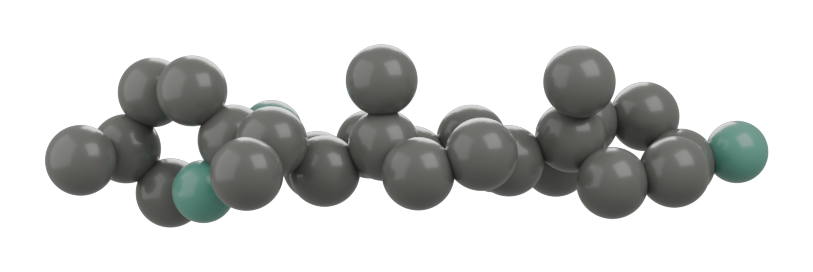
Diosgenin (steroidal sapogenin aglycone of A. cochinchinensis saponins)
PubChem ↗Measured to act on
A protein that shuttles cholesterol and lipids between compartments inside the cell.
Sarsasapogenin (steroidal sapogenin)
PubChem ↗Measured to act on
A liver transporter that draws compounds from the blood into liver cells.
Concentrated in liverstructure resolved ↗
A liver transporter that helps usher substances into the liver for processing.
Concentrated in liverstructure resolved ↗
A membrane protein in brain cells whose fragments play a role in neural signaling and structure.
Measured in the lab
Real measurements from binding studies. A tighter fit means the compound meets its target more readily — the figure in grey is the actual measured value.
Binds tightly to Solute carrier organic anion transporter family member 1B3 · IC50 105 nM
Binds tightly to Solute carrier organic anion transporter family member 1B1 · Ki 130 nM
beta-Sitosterol (phytosterol)
PubChem ↗Measured to act on
A major liver enzyme that processes a wide range of compounds the body takes in.
Concentrated in liverstructure resolved ↗
A liver enzyme involved in breaking down many naturally occurring and ingested compounds.
Concentrated in liverstructure resolved ↗
An enzyme that helps repair and maintain the integrity of DNA.
Concentrated in brainstructure resolved ↗
An enzyme that trims small signaling peptides involved in blood sugar regulation.
Concentrated in parathyroid gland, intestine, placenta, prostatestructure resolved ↗
A blood protein that, when activated, helps form clots to stop bleeding.
Concentrated in liverstructure resolved ↗
Measured in the lab
Real measurements from binding studies. A tighter fit means the compound meets its target more readily — the figure in grey is the actual measured value.
Binds tightly to Prothrombin · Ki 267 nM
Rutin (quercetin-3-O-rutinoside flavonoid glycoside)
PubChem ↗Measured to act on
The enzyme that produces uric acid as the body breaks down purines.
Concentrated in liver, intestine, breaststructure resolved ↗
The enzyme that switches off the nerve messenger acetylcholine after a signal.
Concentrated in skeletal muscle, brain, tonguestructure resolved ↗
An enzyme that helps break down acetylcholine and related compounds in the blood.
Concentrated in liverstructure resolved ↗
An enzyme that trims small signaling peptides involved in blood sugar regulation.
Concentrated in parathyroid gland, intestine, placenta, prostatestructure resolved ↗
An enzyme that cleaves small peptides, involved in processing neuropeptides.
An enzyme that cuts proteins at the cell surface, part of normal protein turnover.
Concentrated in pancreas, brainstructure resolved ↗
The key enzyme that makes melanin, the pigment that colors skin and hair.
Concentrated in skin 1structure resolved ↗
An enzyme that converts excess glucose into sorbitol, part of normal sugar metabolism.
Concentrated in adrenal glandstructure resolved ↗
A channel that lets potassium flow to help reset the heart's electrical rhythm.
Concentrated in pituitary gland, bone marrowstructure resolved ↗
Quercetin (flavonoid aglycone; aglycone of rutin)
PubChem ↗Measured to act on
A receptor that receives growth signals telling cells when to divide and renew.
Concentrated in placentastructure resolved ↗
An enzyme that converts fatty acids into messengers of the inflammatory response.
Concentrated in lymphoid tissue, lungstructure resolved ↗
The enzyme that drives the body's inflammatory response.
Concentrated in urinary bladder, seminal vesicle, bone marrowstructure resolved ↗
An enzyme that dials down insulin and growth signals inside the cell.
A signaling enzyme that helps activate immune T-cells.
Concentrated in lymphoid tissuestructure resolved ↗
An enzyme that helps drive the cell through its growth and division cycle.
Concentrated in lymphoid tissuestructure resolved ↗
A signaling enzyme involved in cell survival and growth.
Concentrated in bone marrowstructure resolved ↗
A regulatory partner in a signaling pathway that governs cell growth and metabolism.
A receptor that senses adenosine, a molecule that helps calm and modulate cell activity.
Concentrated in brainstructure resolved ↗
A liver enzyme that breaks down many compounds the body takes in.
Concentrated in liverstructure resolved ↗
An enzyme that turns fatty acids into signaling molecules of the inflammatory response.
Concentrated in adipose tissue, fallopian tubestructure resolved ↗
The enzyme that produces uric acid as the body breaks down purines.
Concentrated in liver, intestine, breaststructure resolved ↗
Cited science · not claims
Everything we publish about these plants traces to a primary source — the compounds to PubChem, ChEMBL, and BindingDB, the traditional uses to named, dated herbals. We describe what a plant is and what it is understood to nourish — the body’s own systems, structure and function only. We do not claim it treats, cures, or prevents any disease, and nothing here is a substitute for professional care. See our method & sources →
These statements have not been evaluated by the Food and Drug Administration. Not intended to diagnose, treat, cure, or prevent any disease.
Works alongside
Other herbs that share Asparagus Root's terrain
Different plants reaching the same systems of the body — the convergence our genome engine maps. These nourish the terrain Asparagus Root supports:
Respiratory