root
Rehmannia
Rehmannia glutinosa
Also known as
Suitable For
A blood-nourishing root, slow-prepared through repeated steaming to deepen its tonic action — a method refined over a thousand years. Supports foundational vitality, hormonal balance, and the body's deep reserves.
What it nourishes in the body
The body systems this herb is traditionally understood to support — resolved through our knowledge graph, where the classical record and modern biology are read together. Structure and function, never a claim of treatment.
10:1 Concentrated Extract
Whole-plant. Small-batch. Potent.
How to take it
1/4 tsp (up to 1 tsp) in hot water, tea, coffee, a smoothie, or food, once daily — begin with light doses; our extracts are very potent.
Whole plant, never isolated
Concentrated extracts of the whole botanical — the way the body recognizes it.
Cited to measured biology
Every action we describe traces to the compound and its measured target.
Structure & function
We describe what an herb nourishes — never a claim to treat disease.
Secure checkout
Encrypted payment and human verification on every order.
The Botanical
Rehmannia, in depth
Character
Rehmannia glutinosa is the great blood-nourishing root of the classical East Asian materia medica — a thick, dark, glutinous rhizome that the tradition regards as one of its deepest "building" tonics. What reaches our apothecary is not the raw root but the prepared form, shu di huang (熟地黄): cultivated root that has been steamed and sun-dried again and again, a slow ritual of repeated cooking refined over roughly a thousand years. Each cycle darkens the root from pale amber to a near-black, honeyed mass and deepens its character from cooling and fluid to warming, sweet, and profoundly nourishing — a transformation by craft, not by extraction. We carry it as a potent 10:1 extract from China, sweet on the flavor profile, the kind of foundational root an herbalist reaches for when the work is not stimulation but replenishment.
In the architecture of the tradition, Rehmannia is a cornerstone — the chief herb of the most famous tonic formulas in East Asian herbalism, the root other herbs are built around rather than added to. It belongs to the Kidney/adrenal and "deep reserve" branch of our collection alongside roots like eucommia: not a quick, bright botanical but a grounding, generational one, prized for the slow, daily replenishment of the body's foundational stores. It is sweet, dense, moistening, and unhurried by nature — a tonic of substance rather than spark, carried here as the living expression of a 17-year lineage that values what builds the body's reserves over time.
In the Body
Rehmannia is, in our organ map, a root of the Blood/Circulatory, Endocrine, and Kidney systems — the body's three great architectures of supply, signaling, and reserve. Its traditional standing as a "blood tonic" places it with the systems that build and circulate the body's nourishing substance, and as a Kidney-and-adrenal root it nourishes the deep, foundational reserve the tradition treats as the source of vitality, stamina, and graceful, resilient aging. We position it for daily, building support of foundational energy, hormonal balance, and fluid balance — structure and function, the slow toning of the systems that carry the body through demand rather than any single push against it.
Its molecular signature is well characterized and worth naming plainly. Rehmannia is rich in iridoid glycosides — catalpol foremost among them — a compound class that gives the root much of its recognized identity. Alongside these sit phenethyl alcohol glycosides such as acteoside (verbascoside), and a substantial fraction of polysaccharides, the building-block sugars common to the deep tonic roots. These classes are how the prepared root engages the body's own systems: the glycosides as the signaling-active fraction the endocrine and circulatory tissues encounter, the polysaccharides as nourishing substance that supports the body's resilience and its own natural regulatory rhythms. This is a root that works by feeding the systems' intelligence — supporting healthy circulation, endocrine balance, and the kidney-adrenal reserve — not by overriding it. Worth knowing in use: Rehmannia is moistening and building by nature, which is precisely its virtue and also why the tradition reserves it for replenishment rather than for cold, weak, or loose digestion.
The Tradition
In classical East Asian herbalism Rehmannia is di huang, and in its prepared form shu di huang it is among the most esteemed tonic roots in the entire materia medica — the chief herb of Liu Wei Di Huang Wan, the "Six-Flavor Rehmannia" formula, and of its warming companion Ba Wei Di Huang Wan (Rehmannia Eight). For centuries it has been entered into the Kidney, Liver, and Heart channels as a builder of blood and of the body's deep reserve, the foundation herb other tonics are arranged around. The thousand-year practice of repeated steaming and drying to produce the cooked root is itself part of the recorded tradition — a transformation of preparation, documented and unbroken, that the lineage carries forward. We present it as the tradition recorded it: a foundational, replenishing root, prepared by craft, sweet and substantial, carried in the lineage of the great tonic formulas.
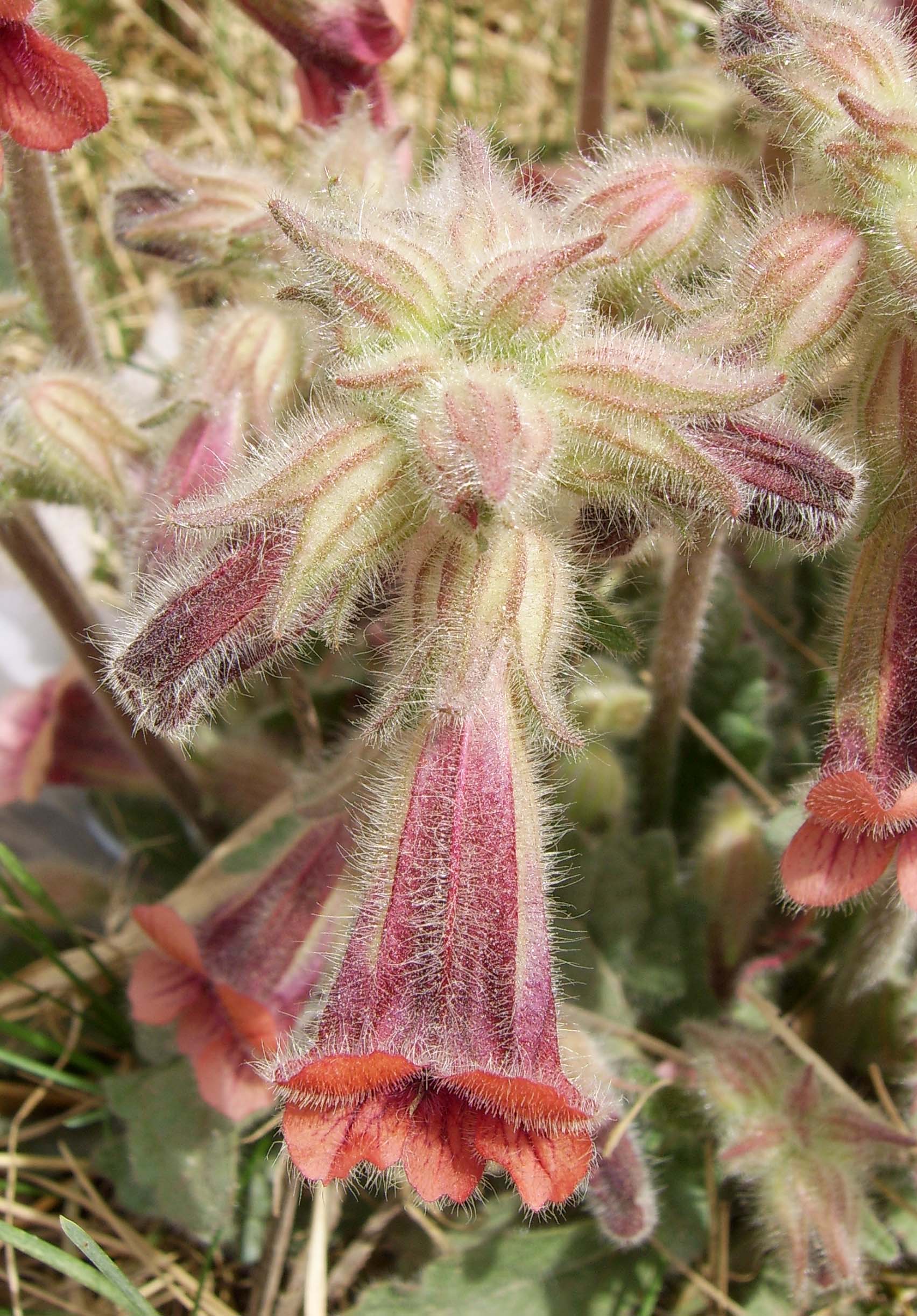
The flower
Rehmannia,
as it actually grows.
Rehmannia glutinosa — di huang, the foxglove-flowered root that anchors the classic blood-building formulas of Chinese herbalism, used raw or steamed dark.
Shizhao · CC BY 2.5 · Wikimedia Commons
How to Use
Across the Three Kingdoms
One herb, prepared once, serving people, pets, and plants from a single botanical practice — each with its own measure and care.
People
Benefit
immune resilience and deep, daily vitality — plus kidney and adrenal support
How to Use
1/4 tsp (up to 1 tsp) in hot water, tea, coffee, a smoothie, or food, once daily — begin with light doses; our extracts are very potent.
Pets
Dogs & companion animals
Benefit
A nourishing, building root tonic that supports vitality, fluid balance, and healthy aging.
How to Use
Offer a small amount of the dilute extract or powder mixed into food, scaled to body weight; start low and build gradually.
By Animal
Cats
Non-aromatic root, no essential-oil/phenol load; routinely used in feline TCVM formulas. Not ASPCA-listed as toxic.
Dogs
Well-tolerated foundational TCVM tonic for dogs; no documented toxicity at appropriate doses. Not ASPCA-listed.
Horses
No iodine/glycyrrhizin/aromatic load; used in equine herbal formulas without intrinsic toxicity. Not ASPCA-listed for horses.
Birds
Well tolerated as a dilute, body-weight-scaled tonic; introduce gradually, starting with a small amount.
⚑ Sport horses: Not a specifically named FEI/USEF banned substance, but iridoid glycosides (catalpol) and mild metabolic/blood-pressure activity mean it is an unapproved herbal tonic; FEI/USEF warn such products can trigger a positive test. Withdraw before sanctioned competition.
Safety
Rehmannia is "moistening" — skip it in any animal with active diarrhea, loose stool, or weak/cold digestion, as it can loosen stools further. Introduce slowly and start at a low dose, scaling to body weight, watching for GI upset. Because it has mild blood-sugar and fluid/blood-pressure activity, use cautiously and under veterinary guidance in animals that are diabetic, on antihypertensive, diuretic, or anticoagulant/antiplatelet medication, or scheduled for surgery; pause before elective procedures. Avoid in pregnancy and lactation absent veterinary direction. Use cautiously in animals with pre-existing kidney or liver disease and monitor — it is commonly used in TCVM renal-support formulas, but only under a veterinarian's supervision. Verify any combination product (e.g., Rehmannia Eight / Ba Wei Di Huang Wan) does NOT contain aconite, which is genuinely toxic. None of these caveats are toxicity to a healthy animal in moderate use; they are conditional.
Source: ASPCA Animal Poison Control toxic/non-toxic plant database (Rehmannia not listed for cats/dogs/horses); Thorne Vet — Prepared Rehmannia Root monograph; Kan Essentials / TCVM Pet Supply (Rehmannia Eight, Ba Wei Di Huang Wan); WebMD Rehmannia monograph; FEI Clean Sport Equine Prohibited Substances List + 2026 USEF Guidelines & Rules for Drugs and Medications (herbal-product caution).
Plants
Garden, soil & foliage
Benefit
vegetative vigor, strong rooting, and resilient new growth
How to Use
Dilute 1/8 to 1/4 teaspoon per gallon of water. Foliar feed at the lighter rate, or soil drench at the fuller rate, about once a month or every other feeding. Best worked in through vegetative growth, as the plant builds leaf, stem, and root.
Best for
Vegetative growthSafety
A dilute extract in the GGG Plants line; always dilute and start light.
Source: GGG Plants line formulation
Structure-and-function guidance for nutrition and vitality. Not intended to diagnose, treat, cure, or prevent any disease. Introduce one botanical at a time and notice how the body responds. Some plants interact with medication; if you are pregnant, nursing, or on a prescription, know the interaction before you begin.
What's inside
Rehmannia,
down to the molecule.
The signature compound of Rehmannia, rendered from its real structure in bronze and glass — the precise thing the plant carries, given the dignity it has earned.
The evidence chain
From the plant to the molecule to the body — traced.
Not a claim — a chain. Every link below traces to a primary record. This is what Rehmannia is, measured.
The plant
Rehmannia
serving the system
Blood & Circulatory · Endocrine
and the tradition independently agrees
Named for these systems in the recorded herbal lineage (Culpeper 1653, TCM, and cross-cultural materia medica) — tradition and the molecule, arrived at separately, converge.
Structure and function only. The chain describes the plant’s characterized chemistry and traditional use — not a claim to treat, cure, or prevent any disease.
How it works
How Rehmannia works in the body
A herb is never one thing — it is a community of compounds, each meeting the body in its own way. These are the active molecules in Rehmannia and the proteins each one is measured to engage: the precise points where the plant meets your biology. So you see not just that it works, but how.
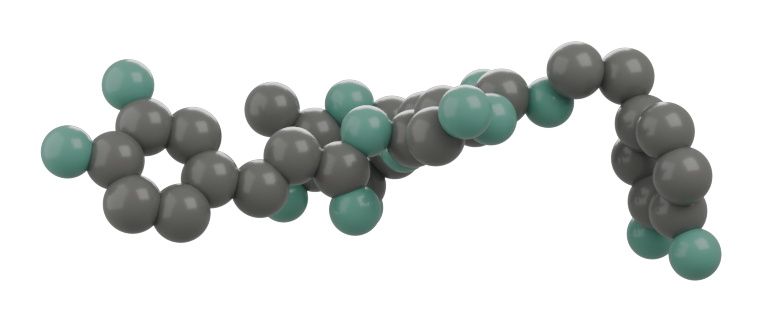
Acteoside (Verbascoside)
PubChem ↗Measured to act on
A family of signaling enzymes that relay messages controlling cell growth and activity.
Measured in the lab
Real measurements from binding studies. A tighter fit means the compound meets its target more readily — the figure in grey is the actual measured value.
Binds very tightly to Beta-secretase 1 · IC50 6.3 nM
Binds very tightly to Protein kinase C zeta type · IC50 68 nM
Binds tightly to Arginase · Ki 700 nM
Binds to PC4 and SFRS1-interacting protein · IC50 1.407 µM
Binds to Integrase · IC50 7.8 µM
Binds to Zinc finger protein mex-5 · EC50 9.829 µM
Aucubin
PubChem ↗Measured to act on
An enzyme that makes prostaglandins for everyday housekeeping like stomach lining and blood flow.
Concentrated in urinary bladder, skin 1, intestinestructure resolved ↗
The enzyme that drives the body's inflammatory response by producing prostaglandins.
Concentrated in urinary bladder, seminal vesicle, bone marrowstructure resolved ↗
The receptor through which estrogen signals, governing many reproductive and tissue functions.
Concentrated in endometrium 1, cervix, fallopian tubestructure resolved ↗
The enzyme that clears acetylcholine, the messenger that carries nerve signals to muscles.
Concentrated in skeletal muscle, brain, tonguestructure resolved ↗
A companion enzyme that helps break down acetylcholine and related signaling molecules.
Concentrated in liverstructure resolved ↗
Cited science · not claims
Everything we publish about these plants traces to a primary source — the compounds to PubChem, ChEMBL, and BindingDB, the traditional uses to named, dated herbals. We describe what a plant is and what it is understood to nourish — the body’s own systems, structure and function only. We do not claim it treats, cures, or prevents any disease, and nothing here is a substitute for professional care. See our method & sources →
These statements have not been evaluated by the Food and Drug Administration. Not intended to diagnose, treat, cure, or prevent any disease.
Works alongside
Other herbs that share Rehmannia's terrain
Different plants reaching the same systems of the body — the convergence our genome engine maps. These nourish the terrain Rehmannia supports:
Blood & Circulatory
Skin