sea-vegetable
Atlantic Irish Sea Moss
Chondrus crispus
Also known as
Suitable For
Chondrus crispus, wild-harvested from the cold North Atlantic. A mineral-dense whole food naturally rich in iodine, magnesium, potassium, and dozens of trace minerals for daily cellular nourishment.
What it nourishes in the body
The body systems this herb is traditionally understood to support — resolved through our knowledge graph, where the classical record and modern biology are read together. Structure and function, never a claim of treatment.
Raw, Unconcentrated Powder
Whole-plant. Small-batch. Potent.
Size
How to take it
1 tsp in hot water, tea, or a smoothie, once daily.
Whole plant, never isolated
Concentrated extracts of the whole botanical — the way the body recognizes it.
Cited to measured biology
Every action we describe traces to the compound and its measured target.
Structure & function
We describe what an herb nourishes — never a claim to treat disease.
Secure checkout
Encrypted payment and human verification on every order.
The Sea Vegetable
Atlantic Irish Sea Moss, in depth
Character
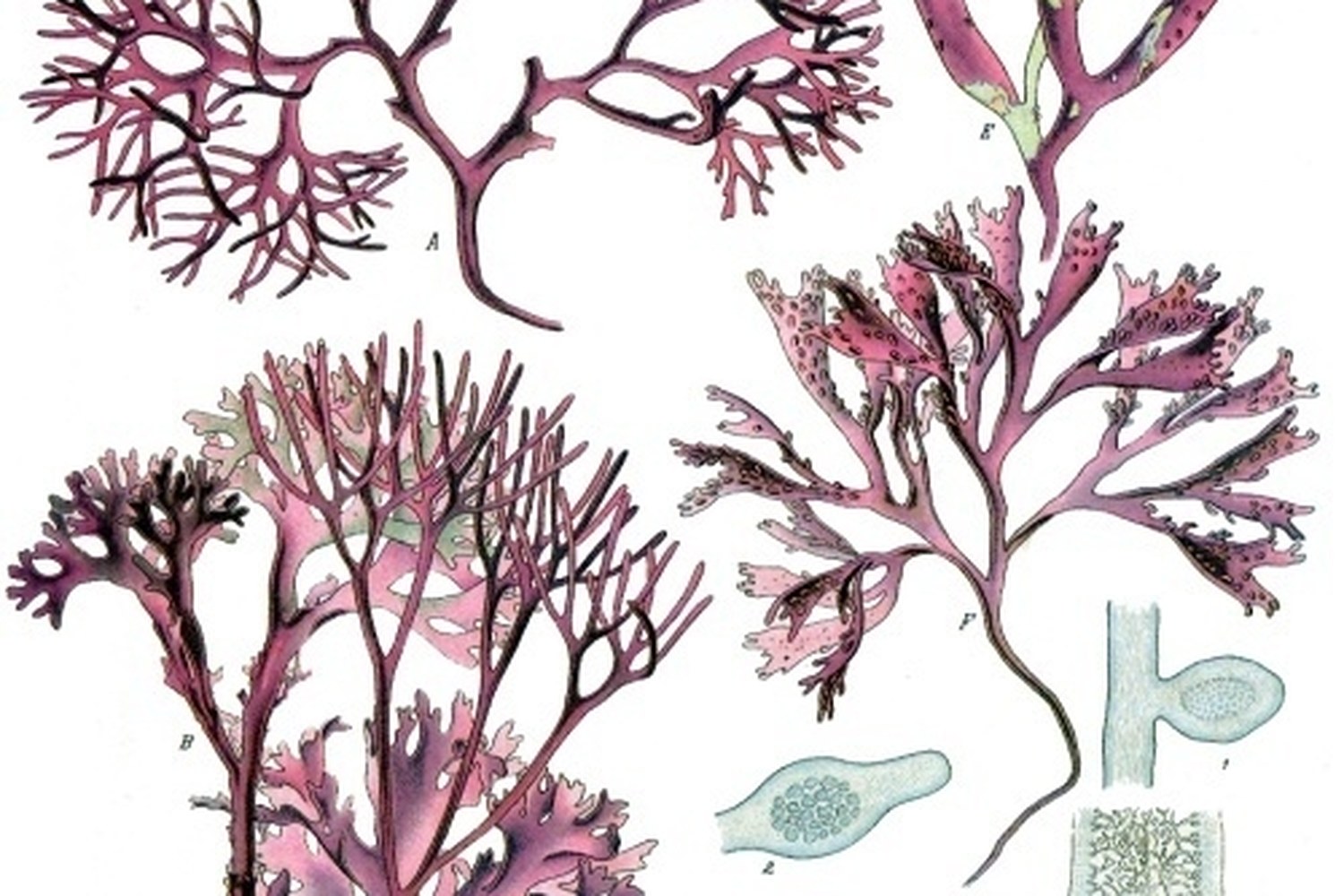
Atlantic Irish Sea Moss (Chondrus crispus) is a cold-water red sea-vegetable, wild-harvested from the rock pools and tidal ledges of the North Atlantic — the storm-washed coasts of Ireland, the Canadian Maritimes, and the rugged Northern European shoreline where the same plant has been gathered by hand for generations. Where the more familiar tropical "sea moss" belongs to the warm Caribbean, true Chondrus crispus is a creature of cold, oxygen-rich, mineral-laden water, and that origin is its entire character: a low, fan-shaped, cartilaginous thallus that branches like a flattened coral, ranging from deep purple-red to greenish-gold depending on the light it grew in. We offer it as the whole thallus, ground to a raw marine powder — nothing extracted away, nothing concentrated, the entire sea-vegetable kept intact.
In the apothecary it sits in the lineage of true foods rather than potent botanicals — closer to a daily bread of the sea than to a drop-dosed tincture. Its nature is mild, cooling, demulcent, and faintly briny; it carries the ocean's full mineral signature into the diet in a form the body has recognized for as long as coastal peoples have eaten from the tide line. This is its place in our shelves: a whole-food foundation, a baseline of marine mineral density and daily cellular nourishment, the kind of plant you build a constitution on rather than reach for in a moment.
In the Body
Sea moss is, before anything else, a mineral whole food. The cold North Atlantic concentrates its dissolved minerals into the living thallus, so the ground plant carries naturally occurring iodine, magnesium, potassium, calcium, and dozens of trace minerals in food-form — the elemental building blocks the body draws on for cellular work, fluid balance, and structural tone. Iodine is the signature element here, and the body's thyroid system is built to use it: iodine is the raw material the thyroid itself reaches for to do its own work, which is why a naturally iodine-bearing sea vegetable nourishes the body's mineral foundation rather than acting on it. We honor this as a benefit and a responsibility both — this is a dilute, food-grade sea-vegetable tonic, kept in modest daily measure, never a concentrated iodine megadose.
Its defining compound class is its red-seaweed polysaccharides — the carrageenan-type galactans that give the plant its cartilaginous body and its famous gel. These are large, water-loving polysaccharides: stirred into hot water they swell into a soft, mucilaginous matrix, and that demulcent quality is what makes sea moss a classic soothing, moistening food for the body's mucosal linings and the gut wall. The same gel carries a mild supportive feel for the skin and the body's hydration and suppleness — the cosmetic, moisture-holding character coastal people have always valued. Alongside the polysaccharides and minerals the whole thallus contributes modest plant pigments and the trace organics of any sea vegetable, all kept together in the unextracted powder. Across the body, then, it engages three things at once: the mineral and thyroid-mineral foundation (iodine, magnesium, potassium, trace elements feeding the body's own balance), the digestive and mucosal terrain (demulcent polysaccharides toning and soothing the gut lining), and the surface tissues (a hydrating, suppleness-supporting marine matrix) — all as nourishment the body recognizes, structure and function, never a drug acting on a condition.
The Tradition
Chondrus crispus carries one of the better-documented folk lineages of the European herbal tradition. Along the Atlantic coasts of Ireland, Scotland, and the Maritimes it was gathered at low tide, sun-bleached on the rocks, and simmered into a setting jelly — the original carrageen "moss blancmange" eaten as a nourishing, gel-forming food, prized especially as a gentle, building food for the young, the elderly, and those wanting easy, strengthening nourishment. The Old English and coastal herbals recorded it as a soothing, demulcent sea food valued for its mucilage and for the strength the sea's minerals were felt to carry into the body, and the same plant gave its Irish coastal name, carrageen, to the gelling polysaccharide it is still known for. In our lineage it stands where the classical herbals placed it: not a potent corrective botanical but a true food of the tide line — a whole sea-vegetable taken in steady, modest measure to nourish the body's own mineral foundation and its natural ease.
The sea vegetable
Atlantic Irish Sea Moss,
as it actually grows.
Chondrus crispus — Irish moss, the branching seaweed of the cold North Atlantic, sun-bleached to pale gold and soaked soft into a gel; a coastal food and natural thickener for centuries from Ireland to the Caribbean.
How to Use
Across the Three Kingdoms
One herb, prepared once, serving people, pets, and plants from a single botanical practice — each with its own measure and care.
People
Benefit
a whole-food source of trace minerals and daily mineral density
How to Use
1 tsp in hot water, tea, or a smoothie, once daily.
Pets
Dogs & companion animals
Benefit
Mineral- and polysaccharide-rich red seaweed (carrageenan, iodine, trace minerals) supporting gut-coat, hydration, and normal mucosal and thyroid-mineral balance.
How to Use
Offer a small amount of the dilute extract or powder stirred into food, scaled to body weight (a pinch for a cat/small dog; proportionally more for larger dogs). Start low and use intermittently rather than as a daily megadose.
By Animal
Cats
Food-grade seaweed, well-tolerated by healthy cats in a small dilute amount; not aromatic, so no phenol/essential-oil glucuronidation concern. Iodine is the only watch-point (see safety).
Dogs
Well-tolerated by healthy dogs in moderate dilute use; commonly used as a coat/gut seaweed tonic. Keep portions body-weight-scaled to avoid GI upset; iodine caveat in safety.
Horses
A gentle, dilute sea-vegetable tonic; keep amounts modest and don't stack other iodine sources.
Birds
Seaweed is non-toxic to birds and used in avian nutrition; Chondrus is not an aromatic/essential-oil herb, so no volatile-oil sensitivity. Offer a tiny amount; iodine is the only moderation point.
⚑ Sport horses: FEI/USEF: Chondrus crispus itself is not a banned substance, but as a natural iodine/trace-mineral source it is not prohibited; treat as a feed/supplement. No specific FEI prohibited-substance listing. Verify the finished product's full ingredient/excipient list before competition use.
Safety
Iodine is an essential mineral — the thyroid requires it to make its hormones, and this sea vegetable is a rich natural source (a benefit, not a hazard). This is a dilute, food-grade wellness tonic, not a concentrated kelp/iodine supplement; the dominant caveat across species is iodine. Because Chondrus crispus is an iodine-bearing seaweed, do not stack it with other iodine sources (kelp, iodized supplements, certain feeds) and avoid in animals with known thyroid disease (hyper- or hypothyroid) or those on thyroid medication without veterinary guidance. Avoid or veterinary-supervise in pregnant/lactating animals — iodine concentrates across the placenta and into milk, and broodmares/foals are the most iodine-sensitive group. Carrageenan-rich seaweed gels can swell with water, so do not give large boluses of raw/powdered material to small animals (intestinal-blockage and GI-upset risk); the dilute extract minimizes this. Introduce slowly and watch for soft stool. Use caution with renal disease (mineral/electrolyte load) and consult a vet for animals on thyroid, lithium, or anticoagulant therapy. Seaweed can concentrate heavy metals (arsenic), so source-quality matters. Start low, go slow, and discontinue if any GI or thyroid signs appear.
Source: ASPCA Toxic and Non-Toxic Plants database (note: ASPCA "Irish Moss" entry = Selaginella kraussiana, a different land plant, listed non-toxic to cats/dogs/horses — not the seaweed); Kentucky Equine Research "Kelp for Horses" and broodmare iodine Q&A (iodine toxicity thresholds in horses); VCA/peer-reviewed seaweed-iodine and thyroid literature (PMC kelp-induced thyroid dysfunction case reports); OPSS (DoD) "Sea moss in dietary supplements."
Plants
Garden, soil & foliage
Benefit
whole-cycle vigor, resilience, and a living root zone
How to Use
Dilute 1/8 to 1/4 teaspoon per gallon of water. Foliar feed at the lighter rate, or soil drench at the fuller rate, about once a month or every other feeding. Used the entire way, through both vegetative growth and bloom.
Best for
Whole cycle — growth & bloomSafety
A dilute extract in the GGG Plants line; always dilute and start light.
Source: GGG Plants line formulation
Structure-and-function guidance for nutrition and vitality. Not intended to diagnose, treat, cure, or prevent any disease. Introduce one botanical at a time and notice how the body responds. Some plants interact with medication; if you are pregnant, nursing, or on a prescription, know the interaction before you begin.
What's inside
Atlantic Irish Sea Moss,
down to the molecule.
The signature compound of Atlantic Irish Sea Moss, rendered from its real structure in bronze and glass — the precise thing the plant carries, given the dignity it has earned.
The evidence chain
From the plant to the molecule to the body — traced.
Not a claim — a chain. Every link below traces to a primary record. This is what Atlantic Irish Sea Moss is, measured.
The plant
Atlantic Irish Sea Moss
serving the system
Endocrine · Skin
and the tradition independently agrees
Named for these systems in the recorded herbal lineage (Culpeper 1653, TCM, and cross-cultural materia medica) — tradition and the molecule, arrived at separately, converge.
Structure and function only. The chain describes the plant’s characterized chemistry and traditional use — not a claim to treat, cure, or prevent any disease.
How it works
How Atlantic Irish Sea Moss works in the body
A herb is never one thing — it is a community of compounds, each meeting the body in its own way. These are the active molecules in Atlantic Irish Sea Moss and the proteins each one is measured to engage: the precise points where the plant meets your biology. So you see not just that it works, but how.
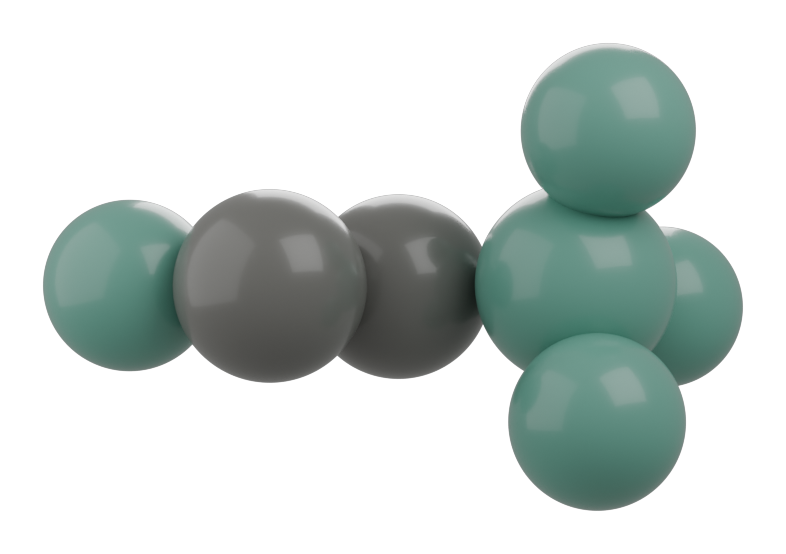
Taurine
PubChem ↗Measured to act on
A transporter that carries amino acids into cells alongside acidity-balancing protons.
Concentrated in parathyroid glandstructure resolved ↗
D-Mannose (genus-associated sugar; included only to carry its verified ChEMBL target, not asserted as the headline Chondrus carrageenan unit)
PubChem ↗Measured to act on
A bacterial surface protein that grips sugar molecules to attach to host surfaces.
Cited science · not claims
Everything we publish about these plants traces to a primary source — the compounds to PubChem, ChEMBL, and BindingDB, the traditional uses to named, dated herbals. We describe what a plant is and what it is understood to nourish — the body’s own systems, structure and function only. We do not claim it treats, cures, or prevents any disease, and nothing here is a substitute for professional care. See our method & sources →
These statements have not been evaluated by the Food and Drug Administration. Not intended to diagnose, treat, cure, or prevent any disease.
Works alongside
Other herbs that share Atlantic Irish Sea Moss's terrain
Different plants reaching the same systems of the body — the convergence our genome engine maps. These nourish the terrain Atlantic Irish Sea Moss supports: