sea-vegetable
Jamaican Purple Sea Moss
Eucheuma cottonii / Gracilaria spp.
Also known as
Suitable For
A premium purple variety from the clear Caribbean coast, its color signaling a high anthocyanin content. Exceptionally rich in iodine and trace minerals, provided as whole dried body for traditional preparation.
What it nourishes in the body
The body systems this herb is traditionally understood to support — resolved through our knowledge graph, where the classical record and modern biology are read together. Structure and function, never a claim of treatment.
Raw, Unconcentrated Powder
Whole-plant. Small-batch. Potent.
Size
How to take it
1 tsp in hot water, tea, or a smoothie, once daily.
Whole plant, never isolated
Concentrated extracts of the whole botanical — the way the body recognizes it.
Cited to measured biology
Every action we describe traces to the compound and its measured target.
Structure & function
We describe what an herb nourishes — never a claim to treat disease.
Secure checkout
Encrypted payment and human verification on every order.
The Sea Vegetable
Jamaican Purple Sea Moss, in depth
Character
Jamaican Purple Sea Moss is a red-algae sea vegetable — *Eucheuma cottonii* and *Gracilaria* species — wild-harvested from the clear, sun-warmed shallows of the Caribbean coast. Where most sea moss arrives in the familiar golden-amber form, the purple variety is distinguished by its deep violet pigmentation, a visible signature of its anthocyanin content: the same family of pigments that color the darkest grapes and berries, here produced by an organism that draws its life directly from seawater and sunlight. This is not a root, a bark, or a flower. It is a whole sea plant — the entire thallus, sun-cured and offered dried, in the unbroken tradition of coastal preparation. It belongs to the apothecary's small and venerable category of sea vegetables, the marine counterparts to terrestrial tonic herbs, prized across maritime cultures precisely because seawater is among the most mineral-rich media on earth and these plants concentrate that wealth into edible form.
In character, sea moss is a foundational nourisher rather than a stimulant or a corrective — a quiet, daily mineral substrate rather than a dramatic actor. Its nature is cooling, moistening, and demulcent: it is rich in soluble gelling polysaccharides that swell into a smooth, mucilaginous gel in water, the very property that has made it both a culinary thickener and a soothing food for generations. Within the GGG NATURAL lineage it occupies the place of the whole-food mineral cornerstone — the sea vegetable one returns to not for a single effect but for the broad, patient density of trace nourishment that underwrites everything else. It carries the ocean's full elemental spectrum in a form the body recognizes as food.
In the Body
Sea moss engages the body first as a whole-food source of trace-mineral density. As a marine alga it concentrates the dissolved mineral wealth of seawater — iodine foremost, alongside a broad spectrum of trace elements — in the bioavailable, food-bound form that the body's own systems are built to recognize and draw upon. Iodine is the element most worth naming: it is an essential mineral that the endocrine system, and the thyroid in particular, requires as raw material to carry out its native work of governing metabolic tempo and energy throughout the body. Sea moss stands among the recognized dietary sources of it (though far gentler than kelp), making this herb a true structural nourisher of the endocrine system — supplying the building block rather than acting upon a gland. This mineral density is also what makes it a quiet support for daily vitality, stamina, and the steady baseline of energy that depends on the body having the elemental raw materials it needs.
Its second mode belongs to its abundant gelling polysaccharides — the soluble carbohydrate matrix that gives sea moss its characteristic gel. These polysaccharides are demulcent and mucilaginous: in water they form a soft, soothing colloid that coats and supports the body's own mucosal surfaces, the moist living linings of the digestive tract. In this way sea moss nourishes the gut and supports the integrity and natural function of the mucosal membranes, while the same soluble matrix acts as a gentle, fibrous substrate within the digestive system. Together these threads — a full marine mineral spectrum feeding the endocrine and metabolic systems, and demulcent polysaccharides toning the digestive and mucosal lining — make sea moss a broad foundational tonic: it does not push any one system, it supplies the elemental and structural nourishment from which the body's own systems draw their resilience, suppleness, and steady vitality. Its purple pigmentation reflects an anthocyanin content, the deeply-colored polyphenol class the body recognizes among its dietary antioxidant nutrients.
The Tradition
Sea moss carries a long lineage as a coastal sea vegetable, woven most famously into the foodways and household traditions of the Caribbean and the North Atlantic. The closely related Irish Moss (*Chondrus crispus*) was a staple of Irish and coastal British practice for centuries — gathered from the tide-line, sun-bleached on stone walls, and simmered into the soothing gels and nourishing preparations recorded in the Old English herbal and domestic traditions that GGG NATURAL carries forward. In Jamaica and across the wider Caribbean it became a cherished tonic vegetable, prepared as a thick gel or steeped drink and valued as a whole-food source of marine nourishment and steady strength. The herbal tradition has always understood sea vegetables as the ocean's tonic foods — concentrated mineral nourishment offered in the form of a whole plant rather than an isolated extract — and the purple Jamaican variety stands within that unbroken maritime practice: wild-harvested, sun-cured, and prepared whole, exactly as the coastal apothecary has done for generations.
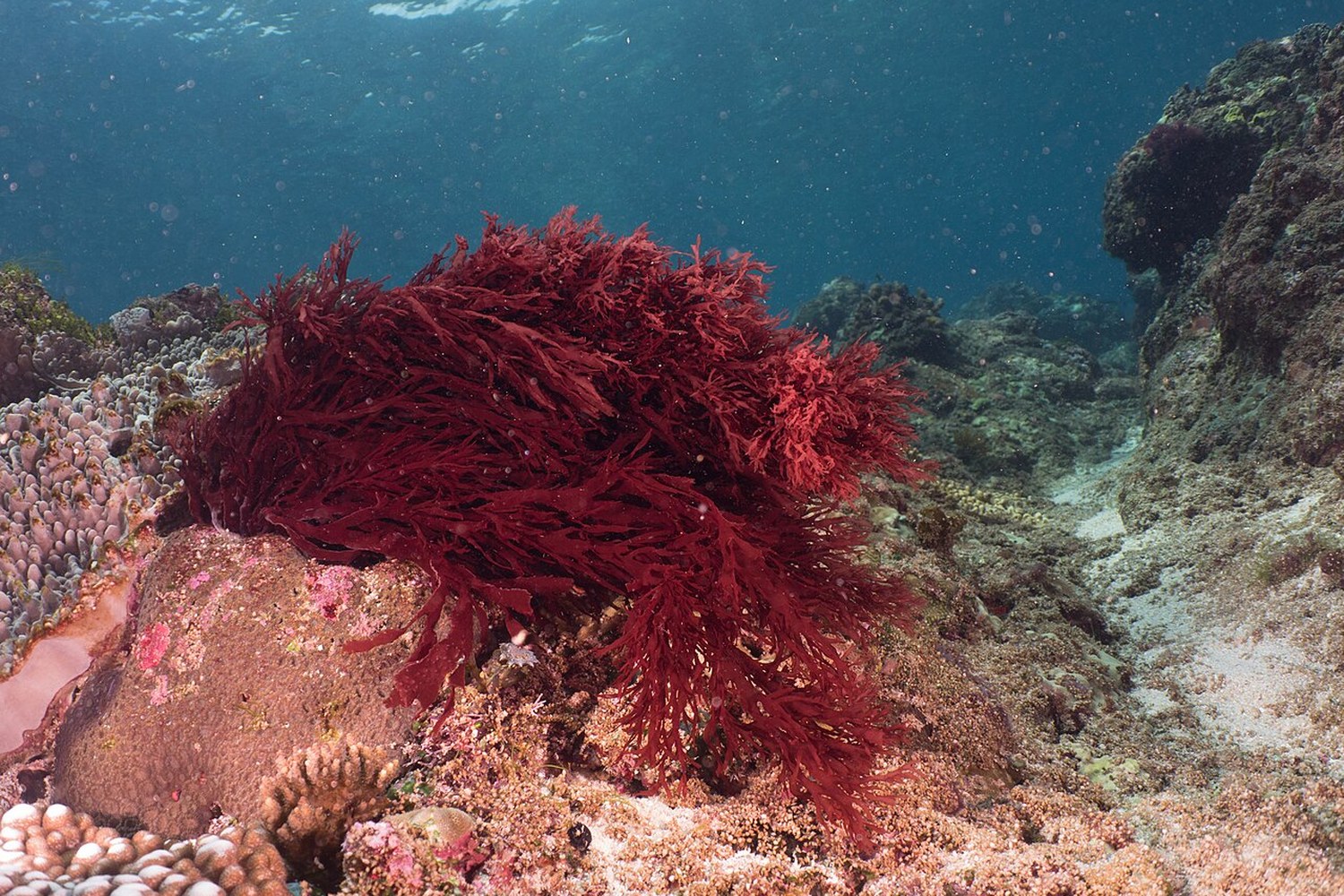
The seaweed
Jamaican Purple Sea Moss,
as it actually grows.
Gracilaria — the warm-water red sea moss raked from tropical reefs and dried to a deep violet, then soaked and blended into the mineral-rich gel of the Caribbean kitchen.
Emoody26 \u00b7 CC BY 3.0 \u00b7 Wikimedia Commons
How to Use
Across the Three Kingdoms
One herb, prepared once, serving people, pets, and plants from a single botanical practice — each with its own measure and care.
People
Benefit
a whole-food source of trace minerals and daily mineral density
How to Use
1 tsp in hot water, tea, or a smoothie, once daily.
Pets
Dogs & companion animals
Benefit
Mineral- and polysaccharide-rich red-algae sea vegetable that supports normal mucosal, thyroid, and gut function as a whole-food tonic.
How to Use
Offer a small amount of the dilute extract or a pinch of powder stirred into food, scaled to body weight (a tiny pinch for cats/small birds, proportionally more for dogs and horses). A few times weekly, not a daily heavy dose.
By Animal
Cats
Non-aromatic red-algae food; well tolerated in tiny pinches. Not a phenol/essential-oil risk.
Dogs
Non-toxic food-grade sea vegetable; well tolerated as a small body-weight-scaled amount.
Horses
Naturally iodine-rich — keep amounts modest; avoid stacking iodine for pregnant mares.
Birds
Seaweed/kelp-type iodine source is fed to parrots in pinch amounts; non-aromatic, so no essential-oil hazard. Rinse-free dilute extract, no added salt.
⚑ Sport horses: Not a named FEI/USEF prohibited substance, but iodine-bearing seaweed supplements are a welfare/labeling concern: feed a documented, tested product and avoid stacking iodine sources before competition; iodine itself is not banned but unknown supplement ingredients can trigger positives.
Safety
Iodine is an essential mineral — the thyroid requires it to make its hormones, and this sea vegetable is a rich natural source (a benefit, not a hazard). Sea moss (Eucheuma cottonii / Gracilaria) is a food-grade red-algae sea vegetable; the ASPCA lists the closely related Irish Moss as non-toxic to cats, dogs, and horses, and the GGG product is a DILUTE extract/powder, not raw concentrated gel. The one inherent caveat is iodine, which is variable in sea moss (though far lower than kelp): start low and keep portions small and intermittent rather than daily heavy dosing. CONDITIONAL caveats (do not by themselves make it unsafe for a healthy animal): avoid or veterinary-supervise in animals with known thyroid disease (hypo- or hyperthyroidism) or in cats predisposed to hyperthyroidism, since added iodine can shift thyroid hormone levels; use caution in pregnant/lactating broodmares and growing foals, who concentrate iodine across the placenta/milk and are most prone to goiter; avoid the raw, fully hydrated concentrated gel form in dogs/cats due to swelling/GI-obstruction risk (the dilute extract does not carry this risk); because seaweeds can accumulate heavy metals/microplastics, source tested material; and because it can add to dietary iodine/mineral load, account for it when other kelp/iodine/mineral supplements are already fed. Discontinue and consult a vet if appetite loss, vomiting, weight change, or lethargy appear.
Source: ASPCA Toxic and Non-Toxic Plants (Irish Moss — non-toxic to cats, dogs, horses, https://www.aspca.org/pet-care/aspca-poison-control/toxic-and-non-toxic-plants/irish-moss); Kentucky Equine Research / HolisticHorse on equine iodine and goiter risk in foals/broodmares; Veterinary Practice News "How Safe Is Kelp For Thyroid Patients?"; PMC kelp/iodine thyrotoxicosis case reports; WebMD Sea Moss monograph; bird/parrot iodine supplementation guidance (BirdSupplies, Morning Bird kelp supplement); FEI Warning re Supplement Use (2015) and FEI Equine Prohibited Substances List.
Plants
Garden, soil & foliage
Benefit
whole-cycle vigor, resilience, and a living root zone
How to Use
Dilute 1/8 to 1/4 teaspoon per gallon of water. Foliar feed at the lighter rate, or soil drench at the fuller rate, about once a month or every other feeding. Used the entire way, through both vegetative growth and bloom.
Best for
Whole cycle — growth & bloomSafety
A dilute extract in the GGG Plants line; always dilute and start light.
Source: GGG Plants line formulation
Structure-and-function guidance for nutrition and vitality. Not intended to diagnose, treat, cure, or prevent any disease. Introduce one botanical at a time and notice how the body responds. Some plants interact with medication; if you are pregnant, nursing, or on a prescription, know the interaction before you begin.
What's inside
Jamaican Purple Sea Moss,
down to the molecule.
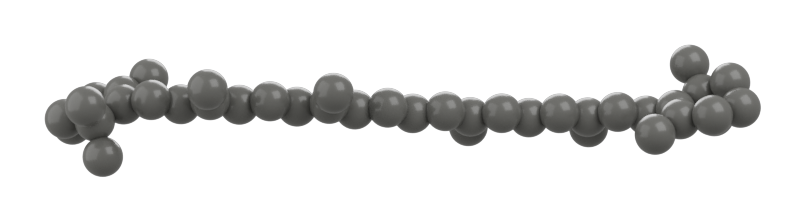
The signature compound of Jamaican Purple Sea Moss, rendered from its real structure in bronze and glass — the precise thing the plant carries, given the dignity it has earned.
The evidence chain
From the plant to the molecule to the body — traced.
Not a claim — a chain. Every link below traces to a primary record. This is what Jamaican Purple Sea Moss is, measured.
The plant
Jamaican Purple Sea Moss
measured to engage
Solute carrier organic anion transporter family member 1B1 · IC50 617nM
BindingDB ↗which governs
A liver transporter that moves compounds into liver cells for processing.
serving the system
Endocrine · Skin
and the tradition independently agrees
Named for these systems in the recorded herbal lineage (Culpeper 1653, TCM, and cross-cultural materia medica) — tradition and the molecule, arrived at separately, converge.
Structure and function only. The chain describes the plant’s characterized chemistry and traditional use — not a claim to treat, cure, or prevent any disease.
How it works
How Jamaican Purple Sea Moss works in the body
A herb is never one thing — it is a community of compounds, each meeting the body in its own way. These are the active molecules in Jamaican Purple Sea Moss and the proteins each one is measured to engage: the precise points where the plant meets your biology. So you see not just that it works, but how.
Taurine
PubChem ↗Measured to act on
A transporter that carries taurine, an amino acid important to heart and eye tissue, into cells.
Concentrated in retinastructure resolved ↗
beta-Carotene
PubChem ↗Measured to act on
A liver transporter that moves compounds from the blood into liver cells for processing.
Concentrated in liverstructure resolved ↗
A liver transporter that carries compounds out of the blood for the liver to handle.
Concentrated in liverstructure resolved ↗
Measured in the lab
Real measurements from binding studies. A tighter fit means the compound meets its target more readily — the figure in grey is the actual measured value.
Binds tightly to Solute carrier organic anion transporter family member 1B1 · Ki 340 nM
Binds to Solute carrier organic anion transporter family member 1B3 · Ki 2.26 µM
Cited science · not claims
Everything we publish about these plants traces to a primary source — the compounds to PubChem, ChEMBL, and BindingDB, the traditional uses to named, dated herbals. We describe what a plant is and what it is understood to nourish — the body’s own systems, structure and function only. We do not claim it treats, cures, or prevents any disease, and nothing here is a substitute for professional care. See our method & sources →
These statements have not been evaluated by the Food and Drug Administration. Not intended to diagnose, treat, cure, or prevent any disease.
Works alongside
Other herbs that share Jamaican Purple Sea Moss's terrain
Different plants reaching the same systems of the body — the convergence our genome engine maps. These nourish the terrain Jamaican Purple Sea Moss supports: