root
Cistanche
Cistanche deserticola
Also known as
Suitable For
A desert succulent rich in echinacoside and acteoside — phenylethanoid compounds studied for their support of vitality and healthy aging. A revered kidney and longevity tonic.
What it nourishes in the body
The body systems this herb is traditionally understood to support — resolved through our knowledge graph, where the classical record and modern biology are read together. Structure and function, never a claim of treatment.
10:1 Concentrated Extract
Whole-plant. Small-batch. Potent.
How to take it
1/4 tsp (up to 1 tsp) in hot water, tea, coffee, a smoothie, or food, once daily — begin with light doses; our extracts are very potent.
Whole plant, never isolated
Concentrated extracts of the whole botanical — the way the body recognizes it.
Cited to measured biology
Every action we describe traces to the compound and its measured target.
Structure & function
We describe what an herb nourishes — never a claim to treat disease.
Secure checkout
Encrypted payment and human verification on every order.
The Botanical
Cistanche, in depth
Character
Cistanche deserticola is a parasitic desert succulent — a fleshy, scale-clad stem that draws its life from the roots of saxaul shrubs buried in the shifting sands of Mongolia and Xinjiang. Where almost nothing else endures, Cistanche thickens into a dense, sweet, oil-dark column beneath the dunes; the part we extract is that succulent stem, though by nature and tradition it belongs to the great family of grounding root-tonics. Tradition named it 肉苁蓉 (Rou Cong Rong) — "the fleshy, yielding, unhurried one" — and the herbalists of the steppe called it the ginseng of the desert. It carries the signature of its origin: a plant that builds deep reserves, holds them against scarcity, and gives them up slowly. That is its entire character — quiet, foundational, enduring vitality rather than stimulant fire.
In the GGG NATURAL apothecary, Cistanche sits among the longevity roots: a sweet, warming, deeply nourishing tonic offered as a potent 10:1 extract. It is not a sharp herb or a quick one. It is a builder — a botanical chosen for the long arc of vitality, stamina, and graceful aging, the kind of plant a tradition reserves for restoring what time and sustained effort draw down.
In the Body
Cistanche is, above all, a tonic for the body's Kidney system — in the herbal tradition the seat of deep reserve, endurance, and the foundational vitality that underwrites stamina and resilient aging. It works there not as a spark but as nourishment, supporting the systems that govern energy at its root: the kidney-adrenal axis, the body's drive and endurance, and its capacity to hold strength over the long term. The way our material is prepared matters: a water extraction concentrates the soluble constituents that define this plant, so what reaches the body is the true tonic fraction rather than aromatic noise.
The chemistry of Cistanche is unusually well-characterized. The plant is dominated by phenylethanoid glycosides — a class of water-soluble polyphenolic compounds it accumulates in abundance, exemplified by the well-documented echinacoside and acteoside (verbascoside). These are joined by iridoids and a generous fraction of oligosaccharides and polysaccharides. The phenylethanoid glycosides are the plant's antioxidant architecture — the molecular class through which it nourishes the body's own systems for managing oxidative balance, supporting the terrain that keeps vitality, clarity, and tissue resilience intact across the arc of aging. The oligosaccharides act as gentle, fermentable nourishment for the lower digestive tract, supporting the hindgut's natural ecology and the body's own unhurried rhythm of elimination — the quality the old name "yielding" describes. Together these classes make Cistanche a structure-and-function tonic in the fullest sense: it does not push the body, it feeds the systems — kidney-adrenal reserve, energy, endurance, and the body's innate antioxidant intelligence — so they can do their own work.
The Tradition
Cistanche is one of the venerable tonics of classical East Asian herbalism, recorded in the early materia medica and ranked among the superior, daily-use restoratives — the class of herbs taken not for a passing complaint but to build and preserve deep vitality over a lifetime. As 肉苁蓉 it earned its enduring epithet, the ginseng of the desert, and held a fixed place among the kidney-and-longevity tonics, prized for nourishing foundational reserve, supporting stamina and endurance, and for its characteristically gentle, moistening, unhurried action on the lower body. The herbalists of Mongolia and the northwestern deserts, where the plant grows wild beneath the saxaul, carried this use into their own steppe traditions. It is this lineage of recorded, long-tested practice — not novelty — that GGG NATURAL carries forward in offering Cistanche as a grounding tonic of vitality and graceful aging.
The desert stalk
Cistanche,
as it actually grows.
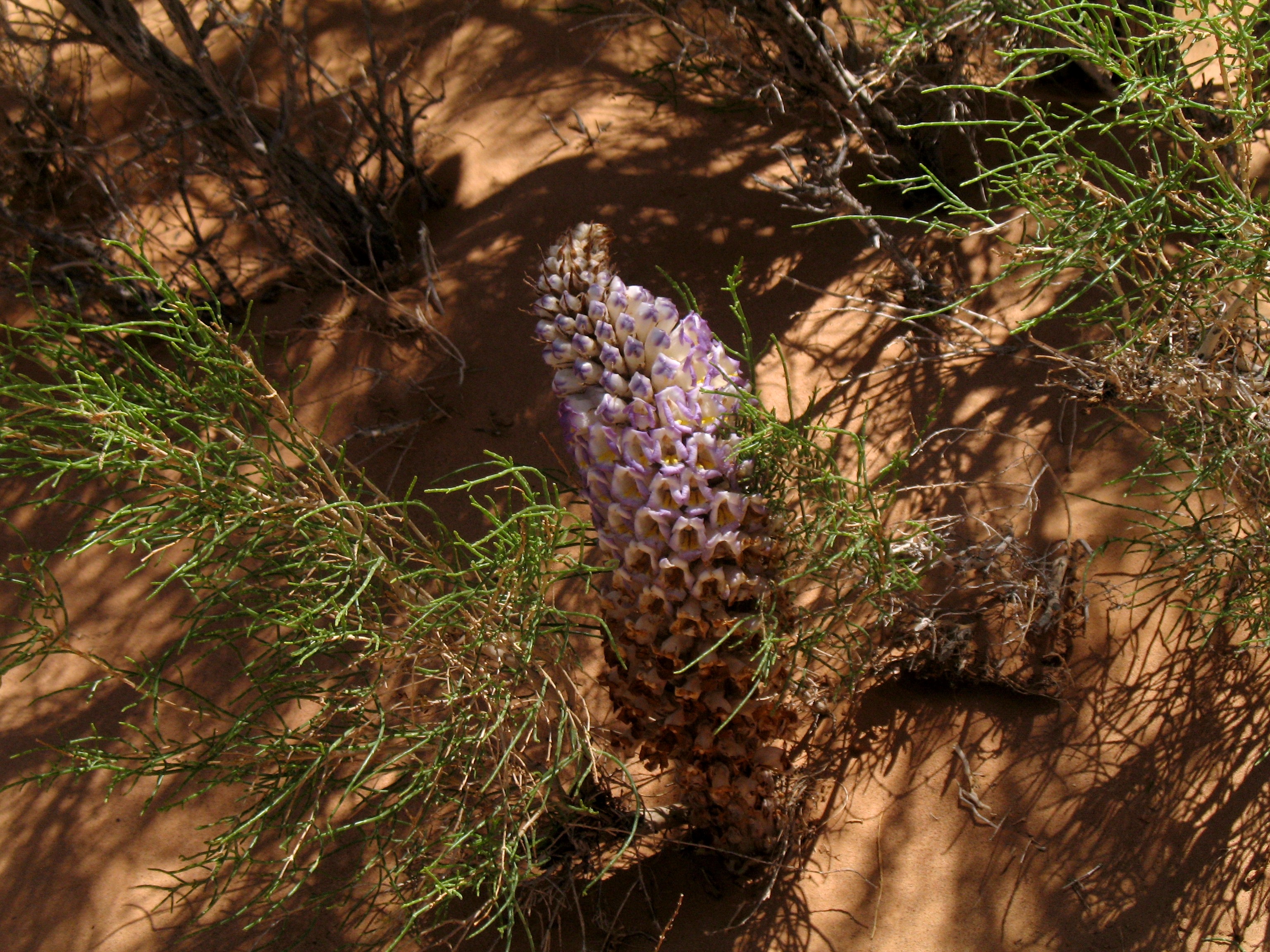
Cistanche deserticola — rou cong rong, the fleshy scaled stalk that lives rootless on desert shrubs of the Gobi, gathered as a warming tonic in the old materia medica.
Yanish E · CC BY 4.0 · Wikimedia Commons
How to Use
Across the Three Kingdoms
One herb, prepared once, serving people, pets, and plants from a single botanical practice — each with its own measure and care.
People
Benefit
immune resilience and deep, daily vitality — plus kidney and adrenal support
How to Use
1/4 tsp (up to 1 tsp) in hot water, tea, coffee, a smoothie, or food, once daily — begin with light doses; our extracts are very potent.
Pets
Dogs & companion animals
Benefit
Adaptogenic "ginseng of the desert" root tonic supporting vitality, stamina, and healthy aging.
How to Use
Offer a small pinch of the dilute water-extract powder mixed into food, scaled to body weight (a fraction of the human serving for small pets), starting low and given a few times weekly.
By Animal
Cats
No ASPCA/feline toxicity on record; dilute water extract is PhG-based with negligible volatile oils. Use raw/concentrated aromatic forms cautiously (reduced glucuronidation).
Dogs
Well-tolerated tonic root; high NOAEL in rodent toxicology, no canine-specific toxicity. Gentle laxative at higher doses — keep portion small.
Horses
No ASPCA equine toxicity; not an iodine/glycyrrhizin source. Hindgut-friendly oligosaccharides, but introduce slowly to avoid loose manure.
Birds
No documented avian toxicity; aqueous extract carries only trace volatile oils, so aromatic-oil sensitivity is low. Avoid concentrated/raw aromatic forms.
⚑ Sport horses: Caution for FEI/USEF sport horses: echinacoside is a documented growth-hormone secretagogue and Cistanche phenylethanoid glycosides are CNS/neuroactive — not specifically cleared, so treat as a potential controlled/prohibited-substance risk and observe withdrawal before competition.
Safety
Cistanche deserticola has an excellent tolerability record: a 90-day rat feeding study set a no-observed-adverse-effect level around 7.8-8.0 g/kg body weight with no toxicity, and 28-day repeated-dose and genotoxicity studies were clean; EFSA reviewed a related Cistanche tubulosa water extract as a Novel Food. Start low and titrate — at high doses humans/animals can get transient loose stool or mild abdominal discomfort, and the herb is traditionally a gentle laxative (rich in oligosaccharides/iridoids) so reduce the dose if stool softens. For pregnant, nursing, or medicated animals, use only under veterinary direction. The water extract is dominated by water-soluble phenylethanoid glycosides (echinacoside, acteoside/verbascoside) with only trace volatile oils, so the aromatic-oil concern for cats (limited glucuronidation) and birds is minimal in this dilute aqueous form — but use any aromatic-rich raw or concentrated form cautiously in cats and birds. Echinacoside has documented growth-hormone-secretagogue and neuroactive (PhG) activity; use caution alongside hormone-modulating, anticoagulant/antiplatelet, or CNS-active medications and pause before surgery. Use cautiously in animals with pre-existing kidney or liver disease and introduce under veterinary guidance. Not in the ASPCA toxic-plant database for any species, so classes reflect a food-grade tonic default rather than a documented hazard.
Source: ASPCA Animal Poison Control toxic/non-toxic plant database (cats/dogs/horses — Cistanche not listed); Li et al., 90-day feeding safety assessment of powdered Cistanche deserticola in SD rats, PubMed 27788603 (NOAEL ~7.8-8.0 g/kg); EFSA NDA Panel, safety of Cistanche tubulosa stem water extract as a Novel Food (PMC7810154); Memoregain genotoxicity + 28-day repeated-dose study (ScienceDirect S0278691518303867); Herba Cistanche phytochemistry/pharmacology review (J-Stage CPB 68(8) c20-00057; PMC4771771); FEI/USEF Equine Prohibited Substances Lists.
Plants
Garden, soil & foliage
Benefit
vegetative vigor, strong rooting, and resilient new growth
How to Use
Dilute 1/8 to 1/4 teaspoon per gallon of water. Foliar feed at the lighter rate, or soil drench at the fuller rate, about once a month or every other feeding. Best worked in through vegetative growth, as the plant builds leaf, stem, and root.
Best for
Vegetative growthSafety
A dilute extract in the GGG Plants line; always dilute and start light.
Source: GGG Plants line formulation
Structure-and-function guidance for nutrition and vitality. Not intended to diagnose, treat, cure, or prevent any disease. Introduce one botanical at a time and notice how the body responds. Some plants interact with medication; if you are pregnant, nursing, or on a prescription, know the interaction before you begin.
What's inside
Cistanche,
down to the molecule.
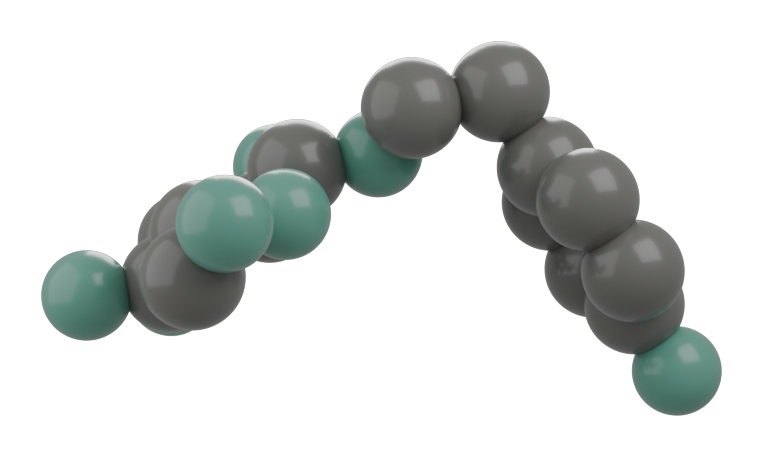
The signature compound of Cistanche, rendered from its real structure in bronze and glass — the precise thing the plant carries, given the dignity it has earned.
The evidence chain
From the plant to the molecule to the body — traced.
Not a claim — a chain. Every link below traces to a primary record. This is what Cistanche is, measured.
The plant
Cistanche
serving the system
Kidney · Nervous
and the tradition independently agrees
Named for these systems in the recorded herbal lineage (Culpeper 1653, TCM, and cross-cultural materia medica) — tradition and the molecule, arrived at separately, converge.
Structure and function only. The chain describes the plant’s characterized chemistry and traditional use — not a claim to treat, cure, or prevent any disease.
How it works
How Cistanche works in the body
A herb is never one thing — it is a community of compounds, each meeting the body in its own way. These are the active molecules in Cistanche and the proteins each one is measured to engage: the precise points where the plant meets your biology. So you see not just that it works, but how.
Echinacoside
PubChem ↗Measured to act on
The enzyme that makes melanin, the pigment that gives skin and hair their color.
Acteoside / Verbascoside
PubChem ↗Measured to act on
An enzyme in brain cells that cuts certain membrane proteins as part of normal cellular processing.
Concentrated in pancreas, brainstructure resolved ↗
An enzyme that processes the amino acid arginine, governing nitrogen handling within cells.
A signaling enzyme that relays messages inside cells, influencing growth and communication.
Concentrated in brainstructure resolved ↗
The enzyme that drives the body's inflammatory response, producing the messengers behind swelling.
Concentrated in urinary bladder, seminal vesicle, bone marrowstructure resolved ↗
A viral enzyme that splices viral genetic material into a host cell's own DNA.
An enzyme that removes marks from DNA-packaging proteins, helping decide which genes stay active.
The enzyme that makes melanin, the pigment that gives skin and hair their color.
Salidroside
PubChem ↗Measured to act on
An enzyme that breaks down certain neurotransmitters, helping balance brain-signaling chemicals.
Concentrated in liverstructure resolved ↗
An enzyme that makes prostaglandins for everyday housekeeping, like protecting the stomach lining.
Concentrated in urinary bladder, skin 1, intestinestructure resolved ↗
An enzyme that cuts RNA when it pairs with DNA, part of normal genetic maintenance.
Measured in the lab
Real measurements from binding studies. A tighter fit means the compound meets its target more readily — the figure in grey is the actual measured value.
Binds tightly to Amine oxidase [flavin-containing] B · IC50 810 nM
Betaine (glycine betaine)
PubChem ↗Measured to act on
An enzyme that recycles homocysteine into methionine, part of the body's methylation chemistry.
Concentrated in liver, kidneystructure resolved ↗
Cited science · not claims
Everything we publish about these plants traces to a primary source — the compounds to PubChem, ChEMBL, and BindingDB, the traditional uses to named, dated herbals. We describe what a plant is and what it is understood to nourish — the body’s own systems, structure and function only. We do not claim it treats, cures, or prevents any disease, and nothing here is a substitute for professional care. See our method & sources →
These statements have not been evaluated by the Food and Drug Administration. Not intended to diagnose, treat, cure, or prevent any disease.
Works alongside
Other herbs that share Cistanche's terrain
Different plants reaching the same systems of the body — the convergence our genome engine maps. These nourish the terrain Cistanche supports: