root
Red Asparagus
Asparagus officinalis (red variety)
Also known as
Suitable For
A rare red-pigmented asparagus root, its color signaling a concentrated antioxidant and nutrient profile. Supports kidney function and reproductive vitality.
What it nourishes in the body
The body systems this herb is traditionally understood to support — resolved through our knowledge graph, where the classical record and modern biology are read together. Structure and function, never a claim of treatment.
10:1 Concentrated Extract
Whole-plant. Small-batch. Potent.
How to take it
1/4 tsp (up to 1 tsp) in hot water, tea, coffee, a smoothie, or food, once daily — begin with light doses; our extracts are very potent.
Whole plant, never isolated
Concentrated extracts of the whole botanical — the way the body recognizes it.
Cited to measured biology
Every action we describe traces to the compound and its measured target.
Structure & function
We describe what an herb nourishes — never a claim to treat disease.
Secure checkout
Encrypted payment and human verification on every order.
The Botanical
Red Asparagus, in depth
Character
Red Asparagus is a rare, red-pigmented root of Asparagus officinalis — the cultivated asparagus carried into its tonic form rather than its garden one. Where the spear is the plant's spring offering, the root is its reservoir: the deep, fleshy storehouse the plant draws on to send up vigor year after year. The crimson hue is not ornament but signal, the mark of a concentrated pigment and nutrient profile laid down in the root's tissues. Prepared by GGG NATURAL as a 10:1 extract, it carries a frankly sweet flavor — in the herbal grammar, sweetness is the taste of nourishment and replenishment, the building register rather than the draining one. This is a root for vitality in the truest sense: energy, stamina, and endurance held not as a stimulant's spike but as a tonic's steady reserve.
In the East Asian materia medica it sits under the name 赤天门冬, within the lineage of asparagus-root tonics prized as moistening, replenishing roots — the kind of botanical kept for those drawn-down states where the body's deep reserves want refilling rather than pushing. It belongs squarely to the tonic class: a grounding, restorative root rather than an acute or stimulating one, formulated in the GGG energy lineage alongside the great replenishing roots and carried across all three of our kingdoms — taken by People for stamina, given to animals as a gentle wellness tonic, and field-proven in the GGG Plants line as a dilute tonic for vigor, rooting, and resilience.
In the Body
Red Asparagus speaks first to the kidney and adrenal axis — the body's deep-reserve system, the seat of stamina, endurance, and the slow-burning vitality that carries a person through sustained demand. In the herbal reading it is a root that nourishes this foundation rather than whipping it, supporting the body's own capacity for steady energy and tone over time. Through that same kidney terrain it supports normal, healthy urinary flow and the body's natural water-balance, and it touches the reproductive vitality that the herbal tradition has always linked to well-tended kidney reserves.
The molecular character of asparagus root is well established. It is rich in steroidal saponins — the spirostanol and furostanol glycosides that give asparagus roots their tonic reputation — alongside fructan and inulin-type polysaccharides, the storage carbohydrates that double as gentle prebiotic fiber feeding the body's own gut ecology. The red pigmentation marks a concentrated load of flavonoids and other polyphenols, the plant's own antioxidant architecture, supporting the body's natural resilience against everyday oxidative stress. Layered over this are the nutritive building blocks the whole asparagus plant is known for — vitamins A, C, E, K, and folate, with the minerals and fiber that supply raw material to the body's renewal. These are not actors imposing an effect; they are substrate and signal that the body's own systems — adrenal reserve, urinary balance, the body's healthy inflammatory response and the oxidative housekeeping that runs beneath conscious notice — take up and put to work, which is precisely how a tonic nourishes the body's intelligence rather than overriding it.
The Tradition
Asparagus root holds a long double lineage. In classical TCM the asparagus roots stand among the moistening, replenishing tonics — sweet, restorative roots kept for depletion and for the deep reserves the tradition seats in the kidneys; this red-pigmented form is carried under the name 赤天门冬 within that family. In the European stream, asparagus runs from the kitchen garden into the herbals as a recognized supporter of the body's water-passages and urinary flow, the property Culpeper and the Old English herbalists noted in the cooked root and shoot alike. GGG NATURAL carries this tonic inheritance forward as a concentrated 10:1 root extract within its energy lineage — and, true to a single apothecary serving all three kingdoms, has field-proven the same root as a dilute tonic for plant vigor and rooting in the GGG Plants line.
The spear
Red Asparagus,
as it actually grows.
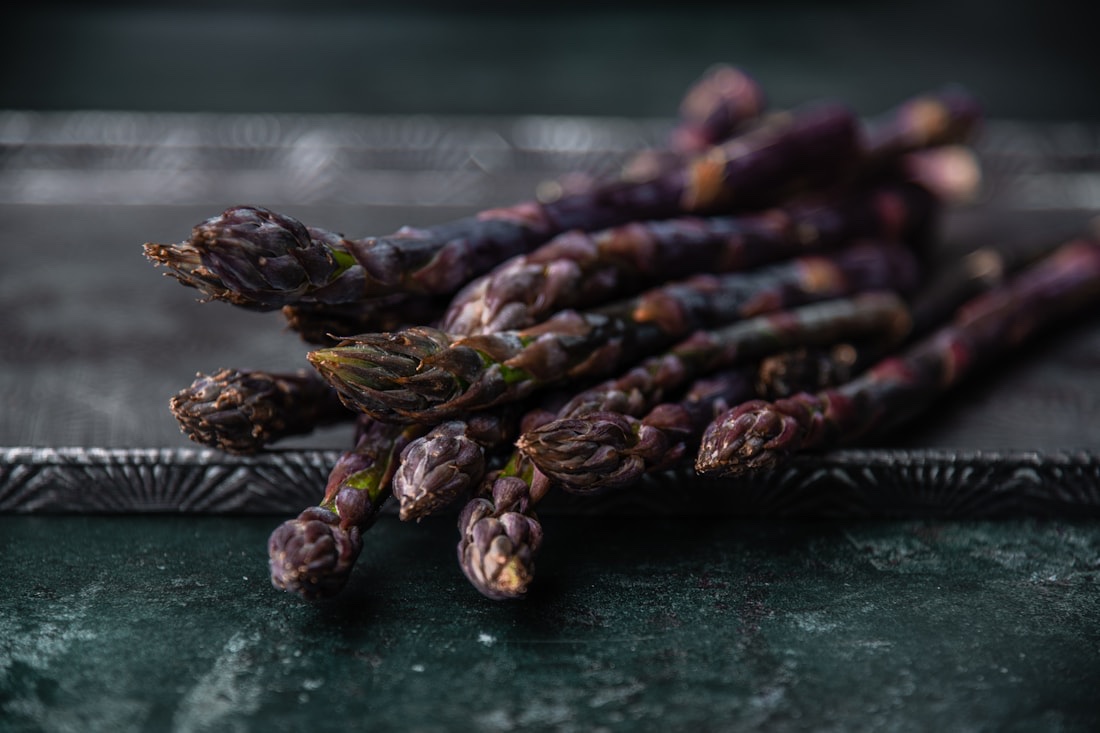
Asparagus officinalis — the purple-speared variety of garden asparagus, its tender shoots flushed with anthocyanins; a prized spring vegetable across Europe and Asia, sweeter and more delicate than the green.
How to Use
Across the Three Kingdoms
One herb, prepared once, serving people, pets, and plants from a single botanical practice — each with its own measure and care.
People
Benefit
natural energy, stamina, and endurance — plus kidney and adrenal support
How to Use
1/4 tsp (up to 1 tsp) in hot water, tea, coffee, a smoothie, or food, once daily — begin with light doses; our extracts are very potent.
Pets
Dogs & companion animals
Benefit
Supports normal urinary flow and supplies vitamins A, C, E, K, folate and fiber as a gentle wellness tonic.
How to Use
Add a small amount of the dilute extract/powder to food, scaled to body weight; start with a pinch for small pets and a modest measure for larger animals, given occasionally rather than daily.
By Animal
Cats
Garden asparagus is non-toxic to cats per ASPCA (only the asparagus fern is listed); dilute extract well-tolerated as an occasional tonic.
Dogs
AKC/PetMD/ASPCA: edible asparagus is safe and non-toxic for dogs; raw-spear choking risk is moot in a dilute extract/powder.
Horses
Garden asparagus is not on the ASPCA toxic-to-horses list and is not known to be toxic; small amounts of the dilute tonic are well-tolerated.
Birds
Well tolerated as a dilute, body-weight-scaled tonic; introduce gradually, starting with a small amount.
⚑ Sport horses: none — food-grade Asparagus officinalis contains no FEI/USEF prohibited substance and does not appear on the FEI Equine Prohibited Substances List; verify the finished GGG product carries no added prohibited adjuncts.
Safety
This rating is for GGG's DILUTE hot-water extract/powder of edible GARDEN asparagus (Asparagus officinalis) in a healthy animal at moderate use — NOT the ornamental "asparagus fern" (A. densiflorus / A. setaceus), which is the only asparagus on the ASPCA toxic list (allergic dermatitis on repeat skin contact; berries cause GI upset) and must never be substituted. Raw whole-spear cautions (choking, tough fiber, GI gas) largely fall away for a dilute extract, but introduce any new tonic slowly and start low to confirm tolerance. Asparagus is a mild natural diuretic and is high in purines and potassium: use extra caution and veterinary guidance in animals with kidney disease, urinary/oxalate-stone history, heart/fluid-balance conditions, or those on diuretics, ACE inhibitors, or potassium-sparing drugs, where increased urinary output or potassium load could matter. As with any diuretic/vitamin-K-containing plant, coordinate with your vet for pregnant, lactating, or chronically ill animals, those on anticoagulant (warfarin-type) or other long-term medication, or any animal scheduled for surgery; these are conditional caveats and do not change the per-species rating for a healthy animal. Avoid canned/seasoned asparagus products (added salt/preservatives) for all species, especially birds. Stop and consult a veterinarian if vomiting, diarrhea, or lethargy occurs.
Source: ASPCA Toxic and Non-Toxic Plant Database (cats/dogs/horses lists; "Asparagus Fern" Asparagus densiflorus is the listed toxic species, garden A. officinalis is not listed); AKC "Can Dogs Eat Asparagus?"; PetMD; FEI Equine Prohibited Substances List / USEF Drugs & Medications (no listing for food-grade asparagus).
Plants
Garden, soil & foliage
Benefit
vegetative vigor, strong rooting, and resilient new growth
How to Use
Dilute 1/8 to 1/4 teaspoon per gallon of water. Foliar feed at the lighter rate, or soil drench at the fuller rate, about once a month or every other feeding. Best worked in through vegetative growth, as the plant builds leaf, stem, and root.
Best for
Vegetative growthSafety
A dilute extract in the GGG Plants line; always dilute and start light.
Source: GGG Plants line formulation
Structure-and-function guidance for nutrition and vitality. Not intended to diagnose, treat, cure, or prevent any disease. Introduce one botanical at a time and notice how the body responds. Some plants interact with medication; if you are pregnant, nursing, or on a prescription, know the interaction before you begin.
What's inside
Red Asparagus,
down to the molecule.
The signature compound of Red Asparagus, rendered from its real structure in bronze and glass — the precise thing the plant carries, given the dignity it has earned.
The evidence chain
From the plant to the molecule to the body — traced.
Not a claim — a chain. Every link below traces to a primary record. This is what Red Asparagus is, measured.
The plant
Red Asparagus
which governs
A liver-family enzyme that helps the body break down compounds, including hormones and environmental substances.
serving the system
Kidney · Liver
and the tradition independently agrees
Named for these systems in the recorded herbal lineage (Culpeper 1653, TCM, and cross-cultural materia medica) — tradition and the molecule, arrived at separately, converge.
Structure and function only. The chain describes the plant’s characterized chemistry and traditional use — not a claim to treat, cure, or prevent any disease.
How it works
How Red Asparagus works in the body
A herb is never one thing — it is a community of compounds, each meeting the body in its own way. These are the active molecules in Red Asparagus and the proteins each one is measured to engage: the precise points where the plant meets your biology. So you see not just that it works, but how.
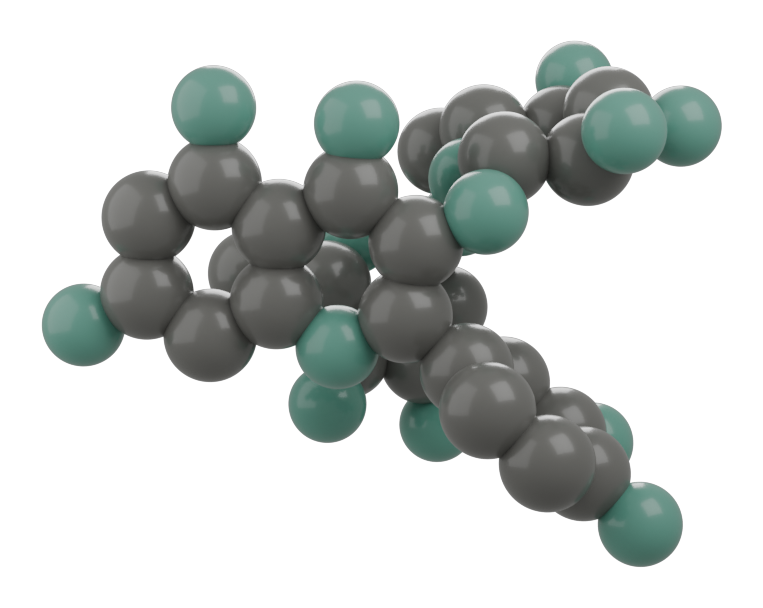
Quercetin
PubChem ↗Measured to act on
A liver-family enzyme that helps the body break down compounds, including hormones and environmental substances.
An enzyme involved in breaking down fatty acids for energy inside the cell's mitochondria.
A signaling enzyme involved in cell survival and growth.
Concentrated in bone marrowstructure resolved ↗
A cellular pump that moves a wide range of compounds out of cells.
Concentrated in intestinestructure resolved ↗
The enzyme that produces uric acid as the body breaks down purines from cells and food.
Concentrated in liver, intestine, breaststructure resolved ↗
The enzyme that converts androgens into estrogens, balancing the body's sex hormones.
Concentrated in placentastructure resolved ↗
A receptor that receives growth signals telling cells when to divide and renew.
Concentrated in placentastructure resolved ↗
An enzyme that converts fatty acids into messengers of the inflammatory response.
Concentrated in lymphoid tissue, lungstructure resolved ↗
An enzyme that converts excess glucose into sorbitol, part of normal sugar metabolism.
Concentrated in adrenal glandstructure resolved ↗
Measured in the lab
Real measurements from binding studies. A tighter fit means the compound meets its target more readily — the figure in grey is the actual measured value.
Binds very tightly to Amine oxidase [flavin-containing] A · IC50 10 nM
Binds very tightly to Aromatase · IC50 12 nM
Binds very tightly to Aldo-keto reductase family 1 member B1 · IC50 14.8 nM
Binds very tightly to Enoyl-acyl-carrier protein reductase · Ki 22 nM
Binds very tightly to Cytochrome P450 1B1 · Ki 23 nM
Binds very tightly to Serine/threonine-protein kinase pim-1 · Kd 25 nM
— and 108 more measured targets, each traced to its source.
Kaempferol
PubChem ↗Measured to act on
An enzyme that helps convert and balance active sex-hormone levels in tissues.
Concentrated in intestine, placenta, liverstructure resolved ↗
A liver enzyme that processes caffeine and many other compounds the body takes in.
Concentrated in liverstructure resolved ↗
A liver and lung enzyme that helps the body process and clear certain compounds.
Concentrated in liver, urinary bladderstructure resolved ↗
A liver-family enzyme that helps the body break down compounds, including hormones and environmental substances.
A liver enzyme that helps break down and process many compounds and natural substances.
Concentrated in liverstructure resolved ↗
A sensor that detects environmental and dietary compounds and tunes the body's response.
The copper enzyme that makes melanin, the pigment that colors skin and hair.
Concentrated in skin 1structure resolved ↗
An enzyme that trims small signaling peptides, part of how the body regulates blood-sugar hormones.
Concentrated in parathyroid gland, intestine, placenta, prostatestructure resolved ↗
Measured in the lab
Real measurements from binding studies. A tighter fit means the compound meets its target more readily — the figure in grey is the actual measured value.
Binds very tightly to Carbonic anhydrase 7 · Ki 25 nM
Binds very tightly to Aryl hydrocarbon receptor · IC50 28 nM
Binds very tightly to Cytochrome P450 1B1 · Ki 43 nM
Binds tightly to CDGSH iron-sulfur domain-containing protein 1 · Ki 132 nM
Binds tightly to Carbonic anhydrase 12 · Ki 146 nM
Binds tightly to Casein kinase II subunit alpha 3 · Ki 210 nM
— and 35 more measured targets, each traced to its source.
Rutin
PubChem ↗Measured to act on
The enzyme that clears acetylcholine, the messenger that carries nerve signals to muscles.
Concentrated in skeletal muscle, brain, tonguestructure resolved ↗
An enzyme that cleaves certain proteins as part of normal cellular processing.
Concentrated in pancreas, brainstructure resolved ↗
A nuclear protein that helps organize DNA and signals when cells are stressed.
Measured in the lab
Real measurements from binding studies. A tighter fit means the compound meets its target more readily — the figure in grey is the actual measured value.
Binds very tightly to Tyrosinase · IC50 0.856 nM
Binds very tightly to Beta-secretase 1 · IC50 3.8 nM
Binds very tightly to Acetylcholinesterase · IC50 12 nM
Binds very tightly to Muscarinic acetylcholine receptor M5 · Ki 35.13 nM
Binds to Neuromedin-U receptor 2 · EC50 1.2 µM
Binds to Genome polyprotein · IC50 2.1 µM
— and 5 more measured targets, each traced to its source.
Ferulic acid
PubChem ↗Measured to act on
A widely active enzyme that adds phosphate tags to guide many cellular processes.
A small brain protein involved in how nerve cells package and release their signals.
Concentrated in brain, bone marrowstructure resolved ↗
Measured in the lab
Real measurements from binding studies. A tighter fit means the compound meets its target more readily — the figure in grey is the actual measured value.
Binds tightly to Siderophore-binding protein · Ki 360 nM
Binds tightly to Casein kinase II subunit alpha 3 · Ki 410 nM
Binds tightly to Alpha-synuclein · IC50 750 nM
Binds to Carbonic anhydrase 2 · Ki 2.4 µM
Binds to Carbonic anhydrase 1 · Ki 2.89 µM
Binds to Carbonic anhydrase 5A, mitochondrial · Ki 7.04 µM
— and 7 more measured targets, each traced to its source.
Cyanidin
PubChem ↗Measured to act on
A blood protein that, when activated, helps form clots to seal injuries.
Concentrated in liverstructure resolved ↗
Measured in the lab
Real measurements from binding studies. A tighter fit means the compound meets its target more readily — the figure in grey is the actual measured value.
Binds to Dipeptidyl peptidase 4 · IC50 1.41 µM
Sarsasapogenin
PubChem ↗Measured to act on
A liver transporter that draws compounds from the blood into liver cells.
Concentrated in liverstructure resolved ↗
A liver transporter that helps usher substances into the liver for processing.
Concentrated in liverstructure resolved ↗
Cited science · not claims
Everything we publish about these plants traces to a primary source — the compounds to PubChem, ChEMBL, and BindingDB, the traditional uses to named, dated herbals. We describe what a plant is and what it is understood to nourish — the body’s own systems, structure and function only. We do not claim it treats, cures, or prevents any disease, and nothing here is a substitute for professional care. See our method & sources →
These statements have not been evaluated by the Food and Drug Administration. Not intended to diagnose, treat, cure, or prevent any disease.
Works alongside
Other herbs that share Red Asparagus's terrain
Different plants reaching the same systems of the body — the convergence our genome engine maps. These nourish the terrain Red Asparagus supports: