mushroom
Cordyceps
Cordyceps militaris
Also known as
Suitable For
Cordyceps militaris, cultivated for its cordycepin and adenosine content. Studied for its support of cellular ATP production and oxygen utilization — the reason it is favored by endurance athletes for stamina and aerobic capacity.
What it nourishes in the body
The body systems this herb is traditionally understood to support — resolved through our knowledge graph, where the classical record and modern biology are read together. Structure and function, never a claim of treatment.
10:1 Concentrated Extract
Whole-plant. Small-batch. Potent.
How to take it
1/4 tsp (up to 1 tsp) in hot water, tea, coffee, a smoothie, or food, once daily — begin with light doses; our extracts are very potent.
Whole plant, never isolated
Concentrated extracts of the whole botanical — the way the body recognizes it.
Cited to measured biology
Every action we describe traces to the compound and its measured target.
Structure & function
We describe what an herb nourishes — never a claim to treat disease.
Secure checkout
Encrypted payment and human verification on every order.
The Fungus
Cordyceps, in depth
Character
Cordyceps militaris is one of the most singular organisms in the entire materia medica — a brilliant orange tonic mushroom that, in its wild form, emerges from the high-altitude meadows of the Tibetan plateau and the mountains of China and Nepal, where it has been gathered as a rare tonic for centuries. What GGG NATURAL carries is the cultivated fruiting body: grown deliberately and food-grade, prized for a compound profile that the wild specimen and its laboratory-raised counterpart share. Among the great fungal tonics, Cordyceps occupies the seat of vitality and stamina. Where Lion's Mane is the scholar of clarity and Reishi the guardian of the immune terrain, Cordyceps is the athlete's mushroom — the botanical that herbalists reach for when the body asks not for calm but for capacity, for the deep, sustained energy that carries a body through exertion and recovers it afterward.
Its character is warm, savory, and quietly potent. This is a tonic in the truest classical sense: not a stimulant that borrows tomorrow's energy to spend today, but a nourishing food that supports the body's own machinery of endurance. It is favored by endurance athletes for precisely this reason — it does not push the body, it feeds the systems the body uses to push itself. Our extract is a concentrated fruiting-body preparation, and because it is genuinely potent, the tradition with Cordyceps is to begin light and build — a small daily measure stirred into hot water, tea, coffee, or food, allowing the body to recognize and integrate it over time.
In the Body
Cordyceps is cultivated specifically for its cordycepin and adenosine content — two nucleoside compounds that sit at the heart of how the body generates and spends energy at the cellular level. Adenosine is a structural cornerstone of ATP, the molecule every cell uses as its energy currency; the established interest in Cordyceps centers on how its nucleoside profile supports the body's own healthy production and utilization of cellular ATP, and its natural use of oxygen during exertion. This is the molecular reason the mushroom is the endurance athlete's tonic: it nourishes the very systems — energetic and respiratory — through which the body sustains aerobic capacity, stamina, and recovery. The framing matters and is exact: Cordyceps does not do the work, it feeds the body's own energy-producing intelligence so that the body does the work more readily.
Beyond the nucleosides, the fruiting body carries the fungal beta-glucans and polysaccharides characteristic of the great tonic mushrooms — established compound classes that engage the body's immune architecture, supporting the immune system's natural function and its everyday resilience rather than forcing it. This is why the tradition pairs Cordyceps's energetic action with respiratory and immune support: the same fruiting body that nourishes stamina also tones the systems that keep the body adaptable and grounded under demand. In the body-system language of the apothecary, Cordyceps is an energy, respiratory, and immune tonic — it supports endurance and aerobic vitality, nourishes healthy respiratory function and oxygen utilization, and supports the immune system's own balanced activity. It is an adaptogenic mushroom in the classical sense: a botanical that helps the whole organism meet exertion with strength and return to balance.
The Tradition
Cordyceps belongs to the classical materia medica of TCM, where it is known as 蛹虫草 and has long been valued as a rare and precious tonic of the high mountains — gathered by hand from the alpine meadows of the Tibetan plateau, China, and Nepal, and reserved historically for restoring depleted vitality, stamina, and the body's foundational energetic and respiratory reserves. In the TCM tradition it is classed among the great restorative tonics, associated with the deep energy of endurance and with healthy lung and kidney vigor. Its modern reputation among endurance athletes is a direct continuation of that lineage — the same property that the old herbalists named as a builder of stamina and breath is what carries it into the practice of those who ask the most of their bodies. GGG NATURAL carries it as a cultivated, food-grade fruiting-body extract, faithful to that unbroken tradition of Cordyceps as the tonic of vitality and endurance.
The mushroom
Cordyceps,
as it actually grows.
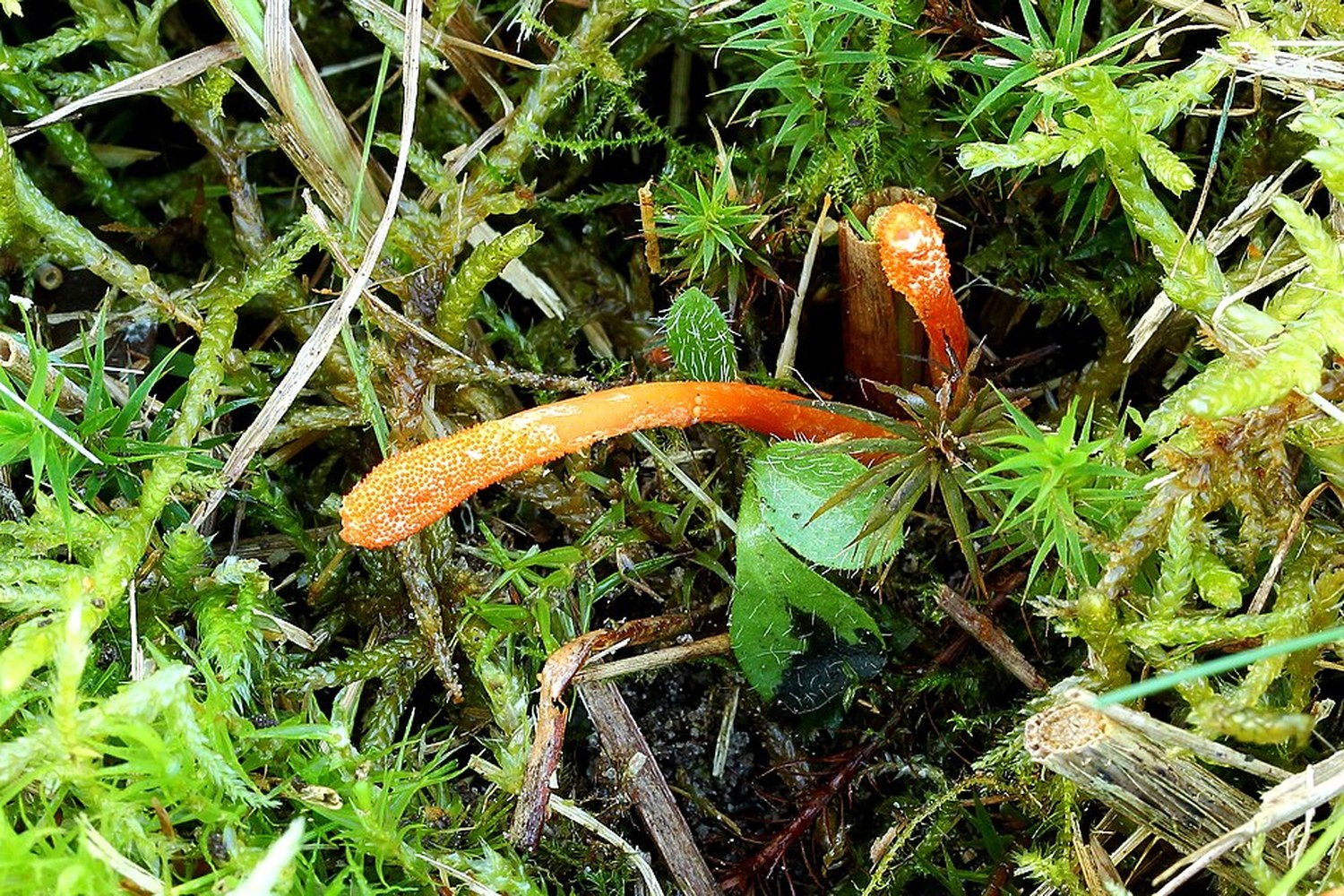
Cordyceps — the fungus that fruits from an insect host, raising a single slender orange club from the ground. Revered across the high mountains of Asia, where it has been gathered and studied for centuries.
Photo Dominicus Johannes Bergsma · CC BY-SA 4.0 · Wikimedia Commons
How to Use
Across the Three Kingdoms
One herb, prepared once, serving people, pets, and plants from a single botanical practice — each with its own measure and care.
People
Benefit
natural energy, stamina, and endurance
How to Use
1/4 tsp (up to 1 tsp) in hot water, tea, coffee, a smoothie, or food, once daily — begin with light doses; our extracts are very potent.
Pets
Dogs & companion animals
Benefit
Adaptogenic tonic mushroom traditionally used to support energy, stamina, and healthy respiratory and immune function.
How to Use
A small amount of the dilute extract/powder stirred into food, scaled to body weight; start low and build gradually.
By Animal
Cats
Cultivated tonic mushroom; not on ASPCA toxic list, no phenols/essential oils, well-tolerated in cats at small tonic doses
Dogs
No documented toxicity at supplement doses; commonly used canine tonic for energy/endurance and immune support
Horses
Listed in equine feed databases (Mad Barn) and fed as an endurance/recovery tonic; no iodine/glycyrrhizin/saponin concern
Birds
Non-aromatic mushroom; poultry/avian studies show safe dietary use with immune/growth benefit, no essential-oil risk
⚑ Sport horses: Cordyceps/cordycepin is not specifically named on the FEI Equine Prohibited Substances List or USEF prohibited list; however, mushroom supplements are not USEF-cleared and batches vary — verify the specific product against FEI CleanSport/USEF and confirm no prohibited co-ingredients before competing.
Safety
Cordyceps militaris (cultivated, food-grade) is not on the ASPCA toxic-plant list and has documented well-tolerated use as a dilute tonic across companion species; it contains no phenols/eugenol or essential oils, so there is no cat-specific aromatic concern. All meaningful risks are CONDITIONAL, not inherent to a healthy animal: (1) Immunomodulating — review before use in animals on immunosuppressants (cyclosporine, azathioprine, corticosteroids) or with autoimmune disease. (2) Cordycepin/adenosine analogs may have mild antiplatelet/anticoagulant activity — pause before elective surgery and use caution with concurrent blood thinners. (3) May modestly affect blood-glucose handling — monitor diabetic animals on insulin/oral hypoglycemics. (4) Kidney/liver disease: a high-dose study in ablactated rats (PMC3595709) showed oxidative nephrotoxicity at exaggerated doses — irrelevant to dilute tonic dosing in a healthy animal, but discuss with a vet before use in animals with diagnosed kidney or liver disease. For pregnant, nursing, or medicated animals, use only under veterinary direction. (6) Quality/labeling varies between products; use a pet-appropriate, tested extract, dose to body weight, start low, and stop if GI upset (vomiting, loose stool) occurs. Human-formulated products are not automatically pet-appropriate.
Source: ASPCA Animal Poison Control toxic/non-toxic plant database (Cordyceps not listed); Mad Barn Equine Feed Database (madbarn.com/ingredient/cordyceps-militaris/); VCA/peer-reviewed vet use; PMC7005407 (broiler hot-water extract immunomodulation); PMC3595709 (high-dose rat nephrotoxicity, conditional); FEI Equine Prohibited Substances List (inside.fei.org/fei/cleansport/ad-h/prohibited-list); USEF Drugs & Medications Guidelines.
Plants
Garden, soil & foliage
Benefit
whole-cycle vigor, resilience, and a living root zone
How to Use
Dilute 1/8 to 1/4 teaspoon per gallon of water. Foliar feed at the lighter rate, or soil drench at the fuller rate, about once a month or every other feeding. Used the entire way, through both vegetative growth and bloom.
Best for
Whole cycle — growth & bloomSafety
A dilute extract in the GGG Plants line; always dilute and start light.
Source: GGG Plants line formulation
Structure-and-function guidance for nutrition and vitality. Not intended to diagnose, treat, cure, or prevent any disease. Introduce one botanical at a time and notice how the body responds. Some plants interact with medication; if you are pregnant, nursing, or on a prescription, know the interaction before you begin.
What's inside
Cordyceps,
down to the molecule.
The signature compound of Cordyceps, rendered from its real structure in bronze and glass — the precise thing the plant carries, given the dignity it has earned.
The evidence chain
From the plant to the molecule to the body — traced.
Not a claim — a chain. Every link below traces to a primary record. This is what Cordyceps is, measured.
The plant
Cordyceps
which governs
A receptor for adenosine that helps calm cellular activity and signaling.
serving the system
Digestive · Immune
and the tradition independently agrees
Named for these systems in the recorded herbal lineage (Culpeper 1653, TCM, and cross-cultural materia medica) — tradition and the molecule, arrived at separately, converge.
Structure and function only. The chain describes the plant’s characterized chemistry and traditional use — not a claim to treat, cure, or prevent any disease.
How it works
How Cordyceps works in the body
A herb is never one thing — it is a community of compounds, each meeting the body in its own way. These are the active molecules in Cordyceps and the proteins each one is measured to engage: the precise points where the plant meets your biology. So you see not just that it works, but how.
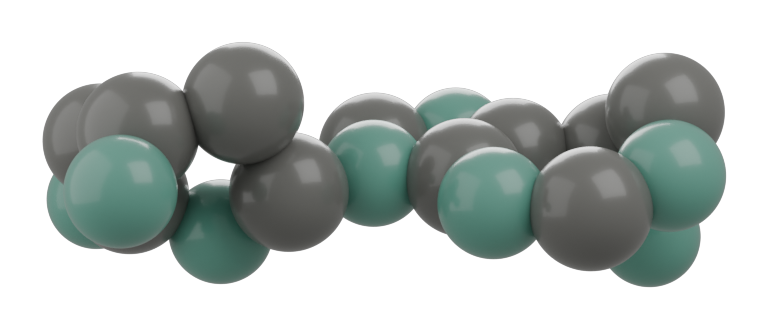
Cordycepin (3'-deoxyadenosine)
PubChem ↗Measured to act on
A receptor for adenosine that helps calm cellular activity and signaling.
A repair enzyme that clears certain damage points so DNA can be mended.
Measured in the lab
Real measurements from binding studies. A tighter fit means the compound meets its target more readily — the figure in grey is the actual measured value.
Binds to Adenosine receptor A1 · Ki 7.12 µM
Pentostatin (2'-deoxycoformycin)
PubChem ↗Measured to act on
An enzyme that breaks down adenosine, part of how cells recycle their building blocks.
Concentrated in intestine, lymphoid tissuestructure resolved ↗
Measured in the lab
Real measurements from binding studies. A tighter fit means the compound meets its target more readily — the figure in grey is the actual measured value.
Binds very tightly to Adenosine deaminase · Ki 1 nM
Adenosine
PubChem ↗Measured to act on
A receptor for adenosine, a molecule the body uses to dial cellular activity up or down.
Concentrated in brain, testisstructure resolved ↗
Measured in the lab
Real measurements from binding studies. A tighter fit means the compound meets its target more readily — the figure in grey is the actual measured value.
Binds very tightly to Adenosine receptor A3 · IC50 1.1 nM
Binds very tightly to Adenosine receptor A1 · IC50 2.3 nM
Binds very tightly to Adenosine receptor A2a/A2b · Ki 5 nM
Binds very tightly to Adenosine receptor A2a · Kd 17 nM
Binds very tightly to Adenosine receptor A2b · EC50 52 nM
Binds to Sodium/nucleoside cotransporter 1 · Ki 1.8 µM
— and 4 more measured targets, each traced to its source.
Cited science · not claims
Everything we publish about these plants traces to a primary source — the compounds to PubChem, ChEMBL, and BindingDB, the traditional uses to named, dated herbals. We describe what a plant is and what it is understood to nourish — the body’s own systems, structure and function only. We do not claim it treats, cures, or prevents any disease, and nothing here is a substitute for professional care. See our method & sources →
These statements have not been evaluated by the Food and Drug Administration. Not intended to diagnose, treat, cure, or prevent any disease.
Works alongside
Other herbs that share Cordyceps's terrain
Different plants reaching the same systems of the body — the convergence our genome engine maps. These nourish the terrain Cordyceps supports: