mushroom
Turkey Tail
Trametes versicolor
Also known as
Suitable For
Trametes versicolor — one of the most researched functional mushrooms on earth, defined by its PSP and PSK polysaccharides. A cornerstone of immune-modulating support: full-spectrum and exhaustively documented.
What it nourishes in the body
The body systems this herb is traditionally understood to support — resolved through our knowledge graph, where the classical record and modern biology are read together. Structure and function, never a claim of treatment.
10:1 Concentrated Extract
Whole-plant. Small-batch. Potent.
How to take it
1/4 tsp (up to 1 tsp) in hot water, tea, coffee, a smoothie, or food, once daily — begin with light doses; our extracts are very potent.
Whole plant, never isolated
Concentrated extracts of the whole botanical — the way the body recognizes it.
Cited to measured biology
Every action we describe traces to the compound and its measured target.
Structure & function
We describe what an herb nourishes — never a claim to treat disease.
Secure checkout
Encrypted payment and human verification on every order.
The Fungus
Turkey Tail, in depth
Character
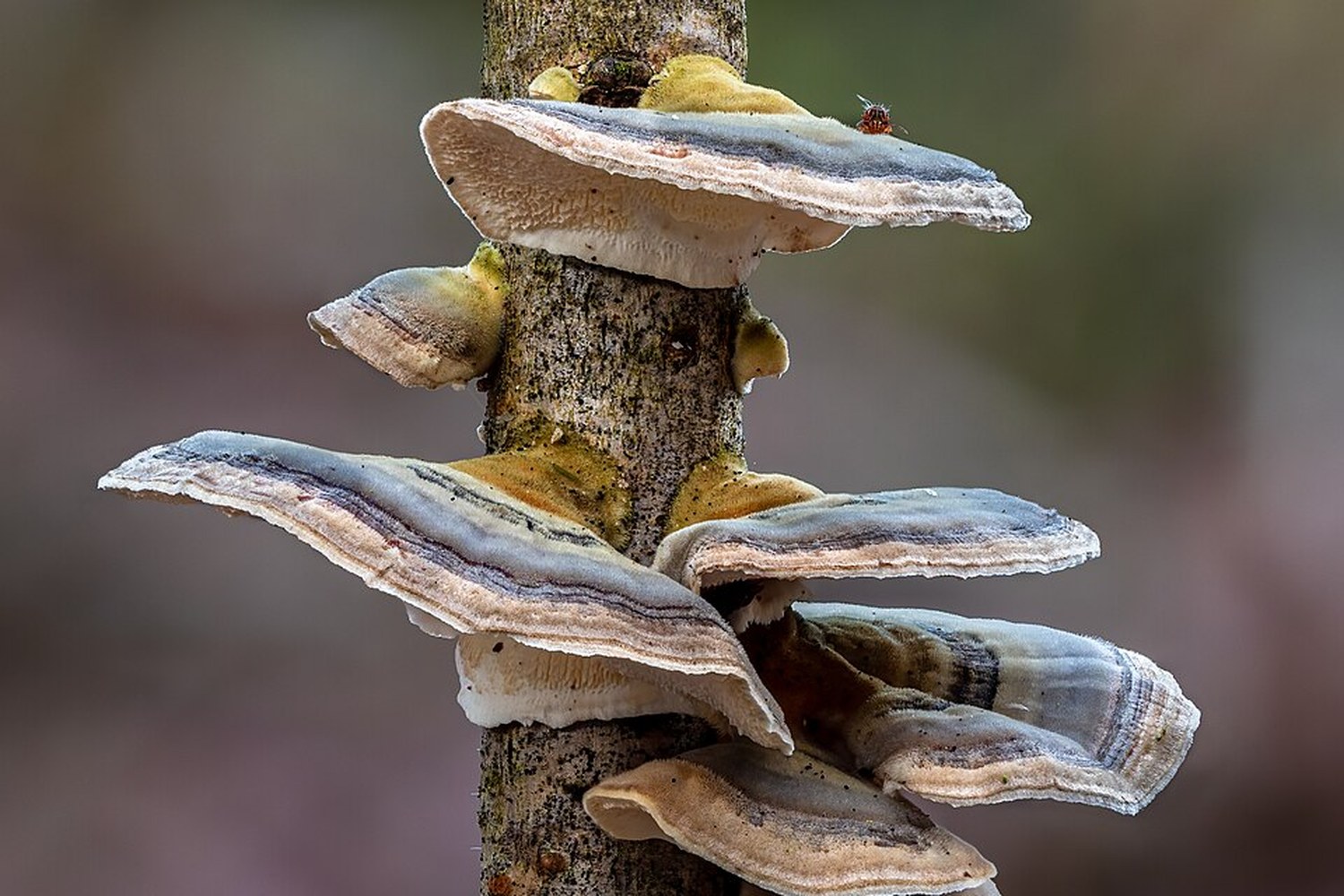
Turkey Tail (Trametes versicolor) is a bracket fungus of the world's temperate forests — a saprophyte that ribbons across fallen hardwood in overlapping fans banded in concentric rings of slate, amber, rust, and cream, the markings that earned it both its English name and its name, 云芝 (yún zhī), "cloud fungus." It is one of the most thoroughly documented functional mushrooms on earth, and at GGG NATURAL it is rendered as a potent 10:1 extract of the fruiting body — the visible bracket itself, where the defining polysaccharides concentrate. Where many botanicals are prized for an aromatic oil or a single alkaloid, Turkey Tail's character is structural: it is built of the woody, fibrous cell-wall architecture of the fungus, and that architecture IS its essence. Earthy, quiet, and unglamorous in flavor, it is a cornerstone tonic rather than a flourish — a mushroom of deep, daily vitality rather than acute drama.
In the GGG lineage Turkey Tail sits among the great immune-tone botanicals: a full-spectrum fungal tonic that the body recognizes and uses. It is one of the rare herbs we formulate across all three kingdoms — a daily vitality mushroom for People, a polysaccharide-rich tonic stirred into food for Pets, and a dilute drench for the vigor and resilience of Plants — all drawn from a single, exhaustively studied organism. It carries no essential-oil burden, no phenolic load, no glycyrrhizin or saponin freight; it is, in the truest sense, a food, and the body takes it as one.
In the Body
Turkey Tail engages the immune system, and it does so through its best-established compound classes: the cell-wall polysaccharides — most notably the beta-glucans and the protein-bound polysaccharides for which this fungus is renowned. These are large, branched carbohydrate structures, and the body's innate immune surveillance is built to read exactly this kind of molecular signature. Rather than acting upon the body, beta-glucans present a pattern the body's own immune intelligence recognizes — engaging the receptors and sentinel cells of the gut-associated and systemic immune network and supporting the immune system's natural, self-regulating function. This is the meaning of immunomodulation in the structure/function sense: Turkey Tail nourishes the system's own capacity to find its balance, supporting healthy immune resilience rather than overriding it.
That same polysaccharide architecture makes Turkey Tail a quiet ally of the digestive terrain. As fibrous, fermentable material, its beta-glucans and protein-bound polysaccharides behave as nourishment for the gut's microbial community — a prebiotic substrate that supports a healthy, balanced gut ecology, the foundation from which so much of the body's immune and metabolic poise arises. The fungus also carries polyphenolic constituents that support the body's natural antioxidant balance, helping the tissues maintain their healthy resilience against everyday oxidative stress. The throughline across People, Pets, and Plants is the same: Turkey Tail does not impose a state on an organism — it feeds the systems that keep an organism in balance, supporting immune tone, digestive harmony, antioxidant equilibrium, and the deep, daily vitality that follows when those systems are well-nourished.
The Tradition
Turkey Tail's recorded lineage runs deepest through classical East Asian herbalism, where it is known as 云芝 (yún zhī), the "cloud fungus," and was valued for centuries as a tonic of vitality and constitutional strength — prepared traditionally as a long-simmered decoction, a mushroom taken not for a moment of crisis but for the steady building of robustness over time. It belongs to the same revered class of fungal tonics as reishi and shiitake in the East Asian materia medica. Across the temperate forests of Europe and North America the same banded bracket was a familiar woodland fungus of folk knowledge, and in the modern era it has become one of the most extensively studied mushrooms in the world — esteemed for the protein-bound polysaccharides that carry its reputation. At GGG NATURAL we carry it as that tradition records it: a full-spectrum, daily vitality mushroom, honored as a cornerstone of immune tone across the herbal lineages that have kept it.
The mushroom
Turkey Tail,
as it actually grows.
Trametes versicolor — the many-zoned bracket that tiles fallen hardwood in overlapping tiers, each concentric ring a season of growth. Dried to its deep earth tones, exactly as the old foragers gathered it.
How to Use
Across the Three Kingdoms
One herb, prepared once, serving people, pets, and plants from a single botanical practice — each with its own measure and care.
People
Benefit
immune resilience and deep, daily vitality — plus immune support
How to Use
1/4 tsp (up to 1 tsp) in hot water, tea, coffee, a smoothie, or food, once daily — begin with light doses; our extracts are very potent.
Pets
Dogs & companion animals
Benefit
Polysaccharide-rich (PSP/PSK beta-glucan) mushroom that supports normal immune function, gut health, and antioxidant balance.
How to Use
Give a small amount of the dilute hot-water extract/powder stirred into food, scaled to body weight; start low and build up over a week or two.
By Animal
Cats
Food-grade polysaccharide mushroom, no phenols/essential oils to burden feline glucuronidation; well tolerated, ASPCA non-toxic.
Dogs
Well tolerated; PSP studied in dogs (Penn Vet hemangiosarcoma trial) with no CBC/biochem adverse findings.
Horses
No iodine/glycyrrhizin/saponin load; polysaccharide extract used in equine immune/gut products without hindgut concern.
Birds
No aromatic/essential-oil content that drives avian sensitivity; dilute polysaccharide tonic well tolerated in moderate use.
⚑ Sport horses: none — PSP/PSK beta-glucans are not FEI/USEF controlled or prohibited substances; verify the finished product carries no added prohibited excipients.
Safety
Conditional caveats only — none of these downgrade a healthy animal in normal use: turkey tail is an immunomodulator, so use veterinary guidance in animals on immunosuppressive drugs or with autoimmune disease; its beta-glucans/PSP have mild antiplatelet/immune-active effects, so coordinate with the vet alongside chemotherapy, anticoagulants/antiplatelet drugs, or before surgery. As a fungus it can rarely trigger a mushroom/mold allergy (anaphylaxis risk in sensitized animals) — discontinue on any allergic sign. Source raw material from a reputable supplier, since wild fungi can accumulate heavy metals. Introduce gradually to avoid transient GI upset; lower the dose or pause if soft stool occurs. As with any supplement, use cautiously in pregnancy/lactation or significant kidney/liver disease only under veterinary supervision. Not a treatment for any disease.
Source: ASPCA Animal Poison Control toxic/non-toxic plant database (not listed as toxic to cats/dogs/horses); Brown & Reetz 2012, "Single Agent Polysaccharopeptide Delays Metastases and Improves Survival in Naturally Occurring Hemangiosarcoma," Evid Based Complement Alternat Med (PMC3440946) / Penn Vet; toxicological assessment of Trametes versicolor powder (PMC12603391, no acute/subchronic/genotoxic toxicity to 2000 mg/kg/day); 28-day oral safety evaluation of T. versicolor polysaccharopeptides in mice (PubMed 22135874); VCA/Gaia Herbs/Drugs.com monographs.
Plants
Garden, soil & foliage
Benefit
whole-cycle vigor, resilience, and a living root zone
How to Use
Dilute 1/8 to 1/4 teaspoon per gallon of water. Foliar feed at the lighter rate, or soil drench at the fuller rate, about once a month or every other feeding. Used the entire way, through both vegetative growth and bloom.
Best for
Whole cycle — growth & bloomSafety
A dilute extract in the GGG Plants line; always dilute and start light.
Source: GGG Plants line formulation
Structure-and-function guidance for nutrition and vitality. Not intended to diagnose, treat, cure, or prevent any disease. Introduce one botanical at a time and notice how the body responds. Some plants interact with medication; if you are pregnant, nursing, or on a prescription, know the interaction before you begin.
What's inside
Turkey Tail,
down to the molecule.
The signature compound of Turkey Tail, rendered from its real structure in bronze and glass — the precise thing the plant carries, given the dignity it has earned.
The evidence chain
From the plant to the molecule to the body — traced.
Not a claim — a chain. Every link below traces to a primary record. This is what Turkey Tail is, measured.
The plant
Turkey Tail
which governs
An enzyme (iNOS) that makes nitric oxide during immune and inflammatory responses.
serving the system
Immune · Liver
and the tradition independently agrees
Named for these systems in the recorded herbal lineage (Culpeper 1653, TCM, and cross-cultural materia medica) — tradition and the molecule, arrived at separately, converge.
Structure and function only. The chain describes the plant’s characterized chemistry and traditional use — not a claim to treat, cure, or prevent any disease.
How it works
How Turkey Tail works in the body
A herb is never one thing — it is a community of compounds, each meeting the body in its own way. These are the active molecules in Turkey Tail and the proteins each one is measured to engage: the precise points where the plant meets your biology. So you see not just that it works, but how.
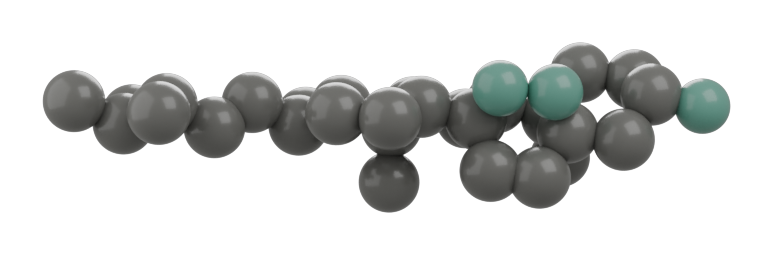
Ergosterol
PubChem ↗Measured to act on
An enzyme that produces nitric oxide as part of the immune and inflammatory response.
A liver enzyme that attaches sugar groups to compounds so the body can clear them.
Concentrated in liver, intestinestructure resolved ↗
Ergosterol peroxide
PubChem ↗Measured to act on
An enzyme that converts glucose into sorbitol, part of how cells handle sugar.
Concentrated in adrenal glandstructure resolved ↗
An enzyme that produces nitric oxide as part of the immune and inflammatory response.
A receptor that senses bile acids and helps govern fat, cholesterol, and bile balance.
Concentrated in liver, intestinestructure resolved ↗
Measured in the lab
Real measurements from binding studies. A tighter fit means the compound meets its target more readily — the figure in grey is the actual measured value.
Binds to Nitric oxide synthase, inducible · IC50 6.3 µM
Cited science · not claims
Everything we publish about these plants traces to a primary source — the compounds to PubChem, ChEMBL, and BindingDB, the traditional uses to named, dated herbals. We describe what a plant is and what it is understood to nourish — the body’s own systems, structure and function only. We do not claim it treats, cures, or prevents any disease, and nothing here is a substitute for professional care. See our method & sources →
These statements have not been evaluated by the Food and Drug Administration. Not intended to diagnose, treat, cure, or prevent any disease.
Works alongside
Other herbs that share Turkey Tail's terrain
Different plants reaching the same systems of the body — the convergence our genome engine maps. These nourish the terrain Turkey Tail supports: