root
Burdock
Arctium lappa
Also known as
Suitable For
A deep taproot rich in inulin and polyphenols. A classic blood and lymphatic support, it nourishes the skin and aids the body's natural clearing and elimination pathways.
What it nourishes in the body
The body systems this herb is traditionally understood to support — resolved through our knowledge graph, where the classical record and modern biology are read together. Structure and function, never a claim of treatment.
Where measure and tradition agree
Burdock is measured to engage these systems in human binding data — and the recorded tradition named it for them independently. Two evidence systems arriving at the same place, separately, is our highest standard. See the research →
10:1 Concentrated Extract
Whole-plant. Small-batch. Potent.
How to take it
1/4 tsp (up to 1 tsp) in hot water, tea, coffee, a smoothie, or food, once daily — begin with light doses; our extracts are very potent.
Whole plant, never isolated
Concentrated extracts of the whole botanical — the way the body recognizes it.
Cited to measured biology
Every action we describe traces to the compound and its measured target.
Structure & function
We describe what an herb nourishes — never a claim to treat disease.
Secure checkout
Encrypted payment and human verification on every order.
The Botanical
Burdock, in depth
Character
Burdock (Arctium lappa, 牛蒡) is a root of the great tonic tradition — a long, dark taproot that drives deep into the earth and draws up a dense, earthy sweetness the body recognizes as food. In our apothecary it stands as the archetypal bitter root tonic: grounded, mineral-rich, unhurried in character, the kind of plant a lineage reaches for when it wants to nourish the body's own systems of renewal rather than push against them. Cultivated for centuries across Europe and Asia and prized in the East as gobō — a culinary root eaten as nourishment long before it was ever called a remedy — burdock belongs to the same Compositae family as the daisy and the thistle, and carries that family's signature of clean, vegetal bitterness. We offer it as a concentrated 10:1 extract of the root alone — the part that holds the inulin and the polyphenols — so that a small measure carries the full weight of the whole taproot.
Its nature is restorative and quietly tonifying rather than stimulating. Where some roots drive heat or force, burdock works through the body's terrain — the blood, the lymph, the skin, the natural channels of elimination — supplying the raw botanical material the body's own intelligence draws upon to keep those systems supple, balanced, and at ease. It is, in the truest sense of the old word, an alterative: a plant traditionally carried to gently support the body's own pathways of renewal, and to nourish toward radiance and resilience over time.
In the Body
Burdock engages the body's terrain-keeping systems — the blood and circulatory channels, the lymphatic network, and the skin — the interconnected fascia through which the body carries, filters, and renews. Its character as a bitter root naturally tones the digestive and eliminative systems: the bitterness the palate registers is the same signal that invites the body's own digestive rhythm into readiness, and a well-toned gut is where renewal begins.
The molecular substance behind this is well established. Burdock root is rich in inulin, a fructan polysaccharide that acts as a prebiotic fiber — it is not digested by the body itself but feeds the beneficial flora of the gut, nourishing the microbial terrain that supports healthy digestion, comfortable elimination, and the body's own renewing pathways. Alongside the inulin sits a deep reservoir of polyphenols — chiefly polyphenolic acids such as the caffeoylquinic (chlorogenic-type) acids — antioxidant compounds that support the body's natural defenses against everyday oxidative stress and help the body maintain its own healthy inflammatory balance. As a root traditionally regarded as cooling and mildly water-moving, burdock supports the body's normal fluid balance and the lymphatic system's natural housekeeping. Carried together — the prebiotic fiber feeding the gut, the polyphenols tending the body's antioxidant terrain — these compound classes nourish the blood, lymph, and skin as one continuous system, supporting clarity, suppleness, and a grounded, well-kept radiance that shows first in the skin. This is nourishment of the body's own intelligence: burdock supplies the material; the body does the work.
The Tradition
In the herbal tradition, burdock is one of the great alterative roots — a "blood-cleansing" tonic in the old language, carried across Western and Eastern lineages alike. Culpeper documented Arctium lappa in his English herbal of the seventeenth century, and the burdock root persisted through the Old English Herbals and the Thomsonian system as a foundational alterative for supporting the skin and the body's own channels of renewal. In classical East Asian practice the root is known as 牛蒡 (niúbàng) — though the seed, niúbàng zǐ, is the more commonly catalogued part — and the plant is honored equally as gobō, a cultivated culinary root eaten as everyday nourishment across East Asia, the truest testament to its standing as food first and tonic second. Across every one of these traditions burdock holds the same place: a grounded, bitter root reached for to support the blood, the lymph, and the radiance of the skin.
The burr
Burdock,
as it actually grows.
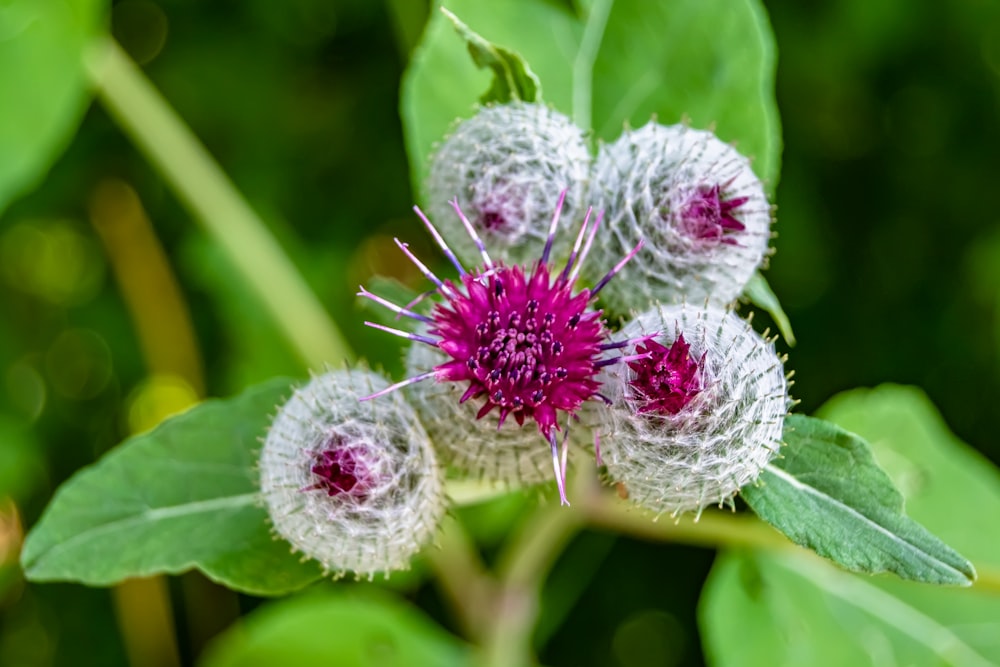
Burdock (Arctium lappa) is a biennial herb whose first-year taproot has been prized in East Asian cuisine — particularly as gobo in Japanese cooking — for centuries. The plant's iconic hooked burrs, shown here in full bloom, famously inspired the invention of Velcro and are as recognizable as the root itself.
How to Use
Across the Three Kingdoms
One herb, prepared once, serving people, pets, and plants from a single botanical practice — each with its own measure and care.
People
Benefit
natural energy, stamina, and endurance — plus gentle liver and cleansing support
How to Use
1/4 tsp (up to 1 tsp) in hot water, tea, coffee, a smoothie, or food, once daily — begin with light doses; our extracts are very potent.
Pets
Dogs & companion animals
Benefit
Bitter root tonic traditionally used to support healthy skin, normal detoxification pathways, and digestive comfort; rich in inulin (prebiotic fiber) and polyphenols.
How to Use
Offer a small amount of the dilute hot-water extract or powder mixed into food, scaled to body weight (a pinch for cats/birds, more for dogs and horses). Start low, give intermittently, and use a clean single-herb product.
By Animal
Cats
Not ASPCA-listed; food-grade root with no phenolic/essential-oil concern for cats. Pinch-sized dose in food.
Dogs
Non-toxic; EFSA evaluated A. lappa dry root extract as a feed additive for dogs. Well tolerated in moderate use.
Horses
Traditional equine skin/detox tonic; no iodine, glycyrrhizin, or saponin concern. Hindgut-friendly inulin root.
Birds
Not an aromatic/essential-oil herb; appears in avian herbal blends. Tiny pinch of dilute extract for a healthy bird.
⚑ Sport horses: USEF does not approve herbal/natural products of any kind, and FEI warns that botanical tonics may contain undeclared prohibited substances. Burdock itself is not a named FEI/USEF banned substance, but a competing horse should use only a batch-tested product and observe a withdrawal window before competition.
Safety
Reported burdock "toxicity" historically traced to a single case of burdock-root tea adulterated with belladonna (atropine), not the herb itself — so source clean, single-herb, contaminant-tested material and avoid wildcrafted product of unknown provenance. As a bitter root with mild diuretic action and inulin-rich fiber, start low and go slow: a sudden large dose can cause loose stool/GI upset, and the diuretic effect warrants extra attention to hydration. Burdock may have mild blood-sugar-lowering and antiplatelet/anticoagulant activity — use cautiously and under veterinary guidance in animals on insulin, anticoagulants/NSAIDs, or diuretics, and pause before elective surgery. For pregnant, nursing, or medicated animals, use only under veterinary direction. Use cautiously in animals with significant kidney or liver disease given the diuretic load and hepatic clearance. Compositae/ragweed-family allergy can cross-react. Any new herb in an animal with chronic disease or on medication should be cleared with a veterinarian first. Note the physical hazard of the raw plant's burs (eye/skin/respiratory irritation) is irrelevant to a dilute extract/powder.
Source: ASPCA Toxic and Non-Toxic Plant List (Arctium lappa not listed as toxic to cats/dogs/horses); EFSA Journal 2021;19(7):6527 — safety/efficacy of A. lappa dry root extract feed additive for cats and dogs; Madbarn Equine Feed Database (burdock root for horses); avian herbal blend ingredient listings; FEI/USEF herbal-product cautions.
Plants
Garden, soil & foliage
Benefit
vegetative vigor, strong rooting, and resilient new growth
How to Use
Dilute 1/8 to 1/4 teaspoon per gallon of water. Foliar feed at the lighter rate, or soil drench at the fuller rate, about once a month or every other feeding. Best worked in through vegetative growth, as the plant builds leaf, stem, and root.
Best for
Vegetative growthSafety
A dilute extract in the GGG Plants line; always dilute and start light.
Source: GGG Plants line formulation
Structure-and-function guidance for nutrition and vitality. Not intended to diagnose, treat, cure, or prevent any disease. Introduce one botanical at a time and notice how the body responds. Some plants interact with medication; if you are pregnant, nursing, or on a prescription, know the interaction before you begin.
What's inside
Burdock,
down to the molecule.
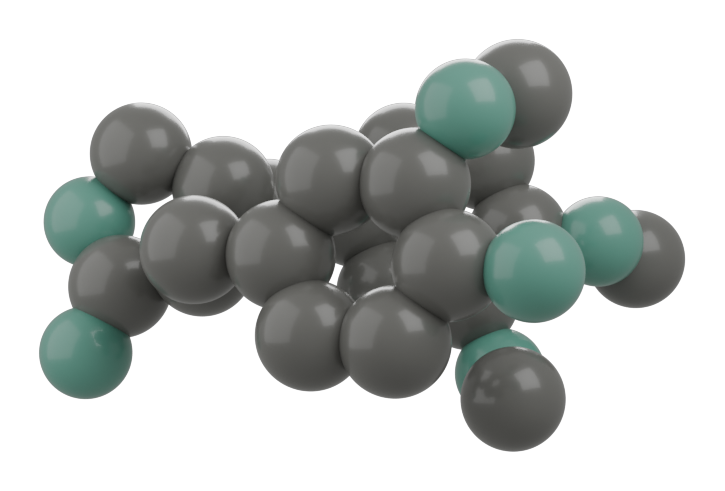
The signature compound of Burdock, rendered from its real structure in bronze and glass — the precise thing the plant carries, given the dignity it has earned.
The evidence chain
From the plant to the molecule to the body — traced.
Not a claim — a chain. Every link below traces to a primary record. This is what Burdock is, measured.
The plant
Burdock
which governs
A signaling enzyme (MEK1) that relays growth signals inside cells.
serving the system
Blood & Circulatory · Lymphatic
and the tradition independently agrees — measured binding
The recorded herbal lineage names Burdock a immune and liver & detox and skin & connective herb. Independently, its compounds are measured to bind proteins of those systems. Tradition and molecule, arrived at separately, converge — the strongest evidence we hold.
Structure and function only. The chain describes the plant’s characterized chemistry and traditional use — not a claim to treat, cure, or prevent any disease.
How it works
How Burdock works in the body
A herb is never one thing — it is a community of compounds, each meeting the body in its own way. These are the active molecules in Burdock and the proteins each one is measured to engage: the precise points where the plant meets your biology. So you see not just that it works, but how.
Arctigenin
PubChem ↗Measured to act on
A signaling enzyme that passes growth messages along a relay chain inside the cell.
A liver enzyme involved in processing a variety of compounds the body encounters.
Concentrated in liverstructure resolved ↗
A receptor that switches certain genes on, helping guide immune-cell development.
Measured in the lab
Real measurements from binding studies. A tighter fit means the compound meets its target more readily — the figure in grey is the actual measured value.
Binds very tightly to Dual specificity mitogen-activated protein kinase kinase 1 · IC50 1 nM
Chlorogenic acid
PubChem ↗Measured to act on
An enzyme that removes phosphate tags from proteins, helping regulate insulin and metabolic signaling.
An enzyme that converts excess glucose into sorbitol, part of normal sugar metabolism.
Concentrated in adrenal glandstructure resolved ↗
Measured in the lab
Real measurements from binding studies. A tighter fit means the compound meets its target more readily — the figure in grey is the actual measured value.
Binds very tightly to Tyrosine-protein phosphatase non-receptor type 1 · IC50 100 nM
Binds tightly to Histone deacetylase · Ki 135 nM
Binds tightly to Aldo-keto reductase family 1 member B1 · IC50 300 nM
Binds to Aldo-keto reductase family 1 member B10 · IC50 7.9 µM
Caffeic acid
PubChem ↗Measured to act on
An enzyme that remodels the scaffolding between cells, part of tissue repair and renewal.
Concentrated in bone marrow, lymphoid tissuestructure resolved ↗
An enzyme that breaks down collagen, remodeling the scaffolding that holds tissues together.
Concentrated in gallbladderstructure resolved ↗
An enzyme that helps clear messengers like dopamine and adrenaline from the body.
A receptor that senses the hormone angiotensin and helps govern blood vessel tone.
Concentrated in placenta, liverstructure resolved ↗
A master switch that turns on many genes of the immune and inflammatory response.
Measured in the lab
Real measurements from binding studies. A tighter fit means the compound meets its target more readily — the figure in grey is the actual measured value.
Binds very tightly to Matrix metalloproteinase-9 · IC50 10 nM
Binds very tightly to 72 kDa type IV collagenase · IC50 24 nM
Binds very tightly to Catechol O-methyltransferase · IC50 93 nM
Binds very tightly to Glutamate carboxypeptidase 2 · IC50 100 nM
Binds tightly to Type-1 angiotensin II receptor · IC50 125 nM
Binds tightly to Interstitial collagenase · IC50 239 nM
— and 20 more measured targets, each traced to its source.
Luteolin
PubChem ↗Measured to act on
An enzyme that balances carbon dioxide and acidity, part of the body's pH chemistry.
Concentrated in intestinestructure resolved ↗
A liver-type enzyme that processes hormones and environmental compounds.
An enzyme that regulates acid-base balance across cell membranes.
Concentrated in kidney, choroid plexus, skin 1structure resolved ↗
A carrier protein that transports thyroid hormone and vitamin A through the blood.
Concentrated in choroid plexusstructure resolved ↗
An enzyme that trims signaling peptides, including those involved in blood sugar regulation.
Concentrated in parathyroid gland, intestine, placenta, prostatestructure resolved ↗
A signaling enzyme that helps regulate how cells build new proteins.
Concentrated in pancreasstructure resolved ↗
Quercetin
PubChem ↗Measured to act on
An enzyme that breaks down messenger chemicals like serotonin in the nervous system.
Concentrated in intestinestructure resolved ↗
The enzyme that converts androgens into estrogen, the body main estrogen source.
Concentrated in placentastructure resolved ↗
An enzyme that converts excess glucose into sorbitol, part of normal sugar metabolism.
Concentrated in adrenal glandstructure resolved ↗
A liver-type enzyme that processes hormones and environmental compounds.
A signaling enzyme involved in cell growth and survival.
Concentrated in bone marrowstructure resolved ↗
A cellular pump that moves compounds out of cells, shaping how substances are absorbed.
Concentrated in intestinestructure resolved ↗
Measured in the lab
Real measurements from binding studies. A tighter fit means the compound meets its target more readily — the figure in grey is the actual measured value.
Binds very tightly to Amine oxidase [flavin-containing] A · IC50 10 nM
Binds very tightly to Aromatase · IC50 12 nM
Binds very tightly to Aldo-keto reductase family 1 member B1 · IC50 14.8 nM
Binds very tightly to Enoyl-acyl-carrier protein reductase · Ki 22 nM
Binds very tightly to Cytochrome P450 1B1 · Ki 23 nM
Binds very tightly to Serine/threonine-protein kinase pim-1 · Kd 25 nM
— and 108 more measured targets, each traced to its source.
Cited science · not claims
Everything we publish about these plants traces to a primary source — the compounds to PubChem, ChEMBL, and BindingDB, the traditional uses to named, dated herbals. We describe what a plant is and what it is understood to nourish — the body’s own systems, structure and function only. We do not claim it treats, cures, or prevents any disease, and nothing here is a substitute for professional care. See our method & sources →
These statements have not been evaluated by the Food and Drug Administration. Not intended to diagnose, treat, cure, or prevent any disease.
Works alongside
Other herbs that share Burdock's terrain
Different plants reaching the same systems of the body — the convergence our genome engine maps. These nourish the terrain Burdock supports:
Blood & Circulatory
Skin