berry
Mulberry
Morus alba
Also known as
Suitable For
Morus alba — dark, antioxidant-rich berries that nourish the blood and replenish the body's moisture reserves. A gentle, restorative, rejuvenating fruit.
What it nourishes in the body
The body systems this herb is traditionally understood to support — resolved through our knowledge graph, where the classical record and modern biology are read together. Structure and function, never a claim of treatment.
Where measure and tradition agree
Mulberry is measured to engage these systems in human binding data — and the recorded tradition named it for them independently. Two evidence systems arriving at the same place, separately, is our highest standard. See the research →
10:1 Concentrated Extract
Whole-plant. Small-batch. Potent.
How to take it
1/4 tsp (up to 1 tsp) in hot water, tea, coffee, a smoothie, or food, once daily — begin with light doses; our extracts are very potent.
Whole plant, never isolated
Concentrated extracts of the whole botanical — the way the body recognizes it.
Cited to measured biology
Every action we describe traces to the compound and its measured target.
Structure & function
We describe what an herb nourishes — never a claim to treat disease.
Secure checkout
Encrypted payment and human verification on every order.
The Botanical
Mulberry, in depth
Character
Mulberry (Morus alba) is the fruit of the white mulberry — a deep, jewel-dark berry borne on a tree so woven into the human story that whole civilizations were built around its leaves and its harvest. In our apothecary it is a berry of the energy kingdom: sweet, cooling, and quietly restorative, prepared as a concentrated 10:1 extract so that a single quarter-teaspoon carries the gathered intelligence of a great weight of ripe fruit. Where many tonics push, Mulberry replenishes. It belongs to the lineage of nourishing fruits — the berries a tradition reaches for not to stimulate the body but to refill it, to restore the moisture, the substance, and the steady reserve from which true vitality is drawn. Its character is gentle, rejuvenating, and unhurried: a fruit taken daily, not for a jolt, but for the long, even stamina of a system that is well-supplied.
In the classical reckoning it is a 桑葚 — a yin-nourishing berry, dark and sweet, prized for replenishing the blood and the body's deeper reserves of moisture. That is its place in the lineage and its place on our shelf: a foundational restorative fruit, food-grade and food-kind, whose work is to nourish the ground from which energy, endurance, and radiance rise. It is among the most generous of the pristine herbs on earth.
In the Body
Mulberry's affinity is for the blood and circulatory system — the body's living river of nourishment — and through it for the deep reserves that the energy economy draws upon. The dark berry is rich in anthocyanins, the very pigments that give it its color, alongside a broader complement of polyphenols and flavonoids. These compound classes are among the body's recognized partners in maintaining healthy antioxidant status: they help the body's own defenses meet the ordinary oxidative wear of daily metabolism, supporting the suppleness and integrity of the circulatory tissues and the steady delivery of nourishment that vitality depends on. This is structure and function — Mulberry does not act upon the blood; it furnishes the blood with the raw botanical intelligence it already knows how to use.
Because it nourishes the reserve rather than spending it, Mulberry's gift to the energy system is endurance over excitation. By supporting the body's moisture and blood substance, it underwrites stamina, steady energy, and the kind of grounded resilience that holds across a long day. The flavonoid and polyphenol fraction supports the body's own healthy inflammatory and antioxidant balance — the equilibrium from which clarity, radiance, and even-keeled stamina naturally arise. The wider Morus plant is also notable for its alkaloid fraction, a compound class the leaf and bark are known to carry; in our restorative fruit tonic, however, the emphasis remains squarely on the berry's nourishing, replenishing character. Taken as a daily tonic, Mulberry tones the blood, supports the body's antioxidant resilience, and feeds the steady foundation of vitality the body builds upon.
The Tradition
Mulberry's recorded use runs through the classical East Asian herbal tradition, where the ripe black fruit (桑葚, sang shen) was catalogued among the sweet, nourishing berries — a yin-replenishing tonic gathered to enrich the blood, restore the body's moisture, and ease the dryness of depletion. The same tree gave the Old World its silk and its shade, and across folk and classical herbals from East to West the mulberry was held a wholesome, generous fruit, taken freely as food and as a gentle restorative. We carry it in that unbroken line: not as a remedy aimed at a condition, but as a foundational nourishing berry whose authority rests on thousands of years of human practice across cultures — tradition as evidence, the fruit as food for the body's own intelligence.
The fruit and leaf
Mulberry,
as it actually grows.
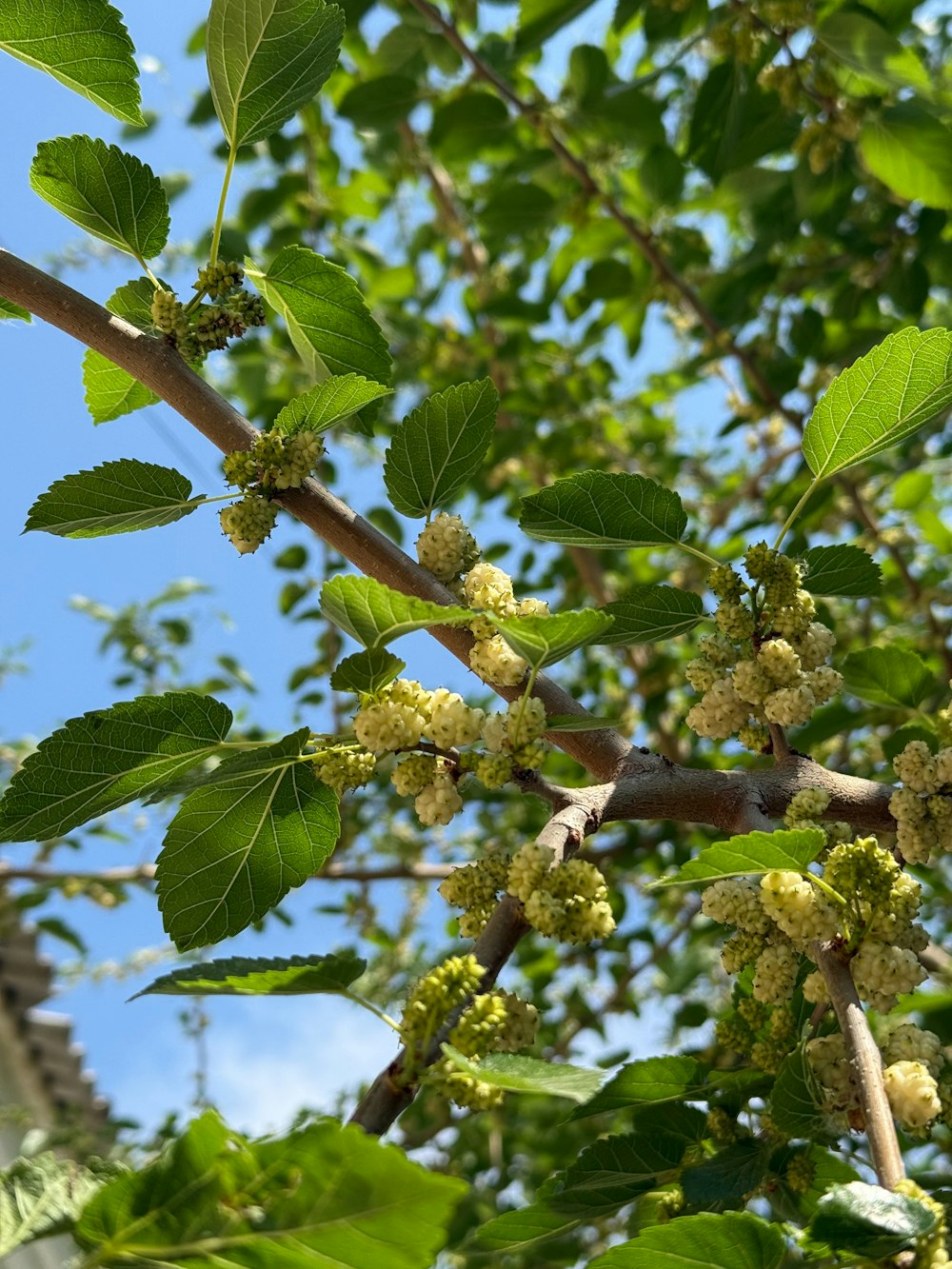
White mulberry (Morus alba) produces elongated, pale-cream drupes borne in dense catkin-like clusters along woody branches, with broadly toothed leaves long prized in sericulture as the primary food source for silkworms. The sweet, mild fruits have been eaten fresh and dried across East Asia and the Middle East for centuries, and the leaves have a long history as a traditional tonic food in Chinese botanical practice.
How to Use
Across the Three Kingdoms
One herb, prepared once, serving people, pets, and plants from a single botanical practice — each with its own measure and care.
People
Benefit
natural energy, stamina, and endurance
How to Use
1/4 tsp (up to 1 tsp) in hot water, tea, coffee, a smoothie, or food, once daily — begin with light doses; our extracts are very potent.
Pets
Dogs & companion animals
Benefit
A polyphenol- and flavonoid-rich leaf/fruit tonic long kept in the traditional kitchen.
How to Use
Offer a small amount of the dilute extract or powder stirred into food, scaled to body weight; start low and build up.
By Animal
Cats
ASPCA non-toxic to cats; no phenols/aromatics of concern in a dilute leaf/fruit tonic.
Dogs
ASPCA non-toxic to dogs; ripe-fruit/leaf extract well-tolerated in moderation.
Horses
ASPCA non-toxic to horses; no iodine/glycyrrhizin load, hindgut-friendly at tonic doses.
Birds
Ripe mulberry is a relished, beneficial avian food; non-aromatic, no essential-oil risk.
⚑ Sport horses: none — mulberry (Morus alba) is not on the FEI Equine Prohibited Substances List or the USEF banned/forbidden-substances list; verify the specific finished product carries no added actives.
Safety
Mulberry leaf/fruit is food-grade and ASPCA-listed non-toxic to cats, dogs, and horses; the only inherent plant cautions (mild GI upset, low-toxicity unripe-berry/milky-sap) do not apply to a dilute ripe-fruit/leaf hot-water tonic. Conditional caveats: Morus alba leaf contains 1-deoxynojirimycin (DNJ), an alpha-glucosidase inhibitor that lowers post-meal glucose — start low and monitor any diabetic or insulin/oral-hypoglycemic-treated animal for additive hypoglycemia, and coordinate dosing with the prescribing veterinarian. Some data suggest mild blood-pressure lowering and possible additive effects with antihypertensive or anticoagulant medications, so use cautiously around scheduled surgery or in animals on those drugs. As with any botanical, introduce gradually, use a clean food-grade preparation, and consult a veterinarian before use in pregnant, lactating, or kidney/liver-compromised animals. Discontinue if GI upset occurs.
Source: ASPCA Toxic and Non-Toxic Plants — Mulberry Tree (Morus sp., Moraceae): Non-Toxic to Dogs, Cats, Horses (https://www.aspca.org/pet-care/aspca-poison-control/toxic-and-non-toxic-plants/mulberry-tree). DNJ/alpha-glucosidase pharmacology from peer-reviewed Morus alba leaf literature. FEI Equine Prohibited Substances List and USEF Drugs & Medications Guidelines checked — mulberry not listed.
Plants
Garden, soil & foliage
Benefit
flowering, fruiting, and finish as a dilute bloom-stage tonic
How to Use
Dilute 1/8 to 1/4 teaspoon per gallon of water. Foliar feed at the lighter rate, or soil drench at the fuller rate, about once a month or every other feeding. Best worked in from pre-flower through bloom, as the plant sets and fills flower and fruit.
Best for
Flower & bloomSafety
A dilute extract in the GGG Plants line; always dilute and start light.
Source: GGG Plants line formulation
Structure-and-function guidance for nutrition and vitality. Not intended to diagnose, treat, cure, or prevent any disease. Introduce one botanical at a time and notice how the body responds. Some plants interact with medication; if you are pregnant, nursing, or on a prescription, know the interaction before you begin.
What's inside
Mulberry,
down to the molecule.
The signature compound of Mulberry, rendered from its real structure in bronze and glass — the precise thing the plant carries, given the dignity it has earned.
The evidence chain
From the plant to the molecule to the body — traced.
Not a claim — a chain. Every link below traces to a primary record. This is what Mulberry is, measured.
The plant
Mulberry
which governs
The copper enzyme that makes melanin, the pigment that colors skin and hair.
serving the system
Blood & Circulatory · Digestive
and the tradition independently agrees — measured binding
The recorded herbal lineage names Mulberry a metabolic and respiratory herb. Independently, its compounds are measured to bind proteins of those systems. Tradition and molecule, arrived at separately, converge — the strongest evidence we hold.
Structure and function only. The chain describes the plant’s characterized chemistry and traditional use — not a claim to treat, cure, or prevent any disease.
How it works
How Mulberry works in the body
A herb is never one thing — it is a community of compounds, each meeting the body in its own way. These are the active molecules in Mulberry and the proteins each one is measured to engage: the precise points where the plant meets your biology. So you see not just that it works, but how.
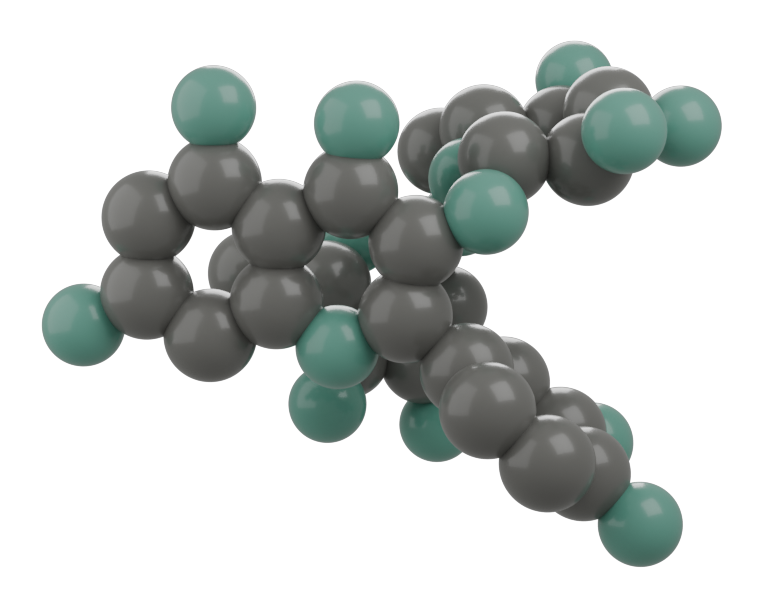
1-Deoxynojirimycin (DNJ)
PubChem ↗Measured to act on
An enzyme inside cells that breaks down stored glycogen into usable glucose.
An enzyme that trims sugar chains as proteins are properly folded and finished.
A gut enzyme that finishes digesting starch into glucose for absorption.
Concentrated in intestine, epididymisstructure resolved ↗
An enzyme that breaks down certain fatty molecules for recycling inside cells.
An enzyme that breaks down specific fatty sugar molecules so they don't accumulate in cells.
A gut enzyme that breaks dietary starch and table sugar into absorbable simple sugars.
Concentrated in intestinestructure resolved ↗
Oxyresveratrol
PubChem ↗Measured to act on
The enzyme that produces melanin, the pigment that colors skin and hair.
Concentrated in skin 1structure resolved ↗
A carrier protein that transports thyroid hormone and vitamin A through the blood.
Concentrated in choroid plexusstructure resolved ↗
A liver-type enzyme that processes hormones and foreign compounds for clearance.
A mushroom enzyme that produces pigment, widely used as a model for studying melanin formation.
Measured in the lab
Real measurements from binding studies. A tighter fit means the compound meets its target more readily — the figure in grey is the actual measured value.
Binds very tightly to Tyrosinase · IC50 90 nM
Binds to Prostaglandin G/H synthase 1 · IC50 1.4 µM
Binds to Transthyretin · Kd 1.4 µM
Binds to Cholinesterase · IC50 2.95 µM
Binds to TYR_PHOSPHATASE_2 domain-containing protein · IC50 8.42 µM
Binds to Serine/threonine-protein kinase 33 · EC50 9.657 µM
Morusin
PubChem ↗Measured to act on
The enzyme that drives the body's inflammatory response.
Concentrated in urinary bladder, seminal vesicle, bone marrowstructure resolved ↗
An enzyme that cuts a brain membrane protein, part of normal protein processing in neurons.
Concentrated in pancreas, brainstructure resolved ↗
An enzyme that helps regulate insulin and metabolic signaling inside cells.
An enzyme that helps generate the messengers behind inflammatory signaling.
Concentrated in lymphoid tissue, lungstructure resolved ↗
The enzyme that clears acetylcholine, the messenger nerves use to signal muscles.
Concentrated in skeletal muscle, brain, tonguestructure resolved ↗
Kuwanon G
PubChem ↗Measured to act on
An enzyme that breaks down complex sugar chains as part of cellular recycling.
Rutin
PubChem ↗Measured to act on
An enzyme the influenza virus uses to release newly made copies from a host cell.
The enzyme that produces uric acid as the body breaks down spent genetic building blocks.
Concentrated in liver, intestine, breaststructure resolved ↗
A receptor for adrenaline that helps fine-tune nerve signaling and blood pressure.
Concentrated in adipose tissuestructure resolved ↗
A protein that stabilizes the internal scaffolding that gives nerve cells their structure.
Concentrated in brain, skeletal musclestructure resolved ↗
Measured in the lab
Real measurements from binding studies. A tighter fit means the compound meets its target more readily — the figure in grey is the actual measured value.
Binds very tightly to Tyrosinase · IC50 0.856 nM
Binds very tightly to Beta-secretase 1 · IC50 3.8 nM
Binds very tightly to Acetylcholinesterase · IC50 12 nM
Binds very tightly to Muscarinic acetylcholine receptor M5 · Ki 35.13 nM
Binds to Neuromedin-U receptor 2 · EC50 1.2 µM
Binds to Genome polyprotein · IC50 2.1 µM
— and 5 more measured targets, each traced to its source.
Chlorogenic acid
PubChem ↗Measured to act on
An enzyme that converts excess glucose into sorbitol as part of sugar metabolism.
Concentrated in adrenal glandstructure resolved ↗
An enzyme that helps regulate insulin and metabolic signaling inside cells.
An enzyme involved in processing fats, retinoids, and reactive byproducts in cells.
Concentrated in intestine, stomach 1, esophagusstructure resolved ↗
A viral enzyme that splices viral genetic material into a host cell's DNA.
Measured in the lab
Real measurements from binding studies. A tighter fit means the compound meets its target more readily — the figure in grey is the actual measured value.
Binds very tightly to Tyrosine-protein phosphatase non-receptor type 1 · IC50 100 nM
Binds tightly to Histone deacetylase · Ki 135 nM
Binds tightly to Aldo-keto reductase family 1 member B1 · IC50 300 nM
Binds to Aldo-keto reductase family 1 member B10 · IC50 7.9 µM
Cited science · not claims
Everything we publish about these plants traces to a primary source — the compounds to PubChem, ChEMBL, and BindingDB, the traditional uses to named, dated herbals. We describe what a plant is and what it is understood to nourish — the body’s own systems, structure and function only. We do not claim it treats, cures, or prevents any disease, and nothing here is a substitute for professional care. See our method & sources →
These statements have not been evaluated by the Food and Drug Administration. Not intended to diagnose, treat, cure, or prevent any disease.
Works alongside
Other herbs that share Mulberry's terrain
Different plants reaching the same systems of the body — the convergence our genome engine maps. These nourish the terrain Mulberry supports:
Blood & Circulatory