berry
Purple Mulberry
Morus nigra
Also known as
Suitable For
Morus nigra — a deeply pigmented berry rich in anthocyanins and resveratrol. Supports the blood, hair vitality, and the body's defenses against oxidative stress.
What it nourishes in the body
The body systems this herb is traditionally understood to support — resolved through our knowledge graph, where the classical record and modern biology are read together. Structure and function, never a claim of treatment.
10:1 Concentrated Extract
Whole-plant. Small-batch. Potent.
How to take it
1/4 tsp (up to 1 tsp) in hot water, tea, coffee, a smoothie, or food, once daily — begin with light doses; our extracts are very potent.
Whole plant, never isolated
Concentrated extracts of the whole botanical — the way the body recognizes it.
Cited to measured biology
Every action we describe traces to the compound and its measured target.
Structure & function
We describe what an herb nourishes — never a claim to treat disease.
Secure checkout
Encrypted payment and human verification on every order.
The Botanical
Purple Mulberry, in depth
Character
Purple Mulberry (Morus nigra) is the deep-jeweled fruit of the black mulberry — a slow-growing, long-lived tree whose berries ripen from crimson to an ink-dark purple so saturated it stains the hand. Native to the warm belt running from the Middle East across Asia, it is the most heavily pigmented of the mulberries, and that pigment is the whole point: each berry is dense with the anthocyanin and stilbene-class polyphenols that give it both its color and its character. Where its paler cousin Morus alba (桑葚, sang shen) is prized as a gentle, moistening blood-and-fluid restorative, Morus nigra is the bolder sibling — sweeter, darker, more concentrated, a fruit of vitality rather than mere refreshment. GGG renders it as a potent 10:1 ripe-fruit extract, the berry alone, never the leaf, bark, or twig.
In the Body
Purple Mulberry engages the body chiefly through the blood and circulatory system, and through the deep reserve of daily vitality that the herbal tradition reads in the blood. Its signature is its polyphenol load: anthocyanins (the purple pigment class) and resveratrol-family stilbenes are well-established antioxidant compounds, and they support the body's own capacity to maintain healthy oxidative balance — nourishing the antioxidant status the tissues rely on to stay resilient, supple, and radiant. As a richly pigmented berry tonic it tones the blood and supports the circulatory system's natural function, the foundation the tradition links to steady energy, stamina, and hair vitality. The mulberry also carries a characteristic iminosugar alkaloid worth naming for what it is — DNJ (1-deoxynojirimycin), one of the plant's own signature molecules — which the tradition associates with nourishing the body's metabolic system and its natural sense of balance after a meal. Together these compound classes work not by overriding the body but by feeding its own regulatory intelligence — antioxidant defenses, circulatory tone, and metabolic balance — toward grounded, sustained strength.
The Tradition
Mulberry has a long and unbroken place across the herbal traditions GGG carries. In classical East Asian practice the mulberry fruit (桑葚, sang shen) is a celebrated blood-and-fluid nourisher, valued for replenishing the body's reserves and supporting vitality, dark hair, and the moisture of the tissues. In the Western lineage the berry appears throughout the Old English herbals and in Culpeper, who recorded the mulberry as a cooling, binding, restorative fruit. Carried along the trade roads from Persia and the Levant into the gardens of Asia and the Mediterranean, the black mulberry was cultivated for centuries as both a prized table fruit and a tonic — a fruit eaten as much for strength as for pleasure, and that is the tradition GGG continues.
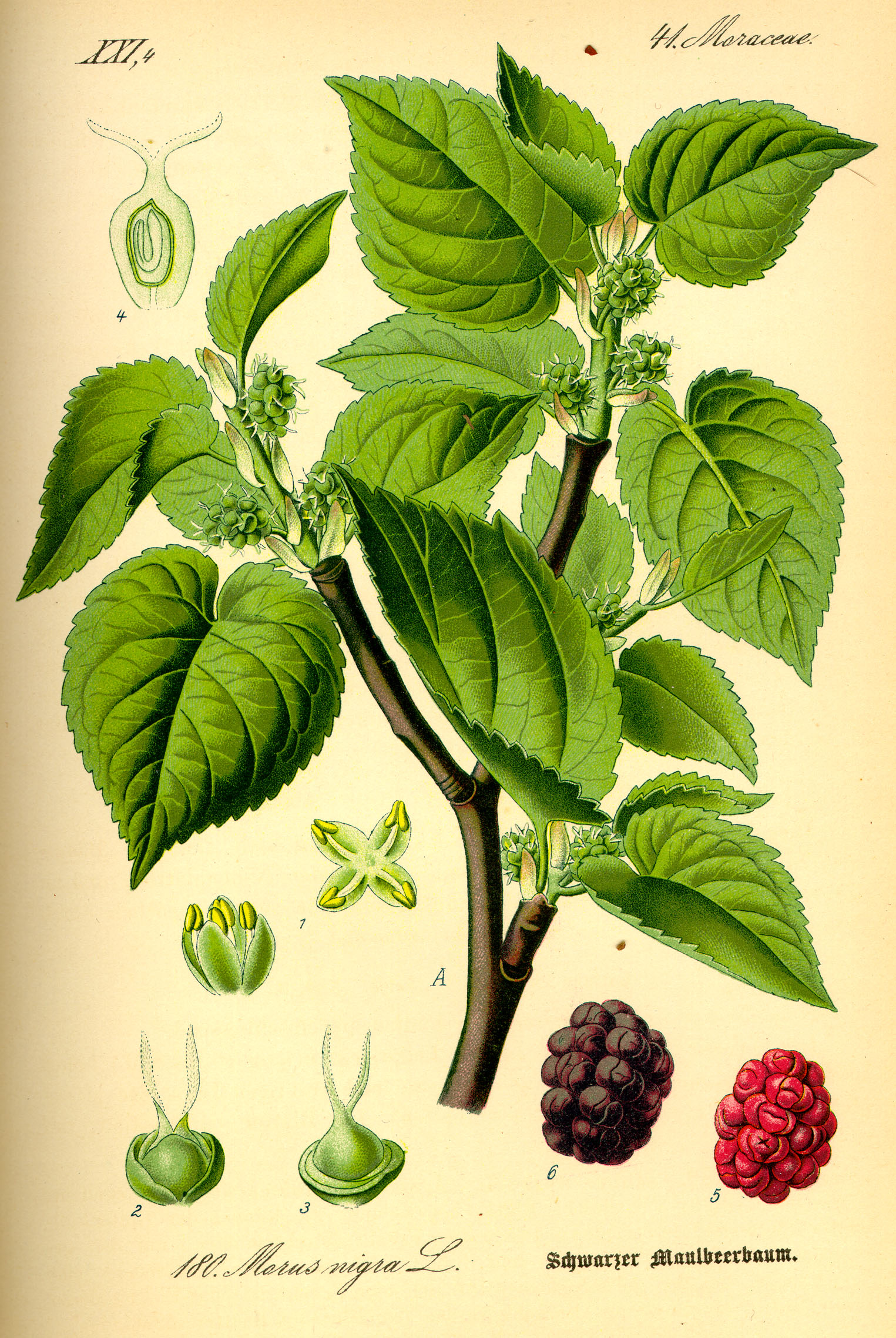
Botanical plate
Purple Mulberry,
as it actually grows.
Morus nigra — the black mulberry, its deep wine-dark fruit eaten fresh and pressed into syrups across Persia and the Mediterranean since antiquity.
How to Use
Across the Three Kingdoms
One herb, prepared once, serving people, pets, and plants from a single botanical practice — each with its own measure and care.
People
Benefit
immune resilience and deep, daily vitality
How to Use
1/4 tsp (up to 1 tsp) in hot water, tea, coffee, a smoothie, or food, once daily — begin with light doses; our extracts are very potent.
Pets
Dogs & companion animals
Benefit
Anthocyanin-rich berry tonic that supports antioxidant status and healthy post-meal glucose balance.
How to Use
Stir a small pinch of the dilute extract/powder into food, scaled to body weight (start at the low end for small pets), a few times per week.
By Animal
Cats
ASPCA: Morus non-toxic to cats; no phenol/essential-oil concern for the glucuronidation-limited cat.
Dogs
ASPCA: Morus non-toxic to dogs; ripe-fruit tonic well tolerated in moderation.
Horses
ASPCA: Morus non-toxic to horses; dilute fruit tonic is hindgut-friendly, no iodine/glycyrrhizin load.
Birds
Mulberry fruit is a documented bird-safe forage; no aromatic/essential-oil risk. No species-specific toxicity reported.
⚑ Sport horses: Mulberry/DNJ is not a named FEI/USEF prohibited substance, but any glucose-modulating botanical supplement should be disclosed and ideally withdrawn before competition out of caution under the controlled-medication framework.
Safety
Healthy animals tolerate ripe-fruit mulberry tonic well; ASPCA lists Morus as non-toxic to cats, dogs, and horses with no toxic principle. The one inherent active to respect is DNJ (1-deoxynojirimycin), the mulberry glucose-modulating compound: start low and go slow, and use caution or veterinary guidance in animals that are diabetic, on insulin or oral hypoglycemics, or already hypoglycemia-prone, since additive blood-sugar lowering is possible. Because it can blunt post-meal glucose, hold or coordinate dosing around sedation/surgery fasting and in very young, pregnant, or nursing animals where data are limited. Animals with liver or kidney disease, or on chronic medications, should be cleared by a vet before regular use. This product is the dilute ripe-fruit extract; do not substitute raw unripe berries, leaves, bark, or twigs, which can cause GI upset. Discontinue and consult a vet if vomiting, diarrhea, lethargy, or weakness occur.
Source: ASPCA Toxic and Non-Toxic Plants: Mulberry Tree (Morus sp.) — non-toxic to cats, dogs, horses (aspca.org); DNJ glucose-modulation and safety: PMC2935155, PMC4014974 (mulberry-leaf 1-deoxynojirimycin postprandial glycemic trials).
Plants
Garden, soil & foliage
Benefit
flowering, fruiting, and finish as a dilute bloom-stage tonic
How to Use
Dilute 1/8 to 1/4 teaspoon per gallon of water. Foliar feed at the lighter rate, or soil drench at the fuller rate, about once a month or every other feeding. Best worked in from pre-flower through bloom, as the plant sets and fills flower and fruit.
Best for
Flower & bloomSafety
A dilute extract in the GGG Plants line; always dilute and start light.
Source: GGG Plants line formulation
Structure-and-function guidance for nutrition and vitality. Not intended to diagnose, treat, cure, or prevent any disease. Introduce one botanical at a time and notice how the body responds. Some plants interact with medication; if you are pregnant, nursing, or on a prescription, know the interaction before you begin.
What's inside
Purple Mulberry,
down to the molecule.
The signature compound of Purple Mulberry, rendered from its real structure in bronze and glass — the precise thing the plant carries, given the dignity it has earned.
The evidence chain
From the plant to the molecule to the body — traced.
Not a claim — a chain. Every link below traces to a primary record. This is what Purple Mulberry is, measured.
The plant
Purple Mulberry
which governs
An enzyme that converts excess glucose into sorbitol, part of normal sugar metabolism.
serving the system
Blood & Circulatory · Liver
and the tradition independently agrees
Named for these systems in the recorded herbal lineage (Culpeper 1653, TCM, and cross-cultural materia medica) — tradition and the molecule, arrived at separately, converge.
Structure and function only. The chain describes the plant’s characterized chemistry and traditional use — not a claim to treat, cure, or prevent any disease.
How it works
How Purple Mulberry works in the body
A herb is never one thing — it is a community of compounds, each meeting the body in its own way. These are the active molecules in Purple Mulberry and the proteins each one is measured to engage: the precise points where the plant meets your biology. So you see not just that it works, but how.
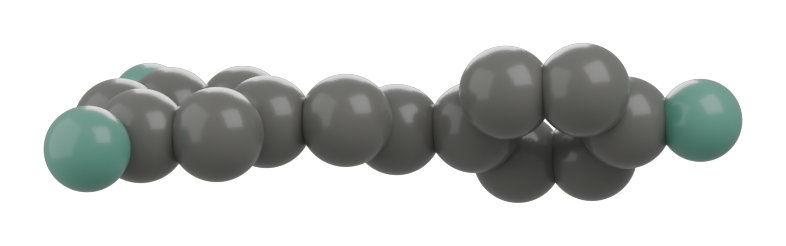
Quercetin
PubChem ↗Measured to act on
An enzyme that converts excess glucose into sorbitol as part of sugar metabolism.
Concentrated in adrenal glandstructure resolved ↗
An enzyme that converts fatty acids into messengers of the inflammatory response.
Concentrated in lymphoid tissue, lungstructure resolved ↗
An enzyme the influenza virus uses to release newly made copies from a host cell.
Measured in the lab
Real measurements from binding studies. A tighter fit means the compound meets its target more readily — the figure in grey is the actual measured value.
Binds very tightly to Amine oxidase [flavin-containing] A · IC50 10 nM
Binds very tightly to Aromatase · IC50 12 nM
Binds very tightly to Aldo-keto reductase family 1 member B1 · IC50 14.8 nM
Binds very tightly to Enoyl-acyl-carrier protein reductase · Ki 22 nM
Binds very tightly to Cytochrome P450 1B1 · Ki 23 nM
Binds very tightly to Serine/threonine-protein kinase pim-1 · Kd 25 nM
— and 108 more measured targets, each traced to its source.
Rutin (quercetin-3-O-rutinoside)
PubChem ↗Measured to act on
An enzyme the influenza virus uses to release newly made copies from a host cell.
The enzyme that produces uric acid as the body breaks down spent genetic building blocks.
Concentrated in liver, intestine, breaststructure resolved ↗
Chlorogenic acid
PubChem ↗Measured to act on
A viral enzyme that splices viral genetic material into a host cell's DNA.
An enzyme that helps regulate insulin and leptin signaling inside cells.
Measured in the lab
Real measurements from binding studies. A tighter fit means the compound meets its target more readily — the figure in grey is the actual measured value.
Binds very tightly to Tyrosine-protein phosphatase non-receptor type 1 · IC50 100 nM
Binds tightly to Histone deacetylase · Ki 135 nM
Binds tightly to Aldo-keto reductase family 1 member B1 · IC50 300 nM
Binds to Aldo-keto reductase family 1 member B10 · IC50 7.9 µM
Resveratrol
PubChem ↗Measured to act on
A structural protein that stabilizes the internal scaffolding of nerve cells.
Concentrated in brain, skeletal musclestructure resolved ↗
A receptor that helps direct the maturation of certain immune cells.
The enzyme that drives the body's inflammatory response.
Concentrated in urinary bladder, seminal vesicle, bone marrowstructure resolved ↗
Measured in the lab
Real measurements from binding studies. A tighter fit means the compound meets its target more readily — the figure in grey is the actual measured value.
Binds very tightly to Dipeptidyl peptidase 4 · IC50 0.6 nM
Binds very tightly to Ribosyldihydronicotinamide dehydrogenase [quinone] · Kd 54 nM
Binds very tightly to Luciferin 4-monooxygenase · IC50 59 nM
Binds tightly to Aryl hydrocarbon receptor · Ki 169 nM
Binds tightly to Cytochrome P450 1B1 · Ki 177 nM
Binds tightly to Platelet-derived growth factor receptor alpha/beta · IC50 230 nM
— and 29 more measured targets, each traced to its source.
1-Deoxynojirimycin (DNJ / duvoglustat)
PubChem ↗Measured to act on
A gut enzyme that breaks dietary starch and table sugar into absorbable simple sugars.
Concentrated in intestinestructure resolved ↗
An enzyme inside cells that breaks down stored glycogen into usable glucose.
A gut enzyme that finishes digesting starch into glucose for absorption.
Concentrated in intestine, epididymisstructure resolved ↗
Measured in the lab
Real measurements from binding studies. A tighter fit means the compound meets its target more readily — the figure in grey is the actual measured value.
Binds very tightly to Neutral alpha-glucosidase AB · Ki 14 nM
Binds very tightly to Sucrase-isomaltase, intestinal · Ki 24 nM
Binds very tightly to Putative alpha-glucosidase · IC50 30 nM
Binds very tightly to Maltase-glucoamylase · IC50 40 nM
Binds very tightly to Lysosomal alpha-glucosidase · Ki 59 nM
Binds tightly to Glycogen debranching enzyme · IC50 190 nM
— and 6 more measured targets, each traced to its source.
Cyanidin (aglycone of cyanidin-3-glucoside, the major Morus nigra fruit anthocyanin)
PubChem ↗Measured to act on
A receptor that senses cholesterol and helps govern fat and cholesterol balance.
Concentrated in liverstructure resolved ↗
A blood protein that, once activated, helps form clots and stop bleeding.
Concentrated in liverstructure resolved ↗
Cited science · not claims
Everything we publish about these plants traces to a primary source — the compounds to PubChem, ChEMBL, and BindingDB, the traditional uses to named, dated herbals. We describe what a plant is and what it is understood to nourish — the body’s own systems, structure and function only. We do not claim it treats, cures, or prevents any disease, and nothing here is a substitute for professional care. See our method & sources →
These statements have not been evaluated by the Food and Drug Administration. Not intended to diagnose, treat, cure, or prevent any disease.
Works alongside
Other herbs that share Purple Mulberry's terrain
Different plants reaching the same systems of the body — the convergence our genome engine maps. These nourish the terrain Purple Mulberry supports: