fruit
Jujube
Ziziphus jujuba
Also known as
Suitable For
The red date — rich in nourishing sugars and saponins that settle the mind, nourish the blood, and steady digestion. Used across herbal traditions to harmonize and soften a formula.
What it nourishes in the body
The body systems this herb is traditionally understood to support — resolved through our knowledge graph, where the classical record and modern biology are read together. Structure and function, never a claim of treatment.
Where measure and tradition agree
Jujube is measured to engage this system in human binding data — and the recorded tradition named it for it independently. Two evidence systems arriving at the same place, separately, is our highest standard. See the research →
10:1 Concentrated Extract
Whole-plant. Small-batch. Potent.
How to take it
1/4 tsp (up to 1 tsp) in hot water, tea, coffee, a smoothie, or food, once daily — begin with light doses; our extracts are very potent.
We'll email you the moment it's back in stock.
Whole plant, never isolated
Concentrated extracts of the whole botanical — the way the body recognizes it.
Cited to measured biology
Every action we describe traces to the compound and its measured target.
Structure & function
We describe what an herb nourishes — never a claim to treat disease.
Secure checkout
Encrypted payment and human verification on every order.
The Botanical
Jujube, in depth
Character
Jujube — Ziziphus jujuba, the red date, 红枣 — is among the most quietly indispensable botanicals in the herbal repertory: a sweet, sun-cured fruit that has been food and tonic in the same breath for thousands of years. Where many herbs are sharp, specialized instruments, jujube is a harmonizer — the fruit a formula is built around to soften, round, and bind its other members into a coherent whole. Its character is warm, sweet, and nourishing; in the classical reading it is a blood-and-spirit tonic, a fruit that steadies rather than stimulates, that grounds rather than drives. At GGG NATURAL we carry it as a concentrated 10:1 extract of the ripe red fruit, where the natural sugars, triterpenoid saponins, and fruit polysaccharides that define its nature are gathered into potent form.
It belongs to the lineage of "daily tonics" — botanicals gentle enough for sustained, everyday use, prized precisely because they ask nothing dramatic of the body and instead supply it with what it recognizes as food. This is the deepest expression of our philosophy: jujube is not a medicine acting upon the body but nourishment the body's own systems take up and use. Sweet on the tongue, settling to the mind, and steadying to digestion, it is the red date that has earned its place at the center of the formulary by making everything around it work in greater harmony.
In the Body
Jujube speaks most directly to two of the body's foundational systems — the blood and circulatory system and the digestive system — and through them to the body's broader capacity for calm, restful rhythm, and daily vitality. Its profile is built on well-established compound classes: nourishing fruit sugars and polysaccharides, triterpenoid saponins (the jujubosides characteristic of the species), and flavonoids. The polysaccharides are the kind of complex, food-form carbohydrates the digestive system readily engages, supporting the gut's own natural function and the steady, comfortable assimilation that underlies sustained energy. As a sweet, nutrient-dense fruit, jujube supplies the building blocks the body draws on to support healthy blood and a grounded sense of stamina, in keeping with its classical role as a blood-nourishing tonic.
Its triterpenoid saponins are the compound class long associated with jujube's settling, calming character — the quality the tradition describes as nourishing the spirit, expressed as restful, grounded calm and an even rhythm of rest. This is structure and function, not sedation: jujube supplies what the nervous system uses to settle into its own natural rest, supporting the body's intrinsic balance between alertness and ease. The flavonoids round out the picture as the supportive, protective class common to deeply colored fruit. Across all of it, jujube engages the body's own systems — circulatory, digestive, and the calm-and-restoration axis between them — nourishing their innate intelligence rather than overriding it, which is why it is so well suited to steady daily use and well tolerated across the People, Pets, and Plants kingdoms alike.
The Tradition
Jujube is one of the great harmonizing fruits of classical East Asian herbalism, where the red date — 红枣, da zao — is counted among the foundational tonics and appears in a remarkable share of traditional formulas, added expressly to nourish the blood, settle the spirit, support the digestive center, and harmonize and soften the action of the other herbs in a blend. Native to China and cultivated there for several thousand years, it traveled the trade routes outward as both food and tonic, entering the materia medica of cultures across Asia and beyond. In the broad herbal tradition we carry, jujube holds the role of the steadying, sweetening presence — the fruit a formula leans on for grounded calm and gentle, sustained vitality — and it is precisely this long, unbroken record of everyday human use across cultures that establishes its place as a daily nourishing tonic.
The dried fruit
Jujube,
as it actually grows.
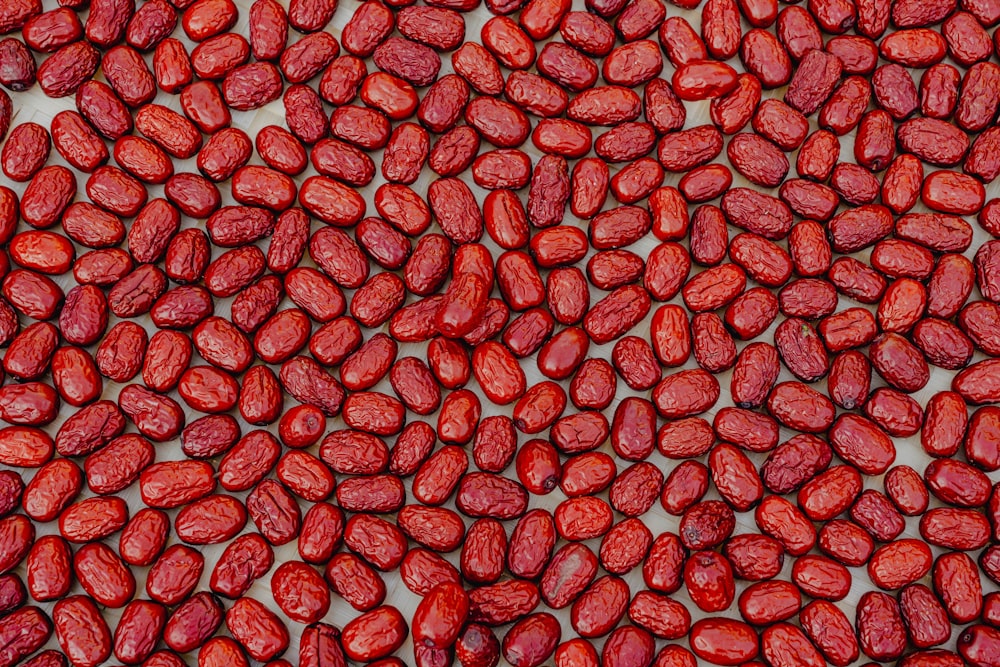
Ziziphus jujuba produces small oval drupes that are harvested in autumn and sun-dried to a deep crimson, concentrating their naturally sweet, honey-like flavor. Known as da zao in Chinese herbalism, dried jujube has been prized for thousands of years as a culinary ingredient in teas, congees, and slow-simmered broths.
How to Use
Across the Three Kingdoms
One herb, prepared once, serving people, pets, and plants from a single botanical practice — each with its own measure and care.
People
Benefit
immune resilience and deep, daily vitality — plus restful calm, digestive comfort
How to Use
1/4 tsp (up to 1 tsp) in hot water, tea, coffee, a smoothie, or food, once daily — begin with light doses; our extracts are very potent.
Pets
Dogs & companion animals
Benefit
Adaptogenic fruit tonic traditionally used to support calm, healthy sleep rhythm, digestion, and overall vitality.
How to Use
Add a small amount of the dilute extract/powder to food, scaled to body weight (a pinch for cats/small birds, up to roughly 1/4–1/2 tsp for a large dog), starting low and building over several days.
By Animal
Cats
ASPCA non-toxic; common TCVM yin/calming tonic for cats. No phenol/essential-oil concern.
Dogs
ASPCA non-toxic; widely used canine TCVM tonic (calm, digestion). Well tolerated.
Horses
ASPCA non-toxic to horses; not a high-iodine/glycyrrhizin herb. Keep sugar load low for EMS-prone horses.
Birds
Jujube fruit is a recognized safe parrot fruit; feed in moderation due to sugar. No aromatic-oil risk.
⚑ Sport horses: Jujube/Ziziphus is not individually named on the FEI Equine Prohibited Substances List, but FEI bans any herbal product used for a calming/sedative or energizing effect and warns against unverified supplement ingredients; competitors should confirm against the current FEI/USEF list and observe detection-time/withdrawal before competing.
Safety
Dilute jujube hot-water extract is well tolerated in healthy cats, dogs, horses, and birds; ASPCA lists Ziziphus jujuba as non-toxic to cats, dogs, and horses, and the fruit is food-grade for birds in moderation. All meaningful risks are CONDITIONAL, not inherent: do NOT combine with anticoagulants/blood thinners, and use caution alongside ACE inhibitors, NSAIDs, or aspirin (theoretical additive/interaction effects). Safe pregnancy/breeding use has not been established (a rat study showed estrous/uterine effects), so avoid in pregnant, lactating, or breeding animals. May be best avoided in animals with poorly controlled hypertension. Jujube fruit is naturally sugar-rich, so keep portions small for diabetic, overweight, or insulin-dysregulated animals, and for birds (sugar load) and horses (hindgut/EMS-prone) limit quantity. Start low, monitor, and consult a veterinarian before use in animals with chronic disease or on medication.
Source: ASPCA Toxic and Non-Toxic Plant Database (Ziziphus jujuba listed non-toxic to cats, dogs, horses); HerbSmith / White Oak Veterinary TCVM use in dogs and cats; VCA Animal Hospitals (fruits in bird diets); FEI Equine Prohibited Substances List / inside.fei.org Clean Sport; USEF 2026 Drugs & Medications Guidelines.
Plants
Garden, soil & foliage
Benefit
flowering, fruiting, and finish as a dilute bloom-stage tonic
How to Use
Dilute 1/8 to 1/4 teaspoon per gallon of water. Foliar feed at the lighter rate, or soil drench at the fuller rate, about once a month or every other feeding. Best worked in from pre-flower through bloom, as the plant sets and fills flower and fruit.
Best for
Flower & bloomSafety
A dilute extract in the GGG Plants line; always dilute and start light.
Source: GGG Plants line formulation
Structure-and-function guidance for nutrition and vitality. Not intended to diagnose, treat, cure, or prevent any disease. Introduce one botanical at a time and notice how the body responds. Some plants interact with medication; if you are pregnant, nursing, or on a prescription, know the interaction before you begin.
The evidence chain
From the plant to the molecule to the body — traced.
Not a claim — a chain. Every link below traces to a primary record. This is what Jujube is, measured.
The plant
Jujube
which governs
A receptor (TGR5) for bile acids, involved in metabolism and energy balance.
serving the system
Blood & Circulatory · Digestive
and the tradition independently agrees — measured binding
The recorded herbal lineage names Jujube a nervous herb. Independently, its compounds are measured to bind proteins of that system. Tradition and molecule, arrived at separately, converge — the strongest evidence we hold.
Structure and function only. The chain describes the plant’s characterized chemistry and traditional use — not a claim to treat, cure, or prevent any disease.
How it works
How Jujube works in the body
A herb is never one thing — it is a community of compounds, each meeting the body in its own way. These are the active molecules in Jujube and the proteins each one is measured to engage: the precise points where the plant meets your biology. So you see not just that it works, but how.
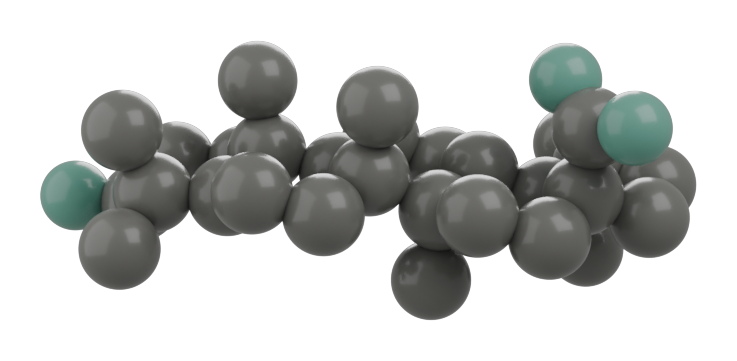
Betulinic acid
PubChem ↗Measured to act on
A receptor that senses bile acids and helps govern metabolism and energy balance.
Concentrated in adipose tissue, breast, gallbladderstructure resolved ↗
An enzyme that dials down insulin and growth signaling by removing phosphate tags.
Measured in the lab
Real measurements from binding studies. A tighter fit means the compound meets its target more readily — the figure in grey is the actual measured value.
Binds tightly to Albumin · Kd 593 nM
Binds to G-protein coupled bile acid receptor 1 · EC50 1.04 µM
Binds to Tyrosine-protein phosphatase non-receptor type 1 · IC50 1.5 µM
Binds to Genome polyprotein · IC50 1.7 µM
Binds to Aldo-keto reductase family 1 member B10 · IC50 2 µM
Binds to Nuclear receptor ROR-gamma · IC50 2.2 µM
— and 5 more measured targets, each traced to its source.
Rutin
PubChem ↗Measured to act on
An enzyme that cuts proteins at the cell surface, part of normal protein turnover.
Concentrated in pancreas, brainstructure resolved ↗
The enzyme that switches off the nerve messenger acetylcholine after a signal.
Concentrated in skeletal muscle, brain, tonguestructure resolved ↗
A protein that helps organize DNA and acts as an alarm signal during tissue stress.
Measured in the lab
Real measurements from binding studies. A tighter fit means the compound meets its target more readily — the figure in grey is the actual measured value.
Binds very tightly to Tyrosinase · IC50 0.856 nM
Binds very tightly to Beta-secretase 1 · IC50 3.8 nM
Binds very tightly to Acetylcholinesterase · IC50 12 nM
Binds very tightly to Muscarinic acetylcholine receptor M5 · Ki 35.13 nM
Binds to Neuromedin-U receptor 2 · EC50 1.2 µM
Binds to Genome polyprotein · IC50 2.1 µM
— and 5 more measured targets, each traced to its source.
Quercetin
PubChem ↗Measured to act on
The enzyme that converts androgens into estrogen, the body main estrogen source.
Concentrated in placentastructure resolved ↗
An enzyme that converts excess glucose into sorbitol, part of normal sugar metabolism.
Concentrated in adrenal glandstructure resolved ↗
A liver-type enzyme that processes hormones and environmental compounds.
A signaling enzyme that tags other proteins to influence cell growth and survival.
Concentrated in bone marrowstructure resolved ↗
A signaling enzyme that relays growth and movement messages inside cells.
An enzyme that converts fatty acids into messengers of the inflammatory response.
Concentrated in lymphoid tissue, lungstructure resolved ↗
The enzyme that produces uric acid as the body breaks down purines.
Concentrated in liver, intestine, breaststructure resolved ↗
An enzyme that cuts proteins at the cell surface, part of normal protein turnover.
Concentrated in pancreas, brainstructure resolved ↗
Measured in the lab
Real measurements from binding studies. A tighter fit means the compound meets its target more readily — the figure in grey is the actual measured value.
Binds very tightly to Amine oxidase [flavin-containing] A · IC50 10 nM
Binds very tightly to Aromatase · IC50 12 nM
Binds very tightly to Aldo-keto reductase family 1 member B1 · IC50 14.8 nM
Binds very tightly to Enoyl-acyl-carrier protein reductase · Ki 22 nM
Binds very tightly to Cytochrome P450 1B1 · Ki 23 nM
Binds very tightly to Serine/threonine-protein kinase pim-1 · Kd 25 nM
— and 108 more measured targets, each traced to its source.
Cited science · not claims
Everything we publish about these plants traces to a primary source — the compounds to PubChem, ChEMBL, and BindingDB, the traditional uses to named, dated herbals. We describe what a plant is and what it is understood to nourish — the body’s own systems, structure and function only. We do not claim it treats, cures, or prevents any disease, and nothing here is a substitute for professional care. See our method & sources →
These statements have not been evaluated by the Food and Drug Administration. Not intended to diagnose, treat, cure, or prevent any disease.
Works alongside
Other herbs that share Jujube's terrain
Different plants reaching the same systems of the body — the convergence our genome engine maps. These nourish the terrain Jujube supports:
Blood & Circulatory