leaf
Hemp Leaf
Cannabis sativa
Also known as
Suitable For
Chlorophyll-rich leaf from organically grown garden hemp. A foundational green, dense in phytonutrients, amino acids, and alkalizing minerals.
What it nourishes in the body
The body systems this herb is traditionally understood to support — resolved through our knowledge graph, where the classical record and modern biology are read together. Structure and function, never a claim of treatment.
Where measure and tradition agree
Hemp Leaf is measured to engage this system in human binding data — and the recorded tradition named it for it independently. Two evidence systems arriving at the same place, separately, is our highest standard. See the research →
Engages the body’s own cannabinoid system
Hemp Leaf is measured to engage the endocannabinoid system — the master regulator the body runs on its own cannabinoids, carrying β-caryophyllene, a dietary terpene that engages the CB2 receptor. Characterization, not a clinical claim. The endocannabinoid bridge →
Raw, Unconcentrated Powder
Whole-plant. Small-batch. Potent.
How to take it
1 tsp to 1 tbsp in hot water makes a good daily green tea — also fine in a smoothie or stirred into food. This is a whole-leaf powder, not a concentrated extract, so use the fuller measure.
Whole plant, never isolated
Concentrated extracts of the whole botanical — the way the body recognizes it.
Cited to measured biology
Every action we describe traces to the compound and its measured target.
Structure & function
We describe what an herb nourishes — never a claim to treat disease.
Secure checkout
Encrypted payment and human verification on every order.
The Botanical
Hemp Leaf, in depth
Character
Hemp Leaf is the broad, palmate fan-leaf of *Cannabis sativa* — the same lineage that humanity has cultivated longer than almost any plant on earth, here taken not for its flower but for its green. This is a deliberate and important distinction: the cannabinoids of the plant concentrate in the resinous trichomes of the flower and sugar leaf, while the fan leaf carries only trace amounts, is non-psychoactive, and is free of the THC that defines the flower. What it carries instead is the fundamental architecture of a true green — chlorophyll, a full spectrum of amino acids, and the alkalizing mineral matrix of a vigorously growing leaf. Grown organically in American soil and dried into a fine, chlorophyll-rich whole-leaf powder, this is hemp as a foundational green food, not as an intoxicant.
In the GGG NATURAL formulary it stands among the chlorophyll-rich, nutrient-dense leaves — a foundational green whose character is earthy, grounding, and quietly energizing. Where the root is restorative and the flower belongs to another conversation entirely, the leaf is daily green nutrition: dense, alkalizing, and serving all three kingdoms. It is one of the rare botanicals offered across People, Pets, and Plants from a single lineage — a green tonic for the body, a green-nutrition staple for cats, dogs, horses, and birds, and organic matter and ground cover for the soil itself.
In the Body
Hemp Leaf engages the body the way a fundamental green food does — as nutritional intelligence the body recognizes and draws upon, supporting natural energy, stamina, and endurance. Its target system is the body's vitality and energy economy: the green substrate that fuels everyday output. The leaf is built on chlorophyll, the porphyrin pigment structurally kin to the heme of our own blood, which the herbal tradition has long prized in deep greens as nourishment for healthy, oxygen-carrying vitality. Around that pigment sits a dense matrix of amino acids — the body's own building blocks for tissue, enzymes, and the proteins of sustained strength — and an alkalizing spread of minerals that supports the body's natural acid-base balance and mineral reserves.
These are established constituent classes of a vigorously growing green leaf, and they engage the body through the most basic channel of all: nourishment of the systems that generate and sustain stamina. The chlorophyll and mineral fraction support the body's own alkalizing balance and its natural systems of cleansing and elimination; the amino-acid and phytonutrient density feeds the structural and energetic tissues that carry endurance through a long day. In animals the same green-nutrition profile supports everyday vitality and supple condition; in the soil, the leaf's organic matter feeds the living ground. Throughout, the leaf nourishes the body's own systems — it is food the body knows how to use, not a compound forcing a result.
The Tradition
*Cannabis sativa* is among the most thoroughly documented plants in the human record, appearing across the great herbal traditions of Asia, the Middle East, and Europe — entering the European canon by way of figures such as Culpeper, who set the plant within the classical herbal scheme, while classical TCM (where it is known as má) records its seed and aerial parts among the long-used materia medica. The fan leaf and aerial greens specifically carry a folk and agrarian lineage distinct from the resinous flower: in cultures where hemp was a staple field crop, the abundant leaf was understood as green fodder, green nourishment, and organic matter returned to the soil. GGG NATURAL carries this green-food lineage forward — the non-psychoactive fan leaf as a foundational chlorophyll-rich tonic across all three kingdoms — keeping faith with the tradition's understanding of the leaf as nutrition rather than intoxicant.
The leaf
Hemp Leaf,
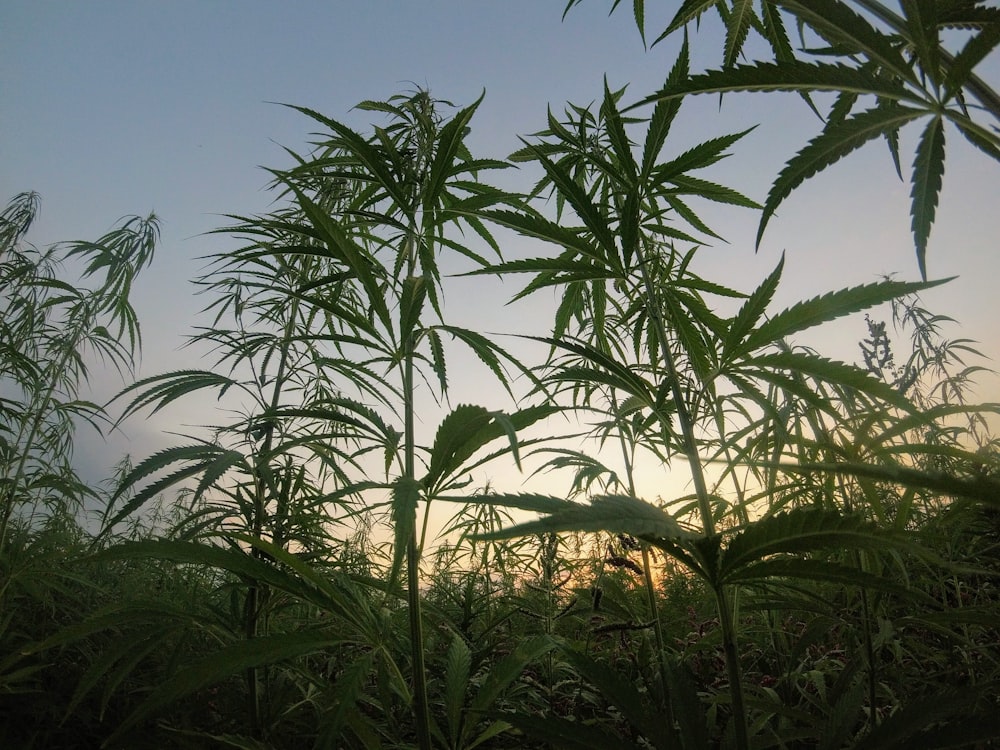
as it actually grows.
Cannabis sativa has been cultivated across Asia and Europe for thousands of years, prized for its fiber, seed, and leaf. Hemp leaf is traditionally used in teas and topical preparations, valued for its rich chlorophyll content and the plant's long history as a versatile botanical ally.
How to Use
Across the Three Kingdoms
One herb, prepared once, serving people, pets, and plants from a single botanical practice — each with its own measure and care.
People
Benefit
natural energy, stamina, and endurance
How to Use
1 tsp to 1 tbsp in hot water makes a good daily green tea — also fine in a smoothie or stirred into food. This is a whole-leaf powder, not a concentrated extract, so use the fuller measure.
Pets
Dogs & companion animals
Benefit
green nutrition, minerals, and everyday vitality in dogs and cats
How to Use
A small amount of the dilute hemp fan-leaf greens stirred into food, scaled to body weight; for competing sport horses, withhold (see competition).
By Animal
Cats
Non-psychoactive hemp fan leaf (no flower/sugar leaf, no THC of concern); a green-nutrition tonic.
Dogs
Non-psychoactive hemp fan leaf (no flower/sugar leaf, no THC of concern); a green-nutrition tonic.
Horses
Non-psychoactive hemp fan leaf (no flower/sugar leaf, no THC of concern); a green-nutrition tonic.
Birds
Non-psychoactive hemp fan leaf (no flower/sugar leaf, no THC of concern); a green-nutrition tonic.
⚑ Sport horses: BANNED substance class for sport horses: USEF prohibits natural and synthetic cannabinoids (CBD + metabolites) under GR4 effective 2019-09-01; THC is a FEI/USEF Banned substance. A hemp-leaf extract will trigger a positive test — do not use in any competing horse.
Safety
This is hemp fan-leaf greens — non-psychoactive, only trace cannabinoids (~0.05%), no THC of concern. Cannabinoids concentrate in flower/sugar leaf, which are not present here. The ASPCA cannabis listing concerns marijuana-grade THC, not hemp fan leaf. Introduce gradually; consult a professional for pregnant, nursing, or medicated animals.
Source: Industrial hemp <0.3% THC (USDA); cannabinoids concentrate in flower trichomes, leaf ~0.05%
Plants
Garden, soil & foliage
Benefit
vegetative vigor, strong rooting, and resilient new growth
How to Use
Dilute 1/8 to 1/4 teaspoon per gallon of water. Foliar feed at the lighter rate, or soil drench at the fuller rate, about once a month or every other feeding. Best worked in through vegetative growth, as the plant builds leaf, stem, and root.
Best for
Vegetative growthSafety
A dilute extract in the GGG Plants line; always dilute and start light.
Source: GGG Plants line formulation
Structure-and-function guidance for nutrition and vitality. Not intended to diagnose, treat, cure, or prevent any disease. Introduce one botanical at a time and notice how the body responds. Some plants interact with medication; if you are pregnant, nursing, or on a prescription, know the interaction before you begin.
What’s in your cup
A daily 1 tsp – 1 tbsp green tea
Hemp leaf is a green food first. Most of the cup is nutrition; a small, naturally-present cannabinoid and terpene fraction rides along.
Green-food matrix
Chlorophyll · full amino-acid spectrum · alkalizing minerals (Ca, Mg, K, Fe)
Daily green nutrition and an alkalizing mineral bed — the bulk of the cup.
Antioxidant flavonoids
Cannflavin A & B · apigenin · luteolin · orientin · vitexin
Polyphenol antioxidant support; cannflavins are nearly unique to hemp.
Aromatic terpenes
β-caryophyllene · myrcene · limonene
β-caryophyllene is a dietary compound the body meets at the CB2 receptor.
Trace cannabinoidstrace
CBD / CBDA-led, with a whisper of others
A small, NON-intoxicating fraction that touches the endocannabinoid system (CB1/CB2). Fan leaf carries only trace THC, well under the hemp limit.
Non-intoxicating. Structure/function only — herbs nourish the body's own systems; this is not a claim to treat.
The evidence chain
From the plant to the molecule to the body — traced.
Not a claim — a chain. Every link below traces to a primary record. This is what Hemp Leaf is, measured.
The plant
Hemp Leaf
which governs
The cannabinoid receptor of immune tissues, involved in inflammation and immune balance.
serving the system
Nervous · Immune
and the tradition independently agrees — measured binding
The recorded herbal lineage names Hemp Leaf a nervous herb. Independently, its compounds are measured to bind proteins of that system. Tradition and molecule, arrived at separately, converge — the strongest evidence we hold.
Structure and function only. The chain describes the plant’s characterized chemistry and traditional use — not a claim to treat, cure, or prevent any disease.
How it works
How Hemp Leaf works in the body
A herb is never one thing — it is a community of compounds, each meeting the body in its own way. These are the active molecules in Hemp Leaf and the proteins each one is measured to engage: the precise points where the plant meets your biology. So you see not just that it works, but how.

Cannabidiol (CBD)
PubChem ↗Measured to act on
A receptor of the endocannabinoid system, concentrated in the brain and nervous tissue.
Concentrated in brain, adipose tissuestructure resolved ↗
A receptor of the endocannabinoid system, concentrated in immune tissue.
Concentrated in lymphoid tissue, intestinestructure resolved ↗
A signaling receptor related to the endocannabinoid system, involved in cellular communication.
Concentrated in testis, lymphoid tissue, brainstructure resolved ↗
A nerve-ending sensor that responds to cold and to sharp, pungent plant compounds like mustard and cinnamon.
A sensory channel that responds to pressure, stretch, and temperature in cells.
A major liver enzyme that processes a wide range of compounds the body takes in.
Concentrated in liverstructure resolved ↗
A liver enzyme that helps break down and clear many compounds from the body.
Concentrated in liverstructure resolved ↗
Measured in the lab
Real measurements from binding studies. A tighter fit means the compound meets its target more readily — the figure in grey is the actual measured value.
Binds very tightly to Transient receptor potential cation channel subfamily M member 8 · IC50 60 nM
Binds very tightly to Transient receptor potential cation channel subfamily A member 1 · EC50 96 nM
Binds tightly to High affinity cGMP-specific 3',5'-cyclic phosphodiesterase 9A · IC50 110 nM
Binds tightly to Gamma-aminobutyric acid receptor subunit beta-2 · IC50 130 nM
Binds tightly to Cytochrome P450 1A1 · Ki 150 nM
Binds tightly to Cannabinoid receptor 1 · Ki 151 nM
— and 28 more measured targets, each traced to its source.
Tetrahydrocannabinol (THC / dronabinol)
PubChem ↗Measured to act on
A receptor of the endocannabinoid system, concentrated in the brain and nervous tissue.
Concentrated in brain, adipose tissuestructure resolved ↗
A receptor of the endocannabinoid system, concentrated in immune tissue.
Concentrated in lymphoid tissue, intestinestructure resolved ↗
A nerve-ending sensor that responds to cold and to sharp, pungent plant compounds like mustard and cinnamon.
A receptor that senses dopamine, the brain's chemical for motivation and movement.
Concentrated in brainstructure resolved ↗
The sensory channel that detects cold and the cooling feel of menthol.
Concentrated in prostate, liverstructure resolved ↗
Measured in the lab
Real measurements from binding studies. A tighter fit means the compound meets its target more readily — the figure in grey is the actual measured value.
Binds very tightly to Cannabinoid receptor 2 · EC50 1.5 nM
Binds very tightly to Cannabinoid receptor 1 · IC50 2.8 nM
Binds very tightly to Cannabinoid receptor 1/2 · IC50 5.8 nM
Binds very tightly to D(3) dopamine receptor · EC50 10 nM
Binds tightly to Transient receptor potential cation channel subfamily M member 8 · IC50 160 nM
Binds tightly to Transient receptor potential cation channel subfamily A member 1 · EC50 230 nM
— and 4 more measured targets, each traced to its source.
Cannabinol (CBN)
PubChem ↗Measured to act on
A receptor of the endocannabinoid system, concentrated in the brain and nervous tissue.
Concentrated in brain, adipose tissuestructure resolved ↗
A receptor of the endocannabinoid system, concentrated in immune tissue.
Concentrated in lymphoid tissue, intestinestructure resolved ↗
A nerve-ending sensor that responds to cold and to sharp, pungent plant compounds like mustard and cinnamon.
A liver enzyme that processes environmental compounds and certain plant molecules.
Concentrated in liver, urinary bladderstructure resolved ↗
A liver enzyme that breaks down caffeine and many other ingested compounds.
Concentrated in liverstructure resolved ↗
Measured in the lab
Real measurements from binding studies. A tighter fit means the compound meets its target more readily — the figure in grey is the actual measured value.
Binds very tightly to Cannabinoid receptor 1 · Ki 13 nM
Binds very tightly to Cannabinoid receptor 2 · Ki 16 nM
Binds very tightly to Cytochrome P450 1A2 · Ki 79 nM
Binds tightly to Cytochrome P450 1B1 · Ki 148 nM
Binds tightly to Transient receptor potential cation channel subfamily A member 1 · EC50 180 nM
Binds tightly to Transient receptor potential cation channel subfamily M member 8 · IC50 210 nM
— and 7 more measured targets, each traced to its source.
Cannabigerol (CBG)
PubChem ↗Measured to act on
A receptor of the endocannabinoid system, concentrated in the brain and nervous tissue.
Concentrated in brain, adipose tissuestructure resolved ↗
A receptor of the endocannabinoid system, concentrated in immune tissue.
Concentrated in lymphoid tissue, intestinestructure resolved ↗
A nerve-ending sensor that responds to cold and to sharp, pungent plant compounds like mustard and cinnamon.
The sensory channel that detects cold and the cooling sensation of menthol.
A transporter that recycles dopamine back into nerve cells after it sends its signal.
Concentrated in brainstructure resolved ↗
beta-Caryophyllene
PubChem ↗Measured to act on
A receptor of the endocannabinoid system, concentrated in immune tissue.
Concentrated in lymphoid tissue, intestinestructure resolved ↗
A receptor that helps the body burn fats and manage energy metabolism.
Concentrated in tonguestructure resolved ↗
Cited science · not claims
Everything we publish about these plants traces to a primary source — the compounds to PubChem, ChEMBL, and BindingDB, the traditional uses to named, dated herbals. We describe what a plant is and what it is understood to nourish — the body’s own systems, structure and function only. We do not claim it treats, cures, or prevents any disease, and nothing here is a substitute for professional care. See our method & sources →
These statements have not been evaluated by the Food and Drug Administration. Not intended to diagnose, treat, cure, or prevent any disease.
Works alongside
Other herbs that share Hemp Leaf's terrain
Different plants reaching the same systems of the body — the convergence our genome engine maps. These nourish the terrain Hemp Leaf supports: