mushroom
Reishi
Ganoderma lucidum
Also known as
Suitable For
Ganoderma lucidum — among the most studied functional mushrooms on earth. Its triterpenes and beta-glucans support a healthy immune system, a steady response to everyday stress, and restful, restorative sleep. Revered across Asia for two millennia and the subject of ongoing modern research.
What it nourishes in the body
The body systems this herb is traditionally understood to support — resolved through our knowledge graph, where the classical record and modern biology are read together. Structure and function, never a claim of treatment.
Where measure and tradition agree
Reishi is measured to engage these systems in human binding data — and the recorded tradition named it for them independently. Two evidence systems arriving at the same place, separately, is our highest standard. See the research →
10:1 Concentrated Extract
Whole-plant. Small-batch. Potent.
How to take it
1/4 tsp (up to 1 tsp) in hot water, tea, coffee, a smoothie, or food, once daily — begin with light doses; our extracts are very potent.
Whole plant, never isolated
Concentrated extracts of the whole botanical — the way the body recognizes it.
Cited to measured biology
Every action we describe traces to the compound and its measured target.
Structure & function
We describe what an herb nourishes — never a claim to treat disease.
Secure checkout
Encrypted payment and human verification on every order.
The Fungus
Reishi, in depth
Character
Reishi (Ganoderma lucidum), known in the East Asian materia medica as líng zhī (灵芝) — the "mushroom of spirit" — is a woody, lacquered polypore that grows on the trunks of aging hardwoods, and one of the most extensively characterized of the functional mushrooms. GGG NATURAL works exclusively with the fruiting body, rendered as a concentrated 10:1 hot-water extract; this is the form in which Reishi's character is most fully expressed. Its flavor is frankly bitter — the signature of a true tonic mushroom — and that bitterness is the taste of its richest constituents. Reishi is not a stimulant and not a sedative; it is an adaptogen in the oldest sense, a botanical of poise. Where some plants push and others pull, Reishi steadies. It belongs to the longevity tradition: the herb taken not for a moment of need but as a daily companion, year over year, the slow cultivation of resilience.
In the Body
Reishi's signature engages two of the body's deepest systems: the immune system and the body's stress-and-vitality architecture. Its established molecular character rests on two well-documented compound classes. The first is its beta-glucans and broader polysaccharides — large, branching sugar structures that the immune system's own surveillance machinery recognizes as familiar, naturally occurring patterns; in the herbal understanding, they are nourishment the immune system reads as information, supporting its healthy, self-regulating function and a steady, balanced response rather than driving it in any single direction. The second is its triterpenes — the bitter, oxygenated molecules (the ganoderic acids) that give Reishi its taste and its tonic depth, traditionally associated with supporting the liver's natural work and with a grounded, composed nervous tone. Together these constituents place Reishi at the intersection of immune resilience and a steady stress response: it supports the body's own capacity to meet daily demand with stamina, to return to calm, and to settle into deep, restorative rest. This is structure and function in the truest sense — Reishi does not act upon the body so much as feed the systems by which the body governs itself, nourishing the immune system's natural function, vitality, and the quiet, grounded balance from which endurance is built.
The Tradition
Reishi has been revered across East Asia for some two millennia, ranked in the classical East Asian herbal canon among the "superior" tonics — the highest class of botanicals, those taken continually to cultivate vitality, calm, and longevity rather than for any acute purpose. Called líng zhī in China and reishi in Japan, it was historically so prized that it was reserved for emperors and rendered in art and scholarship as an emblem of long life and spiritual poise. In the classical tradition it is associated with the heart and the spirit (the shen), prized for settling and grounding, and with the body's protective and restorative capacities. In the lineage GGG NATURAL carries, Reishi is the archetypal longevity mushroom: a daily tonic whose authority comes not from novelty but from an unbroken record of human use across cultures and centuries.
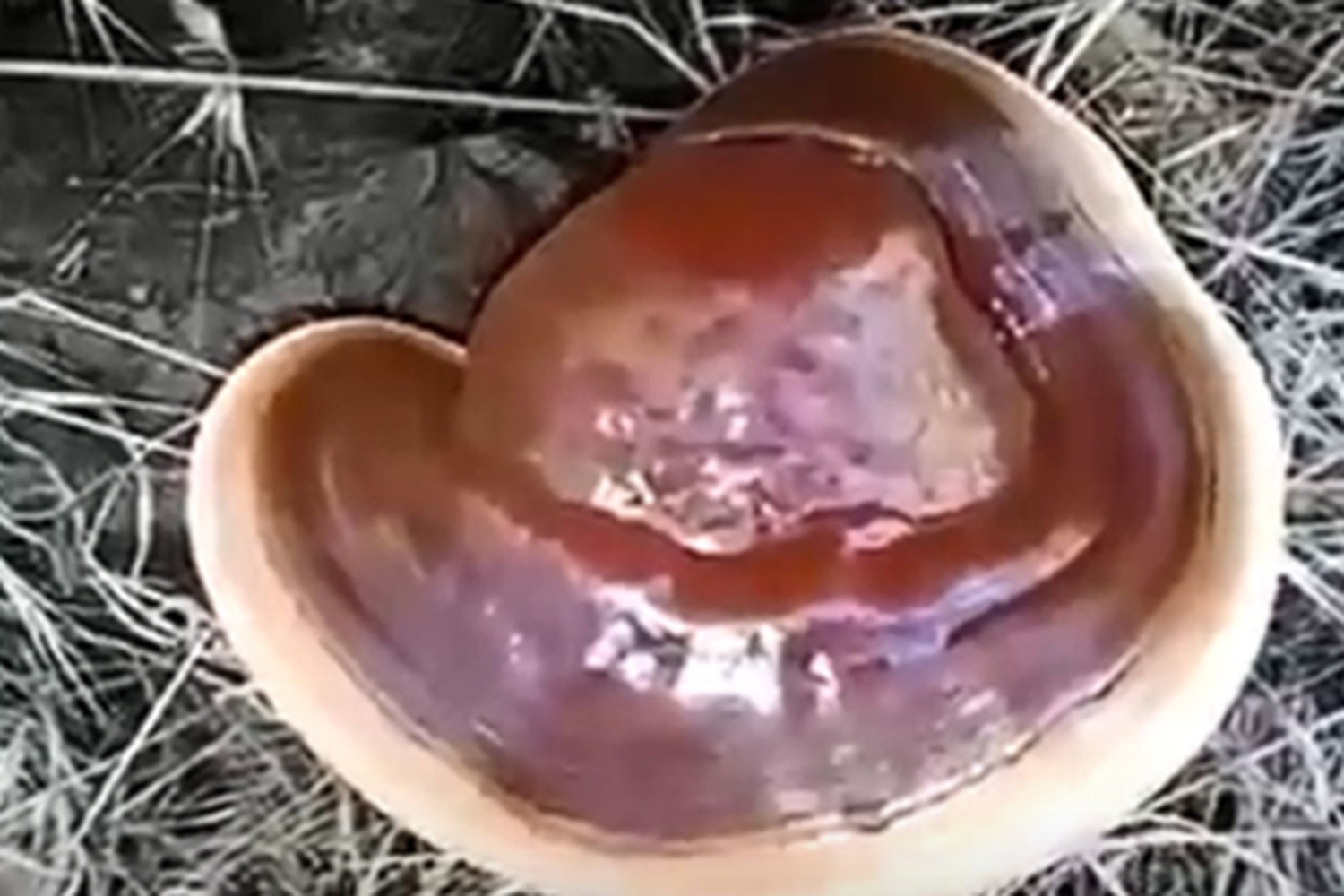
The mushroom
Reishi,
as it actually grows.
Ganoderma lucidum — the lacquered, woody bracket the old texts named lingzhi. It grows slowly on fallen hardwood, ringed and varnished, exactly as it has across the two millennia it has been revered.
How to Use
Across the Three Kingdoms
One herb, prepared once, serving people, pets, and plants from a single botanical practice — each with its own measure and care.
People
Benefit
immune resilience and deep, daily vitality — plus immune support, restful calm
How to Use
1/4 tsp (up to 1 tsp) in hot water, tea, coffee, a smoothie, or food, once daily — begin with light doses; our extracts are very potent.
Pets
Dogs & companion animals
Benefit
Adaptogenic mushroom that supports healthy immune function, normal histamine balance, liver function, and resilience to daily stress.
How to Use
Give a small amount of the dilute hot-water extract or powder stirred into food, scaled to body weight; start low and build gradually over days.
By Animal
Cats
Not on ASPCA toxic list; no phenols/essential oils, so no feline glucuronidation concern — well-tolerated as a dilute tonic.
Dogs
Widely used canine immune/adaptogen tonic; not toxic, no inherent risk to a healthy dog at moderate dilute doses.
Horses
No iodine, glycyrrhizin, or hindgut-irritant saponin load; a dilute extract is well-tolerated by a healthy horse.
Birds
Well tolerated as a dilute, body-weight-scaled tonic; introduce gradually, starting with a small amount.
⚑ Sport horses: Not a specifically named FEI/USEF prohibited substance, but immune-modulating beta-glucans/triterpenes are not on a permitted list either; treat any botanical supplement as competition-risk and withdraw before FEI/USEF events unless cleared.
Safety
Reishi (Ganoderma lucidum) is not listed on the ASPCA toxic-plant database and rat toxicology shows no acute, subchronic, or genotoxic effects up to 2,000 mg/kg/day, so as a dilute hot-water tonic it is well-tolerated by healthy animals of all four species. The real cautions are CONDITIONAL, not species-class issues: (1) Reishi has mild antiplatelet/blood-thinning activity from its triterpenes — use cautiously and consult a vet in animals with bleeding disorders, on NSAIDs, anticoagulants, or blood-pressure medication, and pause 1-2 weeks before elective surgery; (2) its immune-modulating beta-glucans can interact with immunosuppressive drugs — avoid in transplant or autoimmune-suppressed animals without veterinary oversight; (3) avoid in any animal with a known mushroom/fungal allergy; (4) use caution in pregnancy/lactation and in animals with significant pre-existing liver or kidney disease where any new supplement should be vet-supervised; (5) GI upset is possible if introduced too fast, so start low. This is a concentrated 10:1 extract, so dose by body weight rather than by the spoon, and build up gradually over several days.
Source: ASPCA Toxic and Non-Toxic Plants database (Reishi/Ganoderma not listed); VCA Animal Hospitals "Medicinal Mushrooms"; AKC "Medicinal Mushrooms for Dogs"; toxicological assessment of Ganoderma lucidum powder (PMC11558339, NOAEL 2,000 mg/kg/day, no genotoxicity); Ganoderma lucidum chemistry/benefits/safety review (PMC12108272); FEI 2026 Equine Prohibited Substances List / USEF Clean Sport.
Plants
Garden, soil & foliage
Benefit
whole-cycle vigor, resilience, and a living root zone
How to Use
Dilute 1/8 to 1/4 teaspoon per gallon of water. Foliar feed at the lighter rate, or soil drench at the fuller rate, about once a month or every other feeding. Used the entire way, through both vegetative growth and bloom.
Best for
Whole cycle — growth & bloomSafety
A dilute extract in the GGG Plants line; always dilute and start light.
Source: GGG Plants line formulation
Structure-and-function guidance for nutrition and vitality. Not intended to diagnose, treat, cure, or prevent any disease. Introduce one botanical at a time and notice how the body responds. Some plants interact with medication; if you are pregnant, nursing, or on a prescription, know the interaction before you begin.
What's inside
Reishi,
down to the molecule.
The signature compound of Reishi, rendered from its real structure in bronze and glass — the precise thing the plant carries, given the dignity it has earned.
The evidence chain
From the plant to the molecule to the body — traced.
Not a claim — a chain. Every link below traces to a primary record. This is what Reishi is, measured.
The plant
Reishi
which governs
An enzyme (iNOS) that makes nitric oxide during immune and inflammatory responses.
serving the system
Immune · Liver
and the tradition independently agrees — measured binding
The recorded herbal lineage names Reishi a immune and nervous herb. Independently, its compounds are measured to bind proteins of those systems. Tradition and molecule, arrived at separately, converge — the strongest evidence we hold.
Structure and function only. The chain describes the plant’s characterized chemistry and traditional use — not a claim to treat, cure, or prevent any disease.
How it works
How Reishi works in the body
A herb is never one thing — it is a community of compounds, each meeting the body in its own way. These are the active molecules in Reishi and the proteins each one is measured to engage: the precise points where the plant meets your biology. So you see not just that it works, but how.
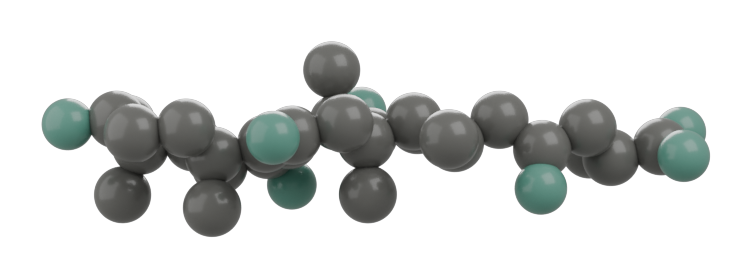
Ganoderic acid A
PubChem ↗Measured to act on
An enzyme that locally regenerates active cortisol, shaping how tissues respond to the body's stress hormone.
Concentrated in liverstructure resolved ↗
An enzyme that quiets cortisol inside kidney and salt-handling tissues, helping govern fluid and mineral balance.
Concentrated in kidney, salivary gland, intestinestructure resolved ↗
An enzyme that converts glucose into sorbitol, part of how cells handle sugar.
Concentrated in adrenal glandstructure resolved ↗
A messenger protein that coordinates immune and inflammatory signaling throughout the body.
A signaling protein that carries messages from the cell surface to the genes, guiding growth and immune response.
A regulatory protein that tags the guardian protein p53 for recycling, keeping cell-cycle control in balance.
Ganoderic acid B
PubChem ↗Measured to act on
The enzyme that breaks down acetylcholine, resetting nerve and muscle signals between pulses.
Concentrated in skeletal muscle, brain, tonguestructure resolved ↗
A blood enzyme that breaks down acetylcholine and helps clear certain compounds from circulation.
Concentrated in liverstructure resolved ↗
An enzyme that converts glucose into sorbitol, part of how cells handle sugar.
Concentrated in adrenal glandstructure resolved ↗
A messenger protein that coordinates immune and inflammatory signaling throughout the body.
Ganoderic acid D
PubChem ↗Measured to act on
An enzyme that converts glucose into sorbitol, part of how cells handle sugar.
Concentrated in adrenal glandstructure resolved ↗
A messenger protein that coordinates immune and inflammatory signaling throughout the body.
Lucidenic acid A
PubChem ↗Measured to act on
The enzyme that breaks down acetylcholine, resetting nerve and muscle signals between pulses.
Concentrated in skeletal muscle, brain, tonguestructure resolved ↗
A blood enzyme that breaks down acetylcholine and helps clear certain compounds from circulation.
Concentrated in liverstructure resolved ↗
Ergosterol
PubChem ↗Measured to act on
An enzyme switched on during immune activity that produces nitric oxide, a small signaling molecule.
A liver enzyme that attaches sugar groups to compounds so the body can process and clear them.
Concentrated in liver, intestinestructure resolved ↗
A liver-surface transporter that pulls compounds out of the blood and into liver cells.
Concentrated in liverstructure resolved ↗
A liver-surface transporter that moves compounds from the bloodstream into the liver for processing.
Concentrated in liverstructure resolved ↗
Ergosterol peroxide
PubChem ↗Measured to act on
The rat version of the enzyme that converts glucose into sorbitol, used in laboratory study.
Concentrated in adrenal glandstructure resolved ↗
An enzyme switched on during immune activity that produces nitric oxide, a small signaling molecule.
A receptor that senses bile acids and helps govern fat, cholesterol, and bile handling.
Concentrated in liver, intestinestructure resolved ↗
Measured in the lab
Real measurements from binding studies. A tighter fit means the compound meets its target more readily — the figure in grey is the actual measured value.
Binds to Nitric oxide synthase, inducible · IC50 6.3 µM
Ganoderiol F
PubChem ↗Measured to act on
The enzyme that breaks down acetylcholine, resetting nerve and muscle signals between pulses.
Concentrated in skeletal muscle, brain, tonguestructure resolved ↗
A blood enzyme that breaks down acetylcholine and helps clear certain compounds from circulation.
Concentrated in liverstructure resolved ↗
An enzyme that untangles DNA strands so cells can copy and divide.
Concentrated in lymphoid tissue, testisstructure resolved ↗
An enzyme that relaxes coiled DNA so it can be read and replicated.
A receptor that senses bile acids and helps govern fat, cholesterol, and bile handling.
Concentrated in liver, intestinestructure resolved ↗
Cited science · not claims
Everything we publish about these plants traces to a primary source — the compounds to PubChem, ChEMBL, and BindingDB, the traditional uses to named, dated herbals. We describe what a plant is and what it is understood to nourish — the body’s own systems, structure and function only. We do not claim it treats, cures, or prevents any disease, and nothing here is a substitute for professional care. See our method & sources →
These statements have not been evaluated by the Food and Drug Administration. Not intended to diagnose, treat, cure, or prevent any disease.
Works alongside
Other herbs that share Reishi's terrain
Different plants reaching the same systems of the body — the convergence our genome engine maps. These nourish the terrain Reishi supports:
Immune