root
American Ginseng
Panax quinquefolius
Also known as
Suitable For
Panax quinquefolius — a cooling adaptogen rich in ginsenosides. Supports adrenal function, mental stamina, and steady energy, replenishing vitality without overstimulation or heat.
What it nourishes in the body
The body systems this herb is traditionally understood to support — resolved through our knowledge graph, where the classical record and modern biology are read together. Structure and function, never a claim of treatment.
Where measure and tradition agree
American Ginseng is measured to engage this system in human binding data — and the recorded tradition named it for it independently. Two evidence systems arriving at the same place, separately, is our highest standard. See the research →
10:1 Concentrated Extract
Whole-plant. Small-batch. Potent.
How to take it
1/4 tsp (up to 1 tsp) in hot water, tea, coffee, a smoothie, or food, once daily — begin with light doses; our extracts are very potent.
Whole plant, never isolated
Concentrated extracts of the whole botanical — the way the body recognizes it.
Cited to measured biology
Every action we describe traces to the compound and its measured target.
Structure & function
We describe what an herb nourishes — never a claim to treat disease.
Secure checkout
Encrypted payment and human verification on every order.
The Botanical
American Ginseng, in depth
Character
American Ginseng (Panax quinquefolius) is the cooling cousin of the great Panax line — a slow-growing, shade-loving woodland root native to the deciduous forests of eastern North America, where it threads its forked, ringed body through cool leaf-litter over years rather than seasons. Within the genus it is the temperate one: where Asian ginseng (Panax ginseng) is read in the herbal tradition as warming and stimulating, quinquefolius is the moistening, settling member of the family — an adaptogen that replenishes rather than goads. Its name, 西洋参 ("Western ocean ginseng"), records the moment the Eastern tradition recognized a true Panax growing on the far side of the world and folded it into a lineage already millennia deep. The unifying signature of the genus is its triterpenoid saponins — the ginsenosides — and quinquefolius carries its own characteristic profile of them, the molecular reason it reads as cool and grounding rather than hot.
In the GGG NATURAL apothecary it stands as a quiet pillar of the energy and vitality lineage: a bitter, 10:1 root concentrate offered to People, Pets, and Plants alike. This is not the borrowed, brittle energy of a stimulant — it is the deep, even tone of a body whose reserves are full. American Ginseng is the adaptogen for endurance held without heat: stamina that does not jangle, clarity that does not race, vitality replenished from the root.
In the Body
American Ginseng's primary affinity is for the body's energy economy and its stress-response architecture — the adrenal system and the steady metabolic tone that governs stamina and endurance. As an adaptogen, it works with the body's own intelligence: rather than pushing a single lever, it nourishes the systems that keep the operator in balance under load, supporting the resilience that lets the body meet demand and return to rest. The character the tradition describes is energy that is replenished, not borrowed — mental stamina and clear, steady focus supported without overstimulation or heat.
The molecular signature behind this character is the ginsenosides — the dammarane-type triterpenoid saponins that define the Panax genus and give quinquefolius its distinctive cooling profile. These triterpene glycosides are the established active class of ginseng, and quinquefolius is notably rich in them; within the adaptogenic frame they are understood to engage the body's own stress-signaling and energy-regulating systems, supporting the adrenal system's natural function and the body's capacity to maintain even-keeled vitality. Alongside the saponins the root carries polysaccharides — long-chain plant sugars of the kind that, across the botanical world, are associated with supporting the body's own resilience and the immune system's natural function. Bitter on the tongue and grounding in the body, American Ginseng tones the energy and vitality systems the way a full well tones a spring: not by forcing flow, but by being deep.
The Tradition
American Ginseng entered the written record at the meeting of two lineages. Indigenous peoples of eastern North America knew and used the native root long before European contact, and when Jesuit observers in the early eighteenth century recognized it as a true Panax — the same precious genus already revered across the classical East Asian materia medica — it was carried back across the Pacific and absorbed into a tradition thousands of years deep, where it is recorded as 西洋参, the cooling "Western ginseng" prized as a moistening, energy-replenishing tonic distinct from the warming Asian root. In that classical framing it is the ginseng for restoring vitality without adding heat — a tonic of stamina, clarity, and steady reserve. GGG NATURAL carries it forward in that same lineage, as a cooling adaptogenic root offered for natural energy, stamina, and endurance across all three kingdoms it serves.
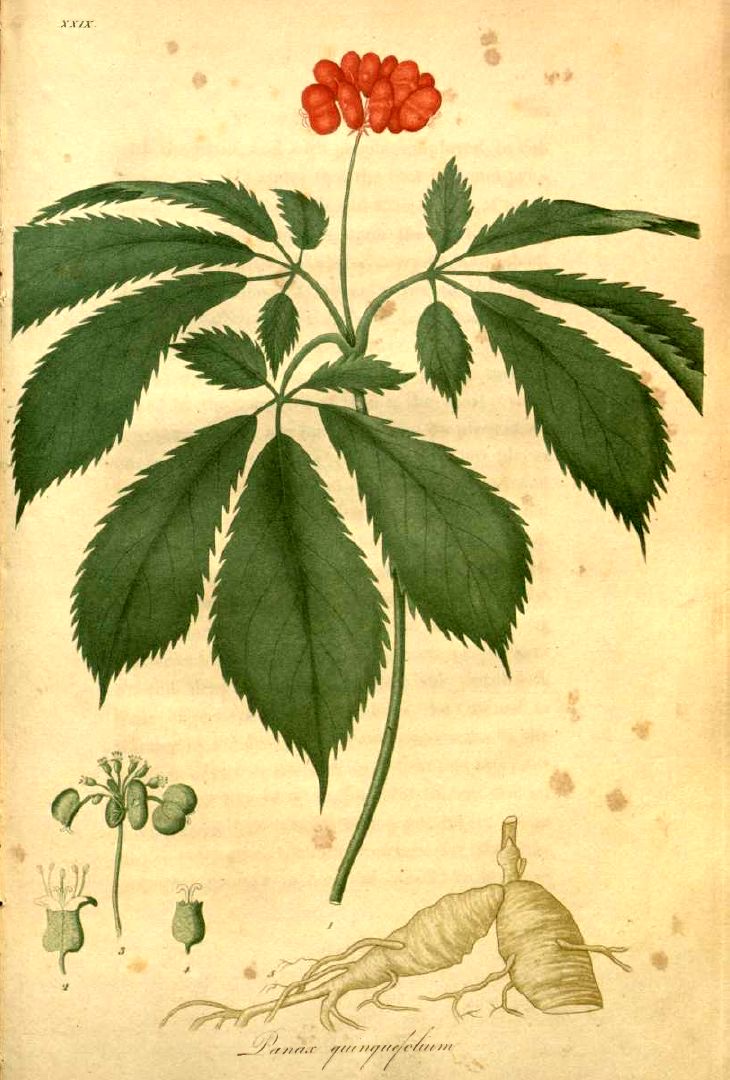
Botanical plate
American Ginseng,
as it actually grows.
Panax quinquefolius — American ginseng, the cooling cousin of the Asian root, its forked body wild-gathered from Appalachian hardwood forests and prized in trade for three centuries.
How to Use
Across the Three Kingdoms
One herb, prepared once, serving people, pets, and plants from a single botanical practice — each with its own measure and care.
People
Benefit
natural energy, stamina, and endurance
How to Use
1/4 tsp (up to 1 tsp) in hot water, tea, coffee, a smoothie, or food, once daily — begin with light doses; our extracts are very potent.
Pets
Dogs & companion animals
Benefit
Adaptogenic root traditionally used to support stamina, vitality, and a balanced stress response.
How to Use
A small amount of the dilute extract or powder stirred into food, scaled to body weight; start at the low end and adjust.
By Animal
Cats
Used as a supplement in cats; low oral toxicity, no ASPCA toxic listing; non-aromatic root, no phenol concern.
Dogs
90-day Beagle study to 15 mg/kg/day showed no toxic effects; low acute oral toxicity; not ASPCA-listed.
Horses
Administered to healthy horses in equine studies without toxicity; well-tolerated as a dilute tonic. Competition status differs.
Birds
Well tolerated as a dilute, body-weight-scaled tonic; introduce gradually, starting with a small amount.
⚑ Sport horses: Prohibited for FEI/USEF competition horses — ginseng/ginsenosides are treated as a stimulant-class controlled/prohibited substance; observe withdrawal before competing.
Safety
Conditional cautions only — none of these downgrade a healthy animal in moderate use, but all belong here. Ginseng has mild antiplatelet/anticoagulant activity: avoid combining with warfarin, NSAIDs, or other blood thinners, and stop well before any surgery or in animals with bleeding disorders. It can lower blood glucose (additive with insulin/oral hypoglycemics — monitor diabetics) and may raise heart rate/blood pressure, so use cautiously in hypertensive or cardiac patients and in hyperexcitable animals. For pregnant, nursing, or medicated animals, use only under veterinary direction. Effects may persist longer in animals with kidney or liver impairment, so reduce or avoid there. Discontinue if allergic signs (facial swelling, rash, irregular breathing) appear. Ginseng root is non-aromatic (no essential-oil/phenol load), so the usual feline phenol concern does not apply. Start low, go slow, and consult a vet for animals on medication or with chronic disease. Sport horses: see competition note.
Source: ASPCA Toxic and Non-Toxic Plant database (Panax not listed); VCA Animal Hospitals "Ginseng" monograph; EFSA Journal 2021;19(7):6526 (Panax ginseng dry extract feed additive for cats and dogs); Frontiers in Vet Science 2024 (red ginseng in healthy horses); FEI Equine Prohibited Substances List 2026.
Plants
Garden, soil & foliage
Benefit
vegetative vigor, strong rooting, and resilient new growth
How to Use
Dilute 1/8 to 1/4 teaspoon per gallon of water. Foliar feed at the lighter rate, or soil drench at the fuller rate, about once a month or every other feeding. Best worked in through vegetative growth, as the plant builds leaf, stem, and root.
Best for
Vegetative growthSafety
A dilute extract in the GGG Plants line; always dilute and start light.
Source: GGG Plants line formulation
Structure-and-function guidance for nutrition and vitality. Not intended to diagnose, treat, cure, or prevent any disease. Introduce one botanical at a time and notice how the body responds. Some plants interact with medication; if you are pregnant, nursing, or on a prescription, know the interaction before you begin.
What's inside
American Ginseng,
down to the molecule.
The signature compound of American Ginseng, rendered from its real structure in bronze and glass — the precise thing the plant carries, given the dignity it has earned.
The evidence chain
From the plant to the molecule to the body — traced.
Not a claim — a chain. Every link below traces to a primary record. This is what American Ginseng is, measured.
The plant
American Ginseng
serving the system
Cardiovascular · Musculoskeletal
and the tradition independently agrees — measured binding
The recorded herbal lineage names American Ginseng a metabolic herb. Independently, its compounds are measured to bind proteins of that system. Tradition and molecule, arrived at separately, converge — the strongest evidence we hold.
Structure and function only. The chain describes the plant’s characterized chemistry and traditional use — not a claim to treat, cure, or prevent any disease.
How it works
How American Ginseng works in the body
A herb is never one thing — it is a community of compounds, each meeting the body in its own way. These are the active molecules in American Ginseng and the proteins each one is measured to engage: the precise points where the plant meets your biology. So you see not just that it works, but how.
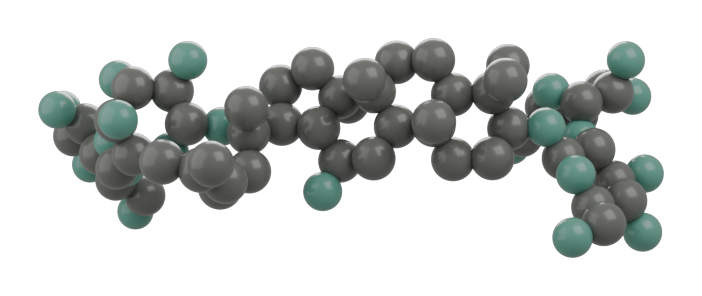
Ginsenoside Rb1
PubChem ↗Measured to act on
The cell's energy sensor, switching on fuel-burning pathways when energy runs low.
Concentrated in heart muscle, skeletal muscle, tonguestructure resolved ↗
Cited science · not claims
Everything we publish about these plants traces to a primary source — the compounds to PubChem, ChEMBL, and BindingDB, the traditional uses to named, dated herbals. We describe what a plant is and what it is understood to nourish — the body’s own systems, structure and function only. We do not claim it treats, cures, or prevents any disease, and nothing here is a substitute for professional care. See our method & sources →
These statements have not been evaluated by the Food and Drug Administration. Not intended to diagnose, treat, cure, or prevent any disease.
Works alongside
Other herbs that share American Ginseng's terrain
Different plants reaching the same systems of the body — the convergence our genome engine maps. These nourish the terrain American Ginseng supports:
Cardiovascular