root
Polygala
Polygala tenuifolia
Also known as
Suitable For
Polygala tenuifolia — a classic nervine root rich in saponins studied for cognitive support. It calms the nervous system while sharpening memory and focus under stress.
What it nourishes in the body
The body systems this herb is traditionally understood to support — resolved through our knowledge graph, where the classical record and modern biology are read together. Structure and function, never a claim of treatment.
Where measure and tradition agree
Polygala is measured to engage this system in human binding data — and the recorded tradition named it for it independently. Two evidence systems arriving at the same place, separately, is our highest standard. See the research →
10:1 Concentrated Extract
Whole-plant. Small-batch. Potent.
How to take it
1/4 tsp (up to 1 tsp) in hot water, tea, coffee, a smoothie, or food, once daily — begin with light doses; our extracts are very potent.
Whole plant, never isolated
Concentrated extracts of the whole botanical — the way the body recognizes it.
Cited to measured biology
Every action we describe traces to the compound and its measured target.
Structure & function
We describe what an herb nourishes — never a claim to treat disease.
Secure checkout
Encrypted payment and human verification on every order.
The Botanical
Polygala, in depth
Character
Polygala tenuifolia is the slender, bitter root the East Asian materia medica calls Yuan Zhi (远志) — literally "far-reaching will" — a name that fixes its character before a single compound is named: this is a root for the resolve of the mind, the steadiness of attention held over distance and time. It is a true nervine in the classical sense, a root prized not for sedation but for the rare doubled gesture of settling the nervous system while sharpening the faculties that ride upon it. Native to the dry hillsides of northern China and Mongolia and gathered as a cured root, it carries a clean, penetrating bitterness — the signature of a saponin-rich botanical — and the GGG line presents it as a concentrated 10:1 extract, which is precisely why dose discipline is its discipline: this is a potent root, not a food-grade tonic, and a quarter teaspoon is a full measure.
In the Body
Polygala is, before all else, a root for the nervous system — the body's network of clarity, memory, and composure. Its character belongs to its triterpenoid saponins, the established class that defines the root: tenuigenin, senegenin, and the broader family of polygalasaponins. These are amphipathic molecules, surface-active by nature, and that surface activity is the structural reason the root is at once mobilizing and to be respected — the same chemistry that makes it bracing also makes restraint in dosing essential. In the body's own architecture, Polygala is traditionally read as a root that supports the settled, grounded baseline from which focus and recall arise: it tones the nervous system toward calm without dulling it, nourishing the conditions for steady attention rather than imposing quiet. Alongside the saponins the root carries oligosaccharide esters and polygalitol, and in the lineage it is also a root of opening and clearing — supporting the respiratory passages' natural, healthy clearing, the moving-out of congestion that the body manages on its own. The through-line is structure and function: Polygala does not act upon the mind, it nourishes the systems — nervous and respiratory — whose own intelligence carries clarity, calm, and resilient focus.
The Tradition
Polygala tenuifolia is a foundational root of classical East Asian herbalism, recorded across the centuries as Yuan Zhi (远志) and counted among the roots that quiet the spirit and open the orifices of the heart and mind. In that lineage it sits squarely in the nervine and clarifying tradition — a root carried for the settled, focused, far-reaching state of will its name describes, and used as well to support the body's own clearing of the chest and breath. It is a saponin-rich, bracingly potent root in the old reckoning, which is why the tradition pairs it always with measure: begin light, take with food, honor the potency. GGG NATURAL carries it within this received tradition — a long and unbroken line of classical practice — as a clarity root for People, a calming cognitive tonic for Pets, and a dilute vigor-and-rooting tonic in the Plants line.
The plant
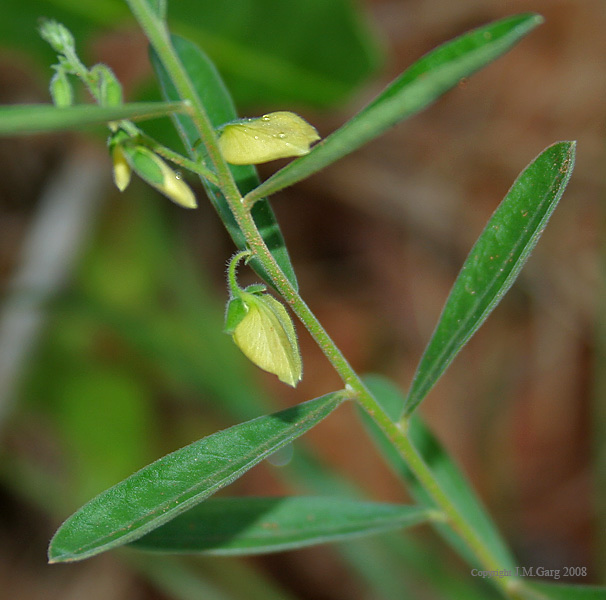
Polygala,
as it actually grows.
Polygala tenuifolia — yuan zhi, the slender milkwort whose root the old texts paired with the heart and the will, steeped to settle and to sharpen.
J.M.Garg · CC BY 3.0 · Wikimedia Commons
How to Use
Across the Three Kingdoms
One herb, prepared once, serving people, pets, and plants from a single botanical practice — each with its own measure and care.
People
Benefit
clear focus and a calm, settled mind
How to Use
1/4 tsp (up to 1 tsp) in hot water, tea, coffee, a smoothie, or food, once daily — begin with light doses; our extracts are very potent.
Pets
Dogs & companion animals
Benefit
Traditional calming/cognitive root tonic supporting a settled, focused state and healthy respiratory clearing.
How to Use
Offer a small amount of the dilute hot-water extract or powder mixed into food, scaled to body weight; start low and give once daily.
By Animal
Cats
Healthy cats tolerate the dilute extract in moderate use; saponin GI/emetic effect is dose-driven, so start low.
Dogs
Beagle preclinical safety study found no substance-related toxicity; vomiting only at high single doses, not the dilute tonic.
Horses
Well tolerated as a dilute, body-weight-scaled tonic; introduce gradually, starting with a small amount.
Birds
Well tolerated as a dilute, body-weight-scaled tonic; introduce gradually, starting with a small amount.
⚑ Sport horses: FEI/USEF: Polygala is a CNS-active calming/sedative-type botanical. Under FEI Equine Prohibited Substances and USEF GR4 controlled-medication rules, calming agents are restricted in competition — withdraw before sanctioned events; no published clearance interval for this herb.
Safety
Polygala tenuifolia (Yuan Zhi) is a saponin-rich emetic root (tenuigenin, senegenin, polygalasaponins), so dose discipline matters more than for a food-grade tonic: start low, give with food, and stop at any vomiting, diarrhea, or lethargy. The saponins are GI-irritant and emetic — overdosing causes vomiting/diarrhea in any species (vomiting seen in Beagle dogs only at high 1,000–2,000 mg/kg single doses; the dilute tonic dose is far below this). Saponins are also hemolytic in vitro, and horse erythrocytes are classed as highly susceptible to saponin hemolysis, with the equine hindgut sensitive to saponin load — keep horse use minimal/avoid in quantity. Birds are small-bodied and sensitive to GI-irritant/aromatic botanicals, so use only token amounts if at all. Conditional cautions that do NOT change the healthy-animal rating but apply case-by-case: avoid in pregnancy (traditionally contraindicated/uterine-active and emetic), use caution with sedatives/CNS depressants and any drug with a narrow GI tolerance, withhold before surgery, and start lower with pre-existing kidney or liver disease or active GI disease. Not a substitute for veterinary care; consult your vet before use in animals on medication.
Source: ASPCA Toxic and Non-Toxic Plant List (no P. tenuifolia entry; P. fruticosa listed separately); Shin et al. 2014, Preclinical Safety of Polygala tenuifolia Root Extract in Sprague-Dawley Rats and Beagle Dogs, Evid Based Complement Alternat Med, PMC4238171 (NOAEL 1,000 mg/kg/day); Cornell University Poisonous Plants Database (saponins — equine erythrocyte hemolytic susceptibility, GI irritation); FEI Equine Prohibited Substances List; USEF GR4.
Plants
Garden, soil & foliage
Benefit
vegetative vigor, strong rooting, and resilient new growth
How to Use
Dilute 1/8 to 1/4 teaspoon per gallon of water. Foliar feed at the lighter rate, or soil drench at the fuller rate, about once a month or every other feeding. Best worked in through vegetative growth, as the plant builds leaf, stem, and root.
Best for
Vegetative growthSafety
A dilute extract in the GGG Plants line; always dilute and start light.
Source: GGG Plants line formulation
Structure-and-function guidance for nutrition and vitality. Not intended to diagnose, treat, cure, or prevent any disease. Introduce one botanical at a time and notice how the body responds. Some plants interact with medication; if you are pregnant, nursing, or on a prescription, know the interaction before you begin.
What's inside
Polygala,
down to the molecule.
The signature compound of Polygala, rendered from its real structure in bronze and glass — the precise thing the plant carries, given the dignity it has earned.
The evidence chain
From the plant to the molecule to the body — traced.
Not a claim — a chain. Every link below traces to a primary record. This is what Polygala is, measured.
The plant
Polygala
which governs
A serotonin receptor involved in mood, calm, and emotional balance.
serving the system
Nervous · Liver
and the tradition independently agrees — measured binding
The recorded herbal lineage names Polygala a nervous herb. Independently, its compounds are measured to bind proteins of that system. Tradition and molecule, arrived at separately, converge — the strongest evidence we hold.
Structure and function only. The chain describes the plant’s characterized chemistry and traditional use — not a claim to treat, cure, or prevent any disease.
How it works
How Polygala works in the body
A herb is never one thing — it is a community of compounds, each meeting the body in its own way. These are the active molecules in Polygala and the proteins each one is measured to engage: the precise points where the plant meets your biology. So you see not just that it works, but how.
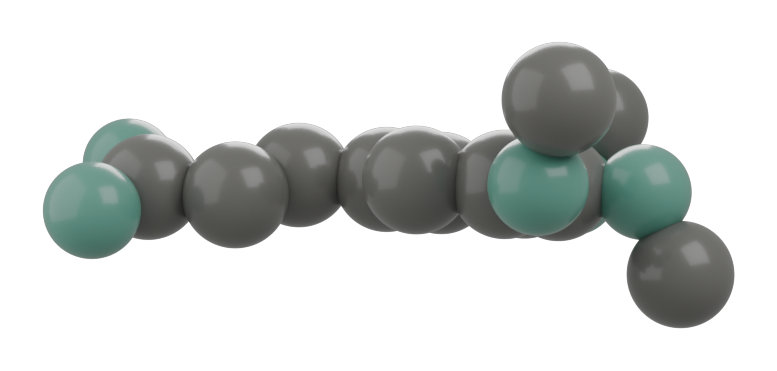
3,4,5-Trimethoxycinnamic acid
PubChem ↗Measured to act on
A serotonin receptor involved in mood, calm, and nervous-system signaling.
Concentrated in brainstructure resolved ↗
A serotonin receptor in the brain involved in mood, perception, and signaling.
Concentrated in brain, blood vesselstructure resolved ↗
A serotonin receptor that helps govern appetite, mood, and emotional balance.
Concentrated in choroid plexus, brainstructure resolved ↗
A brain serotonin receptor involved in learning, memory, and mood signaling.
Concentrated in brainstructure resolved ↗
A serotonin receptor involved in mood, sleep-wake rhythms, and blood vessel tone.
Concentrated in parathyroid gland, testisstructure resolved ↗
A protein that recycles serotonin back into nerve cells, shaping mood signaling.
Concentrated in intestine, lung, placentastructure resolved ↗
A liver gateway protein that ushers compounds into liver cells for processing.
Concentrated in liverstructure resolved ↗
A liver transporter that carries compounds into liver cells to be cleared.
Concentrated in liverstructure resolved ↗
A mitochondrial enzyme involved in breaking down fats and hormones for energy.
An enzyme that edits chemical tags on DNA-packaging proteins to regulate genes.
An enzyme that detoxifies reactive aldehydes and helps produce vitamin A signals.
Concentrated in liverstructure resolved ↗
An enzyme that breaks down prostaglandins, the body's local inflammation messengers.
Concentrated in urinary bladder, stomach 1structure resolved ↗
A protein that repairs damaged DNA and helps balance the cell's oxidative state.
A bitter-taste receptor that detects bitter plant compounds on the tongue and in the gut.
Measured in the lab
Real measurements from binding studies. A tighter fit means the compound meets its target more readily — the figure in grey is the actual measured value.
Binds to 5-hydroxytryptamine receptor 2C · IC50 2.5 µM
Binds to 5-hydroxytryptamine receptor 1A · IC50 7.6 µM
Cited science · not claims
Everything we publish about these plants traces to a primary source — the compounds to PubChem, ChEMBL, and BindingDB, the traditional uses to named, dated herbals. We describe what a plant is and what it is understood to nourish — the body’s own systems, structure and function only. We do not claim it treats, cures, or prevents any disease, and nothing here is a substitute for professional care. See our method & sources →
These statements have not been evaluated by the Food and Drug Administration. Not intended to diagnose, treat, cure, or prevent any disease.
Works alongside
Other herbs that share Polygala's terrain
Different plants reaching the same systems of the body — the convergence our genome engine maps. These nourish the terrain Polygala supports:
Cardiovascular