aromatic
Clove
Syzygium aromaticum
Also known as
Suitable For
An intensely aromatic bud with one of the highest antioxidant densities of any spice, rich in eugenol. It stimulates circulation and reinforces the body's natural defenses.
What it nourishes in the body
The body systems this herb is traditionally understood to support — resolved through our knowledge graph, where the classical record and modern biology are read together. Structure and function, never a claim of treatment.
Where measure and tradition agree
Clove is measured to engage this system in human binding data — and the recorded tradition named it for it independently. Two evidence systems arriving at the same place, separately, is our highest standard. See the research →
Engages the body’s own cannabinoid system
Clove is measured to engage the endocannabinoid system — the master regulator the body runs on its own cannabinoids, carrying β-caryophyllene, a dietary terpene that engages the CB2 receptor. Characterization, not a clinical claim. The endocannabinoid bridge →
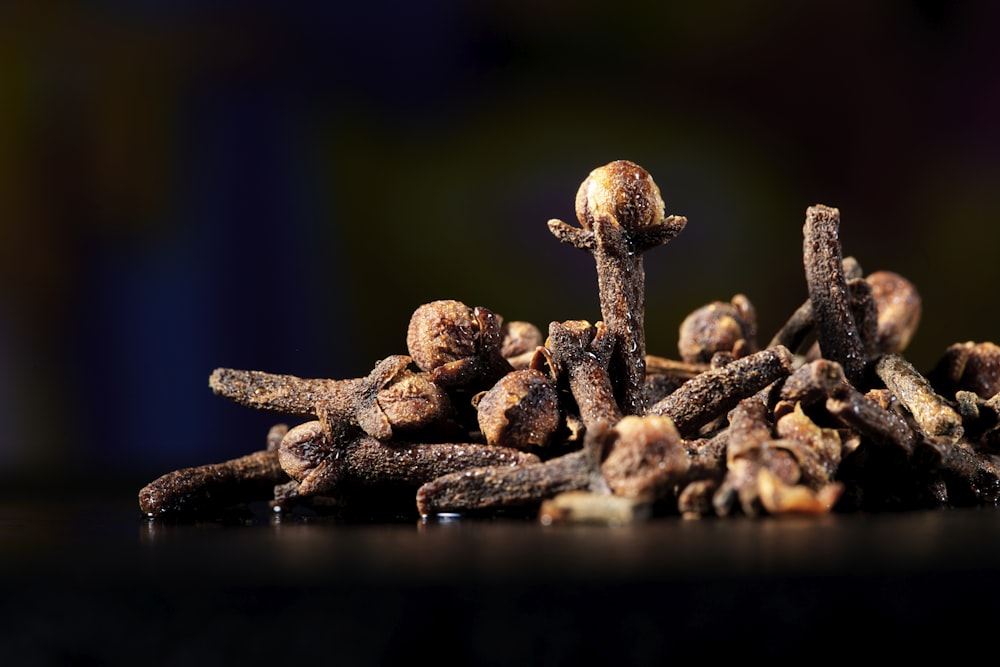
Dried & Powdered
Whole-plant. Small-batch. Potent.
How to take it
1 tsp in hot water, tea, or a smoothie, once daily.
Whole plant, never isolated
Concentrated extracts of the whole botanical — the way the body recognizes it.
Cited to measured biology
Every action we describe traces to the compound and its measured target.
Structure & function
We describe what an herb nourishes — never a claim to treat disease.
Secure checkout
Encrypted payment and human verification on every order.
The Botanical
Clove, in depth
Character
Clove (Syzygium aromaticum) is the sun-dried, unopened flower bud of a tall evergreen of the myrtle family, native to the volcanic Maluku Islands of Indonesia — the original Spice Islands whose harbors once anchored the entire maritime spice trade. The name itself descends from the Latin clavus, "nail," for the bud's hard, tapered, nail-like form. Among all the aromatics in our apothecary, clove is the most concentrated: it carries one of the densest phenolic loads of any culinary spice, a potency you can sense before you taste it, in the warm, resinous heat that rises off a single crushed bud. It is a "hot" aromatic in the classical sense — warming, penetrating, mineral-bearing — and a small amount carries a long way. We offer it as the whole-bud powder, the form that holds the full spectrum of the plant's chemistry intact, rather than the isolated essential oil.
In the lineage, clove sits at the crossroads of the kitchen and the apothecary shelf — a spice prized at the table yet held in reserve as one of the more commanding warming botanicals, used sparingly and with respect for its intensity. It is the defining note in the cardiovascular-and-immune family of aromatics: a bud whose character is to stimulate, to circulate, and to fortify, carrying that warmth inward to the body's own systems.
In the Body
Clove's character is written in its chemistry. Its defining constituent is eugenol, an aromatic phenylpropanoid (a phenolic compound) that accounts for the bud's signature warmth and the bulk of its dense phenolic profile; alongside it sit related phenolics and a small family of triterpenes and flavonoids. These phenolic and triterpene classes are the molecular basis of clove's character as a phenol-rich aromatic — compounds that engage the body's own redox and inflammatory-response systems, nourishing the systems that maintain oxidative balance and a healthy, well-regulated inflammatory response. This is structure and function: we speak of how the bud nourishes the body's intelligence, never of acting upon it.
In our organ map, clove is associated with the Cardiovascular and Immune systems. As a warming aromatic, it engages the circulatory system — the classical action of a "hot" spice is to stimulate circulation and carry warmth to the periphery, supporting healthy blood flow and the body's natural vitality and stamina. Its dense phenolic load is what makes it a fixture of immune-supporting aromatic blends, nourishing the immune system's own natural function and the body's day-to-day resilience. The same eugenol-driven aromatics lend it to oral and throat freshness, where a trace carries a clean, penetrating warmth across the mucous membranes. Across all three kingdoms it keeps this signature: a low-dose, mineral-bearing aromatic that supports digestive comfort and grounded warmth in the body's core — always sparingly, for its potency is its nature.
The Tradition
Clove's recorded lineage is among the longest of any spice: prized across the ancient world as both a culinary aromatic and a treasured warming botanical, it traveled the spice routes from the Maluku Islands through India, the Arab world, and into the European herbals. In the classical East Asian tradition it is 丁香 (dīng xiāng, "nail aromatic"), a warming herb of the materia medica long used to dispel cold and steady the middle. In the Western canon, Culpeper and the Old English Herbals knew it as a hot, comforting spice for the stomach and the senses, and the Thomsonian system — which organized its practice around warming, stimulating botanicals — valued exactly this class of penetrating aromatic. Across every one of these cultures, the through-line is the same: clove as a concentrated, warming bud, carried in small measure to bring warmth and circulation to the body's core.
The flower bud
Clove,
as it actually grows.
Clove is the dried, unopened flower bud of Syzygium aromaticum, an evergreen tree native to the Maluku Islands of Indonesia, and owes its intense fragrance to a high concentration of the phenolic compound eugenol. Prized across millennia of trade, whole cloves have long been a cornerstone of Ayurvedic, Traditional Chinese, and culinary traditions — warming spiced teas, preserving meats, and anchoring the aromatic backbone of blends from garam masala to mulled wine.
How to Use
Across the Three Kingdoms
One herb, prepared once, serving people, pets, and plants from a single botanical practice — each with its own measure and care.
People
Benefit
immune resilience and deep, daily vitality — plus immune support
How to Use
1 tsp in hot water, tea, or a smoothie, once daily.
Pets
Dogs & companion animals
Benefit
A warming aromatic that supports digestive comfort and oral/throat freshness.
How to Use
A very small pinch of the dilute extract or powder stirred into food, scaled to body weight; clove is potent, so use sparingly and far below culinary spice levels.
By Animal
Cats
Cats clear phenols like eugenol poorly — keep clove and clove oil away from cats.
Dogs
Use only a trace of the dilute extract for dogs; never the essential oil.
Horses
Use only a very small pinch of the dilute extract; never the essential oil.
Birds
Keep clove away from birds — they are very sensitive to aromatic oils; never diffuse it.
⚑ Sport horses: Eugenol/clove is not currently on the FEI Equine Prohibited Substances List or the USEF banned/forbidden list, but FEI/USEF judge by pharmacological effect, not plant origin — withhold before competition and confirm against the current FEI Equine Prohibited Substances Database for the show season.
Safety
Clove's defining bioactive is eugenol, a phenolic compound, so even a dilute hot-water extract carries the herb's characteristic phenol load. Start low and dose by body weight; clove is a hot, mucous-membrane-irritant aromatic and excess causes GI upset. Eugenol is metabolized by the liver and can be hepatotoxic in overdose, so use caution or avoid in animals with liver or kidney disease, and in pregnant or nursing animals. Eugenol has antiplatelet (anticoagulant) activity: stop use 1-2 weeks before surgery and avoid combining with NSAIDs, warfarin, or other blood thinners. It also inhibits CYP450 enzymes and may potentiate other drugs, including sedatives and anesthetics — clear it with your veterinarian if the animal is medicated. Cats lack the glucuronidation pathway needed to clear phenols and can develop eugenol-driven hepatotoxicity and hemolytic (Heinz-body) anemia, so the cat caution stands independent of any of the above. NEVER use clove essential oil on or around any species, especially cats and birds; this rating is for the dilute food-grade extract only.
Source: ASPCA Animal Poison Control / Pet Poison Helpline (eugenol-containing essential oils, phenol risk in cats); WagWalking "Clove Poisoning in Cats" (eugenol, lack of glucuronidation, hemolytic anemia, hepatotoxicity); Hepper vet-reviewed "Can Dogs Eat Cloves" (canine eugenol tolerance/dose risk); CAFA Bird Club / Pet Poison Helpline (phenolic essential oils incl. clove toxic to birds/parrots — respiratory distress); FEI Equine Prohibited Substances List (inside.fei.org) and USEF 2026 Drugs & Medications Guidelines (eugenol not currently listed).
Plants
Garden, soil & foliage
Benefit
whole-cycle vigor, resilience, and a living root zone
How to Use
Dilute 1/8 to 1/4 teaspoon per gallon of water. Foliar feed at the lighter rate, or soil drench at the fuller rate, about once a month or every other feeding. Used the entire way, through both vegetative growth and bloom.
Best for
Whole cycle — growth & bloomSafety
A dilute extract in the GGG Plants line; always dilute and start light.
Source: GGG Plants line formulation
Structure-and-function guidance for nutrition and vitality. Not intended to diagnose, treat, cure, or prevent any disease. Introduce one botanical at a time and notice how the body responds. Some plants interact with medication; if you are pregnant, nursing, or on a prescription, know the interaction before you begin.
What's inside
Clove,
down to the molecule.
The signature compound of Clove, rendered from its real structure in bronze and glass — the precise thing the plant carries, given the dignity it has earned.
The evidence chain
From the plant to the molecule to the body — traced.
Not a claim — a chain. Every link below traces to a primary record. This is what Clove is, measured.
The plant
Clove
serving the system
Cardiovascular · Immune
and the tradition independently agrees — measured binding
The recorded herbal lineage names Clove a immune herb. Independently, its compounds are measured to bind proteins of that system. Tradition and molecule, arrived at separately, converge — the strongest evidence we hold.
Structure and function only. The chain describes the plant’s characterized chemistry and traditional use — not a claim to treat, cure, or prevent any disease.
How it works
How Clove works in the body
A herb is never one thing — it is a community of compounds, each meeting the body in its own way. These are the active molecules in Clove and the proteins each one is measured to engage: the precise points where the plant meets your biology. So you see not just that it works, but how.
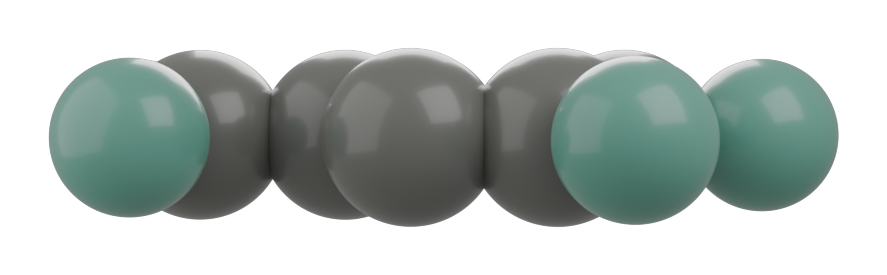
Eugenol
PubChem ↗Measured to act on
The enzyme that drives the body's inflammatory response.
Concentrated in urinary bladder, seminal vesicle, bone marrowstructure resolved ↗
An enzyme making prostaglandins that protect the stomach lining and support everyday tissue function.
Concentrated in urinary bladder, skin 1, intestinestructure resolved ↗
An enzyme that turns fatty acids into signaling molecules involved in inflammation.
Concentrated in lymphoid tissue, lungstructure resolved ↗
A major liver enzyme that processes and clears many compounds from the body.
Concentrated in liverstructure resolved ↗
The receptor through which testosterone and related hormones guide growth and development.
Concentrated in liverstructure resolved ↗
beta-Caryophyllene
PubChem ↗Measured to act on
A receptor of the endocannabinoid system, concentrated in immune tissue.
Concentrated in lymphoid tissue, intestinestructure resolved ↗
Gallic acid
PubChem ↗Measured to act on
An enzyme that trims signaling peptides, helping regulate blood sugar and immune signals.
Concentrated in parathyroid gland, intestine, placenta, prostatestructure resolved ↗
A fast enzyme governing fluid balance, acidity, and carbon dioxide handling throughout the body.
Concentrated in stomach 1, choroid plexus, intestinestructure resolved ↗
Measured in the lab
Real measurements from binding studies. A tighter fit means the compound meets its target more readily — the figure in grey is the actual measured value.
Binds very tightly to Amyloid-beta precursor protein · EC50 1.7 nM
Binds very tightly to Alpha-(1,3)-fucosyltransferase 7 · IC50 60 nM
Binds tightly to Polypeptide N-acetylgalactosaminyltransferase 2 · Kd 924 nM
Binds to Polyphenol oxidase 4 · IC50 1.06 µM
Binds to Carbonic anhydrase 2 · Ki 2.25 µM
Binds to Carbonic anhydrase 1 · Ki 3.2 µM
— and 15 more measured targets, each traced to its source.
Oleanolic acid
PubChem ↗Measured to act on
An enzyme that helps switch off insulin and growth signals inside cells.
An enzyme that dials down growth and immune signaling inside cells.
Concentrated in lymphoid tissuestructure resolved ↗
An enzyme that processes sugars and aldehydes as part of cellular metabolism.
Concentrated in intestine, stomach 1, esophagusstructure resolved ↗
Cited science · not claims
Everything we publish about these plants traces to a primary source — the compounds to PubChem, ChEMBL, and BindingDB, the traditional uses to named, dated herbals. We describe what a plant is and what it is understood to nourish — the body’s own systems, structure and function only. We do not claim it treats, cures, or prevents any disease, and nothing here is a substitute for professional care. See our method & sources →
These statements have not been evaluated by the Food and Drug Administration. Not intended to diagnose, treat, cure, or prevent any disease.
Works alongside
Other herbs that share Clove's terrain
Different plants reaching the same systems of the body — the convergence our genome engine maps. These nourish the terrain Clove supports:
Cardiovascular