root
Astragalus
Astragalus membranaceus
Also known as
Suitable For
Astragalus membranaceus — a foundational adaptogen rich in astragalosides and polysaccharides. One of the world's most important immune and vitality tonics, studied for its support of immune resilience and healthy aging.
What it nourishes in the body
The body systems this herb is traditionally understood to support — resolved through our knowledge graph, where the classical record and modern biology are read together. Structure and function, never a claim of treatment.
Where measure and tradition agree
Astragalus is measured to engage these systems in human binding data — and the recorded tradition named it for them independently. Two evidence systems arriving at the same place, separately, is our highest standard. See the research →
10:1 Concentrated Extract
Whole-plant. Small-batch. Potent.
How to take it
1/4 tsp (up to 1 tsp) in hot water, tea, coffee, a smoothie, or food, once daily — begin with light doses; our extracts are very potent.
Whole plant, never isolated
Concentrated extracts of the whole botanical — the way the body recognizes it.
Cited to measured biology
Every action we describe traces to the compound and its measured target.
Structure & function
We describe what an herb nourishes — never a claim to treat disease.
Secure checkout
Encrypted payment and human verification on every order.
The Botanical
Astragalus, in depth
Character
Astragalus membranaceus — huang qi (黄芪), "the yellow leader" — is among the most venerated tonic roots in the entire botanical lineage, a foundational adaptogen carried for thousands of years at the center of the tradition's vitality formulary. It is the long, fibrous taproot of a perennial legume native to the cold uplands of Northern China and Mongolia, harvested from mature plants whose years in the soil concentrate the root's sweet, faintly grassy character. Cut into its characteristic pale tongue-depressor slices, it carries a gentle, warming sweetness — the classic signature of a deep nourishing tonic rather than a sharp, draining herb. At GGG NATURAL it lives as a potent 10:1 extract: a root distilled to its working essence, a tonic for sustained daily use.
Astragalus is not a fast or dramatic plant. Its nature is cumulative — a builder, a fortifier, the kind of root the tradition reaches for when the aim is to construct enduring constitutional strength over seasons rather than to provoke a momentary shift. It is, by character and by classical standing, a guardian of vitality: the root you take to stand more firmly in your own resilience, season after season.
In the Body
Astragalus speaks most directly to the body's immune system and to its deep reserves of vitality and stamina. The tradition classes it as a quintessential qi tonic — a root that nourishes the foundational energy from which endurance, daily drive, and protective resilience are drawn — and the modern understanding of its chemistry maps cleanly onto that framing. Its two best-established and most studied constituent families are the astragalosides (a group of triterpene saponins, named for this very plant) and a rich complement of polysaccharides, including beta-glucan-type and arabinogalactan-type long-chain sugars. These polysaccharides are precisely the molecular class the body's own immune architecture is built to recognize and engage, which is why astragalus has long been understood as a root that supports the immune system's natural function and tone rather than forcing it. Alongside these, the root carries flavonoids and other antioxidant compounds that support the body's own balance against everyday oxidative stress.
In structure/function terms, this is a tonic that nourishes the systems governing stamina, vitality, and immune resilience — supporting the body's intrinsic capacity to hold its own ground. Its triterpenes and polysaccharides engage the body's existing regulatory and protective systems, helping them stay supple, responsive, and in balance. It supports a grounded, sustained sense of energy — the kind that builds quietly with daily use — and tones the constitution toward resilience and healthy aging. Because it is non-aromatic and food-grade, with a sweet, gentle profile, it is one of the few tonics equally at home across People, Pets, and Plants — a root taken not to act against anything, but to feed the body's own intelligence and let it work.
The Tradition
Astragalus is one of the great pillars of classical East Asian herbalism, where it is known as huang qi (黄芪) — literally the "yellow leader," a name marking its rank among the supreme tonic roots. For well over two thousand years it has held a place among the most relied-upon qi-and-vitality tonics in the East Asian materia medica, reached for as a builder of constitutional strength, protective resilience, and the body's surface defenses. In the classical system it is a warming, sweet root used to tonify deep energy and support the body's own outermost protective layer — the tradition's framing for everyday resilience — and it remains a cornerstone of the foundational tonic formulas carried forward across centuries of unbroken practice. Within GGG NATURAL's own lineage it stands as a foundational daily adaptogen: a guardian root whose authority rests not on novelty but on millennia of human practice across the herbal tradition.
The plant
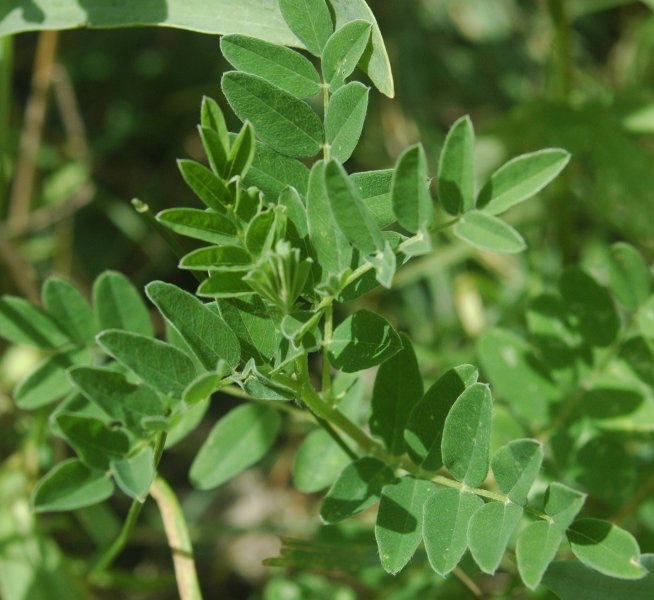
Astragalus,
as it actually grows.
Astragalus membranaceus — huang qi, whose pale fibrous root is among the most-used tonics in Chinese herbalism, simmered into broths and the daily soups of the north.
Doronenko · CC BY 2.5 · Wikimedia Commons
How to Use
Across the Three Kingdoms
One herb, prepared once, serving people, pets, and plants from a single botanical practice — each with its own measure and care.
People
Benefit
immune resilience and deep, daily vitality — plus immune support
How to Use
1/4 tsp (up to 1 tsp) in hot water, tea, coffee, a smoothie, or food, once daily — begin with light doses; our extracts are very potent.
Pets
Dogs & companion animals
Benefit
Adaptogenic root that supports immune resilience, vitality, and antioxidant tone.
How to Use
Offer a small amount of the dilute hot-water extract or powder stirred into food, scaled to body weight (a pinch for cats/small birds, more for dogs and horses); start low and build up over several days.
By Animal
Cats
Non-aromatic root, no phenols/essential oil — no cat-specific glucuronidation concern; used as a dilute immune tonic.
Dogs
Well-tolerated canine immune/adaptogen tonic; no documented toxicity at tonic doses.
Horses
Medicinal huang qi is a recognized equine TCVM tonic; ASPCA-toxic 'locoweed' is a DIFFERENT wild Astragalus (swainsonine/selenium), not this species.
Birds
Non-aromatic, no essential-oil risk to birds; used in avian herbal practice as a dilute tonic, though species-specific avian data is limited.
⚑ Sport horses: Not a named FEI/USEF prohibited substance, but immune/adaptogen herbal tonics fall under FEI's caution against herbal products of unverified composition; withdraw before FEI/USEF competition and use only batch-tested product if a sport horse competes.
Safety
CRITICAL species ID: ASPCA lists wild "locoweed" (Astragalus spp.) as toxic to horses, but that toxicity comes from swainsonine and selenium accumulated by WILD rangeland species — it does NOT apply to cultivated medicinal A. membranaceus (huang qi) used here. Source only verified A. membranaceus from a reputable supplier; never substitute or forage. Otherwise huang qi is a well-tolerated food-grade tonic with no documented toxicity across cats, dogs, and horses. Conditional caveats (do not change the per-species class, but observe these): because astragalus is immunostimulating, use caution or veterinary guidance in animals with autoimmune disease or those on immunosuppressants (it may counteract them); it may potentiate some immune/blood-sugar/blood-pressure medications and diuretics; avoid or get veterinary clearance in pregnancy/lactation given limited reproductive-safety data; introduce slowly and start at a low dose in animals with pre-existing kidney or liver disease; and discontinue before elective surgery if your vet advises, monitoring for additive effects. Stop and consult a vet if GI upset or any adverse reaction appears.
Source: ASPCA Animal Poison Control — Loco Weed (Astragalus spp.), horse toxic, swainsonine (https://www.aspca.org/pet-care/aspca-poison-control/toxic-and-non-toxic-plants/loco-weed-astragalus-spp); Thorne Vet — Astragalus Root (A. membranaceus); NHV Natural Pet Products — Is Astragalus Safe for Cats and Dogs; Tucci et al., "Herbal paw-sibilities: A. membranaceus and Panax in cat/dog diets," Animal Frontiers 2024 (PMC11188985); FEI 2026 Equine Prohibited Substances List + FEI herbal-product caution (inside.fei.org).
Plants
Garden, soil & foliage
Benefit
vegetative vigor, strong rooting, and resilient new growth
How to Use
Dilute 1/8 to 1/4 teaspoon per gallon of water. Foliar feed at the lighter rate, or soil drench at the fuller rate, about once a month or every other feeding. Best worked in through vegetative growth, as the plant builds leaf, stem, and root.
Best for
Vegetative growthSafety
A dilute extract in the GGG Plants line; always dilute and start light.
Source: GGG Plants line formulation
Structure-and-function guidance for nutrition and vitality. Not intended to diagnose, treat, cure, or prevent any disease. Introduce one botanical at a time and notice how the body responds. Some plants interact with medication; if you are pregnant, nursing, or on a prescription, know the interaction before you begin.
What's inside
Astragalus,
down to the molecule.
The signature compound of Astragalus, rendered from its real structure in bronze and glass — the precise thing the plant carries, given the dignity it has earned.
The evidence chain
From the plant to the molecule to the body — traced.
Not a claim — a chain. Every link below traces to a primary record. This is what Astragalus is, measured.
The plant
Astragalus
which governs
A protein that helps decide whether a cell continues living or undergoes natural turnover.
serving the system
Immune · Liver
and the tradition independently agrees — measured binding
The recorded herbal lineage names Astragalus a immune and metabolic herb. Independently, its compounds are measured to bind proteins of those systems. Tradition and molecule, arrived at separately, converge — the strongest evidence we hold.
Structure and function only. The chain describes the plant’s characterized chemistry and traditional use — not a claim to treat, cure, or prevent any disease.
How it works
How Astragalus works in the body
A herb is never one thing — it is a community of compounds, each meeting the body in its own way. These are the active molecules in Astragalus and the proteins each one is measured to engage: the precise points where the plant meets your biology. So you see not just that it works, but how.
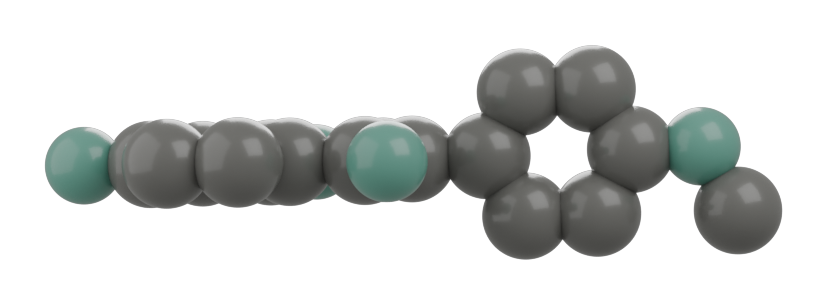
Formononetin
PubChem ↗Measured to act on
A liver enzyme that breaks down many compounds the body takes in.
Concentrated in liverstructure resolved ↗
A protein that helps decide whether a cell continues living or undergoes natural turnover.
An enzyme that edits proteins to manage cellular cleanup and the cell internal scaffolding.
Measured in the lab
Real measurements from binding studies. A tighter fit means the compound meets its target more readily — the figure in grey is the actual measured value.
Binds very tightly to Apoptosis regulator Bcl-2 · Ki 10 nM
Binds to Neuraminidase · IC50 1.37 µM
Binds to Cytochrome P450 1B1 · Ki 3.7 µM
Binds to Interleukin-2 · Kd 5.47 µM
Calycosin
PubChem ↗Measured to act on
A protein that helps organize DNA and acts as an alarm signal during tissue stress.
Kaempferol
PubChem ↗Measured to act on
A liver enzyme that breaks down many compounds the body takes in.
Concentrated in liverstructure resolved ↗
An enzyme that balances carbon dioxide and acidity, part of the family that manages pH.
Concentrated in intestinestructure resolved ↗
A sensor protein that detects compounds from the environment and adjusts detox responses.
A liver-type enzyme that processes hormones and environmental compounds.
A liver enzyme that breaks down caffeine and many other ingested compounds.
Concentrated in liverstructure resolved ↗
A protein in the cell powerhouses that helps regulate energy and iron handling.
Concentrated in parathyroid glandstructure resolved ↗
An enzyme that balances carbon dioxide and acidity to help maintain the body pH.
Concentrated in kidney, choroid plexus, skin 1structure resolved ↗
A liver enzyme that tags compounds with sulfur so the body can clear them.
An enzyme that fine-tunes the balance of active sex hormones in tissues.
Concentrated in intestine, placenta, liverstructure resolved ↗
Measured in the lab
Real measurements from binding studies. A tighter fit means the compound meets its target more readily — the figure in grey is the actual measured value.
Binds very tightly to Carbonic anhydrase 7 · Ki 25 nM
Binds very tightly to Aryl hydrocarbon receptor · IC50 28 nM
Binds very tightly to Cytochrome P450 1B1 · Ki 43 nM
Binds tightly to CDGSH iron-sulfur domain-containing protein 1 · Ki 132 nM
Binds tightly to Carbonic anhydrase 12 · Ki 146 nM
Binds tightly to Casein kinase II subunit alpha 3 · Ki 210 nM
— and 35 more measured targets, each traced to its source.
Quercetin
PubChem ↗Measured to act on
An enzyme that breaks down messenger chemicals like serotonin in the nervous system.
Concentrated in intestinestructure resolved ↗
The enzyme that converts androgens into estrogen, the body main estrogen source.
Concentrated in placentastructure resolved ↗
An enzyme that converts glucose into sorbitol, part of how cells handle sugar.
Concentrated in adrenal glandstructure resolved ↗
A liver-type enzyme that processes hormones and environmental compounds.
A signaling enzyme involved in cell growth and survival.
Concentrated in bone marrowstructure resolved ↗
A cellular pump that ushers compounds out of cells, shaping how the body absorbs them.
Concentrated in intestinestructure resolved ↗
A blood protein that, once activated, drives the formation of clots.
Concentrated in liverstructure resolved ↗
An enzyme that processes nucleotides, helping recycle the building blocks of DNA and energy molecules.
Concentrated in cervixstructure resolved ↗
Measured in the lab
Real measurements from binding studies. A tighter fit means the compound meets its target more readily — the figure in grey is the actual measured value.
Binds very tightly to Amine oxidase [flavin-containing] A · IC50 10 nM
Binds very tightly to Aromatase · IC50 12 nM
Binds very tightly to Aldo-keto reductase family 1 member B1 · IC50 14.8 nM
Binds very tightly to Enoyl-acyl-carrier protein reductase · Ki 22 nM
Binds very tightly to Cytochrome P450 1B1 · Ki 23 nM
Binds very tightly to Serine/threonine-protein kinase pim-1 · Kd 25 nM
— and 108 more measured targets, each traced to its source.
Cited science · not claims
Everything we publish about these plants traces to a primary source — the compounds to PubChem, ChEMBL, and BindingDB, the traditional uses to named, dated herbals. We describe what a plant is and what it is understood to nourish — the body’s own systems, structure and function only. We do not claim it treats, cures, or prevents any disease, and nothing here is a substitute for professional care. See our method & sources →
These statements have not been evaluated by the Food and Drug Administration. Not intended to diagnose, treat, cure, or prevent any disease.
Works alongside
Other herbs that share Astragalus's terrain
Different plants reaching the same systems of the body — the convergence our genome engine maps. These nourish the terrain Astragalus supports: