root
Rhodiola
Rhodiola rosea
Also known as
Suitable For
Rhodiola rosea — an Arctic adaptogen rich in rosavins and salidroside, among the best-studied botanicals for fatigue. It sharpens mental performance, steadies mood, and restores vitality under stress.
What it nourishes in the body
The body systems this herb is traditionally understood to support — resolved through our knowledge graph, where the classical record and modern biology are read together. Structure and function, never a claim of treatment.
Where measure and tradition agree
Rhodiola is measured to engage this system in human binding data — and the recorded tradition named it for it independently. Two evidence systems arriving at the same place, separately, is our highest standard. See the research →
10:1 Concentrated Extract
Whole-plant. Small-batch. Potent.
How to take it
1/4 tsp (up to 1 tsp) in hot water, tea, coffee, a smoothie, or food, once daily — begin with light doses; our extracts are very potent.
Whole plant, never isolated
Concentrated extracts of the whole botanical — the way the body recognizes it.
Cited to measured biology
Every action we describe traces to the compound and its measured target.
Structure & function
We describe what an herb nourishes — never a claim to treat disease.
Secure checkout
Encrypted payment and human verification on every order.
The Botanical
Rhodiola, in depth
Character
Rhodiola rosea is the golden root of the cold places of the earth — an Arctic and alpine succulent that anchors itself in rock and thin soil where most botanicals cannot hold, from the windswept ridgelines of Siberia and Scandinavia to the high reaches of the Tibetan plateau. Its name carries the rose: cut the fresh rhizome and it gives a faint, clean breath of roses, a signature of the rosavins held within. This is a plant shaped entirely by adversity. To survive in latitude and altitude where the growing season is short and the elements are unforgiving, it concentrates a remarkable chemistry in its root — and it is precisely that hard-won resilience the root carries into the body. In the apothecary it stands among the truest of the adaptogens: a tonic of stamina rather than stimulation, of steadiness rather than spike.
What sets Rhodiola apart in our formulary is its character — bracing, clean, grounded. It is not a sweet root or an aromatic one; it is bitter, mineral, and quietly potent, and our extract is concentrated enough that a fraction of a teaspoon is a full measure. Where many roots warm and build slowly, Rhodiola brings clarity and uplift without the jangle of a true stimulant. It belongs to the lineage of northern endurance plants — the herb of soldiers, mountaineers, and long winters — and it carries that inheritance of vitality under hardship into everything we make from it, for People, for Pets, and as a dilute tonic of vigor and rooting for Plants.
In the Body
Rhodiola engages the body's stress-response architecture — the adrenal and nervous systems and the energy economy that connects them. It is an adaptogen in the truest structural sense: it nourishes the body's own capacity to meet demand and return to balance, supporting a healthy, measured stress response rather than overriding it. Where a stimulant pushes, Rhodiola tones. It supports natural stamina, steady physical endurance, and the kind of mental clarity and focus that holds up under load, nourishing the systems that govern energy, attention, and an even, grounded mood.
The established active classes in this root are its phenylpropanoid and phenylethanoid glycosides — the rosavins (rosavin, rosin, rosarin), which are the genus signature unique to Rhodiola rosea, and salidroside, the phenylethanoid that partners with them. These are water-soluble compounds, which is why the root gives its character so readily to hot water, tea, or a smoothie, and why our preparations are built around them. As an adaptogenic class, these glycosides engage the body's own regulatory systems — the pathways that govern energy metabolism, mental endurance, and the nervous system's return to calm after exertion — supporting the body's innate ability to sustain effort and recover its equilibrium. Notably, Rhodiola is a non-aromatic root: it carries no essential oils, no phenolic eugenol, no glycyrrhizin or iodine load, which is why it sits so gently across species, tonifying steady energy and a healthy stress response in cats, dogs, horses, and birds at body-weight-scaled tonic doses. It is mildly stimulating by nature, so it is taken beginning low and built to effect — a tonic of sustained vitality, not a jolt.
The Tradition
Rhodiola's recorded lineage runs through the cold cultures that knew it best. In the folk medicine of Siberia and the Russian north it was the root of endurance — carried by those facing hard travel, long labor, and bitter winters, and reportedly given to newlyweds and to those needing strength for the season ahead. It holds a parallel place in the high-altitude traditions of Scandinavia and the mountain peoples of Central Asia and Tibet, who turned to the golden root for stamina, steadiness, and vitality in thin air. The herbalists of the north prized it as a plant of resilience under hardship — the very quality it earns from the rock and cold it grows in. In the modern era of botanical study it became one of the most carefully examined of all adaptogens, and in the classical East Asian materia medica it is known as hóng jǐng tiān (红景天), a high-plateau tonic root carried in that lineage as well. Across every tradition that recorded it, the through-line is constant: an herb for sustained energy, stamina, and grounded vitality under the demands of a hard life.
The aerial stems
Rhodiola,
as it actually grows.
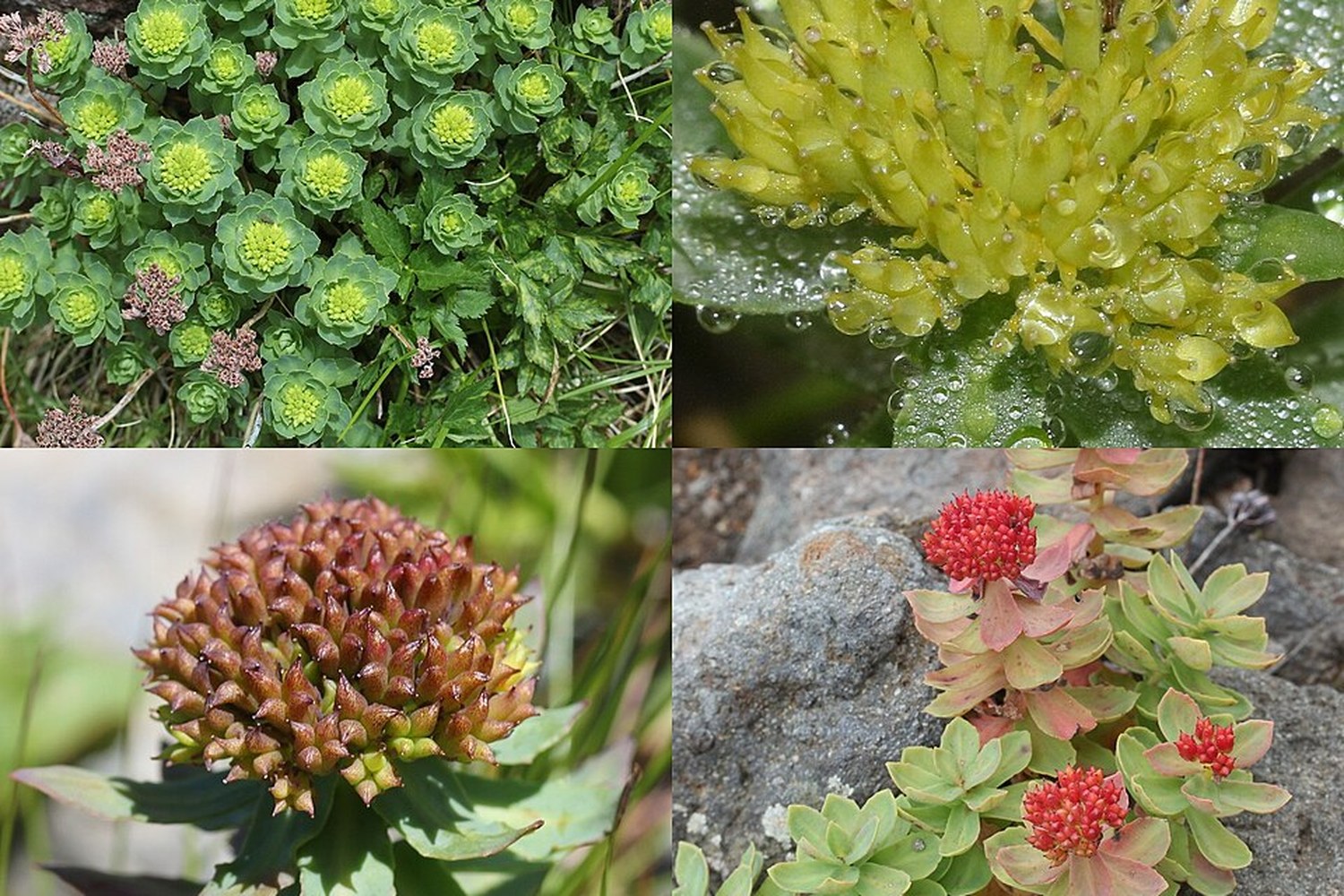
Rhodiola rosea grows in rocky, high-altitude terrain across the Arctic and alpine zones of Europe and Asia, where its thick, golden-rose-scented rhizome has been harvested for centuries. In Scandinavian and Siberian folk tradition, the root was steeped into teas and tonics to support endurance during harsh winters and demanding physical labor.
How to Use
Across the Three Kingdoms
One herb, prepared once, serving people, pets, and plants from a single botanical practice — each with its own measure and care.
People
Benefit
natural energy, stamina, and endurance
How to Use
1/4 tsp (up to 1 tsp) in hot water, tea, coffee, a smoothie, or food, once daily — begin with light doses; our extracts are very potent.
Pets
Dogs & companion animals
Benefit
Roseroot adaptogen root; supports a healthy stress response, stamina, and steady energy.
How to Use
Offer a small amount of the dilute water extract or powder mixed into food, scaled to body weight (a pinch for a cat or small dog up to roughly an eighth-teaspoon for a large dog/horse), starting at the low end.
By Animal
Cats
Non-aromatic root, no phenols/essential oils; well tolerated dilute, start low (stimulating).
Dogs
Well-tolerated adaptogen for healthy dogs; start low as it can be stimulating.
Horses
No iodine/glycyrrhizin/saponin load; hindgut-friendly root at tonic doses. See competition note.
Birds
Well tolerated as a dilute, body-weight-scaled tonic; introduce gradually, starting with a small amount.
⚑ Sport horses: Not a named FEI/USEF substance, but Rhodiola is a stimulant-class adaptogen and any herb given to energize/calm a horse falls under the FEI/USEF catch-all on performance-altering natural products. Treat as competition-prohibited; withdraw well before sanctioned events.
Safety
Rhodiola rosea is a non-aromatic root (salidroside/rosavins, no essential oils, eugenol, glycyrrhizin, or iodine load), so it carries no phenol/aromatic concern for cats or birds and has low intrinsic toxicity (reported LD50 ~3360 mg/kg). It is mildly stimulating/adaptogenic, so start low and dose to effect, especially in geriatric, anxious, or stress-sensitive animals; over-stimulation (restlessness, agitation) is the dose-sensitive sign to back off. Use cautiously alongside CNS stimulants, MAO inhibitors, antidepressants/SSRIs, sedatives, antidiabetic, antihypertensive, or anticoagulant/antiplatelet medications (theoretical additive or interaction effects), and pause before elective surgery. Because herbs are processed by the liver, use conservatively in animals with known hepatic or renal disease and under veterinary guidance. For pregnant, nursing, or medicated animals, use only under veterinary direction. These are conditional cautions; for a healthy animal in moderate use the dilute extract is well tolerated. Source-of-content quality and contaminant-free sourcing matter for all species.
Source: ASPCA Toxic and Non-Toxic Plants database (no Rhodiola/roseroot/Sedum rosea entry — not listed toxic, https://www.aspca.org/pet-care/animal-poison-control/toxic-and-non-toxic-plants/r); Khanum et al., "Rhodiola rosea: A Versatile Adaptogen," Comp Rev Food Sci Food Safety 2005 (low toxicity, LD50 ~3360 mg/kg); FEI Equine Prohibited Substances List + 2026 USEF Drugs & Medications Guidelines (catch-all on performance-altering herbs); CBD Dog Health / iHeartDogs veterinary-herbal guidance (start-low, hepatic caution).
Plants
Garden, soil & foliage
Benefit
vegetative vigor, strong rooting, and resilient new growth
How to Use
Dilute 1/8 to 1/4 teaspoon per gallon of water. Foliar feed at the lighter rate, or soil drench at the fuller rate, about once a month or every other feeding. Best worked in through vegetative growth, as the plant builds leaf, stem, and root.
Best for
Vegetative growthSafety
A dilute extract in the GGG Plants line; always dilute and start light.
Source: GGG Plants line formulation
Structure-and-function guidance for nutrition and vitality. Not intended to diagnose, treat, cure, or prevent any disease. Introduce one botanical at a time and notice how the body responds. Some plants interact with medication; if you are pregnant, nursing, or on a prescription, know the interaction before you begin.
What's inside
Rhodiola,
down to the molecule.
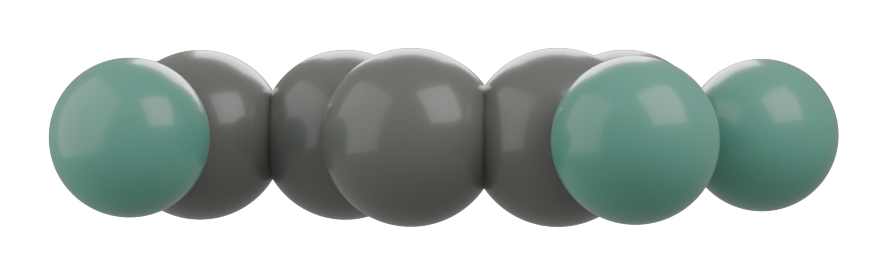
The signature compound of Rhodiola, rendered from its real structure in bronze and glass — the precise thing the plant carries, given the dignity it has earned.
The evidence chain
From the plant to the molecule to the body — traced.
Not a claim — a chain. Every link below traces to a primary record. This is what Rhodiola is, measured.
The plant
Rhodiola
which governs
An enzyme (MAO-B) that breaks down dopamine and related messengers in the brain.
serving the system
Digestive · Liver
and the tradition independently agrees — measured binding
The recorded herbal lineage names Rhodiola a metabolic herb. Independently, its compounds are measured to bind proteins of that system. Tradition and molecule, arrived at separately, converge — the strongest evidence we hold.
Structure and function only. The chain describes the plant’s characterized chemistry and traditional use — not a claim to treat, cure, or prevent any disease.
How it works
How Rhodiola works in the body
A herb is never one thing — it is a community of compounds, each meeting the body in its own way. These are the active molecules in Rhodiola and the proteins each one is measured to engage: the precise points where the plant meets your biology. So you see not just that it works, but how.
Salidroside
PubChem ↗Measured to act on
An enzyme that breaks down messenger chemicals like dopamine in the nervous system.
Concentrated in liverstructure resolved ↗
An enzyme that makes prostaglandins for everyday upkeep like protecting the stomach lining.
Concentrated in urinary bladder, skin 1, intestinestructure resolved ↗
An enzyme that cuts RNA when it is paired with DNA, part of normal genetic housekeeping.
Measured in the lab
Real measurements from binding studies. A tighter fit means the compound meets its target more readily — the figure in grey is the actual measured value.
Binds tightly to Amine oxidase [flavin-containing] B · IC50 810 nM
Tyrosol (p-Tyrosol)
PubChem ↗Measured to act on
An enzyme that balances carbon dioxide and acidity, abundant in red blood cells.
Concentrated in intestine, bone marrowstructure resolved ↗
A fast enzyme that balances carbon dioxide and acidity throughout the body.
Concentrated in stomach 1, choroid plexus, intestinestructure resolved ↗
A receptor that receives growth signals guiding cell movement, repair, and renewal.
Concentrated in liverstructure resolved ↗
Measured in the lab
Real measurements from binding studies. A tighter fit means the compound meets its target more readily — the figure in grey is the actual measured value.
Binds tightly to Beta-carbonic anhydrase 1 · Ki 850 nM
Binds to Carbonic anhydrase · Ki 1.08 µM
Binds to Replicase polyprotein 1ab · IC50 6.68 µM
Binds to Carbonic anhydrase 2 · Ki 8.7 µM
Kaempferol
PubChem ↗Measured to act on
An enzyme that trims signaling peptides, including those involved in blood sugar regulation.
Concentrated in parathyroid gland, intestine, placenta, prostatestructure resolved ↗
An enzyme the influenza virus uses to release newly made copies from a host cell.
Measured in the lab
Real measurements from binding studies. A tighter fit means the compound meets its target more readily — the figure in grey is the actual measured value.
Binds very tightly to Carbonic anhydrase 7 · Ki 25 nM
Binds very tightly to Aryl hydrocarbon receptor · IC50 28 nM
Binds very tightly to Cytochrome P450 1B1 · Ki 43 nM
Binds tightly to CDGSH iron-sulfur domain-containing protein 1 · Ki 132 nM
Binds tightly to Carbonic anhydrase 12 · Ki 146 nM
Binds tightly to Casein kinase II subunit alpha 3 · Ki 210 nM
— and 35 more measured targets, each traced to its source.
Herbacetin
PubChem ↗Measured to act on
An enzyme the influenza virus uses to release newly made copies from a host cell.
An enzyme that helps the body make new glucose, keeping blood sugar steady between meals.
Concentrated in liver, intestine, kidneystructure resolved ↗
A bacterial enzyme that clips sugar molecules off the surfaces of host cells.
Measured in the lab
Real measurements from binding studies. A tighter fit means the compound meets its target more readily — the figure in grey is the actual measured value.
Binds to Sialidase · IC50 1.4 µM
Binds to Fructose-1,6-bisphosphatase 1 · IC50 8.7 µM
Gallic acid
PubChem ↗Measured to act on
An enzyme that attaches sugar groups to proteins, shaping how they fold and function.
Measured in the lab
Real measurements from binding studies. A tighter fit means the compound meets its target more readily — the figure in grey is the actual measured value.
Binds very tightly to Amyloid-beta precursor protein · EC50 1.7 nM
Binds very tightly to Alpha-(1,3)-fucosyltransferase 7 · IC50 60 nM
Binds tightly to Polypeptide N-acetylgalactosaminyltransferase 2 · Kd 924 nM
Binds to Polyphenol oxidase 4 · IC50 1.06 µM
Binds to Carbonic anhydrase 2 · Ki 2.25 µM
Binds to Carbonic anhydrase 1 · Ki 3.2 µM
— and 15 more measured targets, each traced to its source.
Cited science · not claims
Everything we publish about these plants traces to a primary source — the compounds to PubChem, ChEMBL, and BindingDB, the traditional uses to named, dated herbals. We describe what a plant is and what it is understood to nourish — the body’s own systems, structure and function only. We do not claim it treats, cures, or prevents any disease, and nothing here is a substitute for professional care. See our method & sources →
These statements have not been evaluated by the Food and Drug Administration. Not intended to diagnose, treat, cure, or prevent any disease.
Works alongside
Other herbs that share Rhodiola's terrain
Different plants reaching the same systems of the body — the convergence our genome engine maps. These nourish the terrain Rhodiola supports:
Skin