berry
Goji Berry
Lycium barbarum
Also known as
Suitable For
Lycium barbarum — a nutrient-dense berry rich in zeaxanthin and Lycium polysaccharides. Supports vision, antioxidant defense, and the vitality of the liver and kidneys.
What it nourishes in the body
The body systems this herb is traditionally understood to support — resolved through our knowledge graph, where the classical record and modern biology are read together. Structure and function, never a claim of treatment.
Where measure and tradition agree
Goji Berry is measured to engage this system in human binding data — and the recorded tradition named it for it independently. Two evidence systems arriving at the same place, separately, is our highest standard. See the research →
10:1 Concentrated Extract
Whole-plant. Small-batch. Potent.
How to take it
1/4 tsp (up to 1 tsp) in hot water, tea, coffee, a smoothie, or food, once daily — begin with light doses; our extracts are very potent.
Whole plant, never isolated
Concentrated extracts of the whole botanical — the way the body recognizes it.
Cited to measured biology
Every action we describe traces to the compound and its measured target.
Structure & function
We describe what an herb nourishes — never a claim to treat disease.
Secure checkout
Encrypted payment and human verification on every order.
The Botanical
Goji Berry, in depth
Character
Goji Berry (Lycium barbarum) is the small, vermilion fruit of a thorny shrub native to the high deserts and river valleys of northern China — most prized from Ningxia, where alkaline soil, intense sun, and cold nights concentrate the berry into one of the most nutrient-dense fruits in the herbal repertoire. In the Gate of Life lineage it stands among the supreme tonic foods: a "superior" botanical taken not for a single complaint but for the long cultivation of vitality across years. The name 枸杞子 (gǒuqǐzǐ) and the apothecary's wolfberry both point to the same fruit — sweet, neutral, and unhurried in character, a berry that is eaten as readily as it is brewed. We offer it as a 10:1 concentrated extract of the ripe fruit alone, the form the tradition recognizes as a food-grade tonic; the raw green plant, leaves, and unripe berries are no part of it. Goji is a daily berry, not an occasional remedy — the kind of botanical a household keeps for a lifetime, a quiet, accumulating source of strength.
In the Body
Goji's character lives in two well-established compound families. The first is its carotenoid pigments — most notably zeaxanthin, the same xanthophyll the eye itself concentrates in the macula — which the berry delivers in unusually rich, bioavailable form to nourish the visual system and the body's own capacity for clarity and brightness of sight. The second is the Lycium barbarum polysaccharides, a distinctive class of glycoconjugates that engage the body's own immune architecture — the kind of structural recognition the immune system draws on to maintain its natural, self-regulating function — and that, alongside the berry's carotenoids and flavonoids, supply the body abundant material for its native antioxidant defenses, supporting resilience against everyday oxidative wear. Through these constituents goji speaks most directly to the eyes and to what the classical tradition frames as the liver and kidney — the deep reserves of vitality, stamina, and endurance. It is a tonic of foundation: it nourishes the systems that govern radiance, energy, and the body's steady, grounded vigor, giving the body's own intelligence the raw richness it draws upon to stay supple and strong over the long arc of daily use.
The Tradition
Goji has been carried in classical East Asian herbalism for well over two thousand years, recorded among the "superior" tonic class in the foundational materia medica — the rank reserved for the gentle, food-like botanicals one may take continuously to nourish life rather than to address a passing disturbance. In that lineage it is the great fruit of the liver and kidney channels, esteemed for nourishing the body's deep vitality and for its long-standing association with the brightness of the eyes; it appears across the centuries in tonic wines, congees, soups, and simple teas, eaten by the handful as readily as it is decocted. Beyond China it entered the wider apothecary tradition as wolfberry, valued everywhere as a sweet, restorative berry. We honor that unbroken record of use — millennia of households keeping goji as an everyday source of strength and radiance — as the evidence it is.
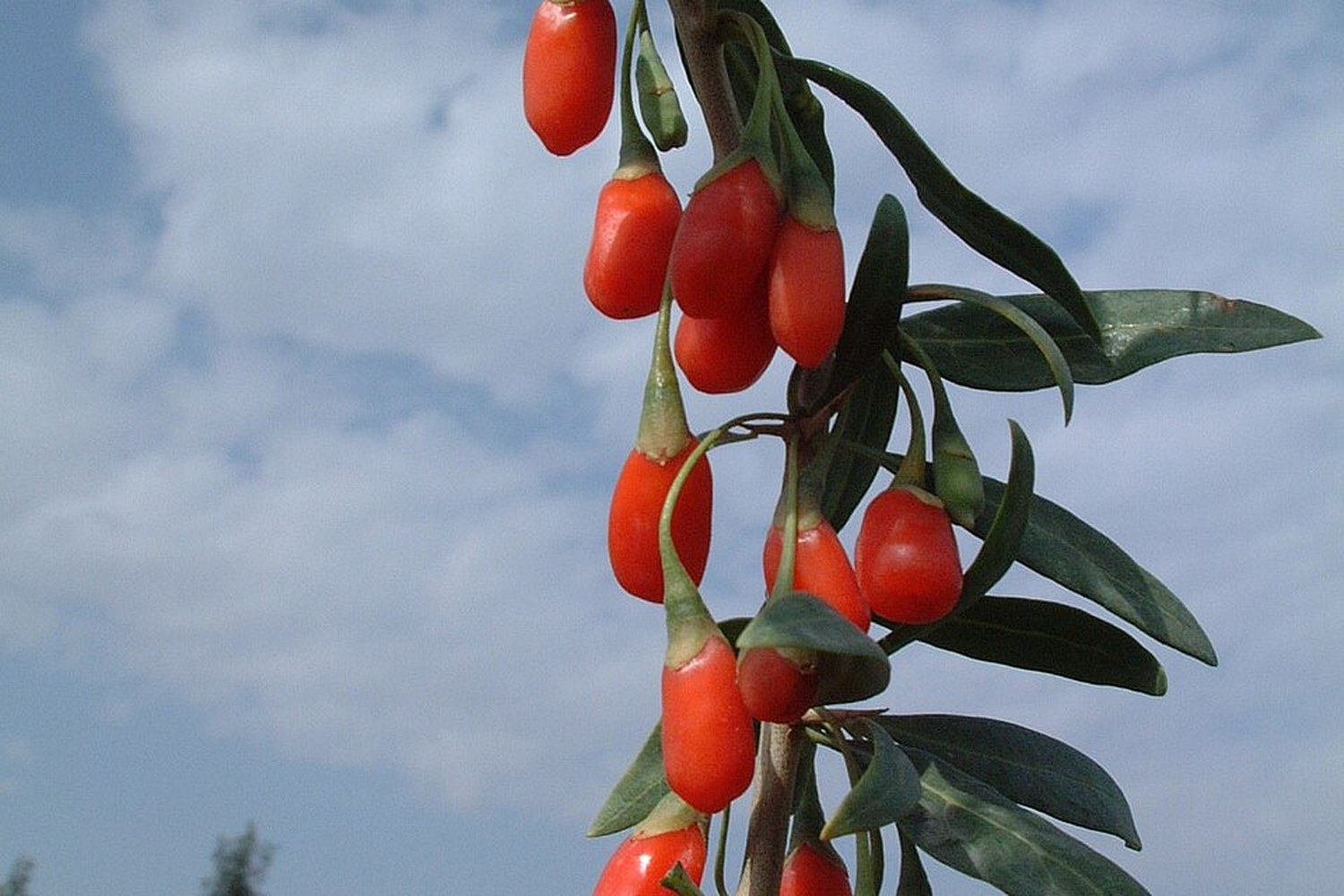
The berry
Goji Berry,
as it actually grows.
Lycium barbarum — the red wolfberry of the Ningxia plains, dried sweet-tart and eaten by the handful, prized in the old texts as a tonic for the eyes and the blood.
How to Use
Across the Three Kingdoms
One herb, prepared once, serving people, pets, and plants from a single botanical practice — each with its own measure and care.
People
Benefit
immune resilience and deep, daily vitality
How to Use
1/4 tsp (up to 1 tsp) in hot water, tea, coffee, a smoothie, or food, once daily — begin with light doses; our extracts are very potent.
Pets
Dogs & companion animals
Benefit
Antioxidant- and polysaccharide-rich fruit tonic that supports immune resilience, healthy vision, and vitality.
How to Use
Stir a small pinch of the dilute extract/powder into food, scaled to body weight (a little for a cat or small bird, proportionally more for a dog or horse); start low and build over a few days.
By Animal
Cats
Food-grade fruit tonic, not ASPCA-listed; ripe-fruit extract well-tolerated in small amounts. No essential-oil/phenol concern (not an aromatic).
Dogs
Well-tolerated ripe-fruit tonic in moderation; not ASPCA-listed. Dilute extract avoids the coarse-dried-berry GI roughness.
Horses
Ripe-fruit extract well-tolerated; no iodine/glycyrrhizin load. See competition note on Solanaceae tropane traces for sport horses.
Birds
Wolfberry is offered to parrots/finches as a nutritious treat; non-aromatic so no essential-oil sensitivity. Dilute extract fine in moderation.
⚑ Sport horses: CAUTION for FEI/USEF sport horses: goji is a Solanaceae (nightshade) and the genus Lycium can carry trace tropane alkaloids (atropine/hyoscyamine). Atropine and hyoscine are recognized naturally-occurring prohibited-substance (NOPS) feed contaminants and atropine is FEI-controlled — a dilute ripe-fruit extract is low-risk but not zero-risk, so avoid feeding in the days before competition / withdraw per NOPS guidance.
Safety
This rating is for the dilute hot-water extract of the RIPE fruit in moderate use — not the raw green plant, leaves, stems, or unripe berries, which (as with other Solanaceae/nightshades) can contain solanine and are not part of this product. Goji is a recognized food-grade tonic with a long traditional-use record and is not listed on the ASPCA toxic-plant database. Conditional cautions belong here, not in the per-species class: goji can potentiate anticoagulants/antiplatelets (notably warfarin) via CYP interaction, so withhold around scheduled surgery or in animals on blood thinners; it may additively affect animals on antihypertensive or antidiabetic medication (monitor blood pressure/glucose); use caution or avoid in pregnancy given traditional uterine/reproductive activity; introduce slowly and reduce or stop if GI upset (vomiting, soft stool) appears, as large quantities — especially coarse dried whole berries — can cause digestive upset. Source quality matters: goji is prone to pesticide and heavy-metal residues, so use a clean, tested extract. As always for healthy animals, moderate dosing scaled to body weight.
Source: ASPCA Toxic and Non-Toxic Plant Database (no Lycium barbarum toxic listing); WebMD/Drugs.com goji monographs (warfarin/CYP, antihypertensive/antidiabetic interactions, pregnancy caution, betaine/atropine constituents); FEI 2026 Equine Prohibited Substances List and FEI Clean Sport contamination/NOPS guidance (atropine/hyoscine as nightshade-derived feed contaminants); avian husbandry guidance on wolfberry as a bird treat.
Plants
Garden, soil & foliage
Benefit
flowering, fruiting, and finish as a dilute bloom-stage tonic
How to Use
Dilute 1/8 to 1/4 teaspoon per gallon of water. Foliar feed at the lighter rate, or soil drench at the fuller rate, about once a month or every other feeding. Best worked in from pre-flower through bloom, as the plant sets and fills flower and fruit.
Best for
Flower & bloomSafety
A dilute extract in the GGG Plants line; always dilute and start light.
Source: GGG Plants line formulation
Structure-and-function guidance for nutrition and vitality. Not intended to diagnose, treat, cure, or prevent any disease. Introduce one botanical at a time and notice how the body responds. Some plants interact with medication; if you are pregnant, nursing, or on a prescription, know the interaction before you begin.
What's inside
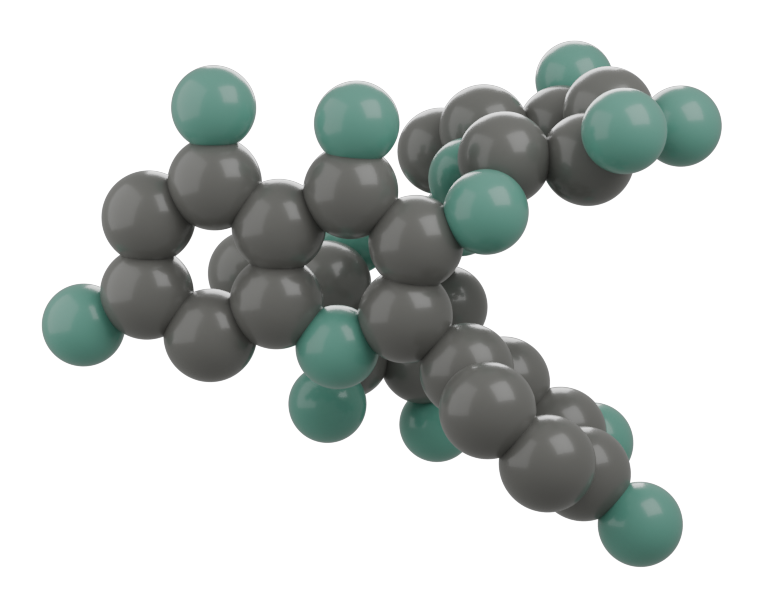
Goji Berry,
down to the molecule.
The signature compound of Goji Berry, rendered from its real structure in bronze and glass — the precise thing the plant carries, given the dignity it has earned.
The evidence chain
From the plant to the molecule to the body — traced.
Not a claim — a chain. Every link below traces to a primary record. This is what Goji Berry is, measured.
The plant
Goji Berry
which governs
An enzyme that helps cells balance acidity by managing carbon dioxide.
serving the system
Eyes · Digestive
and the tradition independently agrees — measured binding
The recorded herbal lineage names Goji Berry a liver & detox herb. Independently, its compounds are measured to bind proteins of that system. Tradition and molecule, arrived at separately, converge — the strongest evidence we hold.
Structure and function only. The chain describes the plant’s characterized chemistry and traditional use — not a claim to treat, cure, or prevent any disease.
How it works
How Goji Berry works in the body
A herb is never one thing — it is a community of compounds, each meeting the body in its own way. These are the active molecules in Goji Berry and the proteins each one is measured to engage: the precise points where the plant meets your biology. So you see not just that it works, but how.
Betaine
PubChem ↗Measured to act on
An enzyme that recycles the amino acid homocysteine back into methionine using betaine.
Concentrated in liver, kidneystructure resolved ↗
Scopoletin
PubChem ↗Measured to act on
An enzyme that helps cells balance acidity by managing carbon dioxide.
Concentrated in stomach 1structure resolved ↗
Measured in the lab
Real measurements from binding studies. A tighter fit means the compound meets its target more readily — the figure in grey is the actual measured value.
Binds tightly to Carbonic anhydrase 9 · Ki 960 nM
Binds to Carbonic anhydrase 12 · Ki 4.05 µM
Binds to Carbonic anhydrase 7 · Ki 8.71 µM
Quercetin
PubChem ↗Measured to act on
An enzyme that converts fatty acids into messengers of the inflammatory response.
Concentrated in lymphoid tissue, lungstructure resolved ↗
A liver-type enzyme that processes hormones and environmental compounds.
A signaling enzyme involved in cell survival and growth.
Concentrated in bone marrowstructure resolved ↗
A cellular pump that ushers compounds out of cells, shaping how the body absorbs them.
Concentrated in intestinestructure resolved ↗
The enzyme that produces uric acid as the body breaks down purines.
Concentrated in liver, intestine, breaststructure resolved ↗
An enzyme that converts glucose into sorbitol, part of how cells handle sugar.
Concentrated in adrenal glandstructure resolved ↗
Measured in the lab
Real measurements from binding studies. A tighter fit means the compound meets its target more readily — the figure in grey is the actual measured value.
Binds very tightly to Amine oxidase [flavin-containing] A · IC50 10 nM
Binds very tightly to Aromatase · IC50 12 nM
Binds very tightly to Aldo-keto reductase family 1 member B1 · IC50 14.8 nM
Binds very tightly to Enoyl-acyl-carrier protein reductase · Ki 22 nM
Binds very tightly to Cytochrome P450 1B1 · Ki 23 nM
Binds very tightly to Serine/threonine-protein kinase pim-1 · Kd 25 nM
— and 108 more measured targets, each traced to its source.
Rutin
PubChem ↗Measured to act on
The enzyme that clears acetylcholine after a nerve signal fires, resetting communication between nerves.
Concentrated in skeletal muscle, brain, tonguestructure resolved ↗
An enzyme that cuts proteins at the cell surface, part of normal protein turnover.
Concentrated in pancreas, brainstructure resolved ↗
A protein that helps organize DNA and acts as an alarm signal during tissue stress.
Measured in the lab
Real measurements from binding studies. A tighter fit means the compound meets its target more readily — the figure in grey is the actual measured value.
Binds very tightly to Tyrosinase · IC50 0.856 nM
Binds very tightly to Beta-secretase 1 · IC50 3.8 nM
Binds very tightly to Acetylcholinesterase · IC50 12 nM
Binds very tightly to Muscarinic acetylcholine receptor M5 · Ki 35.13 nM
Binds to Neuromedin-U receptor 2 · EC50 1.2 µM
Binds to Genome polyprotein · IC50 2.1 µM
— and 5 more measured targets, each traced to its source.
Chlorogenic acid
PubChem ↗Measured to act on
An enzyme that converts glucose into sorbitol, part of how cells handle sugar.
Concentrated in adrenal glandstructure resolved ↗
An enzyme that dials down insulin and growth signaling by removing phosphate tags.
Measured in the lab
Real measurements from binding studies. A tighter fit means the compound meets its target more readily — the figure in grey is the actual measured value.
Binds very tightly to Tyrosine-protein phosphatase non-receptor type 1 · IC50 100 nM
Binds tightly to Histone deacetylase · Ki 135 nM
Binds tightly to Aldo-keto reductase family 1 member B1 · IC50 300 nM
Binds to Aldo-keto reductase family 1 member B10 · IC50 7.9 µM
Cited science · not claims
Everything we publish about these plants traces to a primary source — the compounds to PubChem, ChEMBL, and BindingDB, the traditional uses to named, dated herbals. We describe what a plant is and what it is understood to nourish — the body’s own systems, structure and function only. We do not claim it treats, cures, or prevents any disease, and nothing here is a substitute for professional care. See our method & sources →
These statements have not been evaluated by the Food and Drug Administration. Not intended to diagnose, treat, cure, or prevent any disease.
Works alongside
Other herbs that share Goji Berry's terrain
Different plants reaching the same systems of the body — the convergence our genome engine maps. These nourish the terrain Goji Berry supports: