Measured Biology
The Measured Biology of Asparagus Root
Asparagus cochinchinensis
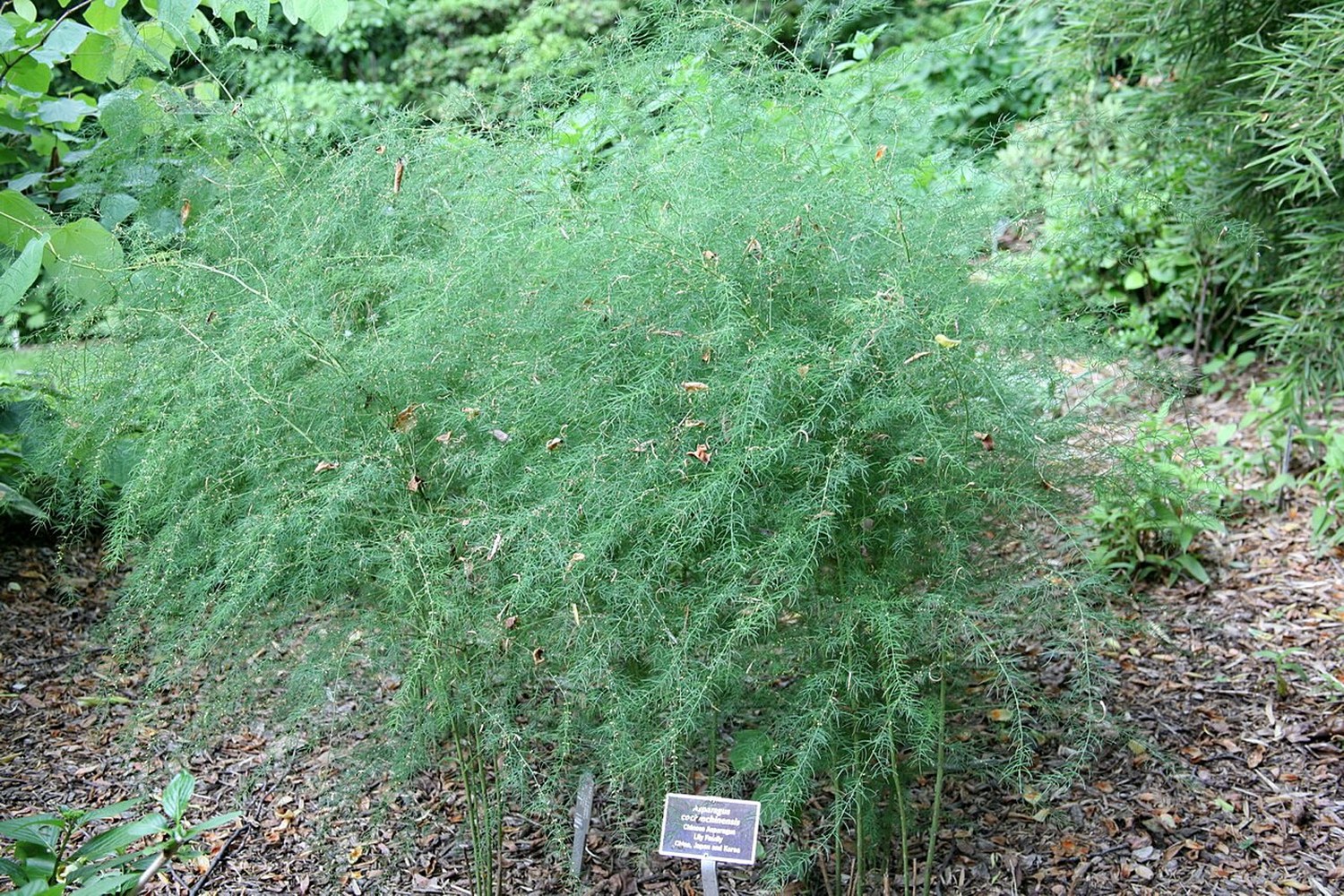
Asparagus cochinchinensis — known in the classical East Asian materia medica as 天门冬, Tian Men Dong, "heavenly asparagus" — is a moistening tuberous root drawn from a climbing perennial of the lily family, cultivated across the temperate forests of China and Korea. Where the kitchen asparagus offers a slender spring spear, this is its medicinal cousin: a plump, translucent, sweet-fleshed root gathered for its juiciness, then steamed and cured into the deep, honeyed tuber the apothecary prizes. Its character is cooling, sweet, and profoundly hydrating — a yin tonic in the oldest sense, a root that carries moisture the way a reservoir carries water, replenishing what dryness and exertion draw down. In the GGG lineage Asparagus Root holds the place of a quiet restorative: not a stimulant that drives the body forward, but a moistening tonic that refills the deeper wells of fluid and reserve. Its nature is twofold and unusually elegant — it nourishes the lungs and the body's hydration while settling the mind into a clear, unhurried calm. This is the root for the kind of clarity that comes from being well-watered and grounded rather than wound tight: focus born of composure. We offer it as a potent 10:1 extract, a concentration that asks for a light hand and rewards it with a sweet, settling depth.
In the body
Asparagus Root engages first with the respiratory system, where its defining quality is moisture. As a classical yin-and-fluid tonic it works to nourish and tone the lungs and the body's hydration, lending suppleness to tissues that exertion, heat, and dry air leave parched — supporting the body's own moistening intelligence rather than overriding it. Alongside the respiratory work runs a nervine character: it supports a settled, grounded nervous tone, the physiological basis of clear focus and a calm, composed mind. The two threads are one root's gift — hydration and composure, the well-watered clarity of a system in balance. At the molecular level, the established and characteristic constituents of this root belong to the steroidal saponins, a class well represented in Asparagus cochinchinensis by its furostanol-type members. These amphipathic, triterpene-like glycosides are the root's signature compound class and the reason its concentrated extract is treated with respect and dilution. The root also carries polysaccharides and mucilaginous fractions — the slippery, water-binding compounds that account for its moistening, demulcent feel on the tissues of the respiratory tract and that engage the body's own fluid balance and lining. These are structure-and-function relationships: the saponins and polysaccharides are the architecture; what they do is nourish, moisten, and tone the body's existing systems. Because the saponins are potent and concentration-dependent, the extract is meant to be taken light and dilute, building slowly — the hallmark of a true tonic rather than a forcing agent.
The molecules, measured
The active compounds in Asparagus Root, the proteins each is measured to engage, and — where a real, exact-match assay exists — the strength of that binding.
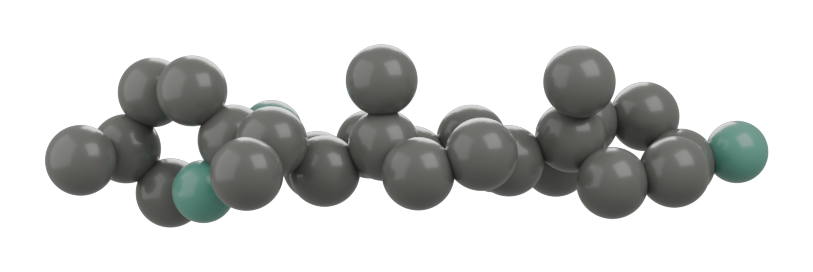
Diosgenin (steroidal sapogenin aglycone of A. cochinchinensis saponins)
PubChem ↗Measured to act on
Oxysterol-binding protein 1
A protein that shuttles cholesterol and lipids between compartments inside the cell.
Sarsasapogenin (steroidal sapogenin)
PubChem ↗Measured to act on
Solute carrier organic anion transporter family member 1B3
A liver transporter that draws compounds from the blood into liver cells.
Solute carrier organic anion transporter family member 1B1
A liver transporter that helps usher substances into the liver for processing.
Amyloid-beta precursor protein
A membrane protein in brain cells whose fragments play a role in neural signaling and structure.
beta-Sitosterol (phytosterol)
PubChem ↗Measured to act on
Cytochrome P450 3A4
A major liver enzyme that processes a wide range of compounds the body takes in.
Cytochrome P450 2D6
A liver enzyme involved in breaking down many naturally occurring and ingested compounds.
DNA polymerase beta
An enzyme that helps repair and maintain the integrity of DNA.
Dipeptidyl peptidase 4
An enzyme that trims small signaling peptides involved in blood sugar regulation.
Prothrombin
A blood protein that, when activated, helps form clots to stop bleeding.
Rutin (quercetin-3-O-rutinoside flavonoid glycoside)
PubChem ↗Measured to act on
Xanthine dehydrogenase/oxidase
The enzyme that produces uric acid as the body breaks down purines.
Acetylcholinesterase
The enzyme that switches off the nerve messenger acetylcholine after a signal.
Cholinesterase
An enzyme that helps break down acetylcholine and related compounds in the blood.
Dipeptidyl peptidase 4
An enzyme that trims small signaling peptides involved in blood sugar regulation.
Prolyl endopeptidase
An enzyme that cleaves small peptides, involved in processing neuropeptides.
Beta-secretase 1
An enzyme that cuts proteins at the cell surface, part of normal protein turnover.
Tyrosinase
The key enzyme that makes melanin, the pigment that colors skin and hair.
Aldo-keto reductase family 1 member B1
An enzyme that converts excess glucose into sorbitol, part of normal sugar metabolism.
Voltage-gated potassium channel KCNH2
A channel that lets potassium flow to help reset the heart's electrical rhythm.
Quercetin (flavonoid aglycone; aglycone of rutin)
PubChem ↗Measured to act on
Epidermal growth factor receptor
A receptor that receives growth signals telling cells when to divide and renew.
Polyunsaturated fatty acid 5-lipoxygenase
An enzyme that converts fatty acids into messengers of the inflammatory response.
Prostaglandin G/H synthase 2
The enzyme that drives the body's inflammatory response.
Tyrosine-protein phosphatase non-receptor type 1
An enzyme that dials down insulin and growth signals inside the cell.
Tyrosine-protein kinase Lck
A signaling enzyme that helps activate immune T-cells.
Cyclin-dependent kinase 6
An enzyme that helps drive the cell through its growth and division cycle.
Cyclin-dependent kinase 2
An enzyme that controls the timing of cell division.
Serine/threonine-protein kinase Pim-1
A signaling enzyme involved in cell survival and growth.
Phosphatidylinositol 3-kinase regulatory subunit alpha
A regulatory partner in a signaling pathway that governs cell growth and metabolism.
Adenosine receptor A3
A receptor that senses adenosine, a molecule that helps calm and modulate cell activity.
Cytochrome P450 2C9
A liver enzyme that breaks down many compounds the body takes in.
Polyunsaturated fatty acid lipoxygenase ALOX15
An enzyme that turns fatty acids into signaling molecules of the inflammatory response.
Xanthine dehydrogenase/oxidase
The enzyme that produces uric acid as the body breaks down purines.
Predicted binding geometry
Beyond the measured affinities, we computed the fit ourselves. We docked Sarsasapogenin into the AlphaFold-predicted structure of Solute carrier organic anion transporter family member 1B3 using AutoDock Vina, and recorded the best pose.
Sarsasapogenin → Solute carrier organic anion transporter family member 1B3
-9.78 kcal/molOur own computation · AutoDock Vina blind dock into AlphaFold model AF-Q9NPD5 (ordered domain, pLDDT ≥ 70), PubChem 3D conformer CID 92095. A predicted binding geometry and energy — more negative is a tighter predicted fit — reported alongside, not in place of, the measured values above.
The classical record
What tradition carried
Asparagus Root is one of the venerable yin tonics of classical East Asian herbalism, recorded for well over a millennium as Tian Men Dong (天门冬), "heavenly asparagus." In that tradition it is classed among the moistening, fluid-replenishing roots — prized for nourishing the lungs, replenishing the body's deep fluids, and settling the mind into calm. It was gathered, steamed, and cured into translucent honeyed tubers, taken as a restorative for the dry and the depleted and as a tonic for clarity of mind. GGG NATURAL carries it within that unbroken lineage: a sweet, cooling, moistening root offered as a 10:1 extract in the way the old herbalists intended — light-handed, patient, and tonic.