Measured Biology
The Measured Biology of Astragalus
Astragalus membranaceus
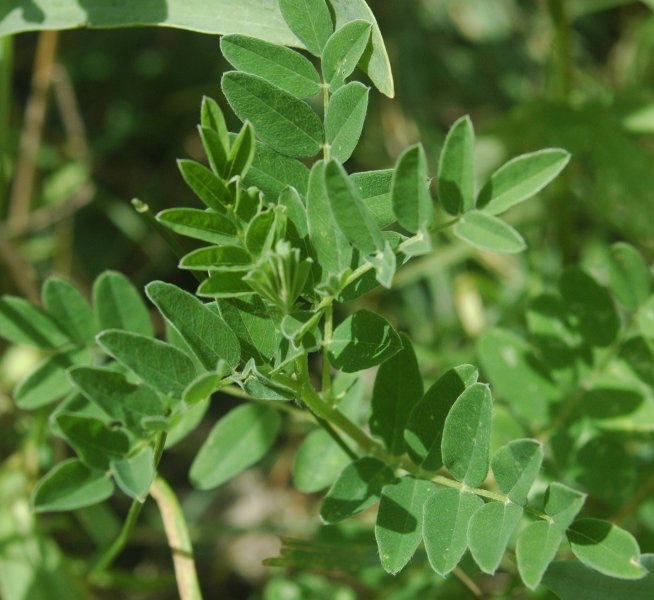
Astragalus membranaceus — huang qi (黄芪), "the yellow leader" — is among the most venerated tonic roots in the entire botanical lineage, a foundational adaptogen carried for thousands of years at the center of the tradition's vitality formulary. It is the long, fibrous taproot of a perennial legume native to the cold uplands of Northern China and Mongolia, harvested from mature plants whose years in the soil concentrate the root's sweet, faintly grassy character. Cut into its characteristic pale tongue-depressor slices, it carries a gentle, warming sweetness — the classic signature of a deep nourishing tonic rather than a sharp, draining herb. At GGG NATURAL it lives as a potent 10:1 extract: a root distilled to its working essence, a tonic for sustained daily use. Astragalus is not a fast or dramatic plant. Its nature is cumulative — a builder, a fortifier, the kind of root the tradition reaches for when the aim is to construct enduring constitutional strength over seasons rather than to provoke a momentary shift. It is, by character and by classical standing, a guardian of vitality: the root you take to stand more firmly in your own resilience, season after season.
In the body
Astragalus speaks most directly to the body's immune system and to its deep reserves of vitality and stamina. The tradition classes it as a quintessential qi tonic — a root that nourishes the foundational energy from which endurance, daily drive, and protective resilience are drawn — and the modern understanding of its chemistry maps cleanly onto that framing. Its two best-established and most studied constituent families are the astragalosides (a group of triterpene saponins, named for this very plant) and a rich complement of polysaccharides, including beta-glucan-type and arabinogalactan-type long-chain sugars. These polysaccharides are precisely the molecular class the body's own immune architecture is built to recognize and engage, which is why astragalus has long been understood as a root that supports the immune system's natural function and tone rather than forcing it. Alongside these, the root carries flavonoids and other antioxidant compounds that support the body's own balance against everyday oxidative stress. In structure/function terms, this is a tonic that nourishes the systems governing stamina, vitality, and immune resilience — supporting the body's intrinsic capacity to hold its own ground. Its triterpenes and polysaccharides engage the body's existing regulatory and protective systems, helping them stay supple, responsive, and in balance. It supports a grounded, sustained sense of energy — the kind that builds quietly with daily use — and tones the constitution toward resilience and healthy aging. Because it is non-aromatic and food-grade, with a sweet, gentle profile, it is one of the few tonics equally at home across People, Pets, and Plants — a root taken not to act against anything, but to feed the body's own intelligence and let it work.
The molecules, measured
The active compounds in Astragalus, the proteins each is measured to engage, and — where a real, exact-match assay exists — the strength of that binding.
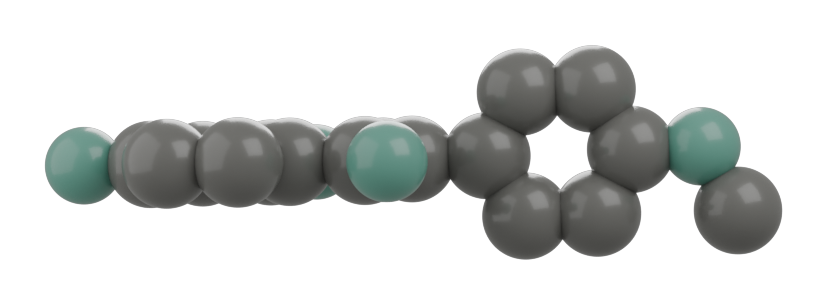
Formononetin
PubChem ↗Measured to act on
Cytochrome P450 2C9
A liver enzyme that breaks down many compounds the body takes in.
Apoptosis regulator Bcl-2
A protein that helps decide whether a cell continues living or undergoes natural turnover.
Protein deacetylase HDAC6
An enzyme that edits proteins to manage cellular cleanup and the cell internal scaffolding.
Calycosin
PubChem ↗Measured to act on
High mobility group protein B1
A protein that helps organize DNA and acts as an alarm signal during tissue stress.
Kaempferol
PubChem ↗Measured to act on
Cytochrome P450 2C9
A liver enzyme that breaks down many compounds the body takes in.
Carbonic anhydrase 7
An enzyme that balances carbon dioxide and acidity, part of the family that manages pH.
Aryl hydrocarbon receptor
A sensor protein that detects compounds from the environment and adjusts detox responses.
Cytochrome P450 1B1
A liver-type enzyme that processes hormones and environmental compounds.
Cytochrome P450 1A2
A liver enzyme that breaks down caffeine and many other ingested compounds.
CDGSH iron-sulfur domain-containing protein 1
A protein in the cell powerhouses that helps regulate energy and iron handling.
Carbonic anhydrase 12
An enzyme that balances carbon dioxide and acidity to help maintain the body pH.
Sulfotransferase 1A1
A liver enzyme that tags compounds with sulfur so the body can clear them.
17-beta-hydroxysteroid dehydrogenase type 2
An enzyme that fine-tunes the balance of active sex hormones in tissues.
Quercetin
PubChem ↗Measured to act on
Amine oxidase [flavin-containing] A
An enzyme that breaks down messenger chemicals like serotonin in the nervous system.
Aromatase
The enzyme that converts androgens into estrogen, the body main estrogen source.
Aldo-keto reductase family 1 member B1
An enzyme that converts glucose into sorbitol, part of how cells handle sugar.
Cytochrome P450 1B1
A liver-type enzyme that processes hormones and environmental compounds.
Serine/threonine-protein kinase PIM-1
A signaling enzyme involved in cell growth and survival.
ATP-binding cassette transporter ABCG2
A cellular pump that ushers compounds out of cells, shaping how the body absorbs them.
Prothrombin
A blood protein that, once activated, drives the formation of clots.
5'-nucleotidase
An enzyme that processes nucleotides, helping recycle the building blocks of DNA and energy molecules.
Predicted binding geometry
Beyond the measured affinities, we computed the fit ourselves. We docked Formononetin into the AlphaFold-predicted structure of Apoptosis regulator Bcl-2 using AutoDock Vina, and recorded the best pose.
Formononetin → Apoptosis regulator Bcl-2
-7.19 kcal/molOur own computation · AutoDock Vina blind dock into AlphaFold model AF-P10415 (ordered domain, pLDDT ≥ 70), PubChem 3D conformer CID 5280378. A predicted binding geometry and energy — more negative is a tighter predicted fit — reported alongside, not in place of, the measured values above.
The classical record
What tradition carried
Astragalus is one of the great pillars of classical East Asian herbalism, where it is known as huang qi (黄芪) — literally the "yellow leader," a name marking its rank among the supreme tonic roots. For well over two thousand years it has held a place among the most relied-upon qi-and-vitality tonics in the East Asian materia medica, reached for as a builder of constitutional strength, protective resilience, and the body's surface defenses. In the classical system it is a warming, sweet root used to tonify deep energy and support the body's own outermost protective layer — the tradition's framing for everyday resilience — and it remains a cornerstone of the foundational tonic formulas carried forward across centuries of unbroken practice. Within GGG NATURAL's own lineage it stands as a foundational daily adaptogen: a guardian root whose authority rests not on novelty but on millennia of human practice across the herbal tradition.