Measured Biology
The Measured Biology of Atlantic Irish Sea Moss
Chondrus crispus
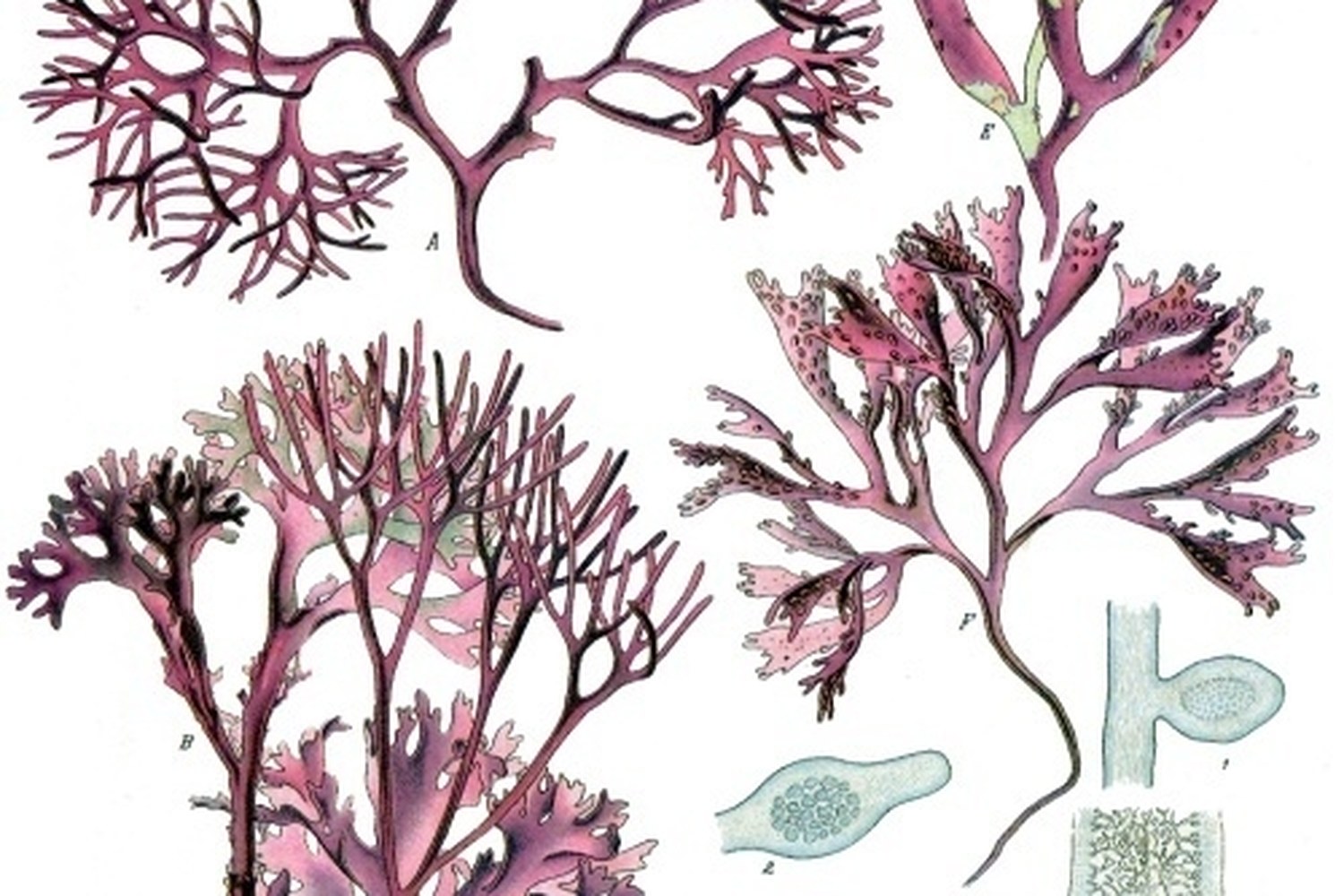
Atlantic Irish Sea Moss (Chondrus crispus) is a cold-water red sea-vegetable, wild-harvested from the rock pools and tidal ledges of the North Atlantic — the storm-washed coasts of Ireland, the Canadian Maritimes, and the rugged Northern European shoreline where the same plant has been gathered by hand for generations. Where the more familiar tropical "sea moss" belongs to the warm Caribbean, true Chondrus crispus is a creature of cold, oxygen-rich, mineral-laden water, and that origin is its entire character: a low, fan-shaped, cartilaginous thallus that branches like a flattened coral, ranging from deep purple-red to greenish-gold depending on the light it grew in. We offer it as the whole thallus, ground to a raw marine powder — nothing extracted away, nothing concentrated, the entire sea-vegetable kept intact. In the apothecary it sits in the lineage of true foods rather than potent botanicals — closer to a daily bread of the sea than to a drop-dosed tincture. Its nature is mild, cooling, demulcent, and faintly briny; it carries the ocean's full mineral signature into the diet in a form the body has recognized for as long as coastal peoples have eaten from the tide line. This is its place in our shelves: a whole-food foundation, a baseline of marine mineral density and daily cellular nourishment, the kind of plant you build a constitution on rather than reach for in a moment.
In the body
Sea moss is, before anything else, a mineral whole food. The cold North Atlantic concentrates its dissolved minerals into the living thallus, so the ground plant carries naturally occurring iodine, magnesium, potassium, calcium, and dozens of trace minerals in food-form — the elemental building blocks the body draws on for cellular work, fluid balance, and structural tone. Iodine is the signature element here, and the body's thyroid system is built to use it: iodine is the raw material the thyroid itself reaches for to do its own work, which is why a naturally iodine-bearing sea vegetable nourishes the body's mineral foundation rather than acting on it. We honor this as a benefit and a responsibility both — this is a dilute, food-grade sea-vegetable tonic, kept in modest daily measure, never a concentrated iodine megadose. Its defining compound class is its red-seaweed polysaccharides — the carrageenan-type galactans that give the plant its cartilaginous body and its famous gel. These are large, water-loving polysaccharides: stirred into hot water they swell into a soft, mucilaginous matrix, and that demulcent quality is what makes sea moss a classic soothing, moistening food for the body's mucosal linings and the gut wall. The same gel carries a mild supportive feel for the skin and the body's hydration and suppleness — the cosmetic, moisture-holding character coastal people have always valued. Alongside the polysaccharides and minerals the whole thallus contributes modest plant pigments and the trace organics of any sea vegetable, all kept together in the unextracted powder. Across the body, then, it engages three things at once: the mineral and thyroid-mineral foundation (iodine, magnesium, potassium, trace elements feeding the body's own balance), the digestive and mucosal terrain (demulcent polysaccharides toning and soothing the gut lining), and the surface tissues (a hydrating, suppleness-supporting marine matrix) — all as nourishment the body recognizes, structure and function, never a drug acting on a condition.
The molecules, measured
The active compounds in Atlantic Irish Sea Moss, the proteins each is measured to engage, and — where a real, exact-match assay exists — the strength of that binding.
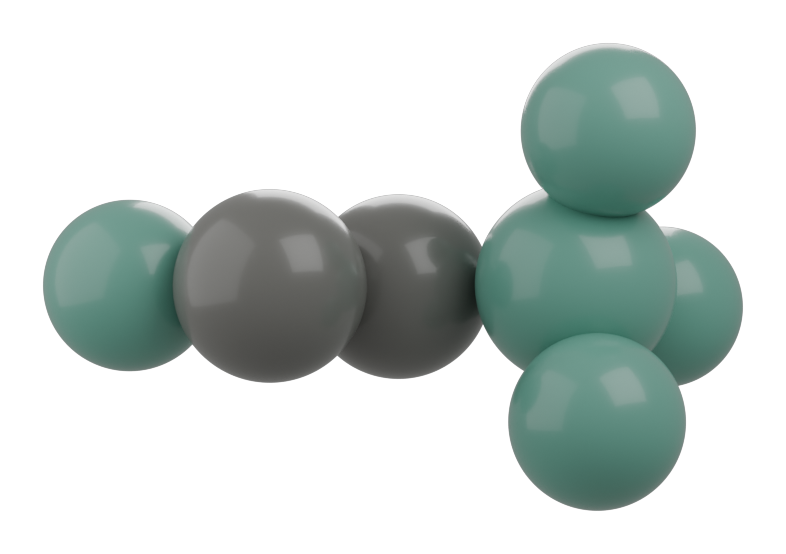
Taurine
PubChem ↗Measured to act on
Proton-coupled amino acid transporter 1
A transporter that carries amino acids into cells alongside acidity-balancing protons.
D-Mannose (genus-associated sugar; included only to carry its verified ChEMBL target, not asserted as the headline Chondrus carrageenan unit)
PubChem ↗Measured to act on
Type 1 fimbrin D-mannose specific adhesin
A bacterial surface protein that grips sugar molecules to attach to host surfaces.
The classical record
What tradition carried
Chondrus crispus carries one of the better-documented folk lineages of the European herbal tradition. Along the Atlantic coasts of Ireland, Scotland, and the Maritimes it was gathered at low tide, sun-bleached on the rocks, and simmered into a setting jelly — the original carrageen "moss blancmange" eaten as a nourishing, gel-forming food, prized especially as a gentle, building food for the young, the elderly, and those wanting easy, strengthening nourishment. The Old English and coastal herbals recorded it as a soothing, demulcent sea food valued for its mucilage and for the strength the sea's minerals were felt to carry into the body, and the same plant gave its Irish coastal name, carrageen, to the gelling polysaccharide it is still known for. In our lineage it stands where the classical herbals placed it: not a potent corrective botanical but a true food of the tide line — a whole sea-vegetable taken in steady, modest measure to nourish the body's own mineral foundation and its natural ease.