Measured Biology
The Measured Biology of Burdock
Arctium lappa
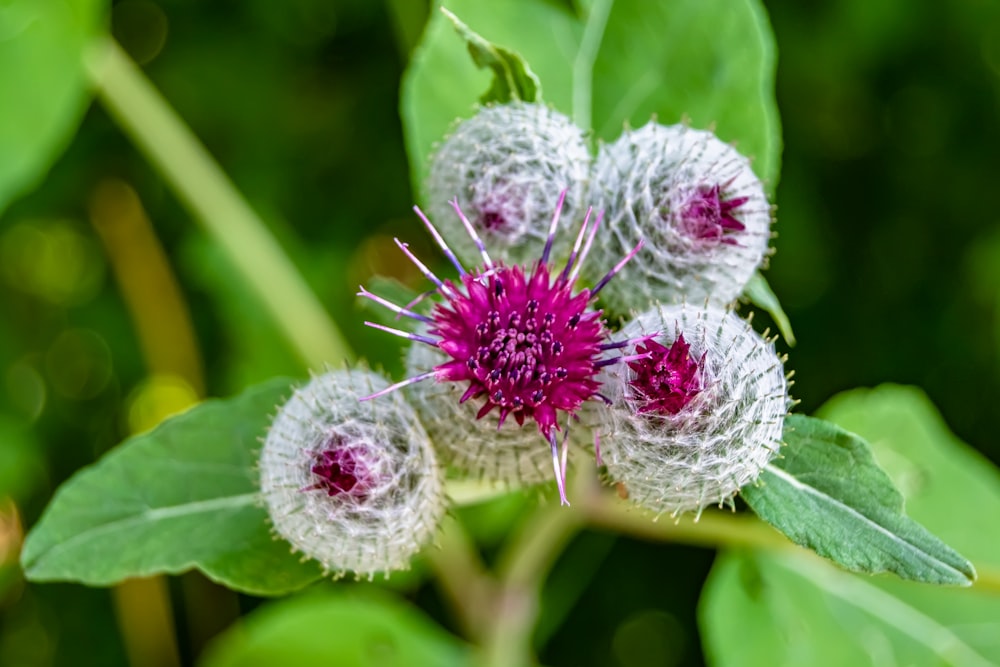
Burdock (Arctium lappa, 牛蒡) is a root of the great tonic tradition — a long, dark taproot that drives deep into the earth and draws up a dense, earthy sweetness the body recognizes as food. In our apothecary it stands as the archetypal bitter root tonic: grounded, mineral-rich, unhurried in character, the kind of plant a lineage reaches for when it wants to nourish the body's own systems of renewal rather than push against them. Cultivated for centuries across Europe and Asia and prized in the East as gobō — a culinary root eaten as nourishment long before it was ever called a remedy — burdock belongs to the same Compositae family as the daisy and the thistle, and carries that family's signature of clean, vegetal bitterness. We offer it as a concentrated 10:1 extract of the root alone — the part that holds the inulin and the polyphenols — so that a small measure carries the full weight of the whole taproot. Its nature is restorative and quietly tonifying rather than stimulating. Where some roots drive heat or force, burdock works through the body's terrain — the blood, the lymph, the skin, the natural channels of elimination — supplying the raw botanical material the body's own intelligence draws upon to keep those systems supple, balanced, and at ease. It is, in the truest sense of the old word, an alterative: a plant traditionally carried to gently support the body's own pathways of renewal, and to nourish toward radiance and resilience over time.
In the body
Burdock engages the body's terrain-keeping systems — the blood and circulatory channels, the lymphatic network, and the skin — the interconnected fascia through which the body carries, filters, and renews. Its character as a bitter root naturally tones the digestive and eliminative systems: the bitterness the palate registers is the same signal that invites the body's own digestive rhythm into readiness, and a well-toned gut is where renewal begins. The molecular substance behind this is well established. Burdock root is rich in inulin, a fructan polysaccharide that acts as a prebiotic fiber — it is not digested by the body itself but feeds the beneficial flora of the gut, nourishing the microbial terrain that supports healthy digestion, comfortable elimination, and the body's own renewing pathways. Alongside the inulin sits a deep reservoir of polyphenols — chiefly polyphenolic acids such as the caffeoylquinic (chlorogenic-type) acids — antioxidant compounds that support the body's natural defenses against everyday oxidative stress and help the body maintain its own healthy inflammatory balance. As a root traditionally regarded as cooling and mildly water-moving, burdock supports the body's normal fluid balance and the lymphatic system's natural housekeeping. Carried together — the prebiotic fiber feeding the gut, the polyphenols tending the body's antioxidant terrain — these compound classes nourish the blood, lymph, and skin as one continuous system, supporting clarity, suppleness, and a grounded, well-kept radiance that shows first in the skin. This is nourishment of the body's own intelligence: burdock supplies the material; the body does the work.
The molecules, measured
The active compounds in Burdock, the proteins each is measured to engage, and — where a real, exact-match assay exists — the strength of that binding.
Arctigenin
PubChem ↗Measured to act on
Dual specificity mitogen-activated protein kinase kinase 1
A signaling enzyme that passes growth messages along a relay chain inside the cell.
Cytochrome P450 2C19
A liver enzyme involved in processing a variety of compounds the body encounters.
Nuclear receptor ROR-gamma
A receptor that switches certain genes on, helping guide immune-cell development.
Chlorogenic acid
PubChem ↗Measured to act on
Tyrosine-protein phosphatase non-receptor type 1
An enzyme that removes phosphate tags from proteins, helping regulate insulin and metabolic signaling.
Aldo-keto reductase family 1 member B1
An enzyme that converts excess glucose into sorbitol, part of normal sugar metabolism.
Caffeic acid
PubChem ↗Measured to act on
Matrix metalloproteinase-9
An enzyme that remodels the scaffolding between cells, part of tissue repair and renewal.
72 kDa type IV collagenase
An enzyme that breaks down collagen, remodeling the scaffolding that holds tissues together.
Catechol O-methyltransferase
An enzyme that helps clear messengers like dopamine and adrenaline from the body.
Type-1 angiotensin II receptor
A receptor that senses the hormone angiotensin and helps govern blood vessel tone.
Nuclear factor NF-kappa-B p105 subunit
A master switch that turns on many genes of the immune and inflammatory response.
Luteolin
PubChem ↗Measured to act on
Carbonic anhydrase 7
An enzyme that balances carbon dioxide and acidity, part of the body's pH chemistry.
Cytochrome P450 1B1
A liver-type enzyme that processes hormones and environmental compounds.
Carbonic anhydrase 12
An enzyme that regulates acid-base balance across cell membranes.
Transthyretin
A carrier protein that transports thyroid hormone and vitamin A through the blood.
Dipeptidyl peptidase 4
An enzyme that trims signaling peptides, including those involved in blood sugar regulation.
MAP kinase-interacting serine/threonine-protein kinase 1
A signaling enzyme that helps regulate how cells build new proteins.
Quercetin
PubChem ↗Measured to act on
Amine oxidase [flavin-containing] A
An enzyme that breaks down messenger chemicals like serotonin in the nervous system.
Aromatase
The enzyme that converts androgens into estrogen, the body main estrogen source.
Aldo-keto reductase family 1 member B1
An enzyme that converts excess glucose into sorbitol, part of normal sugar metabolism.
Cytochrome P450 1B1
A liver-type enzyme that processes hormones and environmental compounds.
Serine/threonine-protein kinase PIM-1
A signaling enzyme involved in cell growth and survival.
ATP-binding cassette transporter ABCG2
A cellular pump that moves compounds out of cells, shaping how substances are absorbed.
Predicted binding geometry
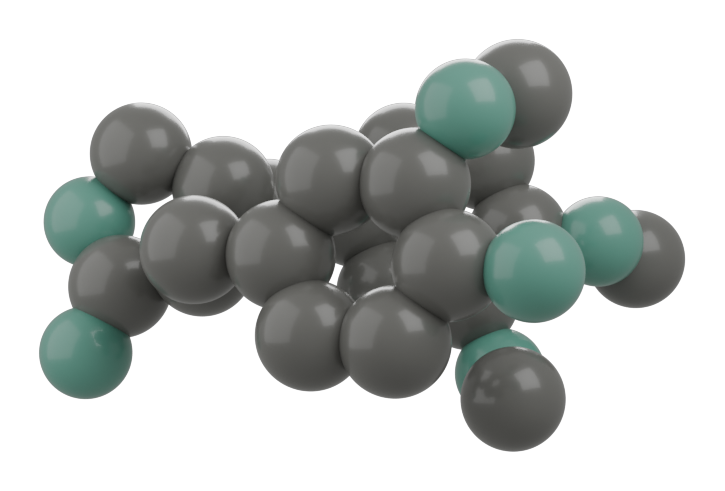
Beyond the measured affinities, we computed the fit ourselves. We docked Arctigenin into the AlphaFold-predicted structure of Dual specificity mitogen-activated protein kinase kinase 1 using AutoDock Vina, and recorded the best pose.
Arctigenin → Dual specificity mitogen-activated protein kinase kinase 1
-6.96 kcal/molOur own computation · AutoDock Vina blind dock into AlphaFold model AF-Q02750 (ordered domain, pLDDT ≥ 70), PubChem 3D conformer CID 64981. A predicted binding geometry and energy — more negative is a tighter predicted fit — reported alongside, not in place of, the measured values above.
The classical record
What tradition carried
In the herbal tradition, burdock is one of the great alterative roots — a "blood-cleansing" tonic in the old language, carried across Western and Eastern lineages alike. Culpeper documented Arctium lappa in his English herbal of the seventeenth century, and the burdock root persisted through the Old English Herbals and the Thomsonian system as a foundational alterative for supporting the skin and the body's own channels of renewal. In classical East Asian practice the root is known as 牛蒡 (niúbàng) — though the seed, niúbàng zǐ, is the more commonly catalogued part — and the plant is honored equally as gobō, a cultivated culinary root eaten as everyday nourishment across East Asia, the truest testament to its standing as food first and tonic second. Across every one of these traditions burdock holds the same place: a grounded, bitter root reached for to support the blood, the lymph, and the radiance of the skin.