Measured Biology
The Measured Biology of Cistanche
Cistanche deserticola
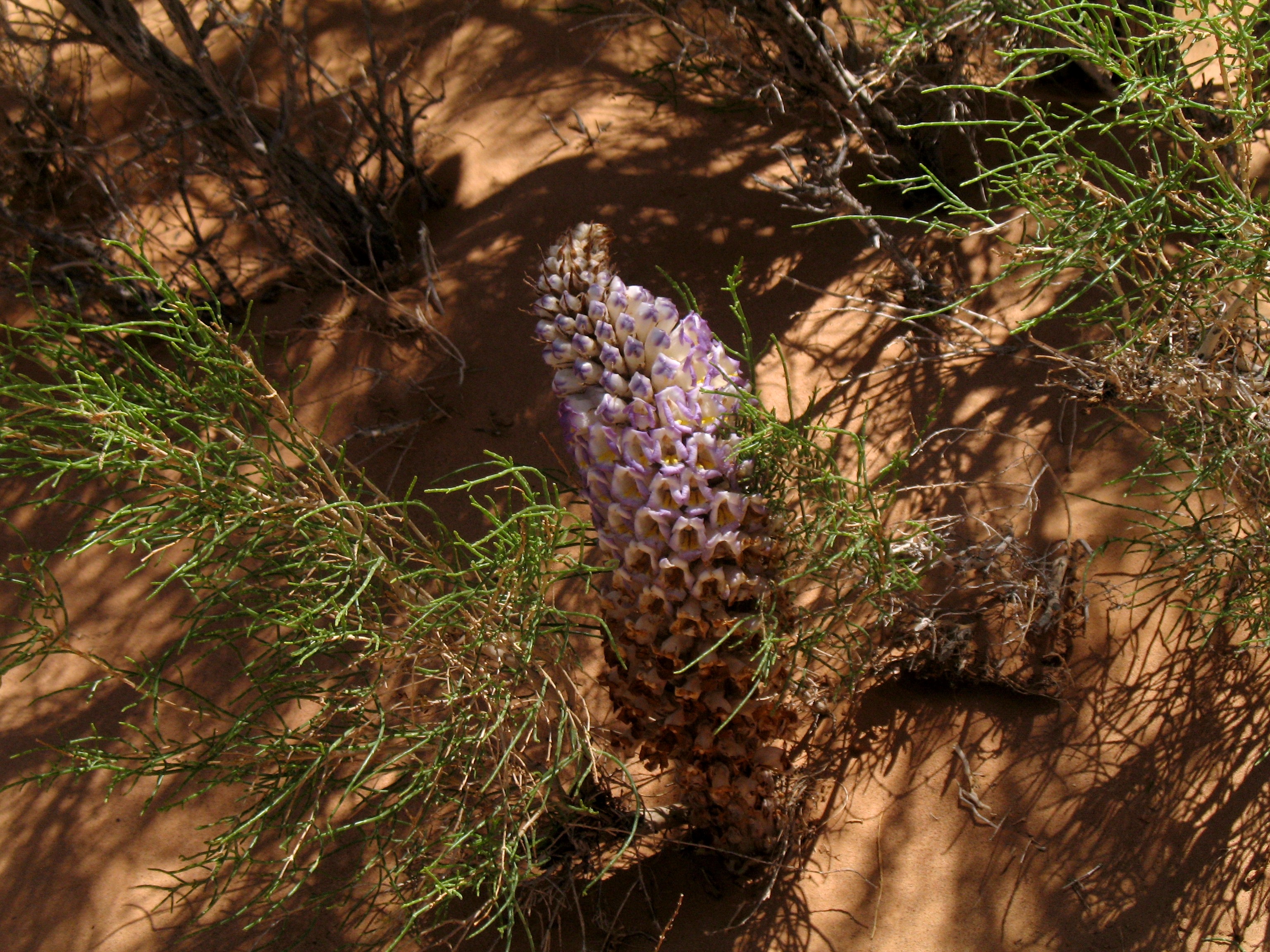
Cistanche deserticola is a parasitic desert succulent — a fleshy, scale-clad stem that draws its life from the roots of saxaul shrubs buried in the shifting sands of Mongolia and Xinjiang. Where almost nothing else endures, Cistanche thickens into a dense, sweet, oil-dark column beneath the dunes; the part we extract is that succulent stem, though by nature and tradition it belongs to the great family of grounding root-tonics. Tradition named it 肉苁蓉 (Rou Cong Rong) — "the fleshy, yielding, unhurried one" — and the herbalists of the steppe called it the ginseng of the desert. It carries the signature of its origin: a plant that builds deep reserves, holds them against scarcity, and gives them up slowly. That is its entire character — quiet, foundational, enduring vitality rather than stimulant fire. In the GGG NATURAL apothecary, Cistanche sits among the longevity roots: a sweet, warming, deeply nourishing tonic offered as a potent 10:1 extract. It is not a sharp herb or a quick one. It is a builder — a botanical chosen for the long arc of vitality, stamina, and graceful aging, the kind of plant a tradition reserves for restoring what time and sustained effort draw down.
In the body
Cistanche is, above all, a tonic for the body's Kidney system — in the herbal tradition the seat of deep reserve, endurance, and the foundational vitality that underwrites stamina and resilient aging. It works there not as a spark but as nourishment, supporting the systems that govern energy at its root: the kidney-adrenal axis, the body's drive and endurance, and its capacity to hold strength over the long term. The way our material is prepared matters: a water extraction concentrates the soluble constituents that define this plant, so what reaches the body is the true tonic fraction rather than aromatic noise. The chemistry of Cistanche is unusually well-characterized. The plant is dominated by phenylethanoid glycosides — a class of water-soluble polyphenolic compounds it accumulates in abundance, exemplified by the well-documented echinacoside and acteoside (verbascoside). These are joined by iridoids and a generous fraction of oligosaccharides and polysaccharides. The phenylethanoid glycosides are the plant's antioxidant architecture — the molecular class through which it nourishes the body's own systems for managing oxidative balance, supporting the terrain that keeps vitality, clarity, and tissue resilience intact across the arc of aging. The oligosaccharides act as gentle, fermentable nourishment for the lower digestive tract, supporting the hindgut's natural ecology and the body's own unhurried rhythm of elimination — the quality the old name "yielding" describes. Together these classes make Cistanche a structure-and-function tonic in the fullest sense: it does not push the body, it feeds the systems — kidney-adrenal reserve, energy, endurance, and the body's innate antioxidant intelligence — so they can do their own work.
The molecules, measured
The active compounds in Cistanche, the proteins each is measured to engage, and — where a real, exact-match assay exists — the strength of that binding.
Echinacoside
PubChem ↗Measured to act on
Tyrosinase
The enzyme that makes melanin, the pigment that gives skin and hair their color.
Acteoside / Verbascoside
PubChem ↗Measured to act on
Beta-secretase 1
An enzyme in brain cells that cuts certain membrane proteins as part of normal cellular processing.
Arginase
An enzyme that processes the amino acid arginine, governing nitrogen handling within cells.
Protein kinase C alpha type
A signaling enzyme that relays messages inside cells, influencing growth and communication.
Prostaglandin G/H synthase 2
The enzyme that drives the body's inflammatory response, producing the messengers behind swelling.
Human immunodeficiency virus type 1 integrase
A viral enzyme that splices viral genetic material into a host cell's own DNA.
Lysine-specific histone demethylase 1A
An enzyme that removes marks from DNA-packaging proteins, helping decide which genes stay active.
Tyrosinase
The enzyme that makes melanin, the pigment that gives skin and hair their color.
Salidroside
PubChem ↗Measured to act on
Amine oxidase [flavin-containing] B
An enzyme that breaks down certain neurotransmitters, helping balance brain-signaling chemicals.
Prostaglandin G/H synthase 1
An enzyme that makes prostaglandins for everyday housekeeping, like protecting the stomach lining.
Ribonuclease HI
An enzyme that cuts RNA when it pairs with DNA, part of normal genetic maintenance.
Betaine (glycine betaine)
PubChem ↗Measured to act on
Betaine-homocysteine S-methyltransferase
An enzyme that recycles homocysteine into methionine, part of the body's methylation chemistry.
Predicted binding geometry
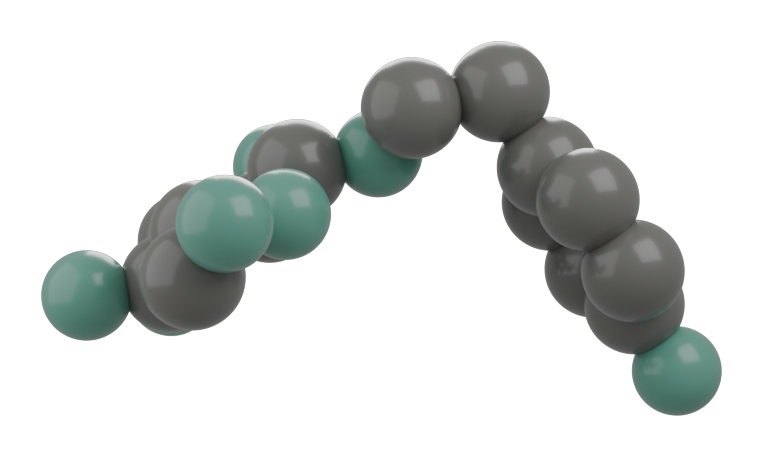
Beyond the measured affinities, we computed the fit ourselves. We docked Salidroside into the AlphaFold-predicted structure of Amine oxidase [flavin-containing] B using AutoDock Vina, and recorded the best pose.
Salidroside → Amine oxidase [flavin-containing] B
-7.49 kcal/molOur own computation · AutoDock Vina blind dock into AlphaFold model AF-P27338 (ordered domain, pLDDT ≥ 70), PubChem 3D conformer CID 159278. A predicted binding geometry and energy — more negative is a tighter predicted fit — reported alongside, not in place of, the measured values above.
The classical record
What tradition carried
Cistanche is one of the venerable tonics of classical East Asian herbalism, recorded in the early materia medica and ranked among the superior, daily-use restoratives — the class of herbs taken not for a passing complaint but to build and preserve deep vitality over a lifetime. As 肉苁蓉 it earned its enduring epithet, the ginseng of the desert, and held a fixed place among the kidney-and-longevity tonics, prized for nourishing foundational reserve, supporting stamina and endurance, and for its characteristically gentle, moistening, unhurried action on the lower body. The herbalists of Mongolia and the northwestern deserts, where the plant grows wild beneath the saxaul, carried this use into their own steppe traditions. It is this lineage of recorded, long-tested practice — not novelty — that GGG NATURAL carries forward in offering Cistanche as a grounding tonic of vitality and graceful aging.