Measured Biology
The Measured Biology of Clove
Syzygium aromaticum
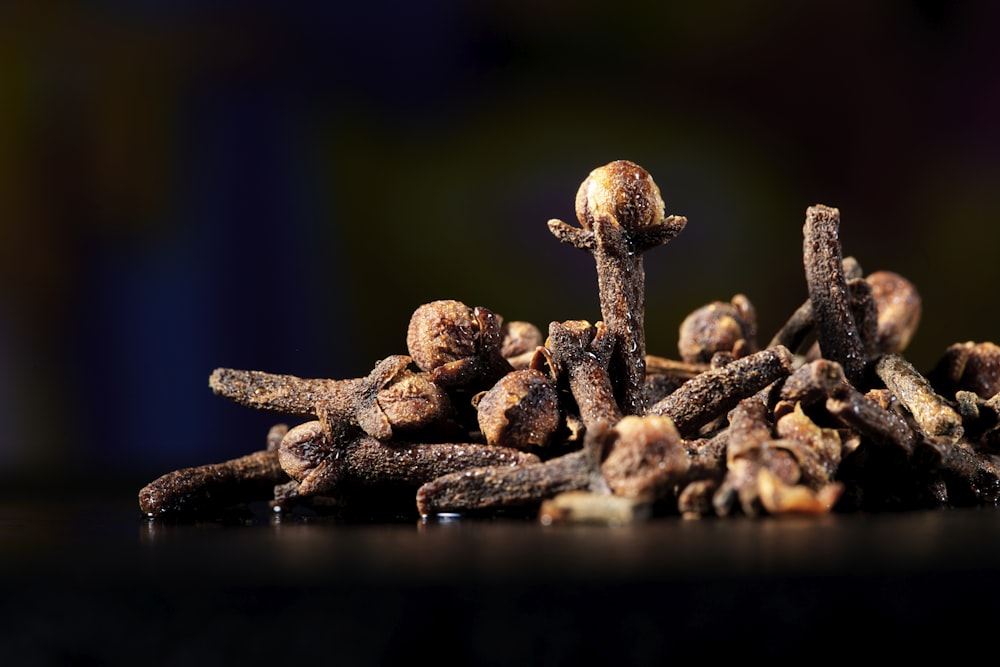
Clove (Syzygium aromaticum) is the sun-dried, unopened flower bud of a tall evergreen of the myrtle family, native to the volcanic Maluku Islands of Indonesia — the original Spice Islands whose harbors once anchored the entire maritime spice trade. The name itself descends from the Latin clavus, "nail," for the bud's hard, tapered, nail-like form. Among all the aromatics in our apothecary, clove is the most concentrated: it carries one of the densest phenolic loads of any culinary spice, a potency you can sense before you taste it, in the warm, resinous heat that rises off a single crushed bud. It is a "hot" aromatic in the classical sense — warming, penetrating, mineral-bearing — and a small amount carries a long way. We offer it as the whole-bud powder, the form that holds the full spectrum of the plant's chemistry intact, rather than the isolated essential oil. In the lineage, clove sits at the crossroads of the kitchen and the apothecary shelf — a spice prized at the table yet held in reserve as one of the more commanding warming botanicals, used sparingly and with respect for its intensity. It is the defining note in the cardiovascular-and-immune family of aromatics: a bud whose character is to stimulate, to circulate, and to fortify, carrying that warmth inward to the body's own systems.
In the body
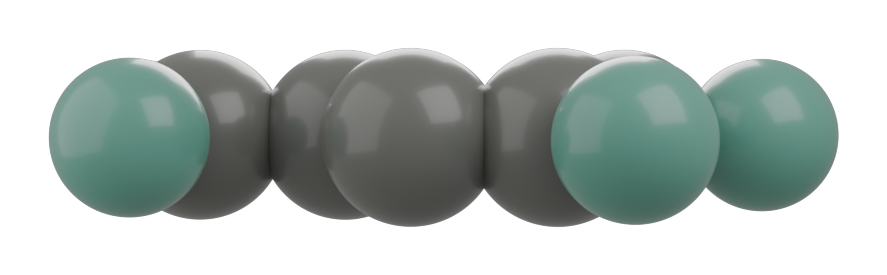
Clove's character is written in its chemistry. Its defining constituent is eugenol, an aromatic phenylpropanoid (a phenolic compound) that accounts for the bud's signature warmth and the bulk of its dense phenolic profile; alongside it sit related phenolics and a small family of triterpenes and flavonoids. These phenolic and triterpene classes are the molecular basis of clove's character as a phenol-rich aromatic — compounds that engage the body's own redox and inflammatory-response systems, nourishing the systems that maintain oxidative balance and a healthy, well-regulated inflammatory response. This is structure and function: we speak of how the bud nourishes the body's intelligence, never of acting upon it. In our organ map, clove is associated with the Cardiovascular and Immune systems. As a warming aromatic, it engages the circulatory system — the classical action of a "hot" spice is to stimulate circulation and carry warmth to the periphery, supporting healthy blood flow and the body's natural vitality and stamina. Its dense phenolic load is what makes it a fixture of immune-supporting aromatic blends, nourishing the immune system's own natural function and the body's day-to-day resilience. The same eugenol-driven aromatics lend it to oral and throat freshness, where a trace carries a clean, penetrating warmth across the mucous membranes. Across all three kingdoms it keeps this signature: a low-dose, mineral-bearing aromatic that supports digestive comfort and grounded warmth in the body's core — always sparingly, for its potency is its nature.
The molecules, measured
The active compounds in Clove, the proteins each is measured to engage, and — where a real, exact-match assay exists — the strength of that binding.
Eugenol
PubChem ↗Measured to act on
Prostaglandin G/H synthase 2
The enzyme that drives the body's inflammatory response.
Prostaglandin G/H synthase 1
An enzyme making prostaglandins that protect the stomach lining and support everyday tissue function.
Polyunsaturated fatty acid 5-lipoxygenase
An enzyme that turns fatty acids into signaling molecules involved in inflammation.
Cytochrome P450 3A4
A major liver enzyme that processes and clears many compounds from the body.
Androgen receptor, Homo sapiens — IC50 19000 nM
The receptor through which testosterone and related hormones guide growth and development.
beta-Caryophyllene
PubChem ↗Measured to act on
Cannabinoid receptor 2
A receptor of the endocannabinoid system, concentrated in immune tissue.
Gallic acid
PubChem ↗Measured to act on
Dipeptidyl peptidase 4
An enzyme that trims signaling peptides, helping regulate blood sugar and immune signals.
Carbonic anhydrase 2, Homo sapiens — Ki 2250 nM
A fast enzyme governing fluid balance, acidity, and carbon dioxide handling throughout the body.
Oleanolic acid
PubChem ↗Measured to act on
Tyrosine-protein phosphatase non-receptor type 1
An enzyme that helps switch off insulin and growth signals inside cells.
Tyrosine-protein phosphatase non-receptor type 2
An enzyme that dials down growth and immune signaling inside cells.
Aldo-keto reductase family 1 member B10
An enzyme that processes sugars and aldehydes as part of cellular metabolism.
The classical record
What tradition carried
Clove's recorded lineage is among the longest of any spice: prized across the ancient world as both a culinary aromatic and a treasured warming botanical, it traveled the spice routes from the Maluku Islands through India, the Arab world, and into the European herbals. In the classical East Asian tradition it is 丁香 (dīng xiāng, "nail aromatic"), a warming herb of the materia medica long used to dispel cold and steady the middle. In the Western canon, Culpeper and the Old English Herbals knew it as a hot, comforting spice for the stomach and the senses, and the Thomsonian system — which organized its practice around warming, stimulating botanicals — valued exactly this class of penetrating aromatic. Across every one of these cultures, the through-line is the same: clove as a concentrated, warming bud, carried in small measure to bring warmth and circulation to the body's core.