Measured Biology
The Measured Biology of Codonopsis
Codonopsis pilosula
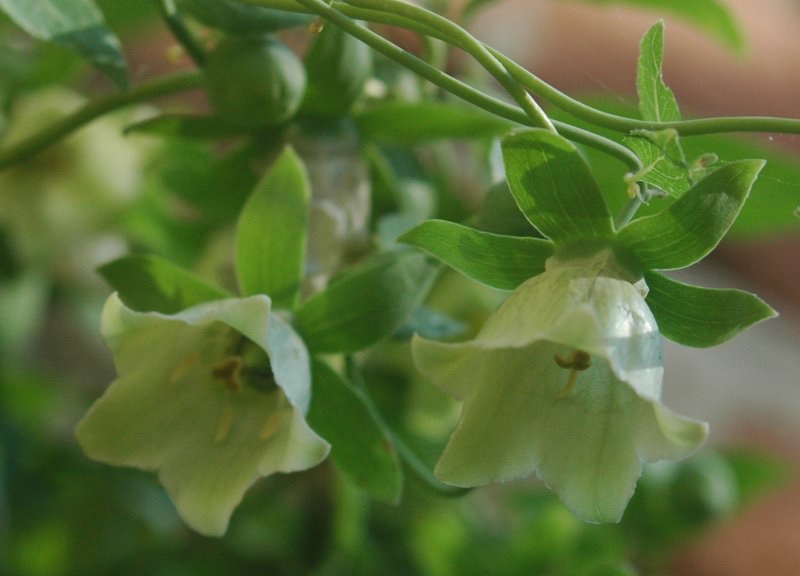
Codonopsis pilosula — 党参, dang shen, "the upright root" — is the great gentle tonic of the Asian materia medica, a sweet, fleshy taproot of a twining bellflower native to the cool mountain provinces of northern and western China. In the herbal lineage it is known as the "poor man's ginseng": it carries much of ginseng's restorative character — the steady building of vitality, stamina, and endurance — but without the heat and edge, offering its strength in a softer, more nourishing register. Where ginseng commands, codonopsis tends. Its flavor is frankly sweet, its temperament moderate and food-like, and this is precisely the source of its standing — a root mild enough to be cooked daily into broths and tonics, yet substantial enough to anchor the most classical restorative formulas. GGG sources it as a concentrated 10:1 extract, and the extract is potent, so it is taken in small measures and built up slowly; this is a root that rewards patience rather than force. Codonopsis belongs to the family of adaptogenic and tonic roots — plants whose gift is not a sharp single action but a broad, grounding support for the body's baseline reserves of energy. It is the everyday, sustainable building-block tonic of the tradition: the root one returns to over seasons to tone the body's own capacity for steady work, clear stamina, and a calm, resilient response to the ordinary stresses of living.

In the body
Codonopsis engages the body's energy economy and its digestive system above all — in the classical reading, it is a tonic for the center, the seat where food is transformed into usable vitality. Its character is to nourish the body's own capacity to extract, build, and sustain energy from what it takes in, supporting steady stamina and endurance rather than a borrowed, stimulant lift. Because it works through the digestive terrain, it tends toward digestive comfort and an even, grounded sense of strength, and it supports the body's natural, healthy response to everyday stress — the quality of resilience rather than reaction. At the level of compound classes, codonopsis root is built on three well-established families. Its **polysaccharides** — long-chain plant sugars that are among the root's most characteristic constituents — are the kind of complex carbohydrates the body's own systems recognize and engage, and they are the molecular basis of its reputation as a nourishing tonic that supports the immune system's natural function and the vitality of the digestive lining. Its **triterpenoid saponins** are the sweet, surface-active glycosides that give tonic roots their building, restorative signature and contribute to the saponin character noted in careful, low-and-slow use. And its **phytosterols and trace alkaloids**, together with a spectrum of minerals and amino acids, round out the root as genuine nutritional intelligence — building-block nutrients the body assimilates to tone its own reserves. The whole-root synergy of these classes is the point: codonopsis does not impose an action so much as it feeds the systems that carry energy, supporting the body's innate balance, supple vitality, and steady endurance from the ground up.
The molecules, measured
The active compounds in Codonopsis, the proteins each is measured to engage, and — where a real, exact-match assay exists — the strength of that binding.
Syringin
PubChem ↗Measured to act on
Prostaglandin G/H synthase 1
An enzyme that makes prostaglandins for everyday housekeeping like stomach lining and blood flow.
Bifunctional epoxide hydrolase 2
An enzyme that breaks down fatty-acid signals involved in blood vessel and inflammation balance.
Atractylenolide I
PubChem ↗Measured to act on
Polyunsaturated fatty acid 5-lipoxygenase
An enzyme that converts fatty acids into messengers of the inflammatory response.
Prostaglandin G/H synthase 1
An enzyme that makes prostaglandins for everyday housekeeping like stomach lining and blood flow.
Cellular tumor antigen p53
A guardian protein that watches over DNA and helps cells decide when to repair or stop dividing.
Atractylenolide II
Measured to act on
Bile acid receptor
A sensor that detects bile acids and governs fat, cholesterol, and digestive balance.
Progesterone receptor
A receptor that responds to progesterone, a hormone central to reproductive cycles.
Polyunsaturated fatty acid 5-lipoxygenase
An enzyme that converts fatty acids into messengers of the inflammatory response.
Prostaglandin G/H synthase 1
An enzyme that makes prostaglandins for everyday housekeeping like stomach lining and blood flow.
Atractylenolide III
PubChem ↗Measured to act on
Bile acid receptor
A sensor that detects bile acids and governs fat, cholesterol, and digestive balance.
Progesterone receptor
A receptor that responds to progesterone, a hormone central to reproductive cycles.
Sterol O-acyltransferase 1
An enzyme that helps the body store cholesterol within cells.
Sterol O-acyltransferase 2
An intestinal and liver enzyme involved in handling and storing cholesterol.
Polyunsaturated fatty acid 5-lipoxygenase
An enzyme that converts fatty acids into messengers of the inflammatory response.
Prostaglandin G/H synthase 1
An enzyme that makes prostaglandins for everyday housekeeping like stomach lining and blood flow.
Stigmasterol
PubChem ↗Measured to act on
5-hydroxytryptamine receptor 7
A serotonin receptor involved in mood, body clock rhythms, and blood vessel tone.
Spinasterol (alpha-spinasterol)
PubChem ↗Measured to act on
Aldo-keto reductase family 1 member B1
An enzyme that converts glucose into a related sugar alcohol as part of cellular metabolism.
The classical record
What tradition carried
In classical East Asian herbalism codonopsis is dang shen (党参), one of the foremost qi tonics — a root used for centuries to tone the body's central, energy-transforming systems and to build steady vitality and stamina. It earned its enduring epithet "poor man's ginseng" because it was taken as an accessible, everyday substitute for and companion to true ginseng (ren shen) within the great restorative and tonifying formulas of the tradition, valued precisely for its gentler, more nourishing temperament. It has long been treated as food as much as tonic — simmered into restorative broths and daily soups — placing it among the building, grounding roots that the herbal lineage returns to season after season to support a strong center and a resilient constitution.