Measured Biology
The Measured Biology of Cordyceps
Cordyceps militaris
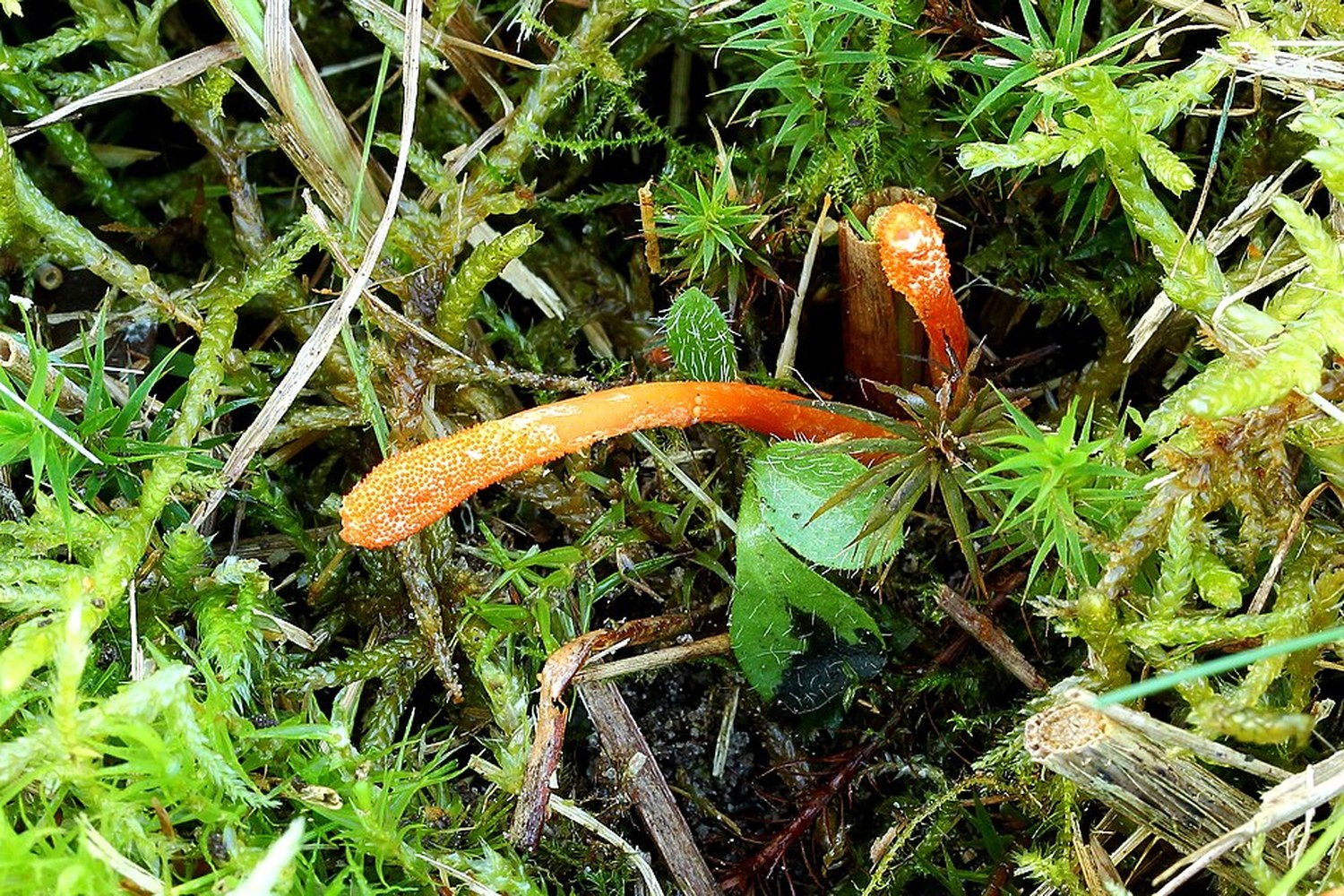
Cordyceps militaris is one of the most singular organisms in the entire materia medica — a brilliant orange tonic mushroom that, in its wild form, emerges from the high-altitude meadows of the Tibetan plateau and the mountains of China and Nepal, where it has been gathered as a rare tonic for centuries. What GGG NATURAL carries is the cultivated fruiting body: grown deliberately and food-grade, prized for a compound profile that the wild specimen and its laboratory-raised counterpart share. Among the great fungal tonics, Cordyceps occupies the seat of vitality and stamina. Where Lion's Mane is the scholar of clarity and Reishi the guardian of the immune terrain, Cordyceps is the athlete's mushroom — the botanical that herbalists reach for when the body asks not for calm but for capacity, for the deep, sustained energy that carries a body through exertion and recovers it afterward. Its character is warm, savory, and quietly potent. This is a tonic in the truest classical sense: not a stimulant that borrows tomorrow's energy to spend today, but a nourishing food that supports the body's own machinery of endurance. It is favored by endurance athletes for precisely this reason — it does not push the body, it feeds the systems the body uses to push itself. Our extract is a concentrated fruiting-body preparation, and because it is genuinely potent, the tradition with Cordyceps is to begin light and build — a small daily measure stirred into hot water, tea, coffee, or food, allowing the body to recognize and integrate it over time.
In the body
Cordyceps is cultivated specifically for its cordycepin and adenosine content — two nucleoside compounds that sit at the heart of how the body generates and spends energy at the cellular level. Adenosine is a structural cornerstone of ATP, the molecule every cell uses as its energy currency; the established interest in Cordyceps centers on how its nucleoside profile supports the body's own healthy production and utilization of cellular ATP, and its natural use of oxygen during exertion. This is the molecular reason the mushroom is the endurance athlete's tonic: it nourishes the very systems — energetic and respiratory — through which the body sustains aerobic capacity, stamina, and recovery. The framing matters and is exact: Cordyceps does not do the work, it feeds the body's own energy-producing intelligence so that the body does the work more readily. Beyond the nucleosides, the fruiting body carries the fungal beta-glucans and polysaccharides characteristic of the great tonic mushrooms — established compound classes that engage the body's immune architecture, supporting the immune system's natural function and its everyday resilience rather than forcing it. This is why the tradition pairs Cordyceps's energetic action with respiratory and immune support: the same fruiting body that nourishes stamina also tones the systems that keep the body adaptable and grounded under demand. In the body-system language of the apothecary, Cordyceps is an energy, respiratory, and immune tonic — it supports endurance and aerobic vitality, nourishes healthy respiratory function and oxygen utilization, and supports the immune system's own balanced activity. It is an adaptogenic mushroom in the classical sense: a botanical that helps the whole organism meet exertion with strength and return to balance.
The molecules, measured
The active compounds in Cordyceps, the proteins each is measured to engage, and — where a real, exact-match assay exists — the strength of that binding.
Cordycepin (3'-deoxyadenosine)
PubChem ↗Measured to act on
Adenosine receptor A1
A receptor for adenosine that helps calm cellular activity and signaling.
Tyrosyl-DNA phosphodiesterase 1
A repair enzyme that clears certain damage points so DNA can be mended.
Pentostatin (2'-deoxycoformycin)
PubChem ↗Measured to act on
Adenosine deaminase
An enzyme that breaks down adenosine, part of how cells recycle their building blocks.
Adenosine
PubChem ↗Measured to act on
Adenosine receptor
A receptor for adenosine, a molecule the body uses to dial cellular activity up or down.
Predicted binding geometry
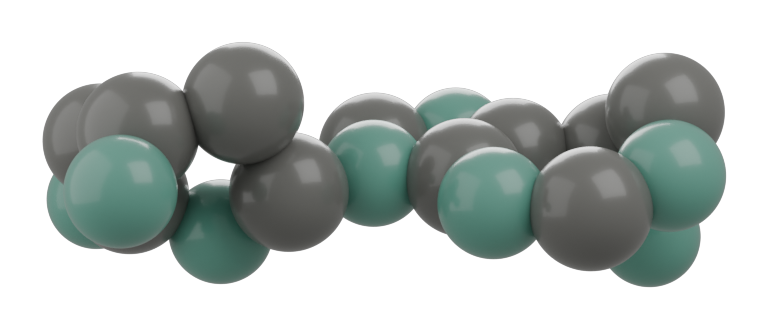
Beyond the measured affinities, we computed the fit ourselves. We docked Pentostatin into the AlphaFold-predicted structure of Adenosine deaminase using AutoDock Vina, and recorded the best pose.
Pentostatin → Adenosine deaminase
-5.38 kcal/molOur own computation · AutoDock Vina blind dock into AlphaFold model AF-P00813 (ordered domain, pLDDT ≥ 70), PubChem 3D conformer CID 439693. A predicted binding geometry and energy — more negative is a tighter predicted fit — reported alongside, not in place of, the measured values above.
The classical record
What tradition carried
Cordyceps belongs to the classical materia medica of TCM, where it is known as 蛹虫草 and has long been valued as a rare and precious tonic of the high mountains — gathered by hand from the alpine meadows of the Tibetan plateau, China, and Nepal, and reserved historically for restoring depleted vitality, stamina, and the body's foundational energetic and respiratory reserves. In the TCM tradition it is classed among the great restorative tonics, associated with the deep energy of endurance and with healthy lung and kidney vigor. Its modern reputation among endurance athletes is a direct continuation of that lineage — the same property that the old herbalists named as a builder of stamina and breath is what carries it into the practice of those who ask the most of their bodies. GGG NATURAL carries it as a cultivated, food-grade fruiting-body extract, faithful to that unbroken tradition of Cordyceps as the tonic of vitality and endurance.