Measured Biology
The Measured Biology of Eleuthero
Eleutherococcus senticosus
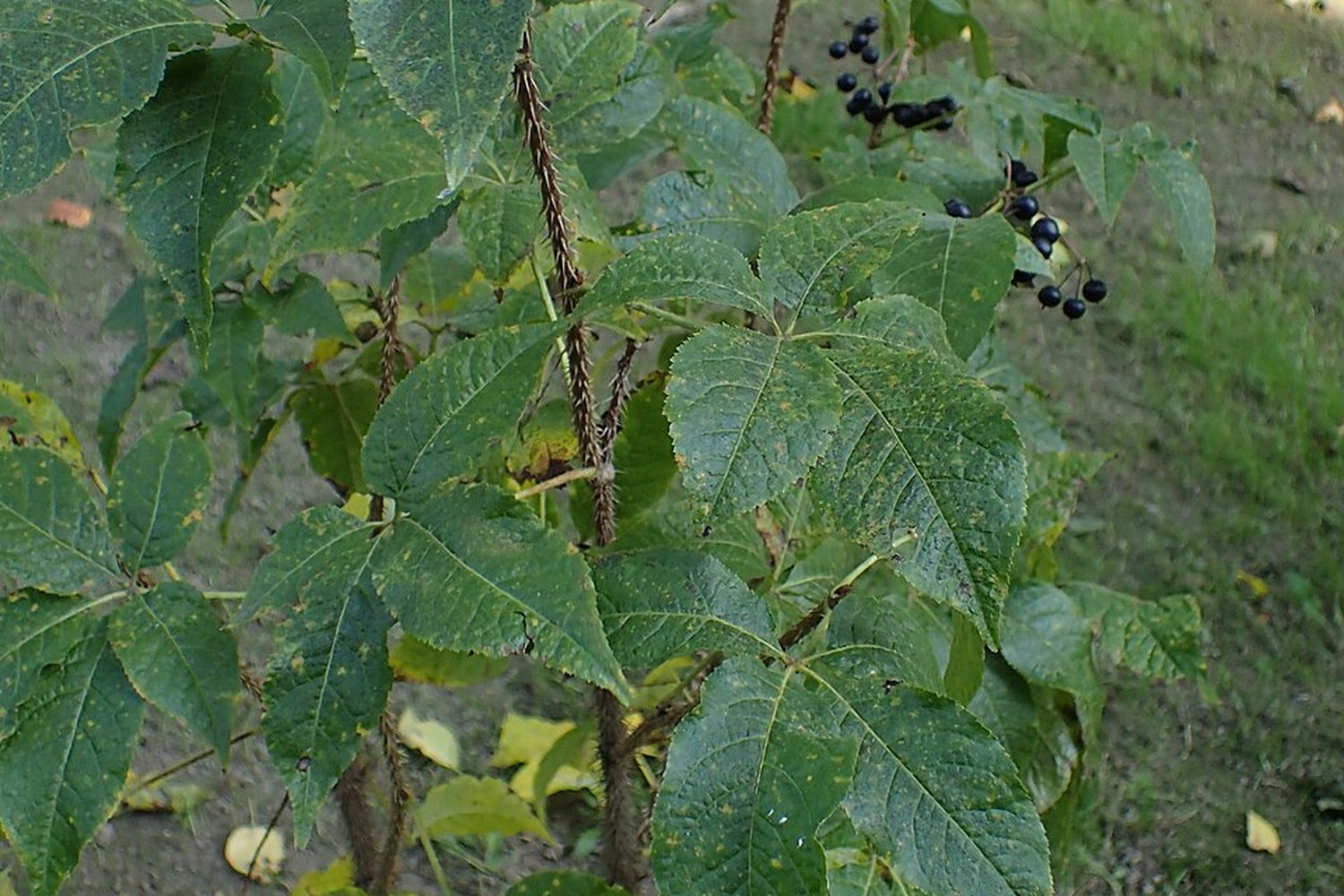
Eleuthero (Eleutherococcus senticosus) is a thorny, slow-growing shrub of the taiga — the cold forests of Siberia, the Russian Far East, and Northeast Asia — and it is the root, not the leaf or berry, that the apothecary prizes. This is the plant that gave the word "adaptogen" its meaning: a botanical that does not push the body in one fixed direction but helps it meet demand, recover, and return to its own center. Where true Panax ginseng is fiery and concentrated, eleuthero is the steadier, more temperate sibling in the Araliaceae family — broad-shouldered, enduring, a tonic of stamina rather than a spark. Its old trade name, "Siberian ginseng," speaks to that kinship; its truer name, eleuthero, honors that it is a root of its own character. Earthy and quietly bitter, it is the root of the long haul — the one a body reaches for when the well of energy and resilience has run shallow and needs to be filled from the ground up. In the GGG lineage it stands among the great tonic roots: a plant of vitality, stamina, and steadiness, prepared as a potent extract and offered across all three kingdoms — People, Pets, and Plants — as a tonic for endurance and resilience.
In the body
Eleuthero is foremost a tonic for the body's adrenal and stress-response systems — in the classical frame, the Kidney/Adrenal axis that governs deep reserve, drive, and the capacity to recover from exertion. It is a root of stamina and endurance: it nourishes the systems that carry the body through sustained physical and mental demand, supporting steady energy, clarity, and focus rather than a brief stimulant lift, and it tones the body's own machinery for adapting to stress so that resilience is built rather than borrowed. Its character traces to a well-established signature of constituents. The defining class is the eleutherosides — a mixed family of glycosides (including lignan and phenylpropanoid types) distinctive enough to lend the plant its name, and the markers around which the root's adaptogenic reputation is organized. Alongside these sit triterpenoid saponins, polysaccharides, and other phenolic compounds. The triterpenes and the eleutheroside glycosides are the constituents most associated with how eleuthero engages the body's stress-adaptation and energy systems, supporting the endocrine pathways that govern stamina and steady output; the polysaccharide fraction is the class through which many tonic roots engage and nourish the immune system's own regulatory function, supporting its natural balance. The structure/function picture is consistent across the board — eleuthero feeds the systems that govern endurance, recovery, and equilibrium, supplying nutritional intelligence the body recognizes and puts to its own use, rather than acting on any one part in isolation.
The molecules, measured
The active compounds in Eleuthero, the proteins each is measured to engage, and — where a real, exact-match assay exists — the strength of that binding.
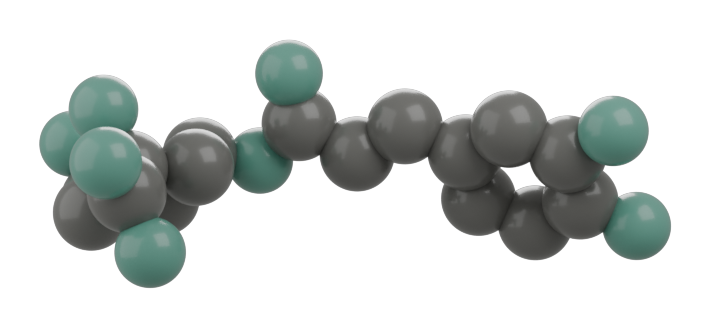
Eleutheroside B (Syringin)
PubChem ↗Measured to act on
Prostaglandin G/H synthase 1
An enzyme that makes prostaglandins, messengers that protect the stomach lining and aid clotting.
Bifunctional epoxide hydrolase 2
An enzyme that breaks down fatty-acid signals involved in blood vessel tone and inflammation.
Sesamin
PubChem ↗Measured to act on
Transient receptor potential cation channel subfamily M member 8
The sensory channel that detects cold and the cooling feel of menthol.
Vitamin D3 receptor
The receptor through which vitamin D guides calcium balance and gene activity.
Serine/threonine-protein kinase PLK1
A signaling enzyme that helps coordinate cell division.
Cytochrome P450 2C9
A liver enzyme that processes and clears many compounds from the body.
Cytochrome P450 1A2
A liver enzyme that metabolizes caffeine and many other compounds.
Thioredoxin reductase 1 cytoplasmic
An enzyme that maintains the cell's antioxidant defenses and redox balance.
Chlorogenic acid
PubChem ↗Measured to act on
Aldo-keto reductase family 1 member B1
The enzyme that converts glucose into sorbitol, the first step in sugar metabolism.
Tyrosine-protein phosphatase non-receptor type 1
An enzyme that helps regulate insulin and leptin signaling inside cells.
Aldo-keto reductase family 1 member B10
An enzyme that reduces sugars and reactive aldehydes as part of cellular detoxification.
Glucose-6-phosphate exchanger SLC37A4
A transporter that moves glucose-6-phosphate across membranes during sugar metabolism.
Human immunodeficiency virus type 1 integrase
A viral enzyme that splices the virus's genetic code into a host cell's DNA.
Prostaglandin G/H synthase 2
The enzyme that drives the body's inflammatory response.
Amyloid-beta precursor protein
A membrane protein involved in nerve cell growth and signaling.
Acetylcholinesterase
The enzyme that breaks down acetylcholine, a key messenger for nerves and muscles.
Syringaresinol (aglycone of eleutheroside E)
PubChem ↗Measured to act on
Peroxisome proliferator-activated receptor delta
A receptor that senses fats and helps regulate how cells burn energy.
Peroxisome proliferator-activated receptor delta
A receptor that senses fats and helps regulate how cells burn energy.
Forkhead box protein O3
A master switch protein that governs cellular stress resistance and longevity programs.
DNA topoisomerase 1
An enzyme that relaxes tension in DNA so it can be copied and read.
Tyrosine-protein phosphatase non-receptor type 1
An enzyme that helps regulate insulin and leptin signaling inside cells.
Predicted binding geometry
Beyond the measured affinities, we computed the fit ourselves. We docked Chlorogenic acid into the AlphaFold-predicted structure of Tyrosine-protein phosphatase non-receptor type 1 using AutoDock Vina, and recorded the best pose.
Chlorogenic acid → Tyrosine-protein phosphatase non-receptor type 1
-6.50 kcal/molOur own computation · AutoDock Vina blind dock into AlphaFold model AF-P18031 (ordered domain, pLDDT ≥ 70), PubChem 3D conformer CID 1794427. A predicted binding geometry and energy — more negative is a tighter predicted fit — reported alongside, not in place of, the measured values above.
The classical record
What tradition carried
Eleuthero's recorded lineage is twofold. In classical East Asian herbalism it is Ci Wu Jia (刺五加, "thorny five-leaf"), a tonic root long used to fortify vital energy, strengthen the back and limbs, and restore those worn down by labor and age — a plant of qi and endurance in the same broad tonic family the tradition reserves for its restorative roots. Its second lineage is modern and equally storied: it was the root that mid-20th-century researchers in the Soviet Union studied most intensively under the newly coined term "adaptogen," carried into the daily regimens of laborers, athletes, soldiers, and cosmonauts as a tonic for endurance and resistance to stress. Carried in the GGG tradition as a root of stamina, vitality, and resilience, eleuthero unites the old Asian tonic wisdom with the empirical record that gave the adaptogens their name.