root
Eleuthero
Eleutherococcus senticosus
Also known as
Suitable For
The root that defined the word 'adaptogen,' rich in eleutherosides. It fortifies the body against physical and mental stress, sharpens endurance, and restores depleted adrenal reserves.
What it nourishes in the body
The body systems this herb is traditionally understood to support — resolved through our knowledge graph, where the classical record and modern biology are read together. Structure and function, never a claim of treatment.
Where measure and tradition agree
Eleuthero is measured to engage these systems in human binding data — and the recorded tradition named it for them independently. Two evidence systems arriving at the same place, separately, is our highest standard. See the research →
Engages the body’s own cannabinoid system
Eleuthero is measured to engage the endocannabinoid system — the master regulator the body runs on its own cannabinoids. Characterization, not a clinical claim. The endocannabinoid bridge →
10:1 Concentrated Extract
Whole-plant. Small-batch. Potent.
How to take it
1/4 tsp (up to 1 tsp) in hot water, tea, coffee, a smoothie, or food, once daily — begin with light doses; our extracts are very potent.
Whole plant, never isolated
Concentrated extracts of the whole botanical — the way the body recognizes it.
Cited to measured biology
Every action we describe traces to the compound and its measured target.
Structure & function
We describe what an herb nourishes — never a claim to treat disease.
Secure checkout
Encrypted payment and human verification on every order.
The Botanical
Eleuthero, in depth
Character
Eleuthero (Eleutherococcus senticosus) is a thorny, slow-growing shrub of the taiga — the cold forests of Siberia, the Russian Far East, and Northeast Asia — and it is the root, not the leaf or berry, that the apothecary prizes. This is the plant that gave the word "adaptogen" its meaning: a botanical that does not push the body in one fixed direction but helps it meet demand, recover, and return to its own center. Where true Panax ginseng is fiery and concentrated, eleuthero is the steadier, more temperate sibling in the Araliaceae family — broad-shouldered, enduring, a tonic of stamina rather than a spark. Its old trade name, "Siberian ginseng," speaks to that kinship; its truer name, eleuthero, honors that it is a root of its own character.
Earthy and quietly bitter, it is the root of the long haul — the one a body reaches for when the well of energy and resilience has run shallow and needs to be filled from the ground up. In the GGG lineage it stands among the great tonic roots: a plant of vitality, stamina, and steadiness, prepared as a potent extract and offered across all three kingdoms — People, Pets, and Plants — as a tonic for endurance and resilience.
In the Body
Eleuthero is foremost a tonic for the body's adrenal and stress-response systems — in the classical frame, the Kidney/Adrenal axis that governs deep reserve, drive, and the capacity to recover from exertion. It is a root of stamina and endurance: it nourishes the systems that carry the body through sustained physical and mental demand, supporting steady energy, clarity, and focus rather than a brief stimulant lift, and it tones the body's own machinery for adapting to stress so that resilience is built rather than borrowed.
Its character traces to a well-established signature of constituents. The defining class is the eleutherosides — a mixed family of glycosides (including lignan and phenylpropanoid types) distinctive enough to lend the plant its name, and the markers around which the root's adaptogenic reputation is organized. Alongside these sit triterpenoid saponins, polysaccharides, and other phenolic compounds. The triterpenes and the eleutheroside glycosides are the constituents most associated with how eleuthero engages the body's stress-adaptation and energy systems, supporting the endocrine pathways that govern stamina and steady output; the polysaccharide fraction is the class through which many tonic roots engage and nourish the immune system's own regulatory function, supporting its natural balance. The structure/function picture is consistent across the board — eleuthero feeds the systems that govern endurance, recovery, and equilibrium, supplying nutritional intelligence the body recognizes and puts to its own use, rather than acting on any one part in isolation.
The Tradition
Eleuthero's recorded lineage is twofold. In classical East Asian herbalism it is Ci Wu Jia (刺五加, "thorny five-leaf"), a tonic root long used to fortify vital energy, strengthen the back and limbs, and restore those worn down by labor and age — a plant of qi and endurance in the same broad tonic family the tradition reserves for its restorative roots. Its second lineage is modern and equally storied: it was the root that mid-20th-century researchers in the Soviet Union studied most intensively under the newly coined term "adaptogen," carried into the daily regimens of laborers, athletes, soldiers, and cosmonauts as a tonic for endurance and resistance to stress. Carried in the GGG tradition as a root of stamina, vitality, and resilience, eleuthero unites the old Asian tonic wisdom with the empirical record that gave the adaptogens their name.
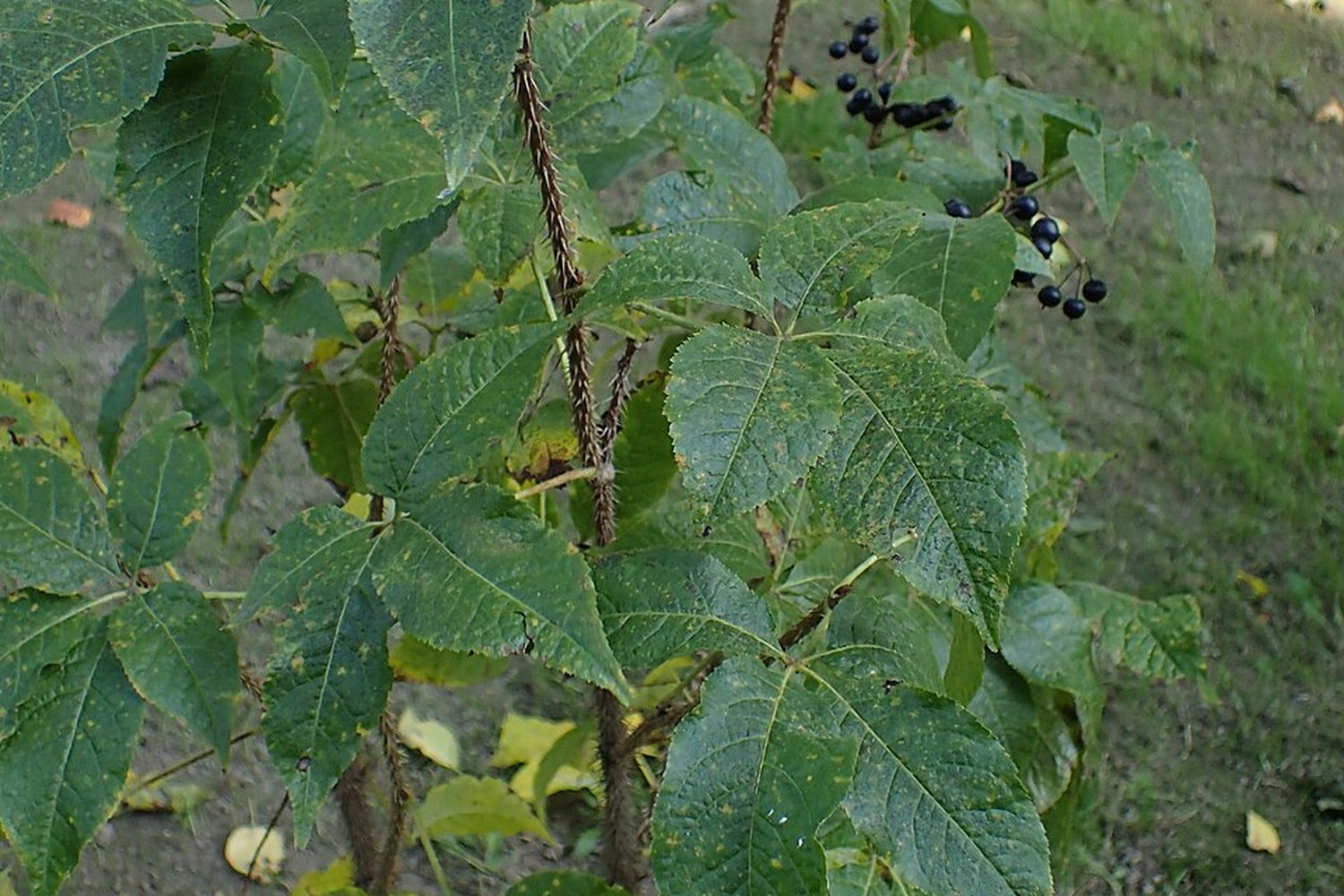
The berry
Eleuthero,
as it actually grows.
Eleutherococcus senticosus — eleuthero, Siberian ginseng, the thorny shrub of the taiga whose root has long been taken to steady stamina through cold and exertion.
S. Doronenko · CC BY 2.5 · Wikimedia Commons
How to Use
Across the Three Kingdoms
One herb, prepared once, serving people, pets, and plants from a single botanical practice — each with its own measure and care.
People
Benefit
natural energy, stamina, and endurance
How to Use
1/4 tsp (up to 1 tsp) in hot water, tea, coffee, a smoothie, or food, once daily — begin with light doses; our extracts are very potent.
Pets
Dogs & companion animals
Benefit
An adaptogenic root traditionally used to support stamina, stress resilience, and healthy adrenal/immune tone.
How to Use
Offer a small amount of the dilute extract or powder mixed into food, scaled to body weight; start at the low end of the range and adjust upward as tolerated.
By Animal
Cats
EFSA FEEDAP assessed taiga-root tincture safe for cats up to ~489.5 mg/kg feed; no phenol/glucuronidation concern for this root.
Dogs
EFSA FEEDAP assessed taiga-root tincture safe for dogs up to ~460.7 mg/kg feed; well-tolerated adaptogen for healthy dogs.
Horses
EFSA FEEDAP assessed taiga-root tincture safe for horses up to ~140.7 mg/kg feed; no iodine/glycyrrhizin/hindgut concern at tonic doses.
Birds
Well tolerated as a dilute, body-weight-scaled tonic; introduce gradually, starting with a small amount.
⚑ Sport horses: FEI/USEF: eleutherosides are not named substances, but FEI warns herbal/adaptogen supplements can trigger positives and "tonics/stimulants" may be scrutinized — observe a withdrawal window and use only batch-tested product before competition.
Safety
Start low and increase gradually; transient restlessness, overstimulation, or mild GI upset can occur in sensitive individuals, so reduce or stop if seen. Eleuthero may potentiate antidiabetic drugs (additive blood-sugar lowering), influence the effect of digoxin and other cardiac/anticoagulant/antiplatelet and immunosuppressant medications, and theoretically interact with sedatives/stimulants — coordinate dosing with a veterinarian for animals on these drugs. As a stimulating adaptogen it is best avoided in uncontrolled hypertension and in highly anxious or seizure-prone animals, and is not recommended during pregnancy or lactation without veterinary guidance. Use cautious, conservative dosing in animals with significant cardiac, kidney, or liver disease. The raw tincture/concentrate is a skin/eye irritant and dermal/respiratory sensitizer (per EFSA), so handle the undiluted product carefully; the dilute in-food tonic does not carry this contact risk. None of these caveats reflect risk to a healthy animal in normal moderate use.
Source: ASPCA Toxic & Non-Toxic Plant Database (not listed as toxic); EFSA FEEDAP Panel, "Safety and efficacy of a tincture from roots of Eleutherococcus senticosus (taiga root) for dogs, cats and horses," EFSA Journal 2023 (PMC9972550 / PubMed 36866192); FEI Equine Prohibited Substances List 2026 and USEF Guidelines & Rules for Drugs and Medications.
Plants
Garden, soil & foliage
Benefit
vegetative vigor, strong rooting, and resilient new growth
How to Use
Dilute 1/8 to 1/4 teaspoon per gallon of water. Foliar feed at the lighter rate, or soil drench at the fuller rate, about once a month or every other feeding. Best worked in through vegetative growth, as the plant builds leaf, stem, and root.
Best for
Vegetative growthSafety
A dilute extract in the GGG Plants line; always dilute and start light.
Source: GGG Plants line formulation
Structure-and-function guidance for nutrition and vitality. Not intended to diagnose, treat, cure, or prevent any disease. Introduce one botanical at a time and notice how the body responds. Some plants interact with medication; if you are pregnant, nursing, or on a prescription, know the interaction before you begin.
What's inside
Eleuthero,
down to the molecule.
The signature compound of Eleuthero, rendered from its real structure in bronze and glass — the precise thing the plant carries, given the dignity it has earned.
The evidence chain
From the plant to the molecule to the body — traced.
Not a claim — a chain. Every link below traces to a primary record. This is what Eleuthero is, measured.
The plant
Eleuthero
which governs
An enzyme that converts excess glucose into sorbitol, part of normal sugar metabolism.
serving the system
Kidney · Endocrine
and the tradition independently agrees — measured binding
The recorded herbal lineage names Eleuthero a endocrine and immune and metabolic and nervous herb. Independently, its compounds are measured to bind proteins of those systems. Tradition and molecule, arrived at separately, converge — the strongest evidence we hold.
Structure and function only. The chain describes the plant’s characterized chemistry and traditional use — not a claim to treat, cure, or prevent any disease.
How it works
How Eleuthero works in the body
A herb is never one thing — it is a community of compounds, each meeting the body in its own way. These are the active molecules in Eleuthero and the proteins each one is measured to engage: the precise points where the plant meets your biology. So you see not just that it works, but how.
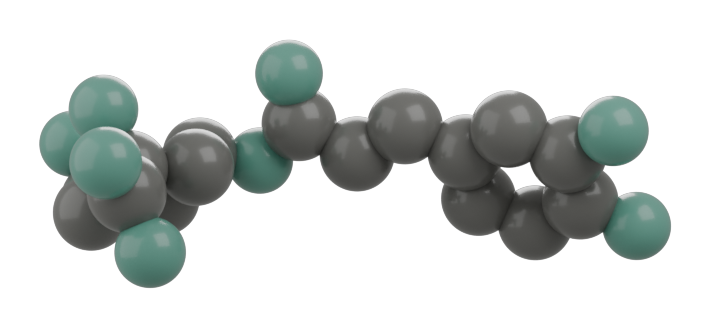
Eleutheroside B (Syringin)
PubChem ↗Measured to act on
An enzyme that makes prostaglandins for everyday upkeep like protecting the stomach lining.
Concentrated in urinary bladder, skin 1, intestinestructure resolved ↗
An enzyme that breaks down fatty-acid signals involved in blood vessel tone and inflammation.
Concentrated in liverstructure resolved ↗
Sesamin
PubChem ↗Measured to act on
The sensory channel that detects cold and the cooling feel of menthol.
Concentrated in prostate, liverstructure resolved ↗
The receptor through which vitamin D guides calcium balance and gene activity.
Concentrated in parathyroid glandstructure resolved ↗
A signaling enzyme that helps coordinate cell division.
Concentrated in lymphoid tissue, testis, bone marrowstructure resolved ↗
Chlorogenic acid
PubChem ↗Measured to act on
An enzyme that converts excess glucose into sorbitol, part of normal sugar metabolism.
Concentrated in adrenal glandstructure resolved ↗
An enzyme that dials down insulin and growth signaling by removing phosphate tags.
An enzyme that reduces sugars and reactive aldehydes as part of cellular detoxification.
Concentrated in intestine, stomach 1, esophagusstructure resolved ↗
A transporter that moves glucose-6-phosphate across membranes during sugar metabolism.
Measured in the lab
Real measurements from binding studies. A tighter fit means the compound meets its target more readily — the figure in grey is the actual measured value.
Binds very tightly to Tyrosine-protein phosphatase non-receptor type 1 · IC50 100 nM
Binds tightly to Histone deacetylase · Ki 135 nM
Binds tightly to Aldo-keto reductase family 1 member B1 · IC50 300 nM
Binds to Aldo-keto reductase family 1 member B10 · IC50 7.9 µM
Cited science · not claims
Everything we publish about these plants traces to a primary source — the compounds to PubChem, ChEMBL, and BindingDB, the traditional uses to named, dated herbals. We describe what a plant is and what it is understood to nourish — the body’s own systems, structure and function only. We do not claim it treats, cures, or prevents any disease, and nothing here is a substitute for professional care. See our method & sources →
These statements have not been evaluated by the Food and Drug Administration. Not intended to diagnose, treat, cure, or prevent any disease.
Works alongside
Other herbs that share Eleuthero's terrain
Different plants reaching the same systems of the body — the convergence our genome engine maps. These nourish the terrain Eleuthero supports: