Measured Biology
The Measured Biology of Eucommia
Eucommia ulmoides
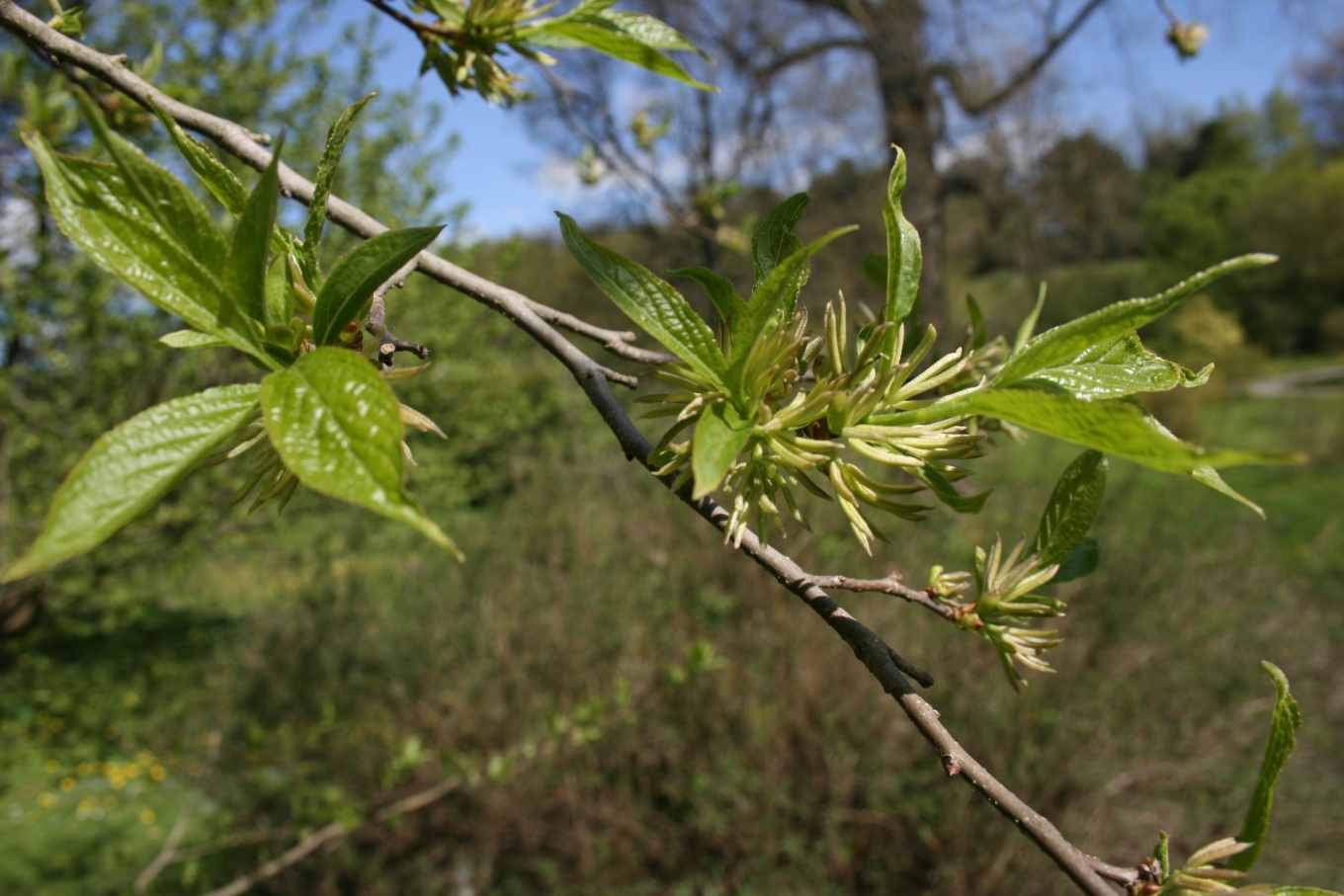
Eucommia ulmoides is a living relic — the sole surviving species of an ancient lineage of trees, hardy and slow-growing, native to the mountain forests of central China. It is the bark we work with: a thick, fibrous, sweet-flavored cortex that, when torn, reveals fine silvery threads of natural latex (gutta-percha) drawn between the broken edges, the tree's signature of resilient, elastic structure made visible. In the classical canon it is Du Zhong (杜仲), and it sits among the most revered of the structural tonics — a bark prized not for any single dramatic action but for the deep, patient, foundational support it lends to the body's framework. Where many herbs are leaves and flowers that move and lighten, Eucommia is bark: dense, grounding, architectural. It carries the character of the tree itself — upright, enduring, supple under load — and it has been carried in the herbal tradition for that reason for well over a thousand years. In our apothecary Eucommia stands as a vitality and structural tonic, a 10:1 extract of the bark whose place in the lineage is unambiguous: it is the herb of the lower back, the bones, the tendons, and the connective fabric that holds the standing body together. It is sweet, warming, and constitutional — meant for daily, accumulating use rather than acute reach. It is the herb you turn to when the conversation is about long-term strength, structural integrity, and the kind of grounded stamina that comes from a frame that is well-nourished from the inside.
In the body
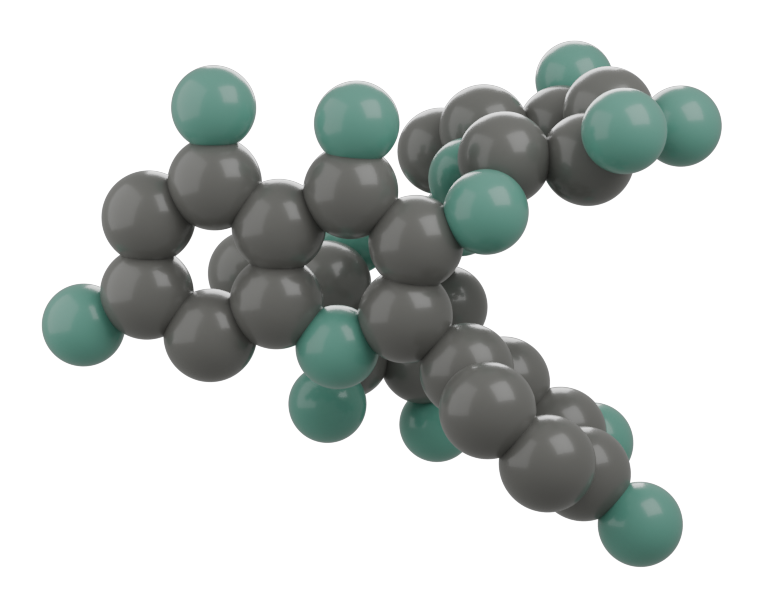
Eucommia's affinity is with the body's skeletal and structural systems — bone, tendon, ligament, the connective tissue of the lower back and joints — and, through the classical kidney-and-liver framing, with the deep reserves of vitality that sustain a strong, upright frame. It is a tonic for the architecture of the body: the herb the tradition reaches for to support suppleness in the tendons, density and integrity in the bone, and grounded strength through the lumbar region. Alongside this structural work it has a long-recognized association with the body's own circulatory system and its natural balance — a gently warming, vitalizing character that supports steady daily energy and endurance rather than a sharp stimulant lift. The established chemistry of Eucommia bark is built on two principal classes, and they map cleanly onto its structural and vitalizing reputation. The first is its lignans — a family of polyphenolic compounds that act as antioxidant constituents, helping support the body's own resilience against everyday oxidative stress and lending the connective and vascular tissues a steadying, supportive tone. The second is its iridoid glycosides, the class that gives Eucommia much of its distinctive identity; these compounds are associated in the structural tonics with support for the body's own bone- and connective-tissue maintenance and for the healthy function of its circulatory system. The bark also carries chlorogenic acid and related phenolic acids — water-soluble polyphenols that are part of its antioxidant profile and its support for the body's vascular tissues — and the characteristic gutta-percha latex, the elastic biopolymer that is the visible emblem of the supple-yet-strong quality the herb is named for. Taken together, these constituents are not acting upon any condition; they are nourishing the body's own systems for building, maintaining, and toning its structural framework and its healthy internal balance.
The molecules, measured
The active compounds in Eucommia, the proteins each is measured to engage, and — where a real, exact-match assay exists — the strength of that binding.
Chlorogenic acid
PubChem ↗Measured to act on
HIV-1 integrase
A viral enzyme HIV uses to insert its genetic material into a host cell's DNA.
Tyrosine-protein phosphatase non-receptor type 1
An enzyme that dials down insulin and growth signaling by removing phosphate tags.
Aldo-keto reductase family 1 member B1
An enzyme that converts glucose into sorbitol as part of cellular sugar handling.
Quercetin
PubChem ↗Measured to act on
Microtubule-associated protein tau
A structural protein that stabilizes the internal scaffolding of nerve cells.
Aldo-keto reductase family 1 member B1
An enzyme that converts excess glucose into sorbitol, part of how cells handle sugar.
Cytochrome P450 1B1
A liver-type enzyme that processes hormones and environmental compounds.
Amine oxidase [flavin-containing] A
An enzyme that breaks down messenger chemicals like serotonin in the nervous system.
Rutin
PubChem ↗Measured to act on
Neuraminidase
A viral surface enzyme the flu uses to release new virus particles from infected cells.
Xanthine dehydrogenase/oxidase
The enzyme that produces uric acid as the body breaks down purines.
The classical record
What tradition carried
Eucommia is Du Zhong (杜仲), one of the foundational structural tonics of classical East Asian herbalism, where it has been recorded and used for well over a millennium. In that tradition it is classified among the tonic barks that strengthen the lower back, the bones and tendons, and the body's deep constitutional reserves — the kidney-and-liver framing the classics use for the systems governing structure, standing strength, and vitality. It was held in such regard that it was reserved for sustained, daily tonic use rather than brief intervention, and it appears consistently in the materia medica as a premier remedy for a sturdy, well-supported frame. We carry it in exactly that spirit: a structural and vitality tonic whose authority rests on the long, unbroken record of human practice that first named the silver threads in its bark as the sign of supple, enduring strength.