Measured Biology
The Measured Biology of Goji Berry
Lycium barbarum
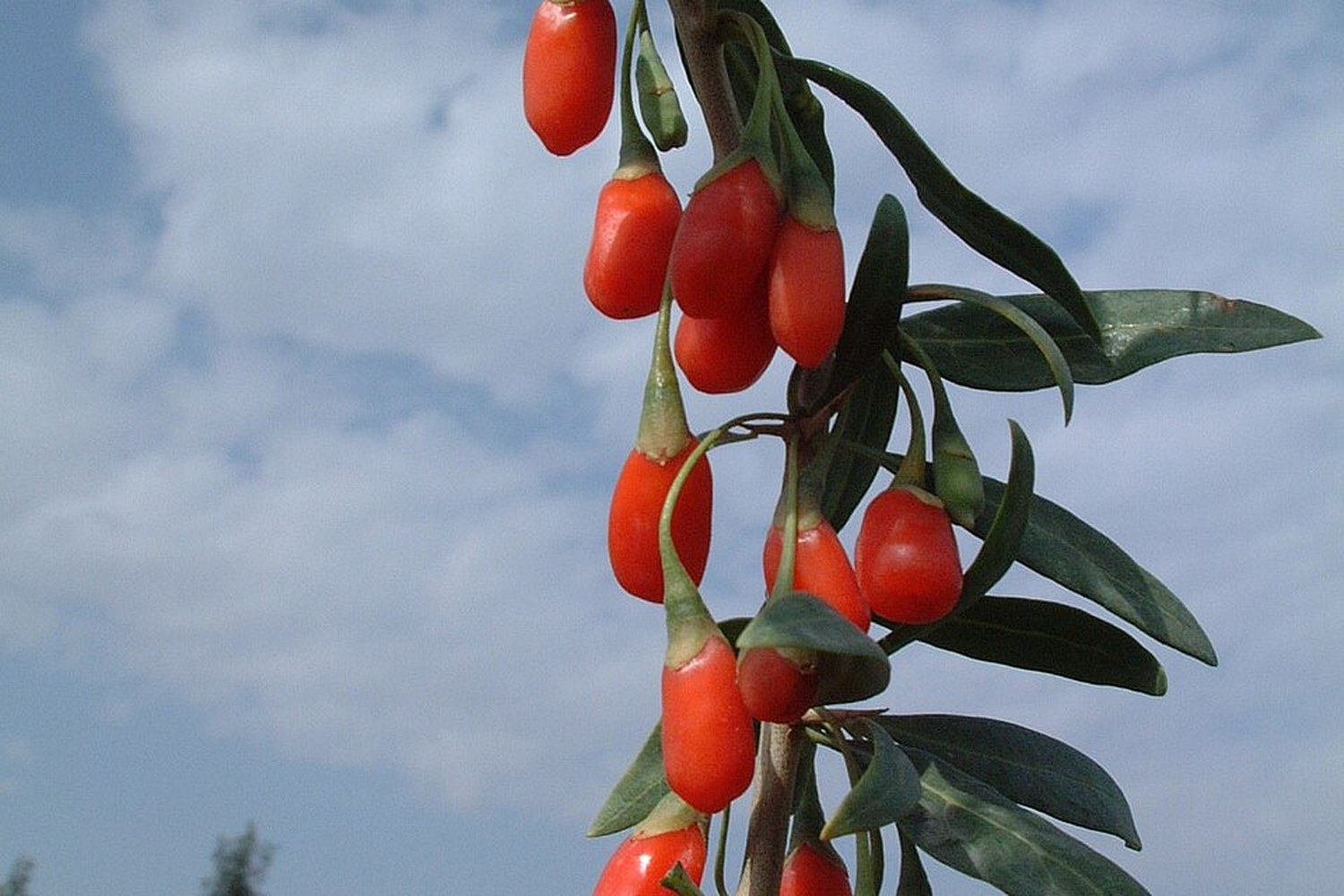
Goji Berry (Lycium barbarum) is the small, vermilion fruit of a thorny shrub native to the high deserts and river valleys of northern China — most prized from Ningxia, where alkaline soil, intense sun, and cold nights concentrate the berry into one of the most nutrient-dense fruits in the herbal repertoire. In the Gate of Life lineage it stands among the supreme tonic foods: a "superior" botanical taken not for a single complaint but for the long cultivation of vitality across years. The name 枸杞子 (gǒuqǐzǐ) and the apothecary's wolfberry both point to the same fruit — sweet, neutral, and unhurried in character, a berry that is eaten as readily as it is brewed. We offer it as a 10:1 concentrated extract of the ripe fruit alone, the form the tradition recognizes as a food-grade tonic; the raw green plant, leaves, and unripe berries are no part of it. Goji is a daily berry, not an occasional remedy — the kind of botanical a household keeps for a lifetime, a quiet, accumulating source of strength.
In the body
Goji's character lives in two well-established compound families. The first is its carotenoid pigments — most notably zeaxanthin, the same xanthophyll the eye itself concentrates in the macula — which the berry delivers in unusually rich, bioavailable form to nourish the visual system and the body's own capacity for clarity and brightness of sight. The second is the Lycium barbarum polysaccharides, a distinctive class of glycoconjugates that engage the body's own immune architecture — the kind of structural recognition the immune system draws on to maintain its natural, self-regulating function — and that, alongside the berry's carotenoids and flavonoids, supply the body abundant material for its native antioxidant defenses, supporting resilience against everyday oxidative wear. Through these constituents goji speaks most directly to the eyes and to what the classical tradition frames as the liver and kidney — the deep reserves of vitality, stamina, and endurance. It is a tonic of foundation: it nourishes the systems that govern radiance, energy, and the body's steady, grounded vigor, giving the body's own intelligence the raw richness it draws upon to stay supple and strong over the long arc of daily use.
The molecules, measured
The active compounds in Goji Berry, the proteins each is measured to engage, and — where a real, exact-match assay exists — the strength of that binding.
Betaine
PubChem ↗Measured to act on
Betaine-homocysteine S-methyltransferase
An enzyme that recycles the amino acid homocysteine back into methionine using betaine.
Scopoletin
PubChem ↗Measured to act on
Carbonic anhydrase 9
An enzyme that helps cells balance acidity by managing carbon dioxide.
Quercetin
PubChem ↗Measured to act on
Polyunsaturated fatty acid 5-lipoxygenase
An enzyme that converts fatty acids into messengers of the inflammatory response.
Cytochrome P450 1B1
A liver-type enzyme that processes hormones and environmental compounds.
Serine/threonine-protein kinase Pim-1
A signaling enzyme involved in cell survival and growth.
ATP-binding cassette transporter ABCG2
A cellular pump that ushers compounds out of cells, shaping how the body absorbs them.
Xanthine dehydrogenase/oxidase
The enzyme that produces uric acid as the body breaks down purines.
Aldo-keto reductase family 1 member B1
An enzyme that converts glucose into sorbitol, part of how cells handle sugar.
Rutin
PubChem ↗Measured to act on
Acetylcholinesterase
The enzyme that clears acetylcholine after a nerve signal fires, resetting communication between nerves.
Beta-secretase 1
An enzyme that cuts proteins at the cell surface, part of normal protein turnover.
High mobility group protein B1
A protein that helps organize DNA and acts as an alarm signal during tissue stress.
Chlorogenic acid
PubChem ↗Measured to act on
Aldo-keto reductase family 1 member B1
An enzyme that converts glucose into sorbitol, part of how cells handle sugar.
Tyrosine-protein phosphatase non-receptor type 1
An enzyme that dials down insulin and growth signaling by removing phosphate tags.
Predicted binding geometry
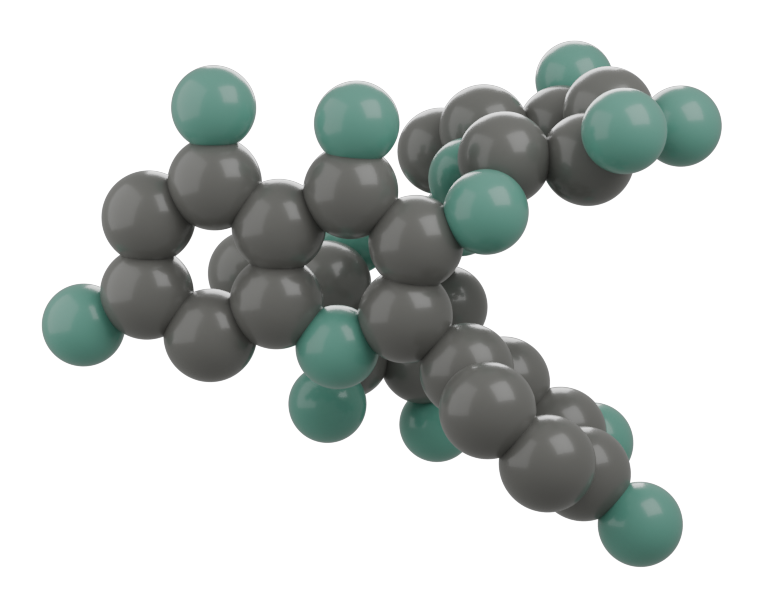
Beyond the measured affinities, we computed the fit ourselves. We docked Rutin into the AlphaFold-predicted structure of Beta-secretase 1 using AutoDock Vina, and recorded the best pose.
Rutin → Beta-secretase 1
-9.14 kcal/molOur own computation · AutoDock Vina blind dock into AlphaFold model AF-P56817 (ordered domain, pLDDT ≥ 70), PubChem 3D conformer CID 5280805. A predicted binding geometry and energy — more negative is a tighter predicted fit — reported alongside, not in place of, the measured values above.
The classical record
What tradition carried
Goji has been carried in classical East Asian herbalism for well over two thousand years, recorded among the "superior" tonic class in the foundational materia medica — the rank reserved for the gentle, food-like botanicals one may take continuously to nourish life rather than to address a passing disturbance. In that lineage it is the great fruit of the liver and kidney channels, esteemed for nourishing the body's deep vitality and for its long-standing association with the brightness of the eyes; it appears across the centuries in tonic wines, congees, soups, and simple teas, eaten by the handful as readily as it is decocted. Beyond China it entered the wider apothecary tradition as wolfberry, valued everywhere as a sweet, restorative berry. We honor that unbroken record of use — millennia of households keeping goji as an everyday source of strength and radiance — as the evidence it is.