Measured Biology
The Measured Biology of Jamaican Purple Sea Moss
Eucheuma cottonii / Gracilaria spp.
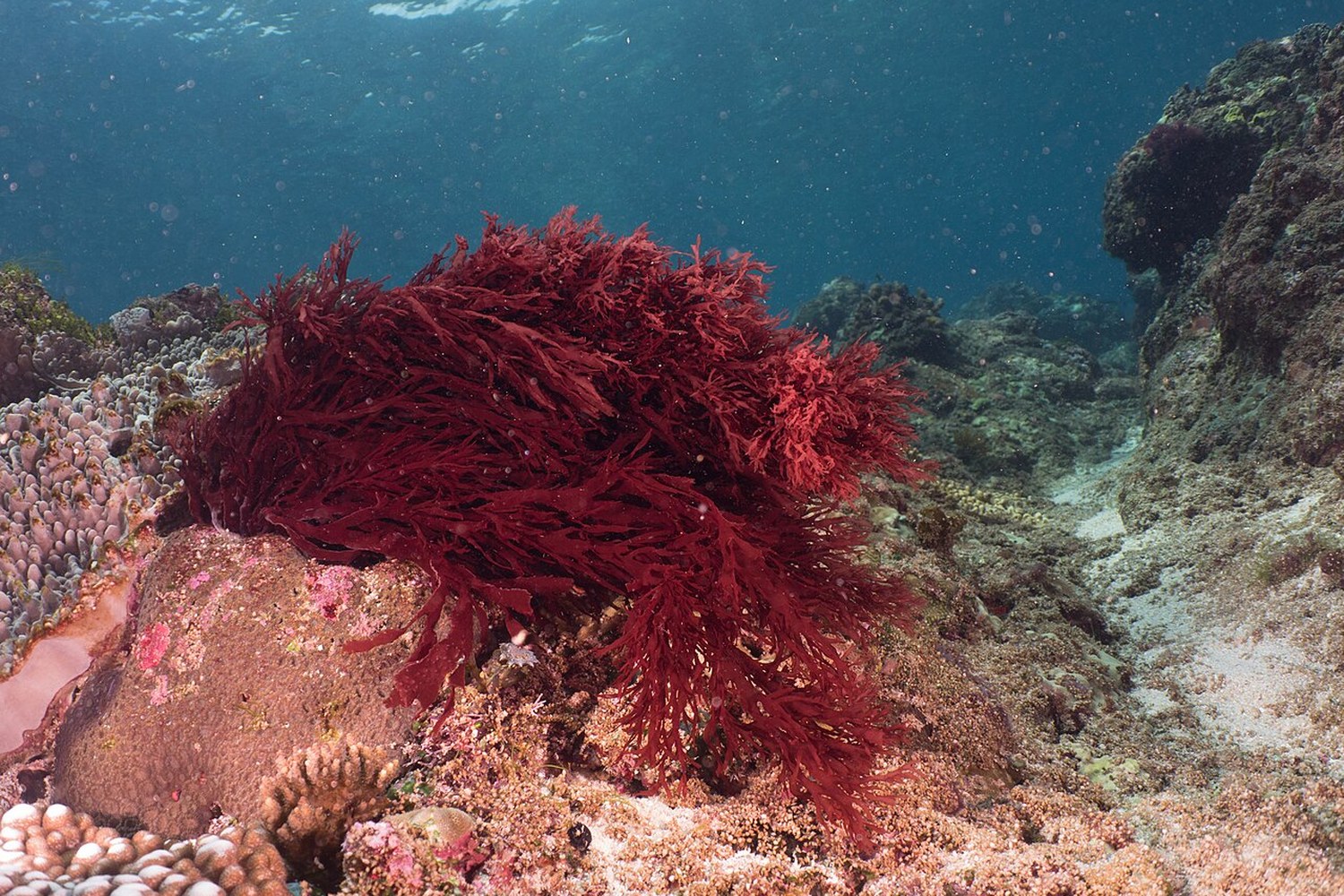
Jamaican Purple Sea Moss is a red-algae sea vegetable — *Eucheuma cottonii* and *Gracilaria* species — wild-harvested from the clear, sun-warmed shallows of the Caribbean coast. Where most sea moss arrives in the familiar golden-amber form, the purple variety is distinguished by its deep violet pigmentation, a visible signature of its anthocyanin content: the same family of pigments that color the darkest grapes and berries, here produced by an organism that draws its life directly from seawater and sunlight. This is not a root, a bark, or a flower. It is a whole sea plant — the entire thallus, sun-cured and offered dried, in the unbroken tradition of coastal preparation. It belongs to the apothecary's small and venerable category of sea vegetables, the marine counterparts to terrestrial tonic herbs, prized across maritime cultures precisely because seawater is among the most mineral-rich media on earth and these plants concentrate that wealth into edible form. In character, sea moss is a foundational nourisher rather than a stimulant or a corrective — a quiet, daily mineral substrate rather than a dramatic actor. Its nature is cooling, moistening, and demulcent: it is rich in soluble gelling polysaccharides that swell into a smooth, mucilaginous gel in water, the very property that has made it both a culinary thickener and a soothing food for generations. Within the GGG NATURAL lineage it occupies the place of the whole-food mineral cornerstone — the sea vegetable one returns to not for a single effect but for the broad, patient density of trace nourishment that underwrites everything else. It carries the ocean's full elemental spectrum in a form the body recognizes as food.
In the body
Sea moss engages the body first as a whole-food source of trace-mineral density. As a marine alga it concentrates the dissolved mineral wealth of seawater — iodine foremost, alongside a broad spectrum of trace elements — in the bioavailable, food-bound form that the body's own systems are built to recognize and draw upon. Iodine is the element most worth naming: it is an essential mineral that the endocrine system, and the thyroid in particular, requires as raw material to carry out its native work of governing metabolic tempo and energy throughout the body. Sea moss stands among the recognized dietary sources of it (though far gentler than kelp), making this herb a true structural nourisher of the endocrine system — supplying the building block rather than acting upon a gland. This mineral density is also what makes it a quiet support for daily vitality, stamina, and the steady baseline of energy that depends on the body having the elemental raw materials it needs. Its second mode belongs to its abundant gelling polysaccharides — the soluble carbohydrate matrix that gives sea moss its characteristic gel. These polysaccharides are demulcent and mucilaginous: in water they form a soft, soothing colloid that coats and supports the body's own mucosal surfaces, the moist living linings of the digestive tract. In this way sea moss nourishes the gut and supports the integrity and natural function of the mucosal membranes, while the same soluble matrix acts as a gentle, fibrous substrate within the digestive system. Together these threads — a full marine mineral spectrum feeding the endocrine and metabolic systems, and demulcent polysaccharides toning the digestive and mucosal lining — make sea moss a broad foundational tonic: it does not push any one system, it supplies the elemental and structural nourishment from which the body's own systems draw their resilience, suppleness, and steady vitality. Its purple pigmentation reflects an anthocyanin content, the deeply-colored polyphenol class the body recognizes among its dietary antioxidant nutrients.
The molecules, measured
The active compounds in Jamaican Purple Sea Moss, the proteins each is measured to engage, and — where a real, exact-match assay exists — the strength of that binding.
Taurine
PubChem ↗Measured to act on
Sodium- and chloride-dependent taurine transporter
A transporter that carries taurine, an amino acid important to heart and eye tissue, into cells.
beta-Carotene
PubChem ↗Measured to act on
Solute carrier organic anion transporter family member 1B1
A liver transporter that moves compounds from the blood into liver cells for processing.
Solute carrier organic anion transporter family member 1B3
A liver transporter that carries compounds out of the blood for the liver to handle.
Predicted binding geometry
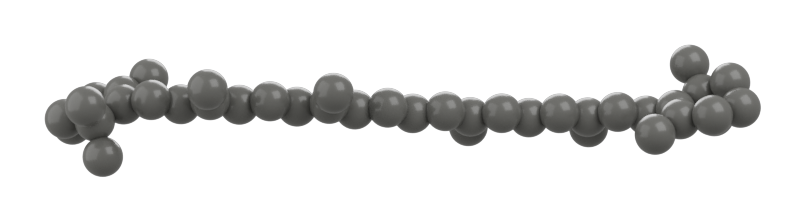
Beyond the measured affinities, we computed the fit ourselves. We docked beta-Carotene into the AlphaFold-predicted structure of Solute carrier organic anion transporter family member 1B1 using AutoDock Vina, and recorded the best pose.
beta-Carotene → Solute carrier organic anion transporter family member 1B1
-8.61 kcal/molOur own computation · AutoDock Vina blind dock into AlphaFold model AF-Q9Y6L6 (ordered domain, pLDDT ≥ 70), PubChem 3D conformer CID 5280489. A predicted binding geometry and energy — more negative is a tighter predicted fit — reported alongside, not in place of, the measured values above.
The classical record
What tradition carried
Sea moss carries a long lineage as a coastal sea vegetable, woven most famously into the foodways and household traditions of the Caribbean and the North Atlantic. The closely related Irish Moss (*Chondrus crispus*) was a staple of Irish and coastal British practice for centuries — gathered from the tide-line, sun-bleached on stone walls, and simmered into the soothing gels and nourishing preparations recorded in the Old English herbal and domestic traditions that GGG NATURAL carries forward. In Jamaica and across the wider Caribbean it became a cherished tonic vegetable, prepared as a thick gel or steeped drink and valued as a whole-food source of marine nourishment and steady strength. The herbal tradition has always understood sea vegetables as the ocean's tonic foods — concentrated mineral nourishment offered in the form of a whole plant rather than an isolated extract — and the purple Jamaican variety stands within that unbroken maritime practice: wild-harvested, sun-cured, and prepared whole, exactly as the coastal apothecary has done for generations.