Measured Biology
The Measured Biology of Jatamansi (Spikenard)
Nardostachys jatamansi
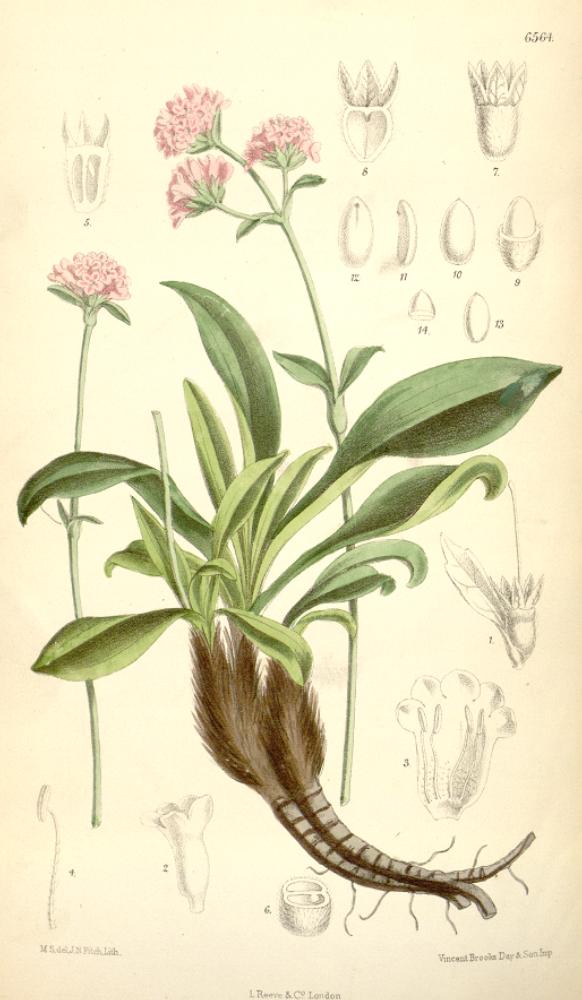
Jatamansi (Nardostachys jatamansi), known to the West as spikenard and to classical East Asian practice as 甘松, gan song, is an aromatic root and rhizome drawn from one of the most rarefied origins in the entire materia medica: the high alpine meadows of the Himalaya, where it grows at altitudes few plants will tolerate, in Nepal, northern India, and Tibet. What is harvested is the dense, hair-like crown of rhizome — earthy, resinous, unmistakably perfumed — and it is this perfume that announces the plant's character. Spikenard is one of the great aromatics of the ancient world, a root so prized it was carried in alabaster and named in scripture, and within the apothecary it occupies the seat of the grounding nervine: a botanical whose whole disposition is toward stillness, settling, and the gathering-in of a scattered mind. Where many aromatics lift and disperse, jatamansi descends. It is warming and earthward, and it is used — as it has always been used — in small, deliberate amounts, because its potency is concentrated and its action is one of quiet depth rather than force. In the GGG lineage it stands as the calming, grounding aromatic of the clarity line: the root you reach for when the nervous system needs to be steadied and the senses brought back to center.
In the body
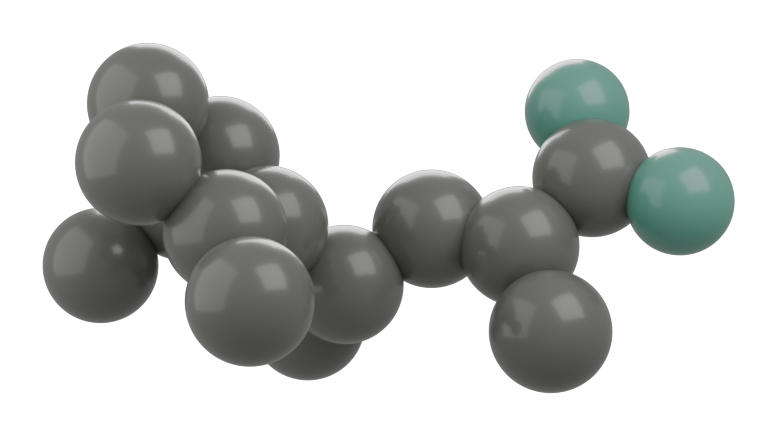
Jatamansi is, first and last, a botanical of the nervous system. Its aromatic character is not incidental — it is the signature of a root unusually rich in sesquiterpenes, the class of volatile aromatic compounds that defines the valerian family to which it belongs. Chief among these are the valeranoid sesquiterpenes, jatamansone (also called valeranone) and its relatives, the established constituents that carry the plant's grounding, settling disposition and account for its long-standing place as a nervine. These are the molecules the body's own nervous system recognizes when the root is taken as a dilute tonic, and they work with — never against — the body's innate machinery of rest, helping a wound-up, overstimulated nervous system find its way back toward an even, settled baseline. The experience GGG formulates for is exactly this: clear focus and a calm, settled mind, the kind of grounded steadiness that supports natural, restful balance. Alongside the sesquiterpenes the root carries its broader aromatic and resinous fraction, the earthy bouquet that makes spikenard what it is and that traditional practice has always linked to its centering, sense-steadying quality. The whole engages a single system with precision — it tones the nervous system toward calm and clarity rather than scattering it — which is why it is given in small amounts and why, in the GGG framing, it is presented as a true nervine tonic for People (a teaspoon in warm water for a settled mind), as a gentle dilute calming support for Pets, and as a vigor-and-rooting tonic for Plants. Because its valeranoid actives are genuinely grounding in character and support the body's own settling, equilibrium-seeking systems, it is treated with the respect a potent aromatic deserves: dilute, low, and observed.
The molecules, measured
The active compounds in Jatamansi (Spikenard), the proteins each is measured to engage, and — where a real, exact-match assay exists — the strength of that binding.
Valerenic acid (CAUTION: established Valeriana marker, NOT a confirmed major Nardostachys constituent; included for the verified GABA-A target but flagged as cross-genus)
PubChem ↗Measured to act on
GABA-A receptor; alpha-1/beta-3/gamma-2
A receptor that carries the brain's main calming signal, quieting nerve activity.
GABA-A receptor; alpha-1/beta-2/gamma-2
A receptor that carries the brain's main calming signal, easing nerve excitability.
GABA-A receptor; anion channel
A gated channel that lets calming signals flow into nerve cells, settling their activity.
The classical record
What tradition carried
Spikenard's recorded lineage is among the oldest and most cross-cultural of any aromatic root. It is the nard of the ancient Mediterranean world — the costly perfumed unguent named in scripture and traded along the spice routes — and it has been continuously honored in two living systems the apothecary draws on directly. In the Ayurvedic tradition of India it is jatamansi, classed among the grounding, mind-steadying herbs and used in small amounts as a calming nervine to quiet a restless mind and settle the senses. In classical East Asian practice the same root appears as 甘松, gan song, an aromatic that warms, moves, and harmonizes, valued for its earthy, settling fragrance. Across both lineages the consensus is identical and ancient: spikenard is a root for grounding, for stilling agitation, and for bringing a scattered nervous system back to center — used sparingly, with reverence for its concentrated aromatic strength. This is the tradition GGG carries: not a novelty but one of the oldest aromatics known to human practice, presented in its proper, dilute, time-honored form.