Measured Biology
The Measured Biology of Jujube
Ziziphus jujuba
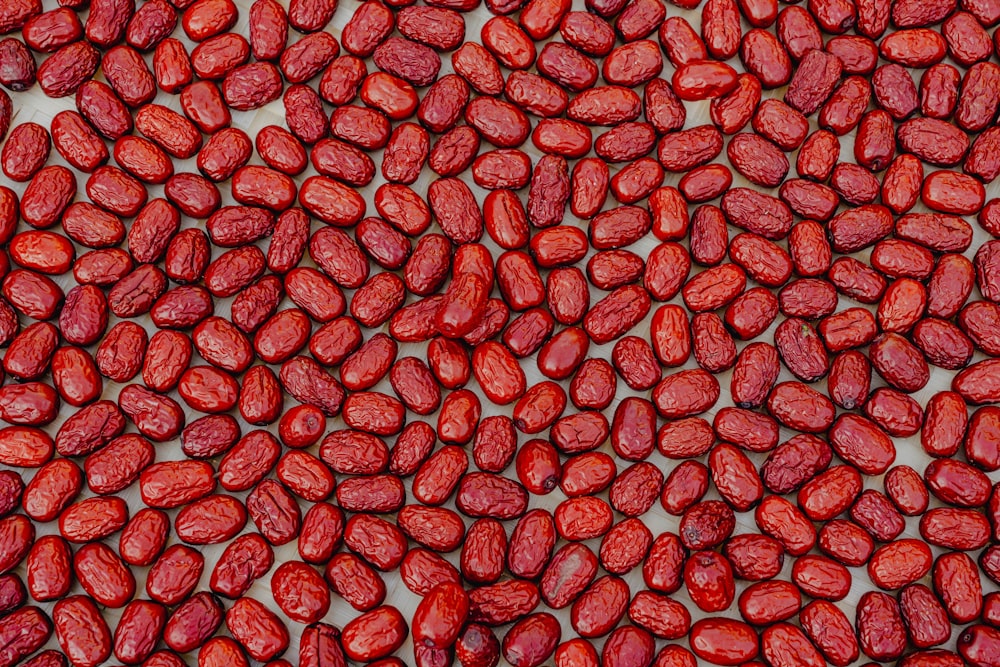
Jujube — Ziziphus jujuba, the red date, 红枣 — is among the most quietly indispensable botanicals in the herbal repertory: a sweet, sun-cured fruit that has been food and tonic in the same breath for thousands of years. Where many herbs are sharp, specialized instruments, jujube is a harmonizer — the fruit a formula is built around to soften, round, and bind its other members into a coherent whole. Its character is warm, sweet, and nourishing; in the classical reading it is a blood-and-spirit tonic, a fruit that steadies rather than stimulates, that grounds rather than drives. At GGG NATURAL we carry it as a concentrated 10:1 extract of the ripe red fruit, where the natural sugars, triterpenoid saponins, and fruit polysaccharides that define its nature are gathered into potent form. It belongs to the lineage of "daily tonics" — botanicals gentle enough for sustained, everyday use, prized precisely because they ask nothing dramatic of the body and instead supply it with what it recognizes as food. This is the deepest expression of our philosophy: jujube is not a medicine acting upon the body but nourishment the body's own systems take up and use. Sweet on the tongue, settling to the mind, and steadying to digestion, it is the red date that has earned its place at the center of the formulary by making everything around it work in greater harmony.
In the body
Jujube speaks most directly to two of the body's foundational systems — the blood and circulatory system and the digestive system — and through them to the body's broader capacity for calm, restful rhythm, and daily vitality. Its profile is built on well-established compound classes: nourishing fruit sugars and polysaccharides, triterpenoid saponins (the jujubosides characteristic of the species), and flavonoids. The polysaccharides are the kind of complex, food-form carbohydrates the digestive system readily engages, supporting the gut's own natural function and the steady, comfortable assimilation that underlies sustained energy. As a sweet, nutrient-dense fruit, jujube supplies the building blocks the body draws on to support healthy blood and a grounded sense of stamina, in keeping with its classical role as a blood-nourishing tonic. Its triterpenoid saponins are the compound class long associated with jujube's settling, calming character — the quality the tradition describes as nourishing the spirit, expressed as restful, grounded calm and an even rhythm of rest. This is structure and function, not sedation: jujube supplies what the nervous system uses to settle into its own natural rest, supporting the body's intrinsic balance between alertness and ease. The flavonoids round out the picture as the supportive, protective class common to deeply colored fruit. Across all of it, jujube engages the body's own systems — circulatory, digestive, and the calm-and-restoration axis between them — nourishing their innate intelligence rather than overriding it, which is why it is so well suited to steady daily use and well tolerated across the People, Pets, and Plants kingdoms alike.
The molecules, measured
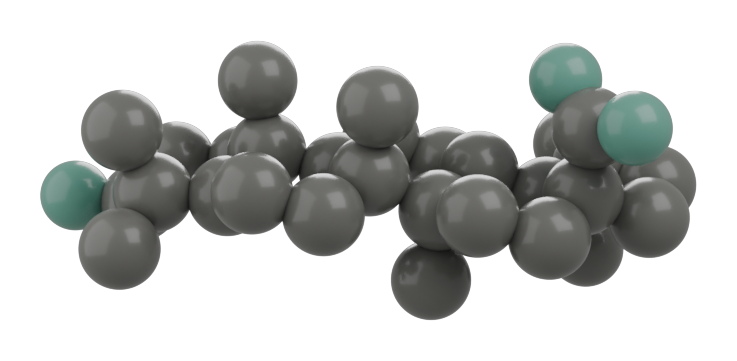
The active compounds in Jujube, the proteins each is measured to engage, and — where a real, exact-match assay exists — the strength of that binding.
Betulinic acid
PubChem ↗Measured to act on
G-protein coupled bile acid receptor 1
A receptor that senses bile acids and helps govern metabolism and energy balance.
Tyrosine-protein phosphatase non-receptor type 1
An enzyme that dials down insulin and growth signaling by removing phosphate tags.
Rutin
PubChem ↗Measured to act on
Beta-secretase 1
An enzyme that cuts proteins at the cell surface, part of normal protein turnover.
Acetylcholinesterase
The enzyme that switches off the nerve messenger acetylcholine after a signal.
High mobility group protein B1
A protein that helps organize DNA and acts as an alarm signal during tissue stress.
Quercetin
PubChem ↗Measured to act on
Aromatase
The enzyme that converts androgens into estrogen, the body main estrogen source.
Aldo-keto reductase family 1 member B1
An enzyme that converts excess glucose into sorbitol, part of normal sugar metabolism.
Cytochrome P450 1B1
A liver-type enzyme that processes hormones and environmental compounds.
Serine/threonine-protein kinase PIM1
A signaling enzyme that tags other proteins to influence cell growth and survival.
Proto-oncogene tyrosine-protein kinase Src
A signaling enzyme that relays growth and movement messages inside cells.
Polyunsaturated fatty acid 5-lipoxygenase
An enzyme that converts fatty acids into messengers of the inflammatory response.
Xanthine dehydrogenase/oxidase
The enzyme that produces uric acid as the body breaks down purines.
Beta-secretase 1
An enzyme that cuts proteins at the cell surface, part of normal protein turnover.
The classical record
What tradition carried
Jujube is one of the great harmonizing fruits of classical East Asian herbalism, where the red date — 红枣, da zao — is counted among the foundational tonics and appears in a remarkable share of traditional formulas, added expressly to nourish the blood, settle the spirit, support the digestive center, and harmonize and soften the action of the other herbs in a blend. Native to China and cultivated there for several thousand years, it traveled the trade routes outward as both food and tonic, entering the materia medica of cultures across Asia and beyond. In the broad herbal tradition we carry, jujube holds the role of the steadying, sweetening presence — the fruit a formula leans on for grounded calm and gentle, sustained vitality — and it is precisely this long, unbroken record of everyday human use across cultures that establishes its place as a daily nourishing tonic.