Measured Biology
The Measured Biology of Lion's Mane
Hericium erinaceus
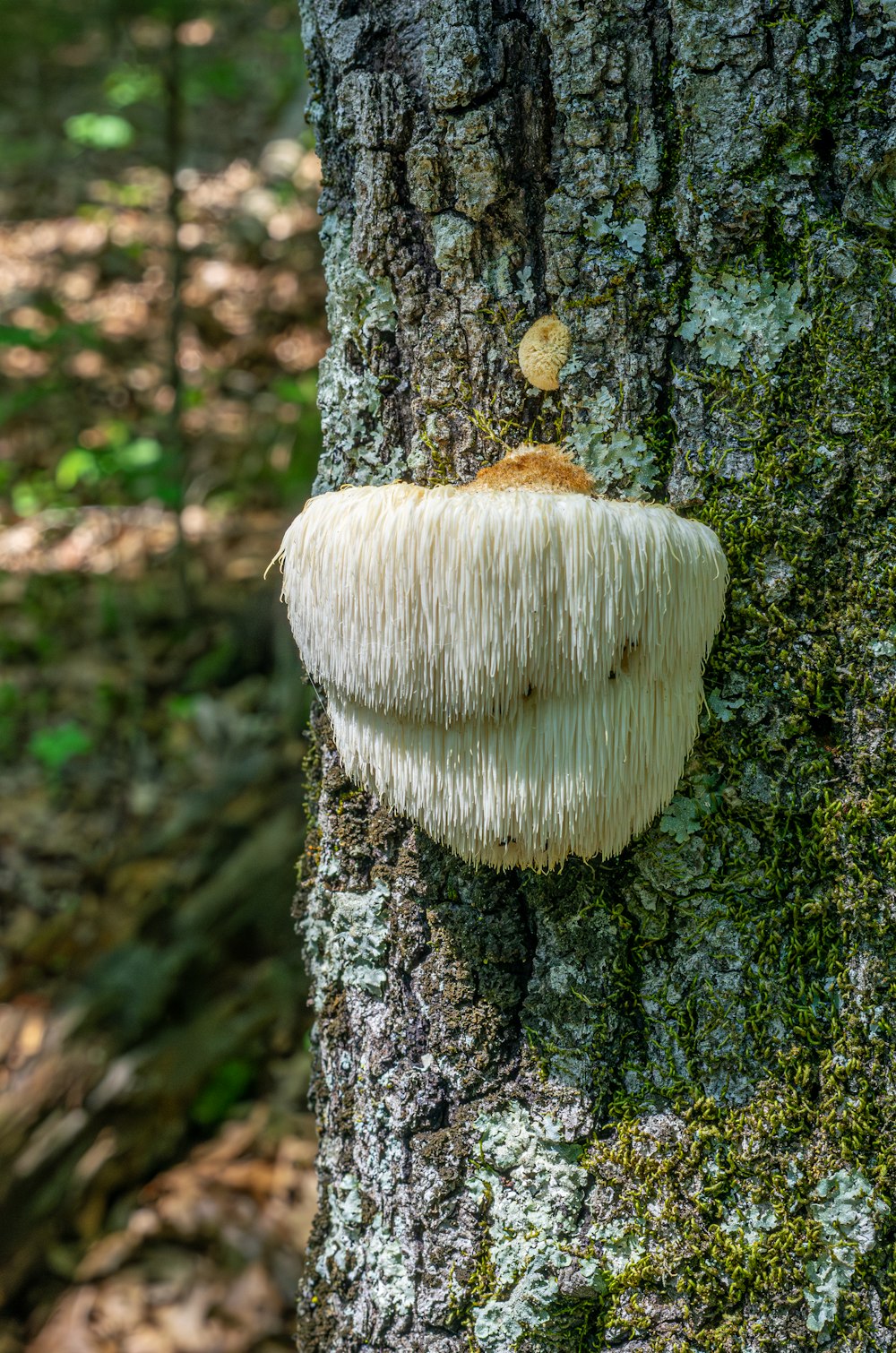
Lion's Mane (Hericium erinaceus) is a striking edible fungus that grows not as a capped mushroom but as a cascade of soft, ivory-white spines, draping from hardwood like a frozen waterfall or the mane of its namesake. Native to the old-growth forests of North America, Europe, and Asia, it has long held a dual standing as both a delicacy and a botanical of distinction — prized as much for its character as for the refined compounds it carries. In the GGG NATURAL formulary it is the definitive botanical of clarity: where other herbs ground the body or quicken the blood, Lion's Mane belongs to the realm of mind, attention, and the quiet, sustained luminosity of a settled intellect. It is the fruiting body that we honor, concentrated as a 10:1 extract, because it is here that the fungus assembles its most singular molecular signature. Lion's Mane is a botanical of refinement rather than force — savory, lucid, and exact. It does not stimulate the way coffee stimulates; its character is one of steady, unhurried coherence. To work with it is to nourish the body's own capacity for focus and recollection — a research-grade botanical whose reputation rests not on mystique but on a genuinely distinctive chemistry that the modern laboratory has only deepened our respect for.
In the body
Lion's Mane engages the body's nervous system above all — the substrate of thought, memory, mood, and the relay between brain and gut. Its distinction lies in two families of compounds found almost nowhere else in the botanical world: the hericenones, concentrated in the fruiting body, and the erinacines, drawn chiefly from the mycelium. These small, lipid-soluble molecules are notable for their affinity with nerve growth factor (NGF), one of the body's own neurotrophic signals — the proteins through which the nervous system maintains, organizes, and renews its architecture. Rather than acting upon the mind from outside, these compounds appear to engage the body's own NGF-mediated signaling, nourishing the terrain on which clarity, memory, and sustained focus are built. Alongside these neuroactive terpenoids, Lion's Mane carries a robust complement of beta-glucans and other polysaccharides — the structural sugars that define the great tonic fungi. In the truest structure/function sense, these engage the body's innate immune signaling to support the immune system's own balanced, well-regulated function rather than overriding it. The same beta-glucan fraction extends Lion's Mane's affinity toward the digestive tract, where the gut and the nervous system are in constant conversation, making it a botanical that tones the whole brain-gut axis. The result is a fungus that nourishes three of the body's most interconnected systems at once — cognitive, nervous, and digestive — through compound classes that the body recognizes and puts to its own use.
The molecules, measured
The active compounds in Lion's Mane, the proteins each is measured to engage, and — where a real, exact-match assay exists — the strength of that binding.
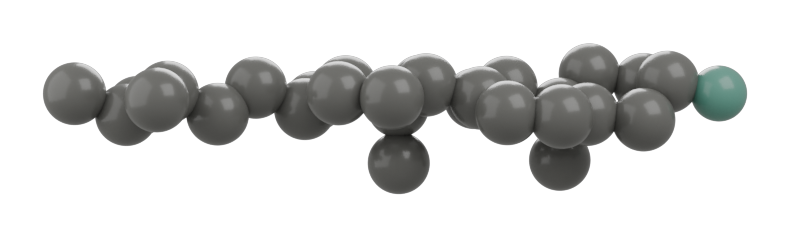
Ergosterol
PubChem ↗Measured to act on
Protein deacetylase HDAC6
An enzyme that adjusts protein activity and helps the cell clear damaged material.
ATP-dependent translocase ABCB1
A cellular pump that escorts foreign compounds out of cells.
Nitric oxide synthase, inducible
An enzyme immune cells switch on to make nitric oxide, a signaling molecule of the inflammatory response.
The classical record
What tradition carried
In the classical East Asian materia medica it is known as hóu tóu gū (猴头菇), the "monkey-head mushroom," a name drawn from its shaggy form, and it has been carried for centuries as both a prized table delicacy and a tonic associated with the digestive organs and a long, vigorous constitution. Across the temperate forests of Asia, Europe, and North America it was gathered where it grew on aging hardwoods, valued in folk practice as a strengthening food rather than a remedy for any single complaint — the older herbal cultures understanding it, as we do, as nourishment for the body's own systems. It is a relative newcomer to the Western apothecary compared with the classical European herbs, but it enters the GGG NATURAL lineage on the strength of that long East Asian record of culinary and tonic use, refined here into a concentrated extract for clarity, memory, and sustained focus.