Measured Biology
The Measured Biology of Longan Berry
Dimocarpus longan
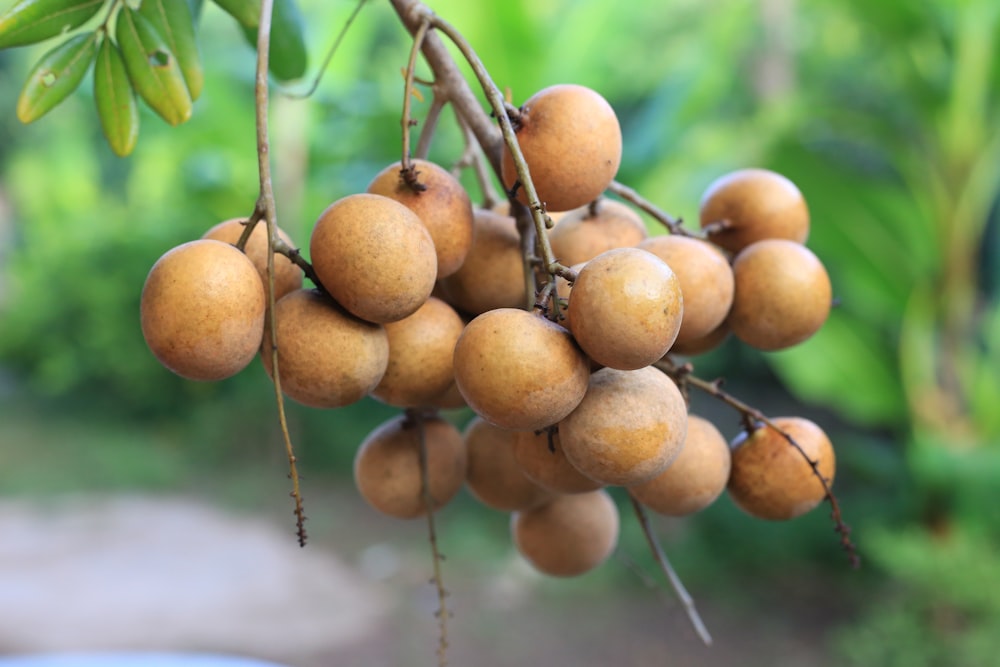
Longan (Dimocarpus longan) is the translucent, honey-sweet aril that sheaths the single dark seed of a subtropical evergreen in the soapberry family — the same lineage as lychee, to which it is the quieter, warmer cousin. Native to the foothills of southern China and across Southeast Asia, it has been carried for centuries as 龙眼肉, "dragon-eye flesh," named for the way the dark seed gazes out from the pearl-clear pulp. In the apothecary we work only with that flesh: a 10:1 hot-water extract of the aril alone, never the seed or shell, where the fruit's nourishment is concentrated and its tonic character deepened well beyond that of the fresh fruit. This is a tonic fruit in the truest sense — sweet, gentle, warming, and deeply nourishing rather than stimulating. It belongs to the small, prized class of botanicals the tradition reaches for not to provoke the body but to feed it, to restore what long effort has drawn down. Where bitter herbs move and clear, longan settles and replenishes; it is the warmth at the center of a formula, the note of steadiness.
In the body
Longan is associated above all with the cardiovascular system — the heart and the blood it governs — and through that center, with the mind it is held to house. Its sweet, warming character makes it a building, replenishing food: the aril is naturally rich in simple sugars that deliver readily available energy, alongside the polysaccharides and the polyphenol class (flavonoids and related plant pigments) that distinguish longan as a nutrient- and antioxidant-dense fruit rather than a mere sweet. These polyphenols are part of the body's broad encounter with dietary antioxidants — compounds that support the body's own systems for managing everyday oxidative load, the natural counter-balance that keeps tissue resilient and supple. In the apothecary's reading, longan nourishes the heart-blood and in doing so supports a calm, settled mind: the experience it offers is clear focus paired with grounded steadiness, the quiet stamina of a system that is fed rather than driven. It tones the cardiovascular center, supports restful calm and emotional evenness, and lends its warmth and sweetness as a base that carries and harmonizes the more active herbs around it. Structure and function throughout — it feeds the body's own intelligence; it does not push against it.
The molecules, measured
The active compounds in Longan Berry, the proteins each is measured to engage, and — where a real, exact-match assay exists — the strength of that binding.
Gallic acid
PubChem ↗Measured to act on
3-hydroxyacyl-CoA dehydrogenase type-2
A mitochondrial enzyme involved in breaking down fatty acids and balancing steroid hormones.
Alpha-(1,3)-fucosyltransferase 7
An enzyme that adds sugar tags to cells, helping immune cells find their way through tissue.
Lysine-specific demethylase 4E
An enzyme that edits chemical tags on DNA-packaging proteins to regulate genes.
Tyrosyl-DNA phosphodiesterase 1
A repair enzyme that clears certain damage points so DNA can be mended.
Ellagic acid
PubChem ↗Measured to act on
DNA repair nuclease/redox regulator APEX1
A protein that repairs damaged DNA and helps balance the cell's oxidative state.
Casein kinase II subunit alpha
A constantly active signaling enzyme involved in cell growth and stress responses.
Pyruvate kinase PKLR
An enzyme in the liver and red blood cells that helps turn sugar into usable energy.
Tyrosyl-DNA phosphodiesterase 1
A repair enzyme that clears certain damage points so DNA can be mended.
G-protein coupled receptor 35
A cell-surface receptor active in the gut and immune tissue that helps relay signals inward.
Quercetin
PubChem ↗Measured to act on
Aromatase
The enzyme that converts androgens into estrogen, the body main estrogen source.
Aldo-keto reductase family 1 member B1
An enzyme that converts glucose into sorbitol, part of how cells handle sugar.
Cytochrome P450 1B1
A liver-type enzyme that processes hormones and environmental compounds.
Serine/threonine-protein kinase PIM-1
A signaling enzyme involved in cell growth and survival.
3-hydroxyacyl-CoA dehydrogenase type-2
A mitochondrial enzyme involved in breaking down fatty acids and balancing steroid hormones.
Epicatechin
PubChem ↗Measured to act on
Nuclear factor NF-kappa-B p105 subunit
A master switch that turns on many genes of the immune and inflammatory response.
Alkaline phosphatase, tissue-nonspecific isozyme
An enzyme central to building and mineralizing healthy bone and teeth.
Adenosine
PubChem ↗Measured to act on
Adenosine receptor
A receptor for adenosine, a molecule the body uses to dial cellular activity up or down.
The classical record
What tradition carried
In classical East Asian herbalism longan flesh (龙眼肉, long yan rou) is one of the enduring tonic foods, recorded for generations as a sweet, warm botanical that nourishes the heart and the blood and settles the spirit — reached for in the building, restorative formulas favored by those worn down by long labor, broken rest, or overthinking. It travels as a cherished tonic food across southern China and Southeast Asia, eaten fresh in season and dried for the year-round apothecary, and it has long appeared in the steeped tonic soups and the famous heart-and-spleen restorative blends of the tradition. We carry it in that lineage: the dragon-eye fruit as a nourishing tonic of warmth, sweetness, and quiet steadiness, prepared as the dilute flesh extract our forebears would recognize.