Measured Biology
The Measured Biology of Mulberry
Morus alba
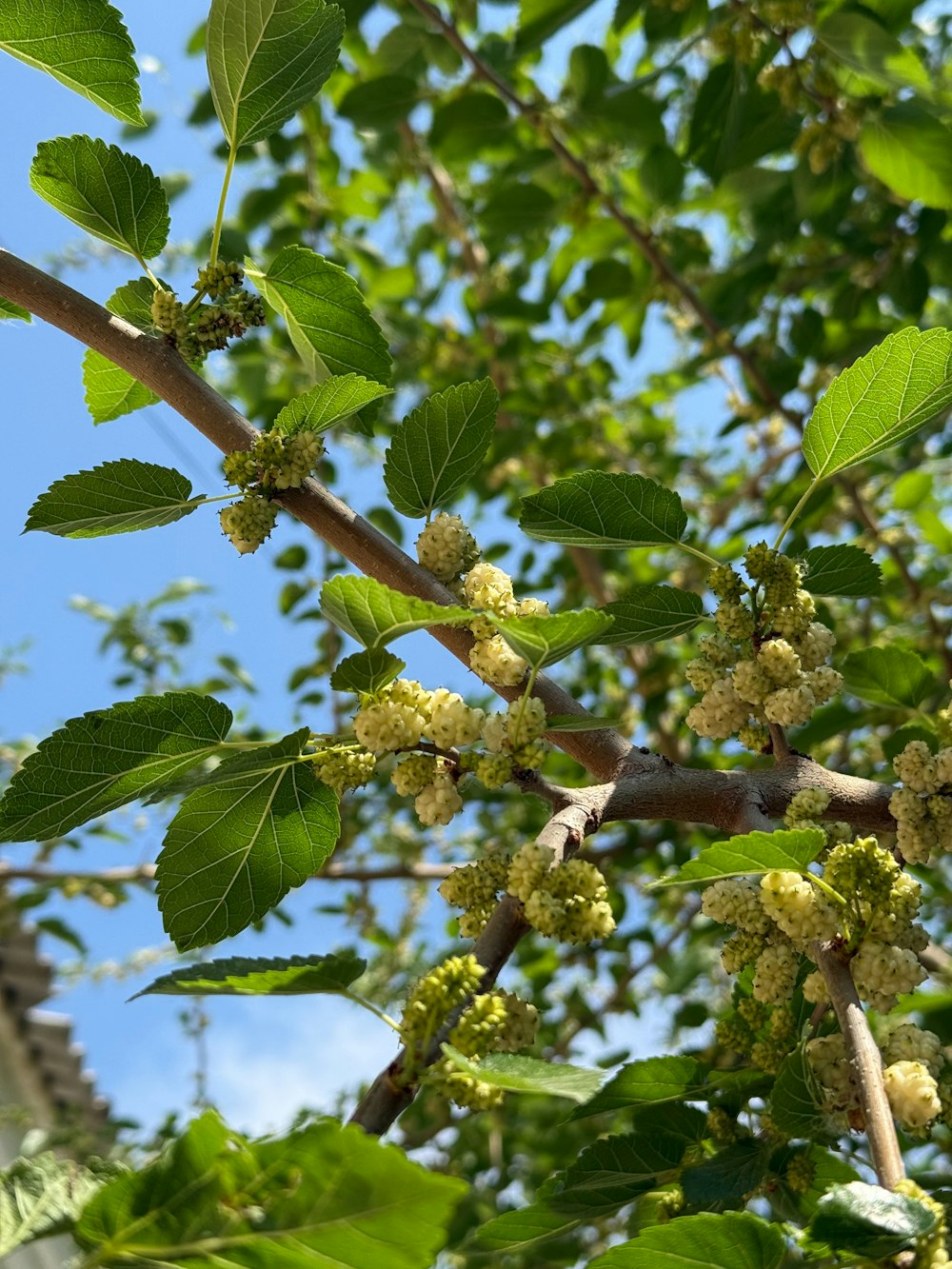
Mulberry (Morus alba) is the fruit of the white mulberry — a deep, jewel-dark berry borne on a tree so woven into the human story that whole civilizations were built around its leaves and its harvest. In our apothecary it is a berry of the energy kingdom: sweet, cooling, and quietly restorative, prepared as a concentrated 10:1 extract so that a single quarter-teaspoon carries the gathered intelligence of a great weight of ripe fruit. Where many tonics push, Mulberry replenishes. It belongs to the lineage of nourishing fruits — the berries a tradition reaches for not to stimulate the body but to refill it, to restore the moisture, the substance, and the steady reserve from which true vitality is drawn. Its character is gentle, rejuvenating, and unhurried: a fruit taken daily, not for a jolt, but for the long, even stamina of a system that is well-supplied. In the classical reckoning it is a 桑葚 — a yin-nourishing berry, dark and sweet, prized for replenishing the blood and the body's deeper reserves of moisture. That is its place in the lineage and its place on our shelf: a foundational restorative fruit, food-grade and food-kind, whose work is to nourish the ground from which energy, endurance, and radiance rise. It is among the most generous of the pristine herbs on earth.
In the body
Mulberry's affinity is for the blood and circulatory system — the body's living river of nourishment — and through it for the deep reserves that the energy economy draws upon. The dark berry is rich in anthocyanins, the very pigments that give it its color, alongside a broader complement of polyphenols and flavonoids. These compound classes are among the body's recognized partners in maintaining healthy antioxidant status: they help the body's own defenses meet the ordinary oxidative wear of daily metabolism, supporting the suppleness and integrity of the circulatory tissues and the steady delivery of nourishment that vitality depends on. This is structure and function — Mulberry does not act upon the blood; it furnishes the blood with the raw botanical intelligence it already knows how to use. Because it nourishes the reserve rather than spending it, Mulberry's gift to the energy system is endurance over excitation. By supporting the body's moisture and blood substance, it underwrites stamina, steady energy, and the kind of grounded resilience that holds across a long day. The flavonoid and polyphenol fraction supports the body's own healthy inflammatory and antioxidant balance — the equilibrium from which clarity, radiance, and even-keeled stamina naturally arise. The wider Morus plant is also notable for its alkaloid fraction, a compound class the leaf and bark are known to carry; in our restorative fruit tonic, however, the emphasis remains squarely on the berry's nourishing, replenishing character. Taken as a daily tonic, Mulberry tones the blood, supports the body's antioxidant resilience, and feeds the steady foundation of vitality the body builds upon.
The molecules, measured
The active compounds in Mulberry, the proteins each is measured to engage, and — where a real, exact-match assay exists — the strength of that binding.
1-Deoxynojirimycin (DNJ)
PubChem ↗Measured to act on
Lysosomal alpha-glucosidase
An enzyme inside cells that breaks down stored glycogen into usable glucose.
Neutral alpha-glucosidase AB
An enzyme that trims sugar chains as proteins are properly folded and finished.
Maltase-glucoamylase
A gut enzyme that finishes digesting starch into glucose for absorption.
Lysosomal acid glucosylceramidase
An enzyme that breaks down certain fatty molecules for recycling inside cells.
Alpha-galactosidase A
An enzyme that breaks down specific fatty sugar molecules so they don't accumulate in cells.
Sucrase-isomaltase, intestinal
A gut enzyme that breaks dietary starch and table sugar into absorbable simple sugars.
Oxyresveratrol
PubChem ↗Measured to act on
Tyrosinase
The enzyme that produces melanin, the pigment that colors skin and hair.
Transthyretin
A carrier protein that transports thyroid hormone and vitamin A through the blood.
Cytochrome P450 1B1
A liver-type enzyme that processes hormones and foreign compounds for clearance.
Tyrosinase
A mushroom enzyme that produces pigment, widely used as a model for studying melanin formation.
Morusin
PubChem ↗Measured to act on
Prostaglandin G/H synthase 2
The enzyme that drives the body's inflammatory response.
Beta-secretase 1
An enzyme that cuts a brain membrane protein, part of normal protein processing in neurons.
Tyrosine-protein phosphatase non-receptor type 1
An enzyme that helps regulate insulin and metabolic signaling inside cells.
Arachidonate 5-lipoxygenase
An enzyme that helps generate the messengers behind inflammatory signaling.
Acetylcholinesterase
The enzyme that clears acetylcholine, the messenger nerves use to signal muscles.
Kuwanon G
PubChem ↗Measured to act on
Beta-glucuronidase
An enzyme that breaks down complex sugar chains as part of cellular recycling.
Rutin
PubChem ↗Measured to act on
Neuraminidase
An enzyme the influenza virus uses to release newly made copies from a host cell.
Xanthine dehydrogenase/oxidase
The enzyme that produces uric acid as the body breaks down spent genetic building blocks.
Alpha-2A adrenergic receptor
A receptor for adrenaline that helps fine-tune nerve signaling and blood pressure.
Microtubule-associated protein tau
A protein that stabilizes the internal scaffolding that gives nerve cells their structure.
Chlorogenic acid
PubChem ↗Measured to act on
Aldo-keto reductase family 1 member B1
An enzyme that converts excess glucose into sorbitol as part of sugar metabolism.
Tyrosine-protein phosphatase non-receptor type 1
An enzyme that helps regulate insulin and metabolic signaling inside cells.
Aldo-keto reductase family 1 member B10
An enzyme involved in processing fats, retinoids, and reactive byproducts in cells.
HIV-1 integrase
A viral enzyme that splices viral genetic material into a host cell's DNA.
Predicted binding geometry
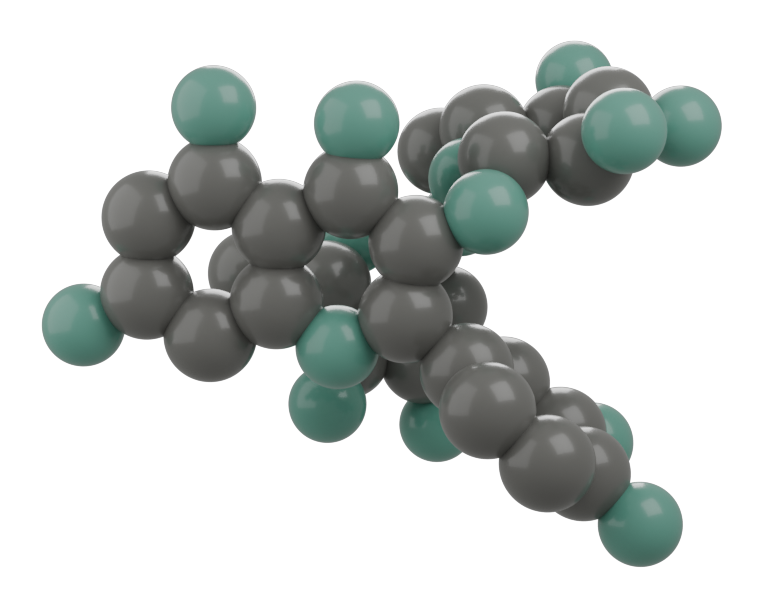
Beyond the measured affinities, we computed the fit ourselves. We docked Rutin into the AlphaFold-predicted structure of Beta-secretase 1 using AutoDock Vina, and recorded the best pose.
Rutin → Beta-secretase 1
-9.14 kcal/molOur own computation · AutoDock Vina blind dock into AlphaFold model AF-P56817 (ordered domain, pLDDT ≥ 70), PubChem 3D conformer CID 5280805. A predicted binding geometry and energy — more negative is a tighter predicted fit — reported alongside, not in place of, the measured values above.
The classical record
What tradition carried
Mulberry's recorded use runs through the classical East Asian herbal tradition, where the ripe black fruit (桑葚, sang shen) was catalogued among the sweet, nourishing berries — a yin-replenishing tonic gathered to enrich the blood, restore the body's moisture, and ease the dryness of depletion. The same tree gave the Old World its silk and its shade, and across folk and classical herbals from East to West the mulberry was held a wholesome, generous fruit, taken freely as food and as a gentle restorative. We carry it in that unbroken line: not as a remedy aimed at a condition, but as a foundational nourishing berry whose authority rests on thousands of years of human practice across cultures — tradition as evidence, the fruit as food for the body's own intelligence.