Measured Biology
The Measured Biology of Polygala
Polygala tenuifolia
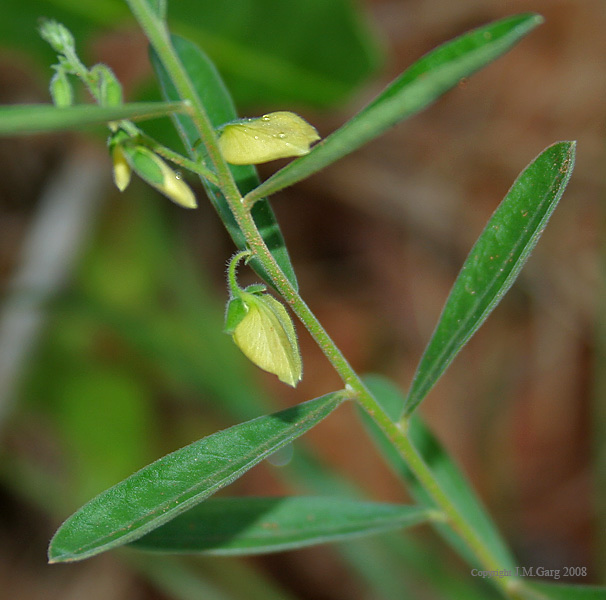
Polygala tenuifolia is the slender, bitter root the East Asian materia medica calls Yuan Zhi (远志) — literally "far-reaching will" — a name that fixes its character before a single compound is named: this is a root for the resolve of the mind, the steadiness of attention held over distance and time. It is a true nervine in the classical sense, a root prized not for sedation but for the rare doubled gesture of settling the nervous system while sharpening the faculties that ride upon it. Native to the dry hillsides of northern China and Mongolia and gathered as a cured root, it carries a clean, penetrating bitterness — the signature of a saponin-rich botanical — and the GGG line presents it as a concentrated 10:1 extract, which is precisely why dose discipline is its discipline: this is a potent root, not a food-grade tonic, and a quarter teaspoon is a full measure.
In the body
Polygala is, before all else, a root for the nervous system — the body's network of clarity, memory, and composure. Its character belongs to its triterpenoid saponins, the established class that defines the root: tenuigenin, senegenin, and the broader family of polygalasaponins. These are amphipathic molecules, surface-active by nature, and that surface activity is the structural reason the root is at once mobilizing and to be respected — the same chemistry that makes it bracing also makes restraint in dosing essential. In the body's own architecture, Polygala is traditionally read as a root that supports the settled, grounded baseline from which focus and recall arise: it tones the nervous system toward calm without dulling it, nourishing the conditions for steady attention rather than imposing quiet. Alongside the saponins the root carries oligosaccharide esters and polygalitol, and in the lineage it is also a root of opening and clearing — supporting the respiratory passages' natural, healthy clearing, the moving-out of congestion that the body manages on its own. The through-line is structure and function: Polygala does not act upon the mind, it nourishes the systems — nervous and respiratory — whose own intelligence carries clarity, calm, and resilient focus.
The molecules, measured
The active compounds in Polygala, the proteins each is measured to engage, and — where a real, exact-match assay exists — the strength of that binding.
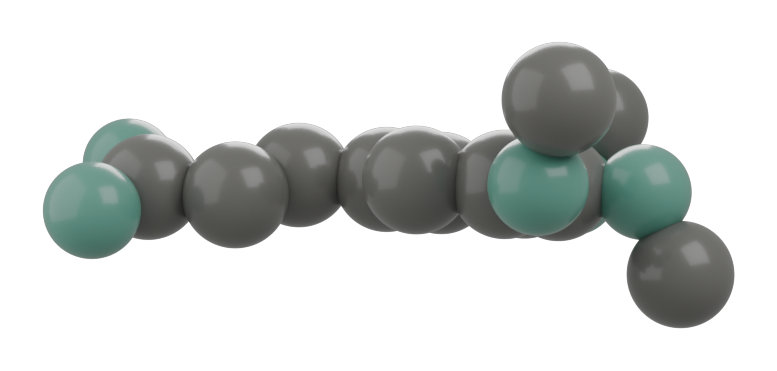
3,4,5-Trimethoxycinnamic acid
PubChem ↗Measured to act on
5-hydroxytryptamine receptor 1A
A serotonin receptor involved in mood, calm, and nervous-system signaling.
5-hydroxytryptamine receptor 2A
A serotonin receptor in the brain involved in mood, perception, and signaling.
5-hydroxytryptamine receptor 2C
A serotonin receptor that helps govern appetite, mood, and emotional balance.
5-hydroxytryptamine receptor 6
A brain serotonin receptor involved in learning, memory, and mood signaling.
5-hydroxytryptamine receptor 7
A serotonin receptor involved in mood, sleep-wake rhythms, and blood vessel tone.
Sodium-dependent serotonin transporter
A protein that recycles serotonin back into nerve cells, shaping mood signaling.
Solute carrier organic anion transporter 1B1
A liver gateway protein that ushers compounds into liver cells for processing.
Solute carrier organic anion transporter 1B3
A liver transporter that carries compounds into liver cells to be cleared.
3-hydroxyacyl-CoA dehydrogenase type-2
A mitochondrial enzyme involved in breaking down fats and hormones for energy.
Lysine-specific demethylase 4E
An enzyme that edits chemical tags on DNA-packaging proteins to regulate genes.
Aldehyde dehydrogenase 1A1
An enzyme that detoxifies reactive aldehydes and helps produce vitamin A signals.
15-hydroxyprostaglandin dehydrogenase [NAD(+)]
An enzyme that breaks down prostaglandins, the body's local inflammation messengers.
DNA repair nuclease/redox regulator APEX1
A protein that repairs damaged DNA and helps balance the cell's oxidative state.
Taste receptor type 2 member 39
A bitter-taste receptor that detects bitter plant compounds on the tongue and in the gut.
Predicted binding geometry
Beyond the measured affinities, we computed the fit ourselves. We docked 3,4,5-Trimethoxycinnamic acid into the AlphaFold-predicted structure of 5-hydroxytryptamine receptor 2C using AutoDock Vina, and recorded the best pose.
3,4,5-Trimethoxycinnamic acid → 5-hydroxytryptamine receptor 2C
-6.42 kcal/molOur own computation · AutoDock Vina blind dock into AlphaFold model AF-P28335 (ordered domain, pLDDT ≥ 70), PubChem 3D conformer CID 735755. A predicted binding geometry and energy — more negative is a tighter predicted fit — reported alongside, not in place of, the measured values above.
The classical record
What tradition carried
Polygala tenuifolia is a foundational root of classical East Asian herbalism, recorded across the centuries as Yuan Zhi (远志) and counted among the roots that quiet the spirit and open the orifices of the heart and mind. In that lineage it sits squarely in the nervine and clarifying tradition — a root carried for the settled, focused, far-reaching state of will its name describes, and used as well to support the body's own clearing of the chest and breath. It is a saponin-rich, bracingly potent root in the old reckoning, which is why the tradition pairs it always with measure: begin light, take with food, honor the potency. GGG NATURAL carries it within this received tradition — a long and unbroken line of classical practice — as a clarity root for People, a calming cognitive tonic for Pets, and a dilute vigor-and-rooting tonic in the Plants line.