Measured Biology
The Measured Biology of Red Asparagus
Asparagus officinalis (red variety)
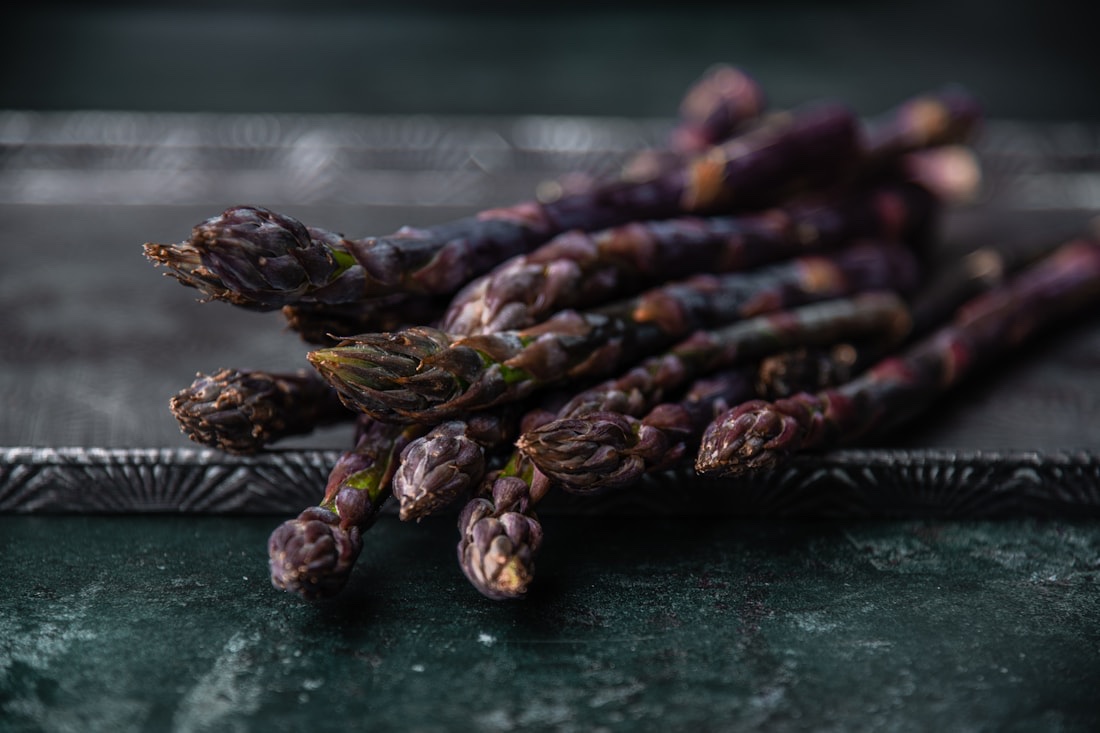
Red Asparagus is a rare, red-pigmented root of Asparagus officinalis — the cultivated asparagus carried into its tonic form rather than its garden one. Where the spear is the plant's spring offering, the root is its reservoir: the deep, fleshy storehouse the plant draws on to send up vigor year after year. The crimson hue is not ornament but signal, the mark of a concentrated pigment and nutrient profile laid down in the root's tissues. Prepared by GGG NATURAL as a 10:1 extract, it carries a frankly sweet flavor — in the herbal grammar, sweetness is the taste of nourishment and replenishment, the building register rather than the draining one. This is a root for vitality in the truest sense: energy, stamina, and endurance held not as a stimulant's spike but as a tonic's steady reserve. In the East Asian materia medica it sits under the name 赤天门冬, within the lineage of asparagus-root tonics prized as moistening, replenishing roots — the kind of botanical kept for those drawn-down states where the body's deep reserves want refilling rather than pushing. It belongs squarely to the tonic class: a grounding, restorative root rather than an acute or stimulating one, formulated in the GGG energy lineage alongside the great replenishing roots and carried across all three of our kingdoms — taken by People for stamina, given to animals as a gentle wellness tonic, and field-proven in the GGG Plants line as a dilute tonic for vigor, rooting, and resilience.
In the body
Red Asparagus speaks first to the kidney and adrenal axis — the body's deep-reserve system, the seat of stamina, endurance, and the slow-burning vitality that carries a person through sustained demand. In the herbal reading it is a root that nourishes this foundation rather than whipping it, supporting the body's own capacity for steady energy and tone over time. Through that same kidney terrain it supports normal, healthy urinary flow and the body's natural water-balance, and it touches the reproductive vitality that the herbal tradition has always linked to well-tended kidney reserves. The molecular character of asparagus root is well established. It is rich in steroidal saponins — the spirostanol and furostanol glycosides that give asparagus roots their tonic reputation — alongside fructan and inulin-type polysaccharides, the storage carbohydrates that double as gentle prebiotic fiber feeding the body's own gut ecology. The red pigmentation marks a concentrated load of flavonoids and other polyphenols, the plant's own antioxidant architecture, supporting the body's natural resilience against everyday oxidative stress. Layered over this are the nutritive building blocks the whole asparagus plant is known for — vitamins A, C, E, K, and folate, with the minerals and fiber that supply raw material to the body's renewal. These are not actors imposing an effect; they are substrate and signal that the body's own systems — adrenal reserve, urinary balance, the body's healthy inflammatory response and the oxidative housekeeping that runs beneath conscious notice — take up and put to work, which is precisely how a tonic nourishes the body's intelligence rather than overriding it.
The molecules, measured
The active compounds in Red Asparagus, the proteins each is measured to engage, and — where a real, exact-match assay exists — the strength of that binding.
Quercetin
PubChem ↗Measured to act on
Cytochrome P450 1B1
A liver-family enzyme that helps the body break down compounds, including hormones and environmental substances.
3-hydroxyacyl-CoA dehydrogenase type-2
An enzyme involved in breaking down fatty acids for energy inside the cell's mitochondria.
Serine/threonine-protein kinase pim-1
A signaling enzyme involved in cell survival and growth.
Broad substrate specificity ATP-binding cassette transporter ABCG2
A cellular pump that moves a wide range of compounds out of cells.
Xanthine dehydrogenase/oxidase
The enzyme that produces uric acid as the body breaks down purines from cells and food.
Aromatase
The enzyme that converts androgens into estrogens, balancing the body's sex hormones.
Epidermal growth factor receptor
A receptor that receives growth signals telling cells when to divide and renew.
Polyunsaturated fatty acid 5-lipoxygenase
An enzyme that converts fatty acids into messengers of the inflammatory response.
Aldo-keto reductase family 1 member B1
An enzyme that converts excess glucose into sorbitol, part of normal sugar metabolism.
Kaempferol
PubChem ↗Measured to act on
17-beta-hydroxysteroid dehydrogenase type 2
An enzyme that helps convert and balance active sex-hormone levels in tissues.
Cytochrome P450 1A2
A liver enzyme that processes caffeine and many other compounds the body takes in.
Cytochrome P450 1A1
A liver and lung enzyme that helps the body process and clear certain compounds.
Cytochrome P450 1B1
A liver-family enzyme that helps the body break down compounds, including hormones and environmental substances.
Cytochrome P450 2C9
A liver enzyme that helps break down and process many compounds and natural substances.
Aryl hydrocarbon receptor
A sensor that detects environmental and dietary compounds and tunes the body's response.
Tyrosinase
The copper enzyme that makes melanin, the pigment that colors skin and hair.
Dipeptidyl peptidase 4
An enzyme that trims small signaling peptides, part of how the body regulates blood-sugar hormones.
Rutin
PubChem ↗Measured to act on
Acetylcholinesterase
The enzyme that clears acetylcholine, the messenger that carries nerve signals to muscles.
Beta-secretase 1
An enzyme that cleaves certain proteins as part of normal cellular processing.
High mobility group protein B1
A nuclear protein that helps organize DNA and signals when cells are stressed.
Ferulic acid
PubChem ↗Measured to act on
Casein kinase 2
A widely active enzyme that adds phosphate tags to guide many cellular processes.
Alpha-synuclein
A small brain protein involved in how nerve cells package and release their signals.
Cyanidin
PubChem ↗Measured to act on
Prothrombin
A blood protein that, when activated, helps form clots to seal injuries.
Sarsasapogenin
PubChem ↗Measured to act on
Solute carrier organic anion transporter family member 1B3
A liver transporter that draws compounds from the blood into liver cells.
Solute carrier organic anion transporter family member 1B1
A liver transporter that helps usher substances into the liver for processing.
Predicted binding geometry
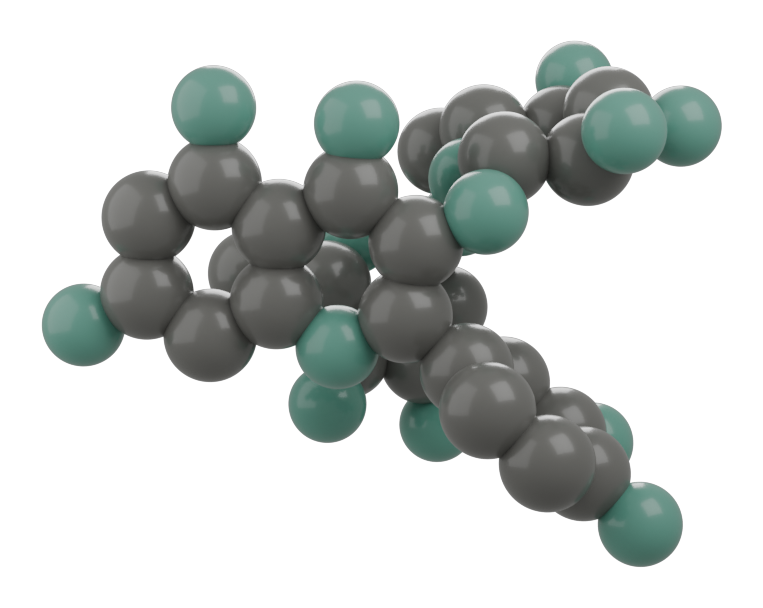
Beyond the measured affinities, we computed the fit ourselves. We docked Rutin into the AlphaFold-predicted structure of Beta-secretase 1 using AutoDock Vina, and recorded the best pose.
Rutin → Beta-secretase 1
-9.14 kcal/molOur own computation · AutoDock Vina blind dock into AlphaFold model AF-P56817 (ordered domain, pLDDT ≥ 70), PubChem 3D conformer CID 5280805. A predicted binding geometry and energy — more negative is a tighter predicted fit — reported alongside, not in place of, the measured values above.
The classical record
What tradition carried
Asparagus root holds a long double lineage. In classical TCM the asparagus roots stand among the moistening, replenishing tonics — sweet, restorative roots kept for depletion and for the deep reserves the tradition seats in the kidneys; this red-pigmented form is carried under the name 赤天门冬 within that family. In the European stream, asparagus runs from the kitchen garden into the herbals as a recognized supporter of the body's water-passages and urinary flow, the property Culpeper and the Old English herbalists noted in the cooked root and shoot alike. GGG NATURAL carries this tonic inheritance forward as a concentrated 10:1 root extract within its energy lineage — and, true to a single apothecary serving all three kingdoms, has field-proven the same root as a dilute tonic for plant vigor and rooting in the GGG Plants line.