Measured Biology
The Measured Biology of Reishi
Ganoderma lucidum
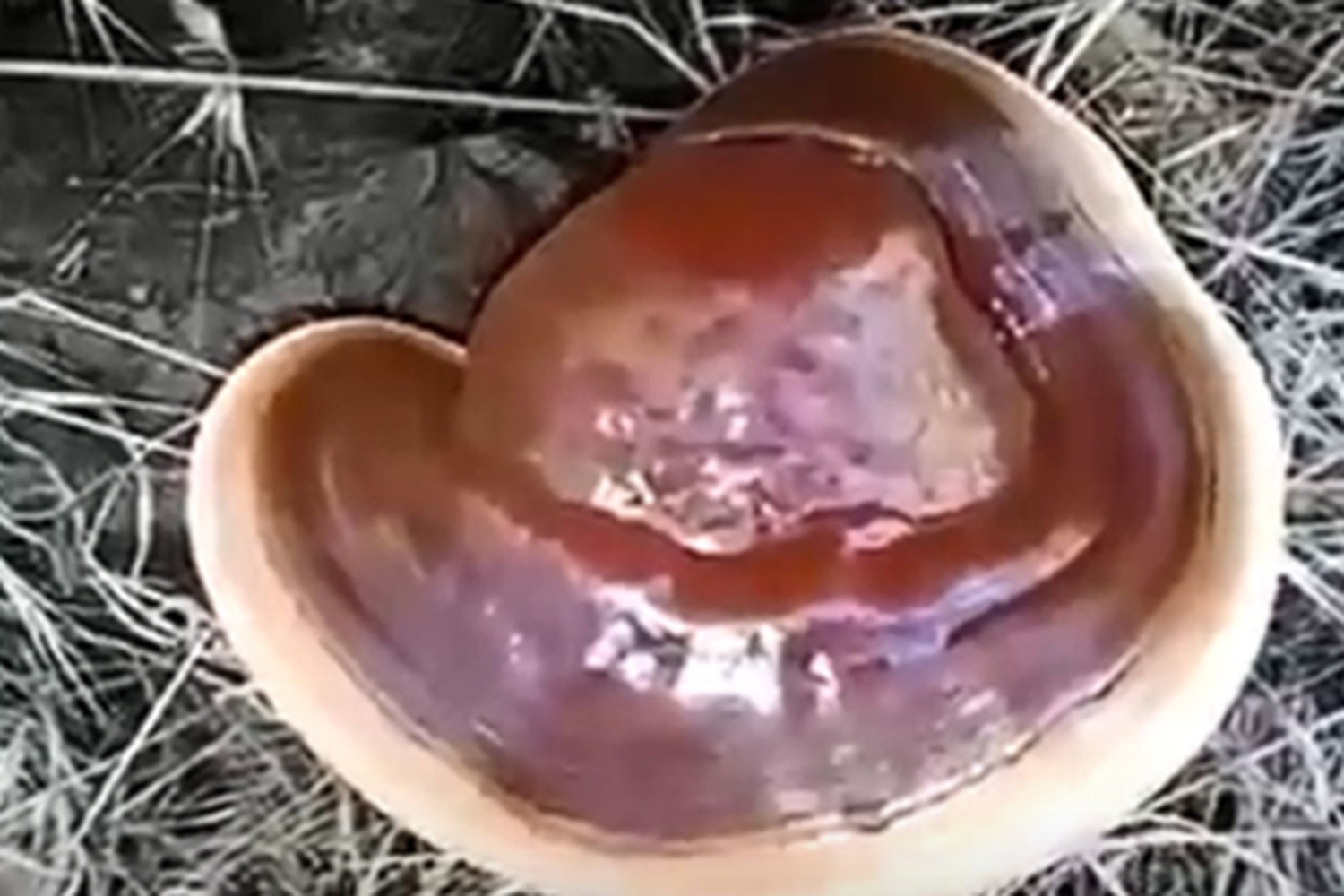
Reishi (Ganoderma lucidum), known in the East Asian materia medica as líng zhī (灵芝) — the "mushroom of spirit" — is a woody, lacquered polypore that grows on the trunks of aging hardwoods, and one of the most extensively characterized of the functional mushrooms. GGG NATURAL works exclusively with the fruiting body, rendered as a concentrated 10:1 hot-water extract; this is the form in which Reishi's character is most fully expressed. Its flavor is frankly bitter — the signature of a true tonic mushroom — and that bitterness is the taste of its richest constituents. Reishi is not a stimulant and not a sedative; it is an adaptogen in the oldest sense, a botanical of poise. Where some plants push and others pull, Reishi steadies. It belongs to the longevity tradition: the herb taken not for a moment of need but as a daily companion, year over year, the slow cultivation of resilience.
In the body
Reishi's signature engages two of the body's deepest systems: the immune system and the body's stress-and-vitality architecture. Its established molecular character rests on two well-documented compound classes. The first is its beta-glucans and broader polysaccharides — large, branching sugar structures that the immune system's own surveillance machinery recognizes as familiar, naturally occurring patterns; in the herbal understanding, they are nourishment the immune system reads as information, supporting its healthy, self-regulating function and a steady, balanced response rather than driving it in any single direction. The second is its triterpenes — the bitter, oxygenated molecules (the ganoderic acids) that give Reishi its taste and its tonic depth, traditionally associated with supporting the liver's natural work and with a grounded, composed nervous tone. Together these constituents place Reishi at the intersection of immune resilience and a steady stress response: it supports the body's own capacity to meet daily demand with stamina, to return to calm, and to settle into deep, restorative rest. This is structure and function in the truest sense — Reishi does not act upon the body so much as feed the systems by which the body governs itself, nourishing the immune system's natural function, vitality, and the quiet, grounded balance from which endurance is built.
The molecules, measured
The active compounds in Reishi, the proteins each is measured to engage, and — where a real, exact-match assay exists — the strength of that binding.
Ganoderic acid A
PubChem ↗Measured to act on
11-beta-hydroxysteroid dehydrogenase 1
An enzyme that locally regenerates active cortisol, shaping how tissues respond to the body's stress hormone.
11-beta-hydroxysteroid dehydrogenase type 2
An enzyme that quiets cortisol inside kidney and salt-handling tissues, helping govern fluid and mineral balance.
Aldo-keto reductase family 1 member B1
An enzyme that converts glucose into sorbitol, part of how cells handle sugar.
Tumor necrosis factor
A messenger protein that coordinates immune and inflammatory signaling throughout the body.
Signal transducer and activator of transcription 3
A signaling protein that carries messages from the cell surface to the genes, guiding growth and immune response.
E3 ubiquitin-protein ligase Mdm2
A regulatory protein that tags the guardian protein p53 for recycling, keeping cell-cycle control in balance.
Ganoderic acid B
PubChem ↗Measured to act on
Acetylcholinesterase
The enzyme that breaks down acetylcholine, resetting nerve and muscle signals between pulses.
Cholinesterase
A blood enzyme that breaks down acetylcholine and helps clear certain compounds from circulation.
Aldo-keto reductase family 1 member B1
An enzyme that converts glucose into sorbitol, part of how cells handle sugar.
Tumor necrosis factor
A messenger protein that coordinates immune and inflammatory signaling throughout the body.
Ganoderic acid D
PubChem ↗Measured to act on
Aldo-keto reductase family 1 member B1
An enzyme that converts glucose into sorbitol, part of how cells handle sugar.
Tumor necrosis factor
A messenger protein that coordinates immune and inflammatory signaling throughout the body.
Lucidenic acid A
PubChem ↗Measured to act on
Acetylcholinesterase
The enzyme that breaks down acetylcholine, resetting nerve and muscle signals between pulses.
Cholinesterase
A blood enzyme that breaks down acetylcholine and helps clear certain compounds from circulation.
Ergosterol
PubChem ↗Measured to act on
Nitric oxide synthase, inducible
An enzyme switched on during immune activity that produces nitric oxide, a small signaling molecule.
UDP-glucuronosyltransferase 1A1
A liver enzyme that attaches sugar groups to compounds so the body can process and clear them.
Solute carrier organic anion transporter 1B1
A liver-surface transporter that pulls compounds out of the blood and into liver cells.
Solute carrier organic anion transporter 1B3
A liver-surface transporter that moves compounds from the bloodstream into the liver for processing.
Ergosterol peroxide
PubChem ↗Measured to act on
Aldo-keto reductase family 1 member B1
The rat version of the enzyme that converts glucose into sorbitol, used in laboratory study.
Nitric oxide synthase, inducible
An enzyme switched on during immune activity that produces nitric oxide, a small signaling molecule.
Bile acid receptor
A receptor that senses bile acids and helps govern fat, cholesterol, and bile handling.
Ganoderiol F
PubChem ↗Measured to act on
Acetylcholinesterase
The enzyme that breaks down acetylcholine, resetting nerve and muscle signals between pulses.
Cholinesterase
A blood enzyme that breaks down acetylcholine and helps clear certain compounds from circulation.
DNA topoisomerase 2-alpha
An enzyme that untangles DNA strands so cells can copy and divide.
DNA topoisomerase 1
An enzyme that relaxes coiled DNA so it can be read and replicated.
Bile acid receptor
A receptor that senses bile acids and helps govern fat, cholesterol, and bile handling.
Predicted binding geometry
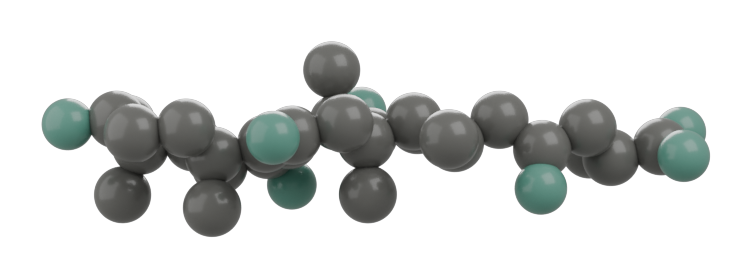
Beyond the measured affinities, we computed the fit ourselves. We docked Ganoderic acid C2 into the AlphaFold-predicted structure of Tumor necrosis factor using AutoDock Vina, and recorded the best pose.
Ganoderic acid C2 → Tumor necrosis factor
-6.31 kcal/molOur own computation · AutoDock Vina blind dock into AlphaFold model AF-P01375 (ordered domain, pLDDT ≥ 70), PubChem 3D conformer CID 57396771. A predicted binding geometry and energy — more negative is a tighter predicted fit — reported alongside, not in place of, the measured values above.
The classical record
What tradition carried
Reishi has been revered across East Asia for some two millennia, ranked in the classical East Asian herbal canon among the "superior" tonics — the highest class of botanicals, those taken continually to cultivate vitality, calm, and longevity rather than for any acute purpose. Called líng zhī in China and reishi in Japan, it was historically so prized that it was reserved for emperors and rendered in art and scholarship as an emblem of long life and spiritual poise. In the classical tradition it is associated with the heart and the spirit (the shen), prized for settling and grounding, and with the body's protective and restorative capacities. In the lineage GGG NATURAL carries, Reishi is the archetypal longevity mushroom: a daily tonic whose authority comes not from novelty but from an unbroken record of human use across cultures and centuries.