Measured Biology
The Measured Biology of Rhodiola
Rhodiola rosea
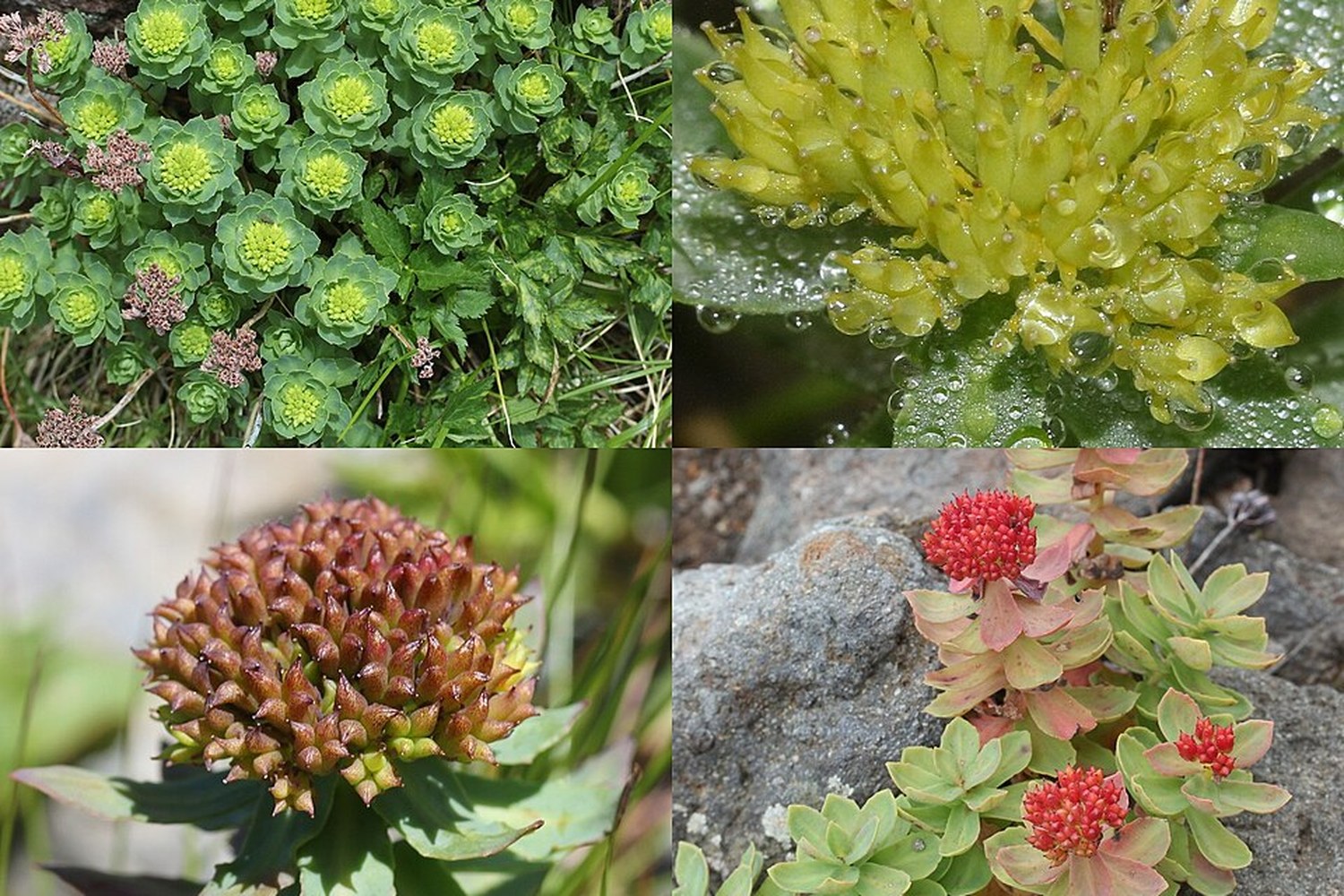
Rhodiola rosea is the golden root of the cold places of the earth — an Arctic and alpine succulent that anchors itself in rock and thin soil where most botanicals cannot hold, from the windswept ridgelines of Siberia and Scandinavia to the high reaches of the Tibetan plateau. Its name carries the rose: cut the fresh rhizome and it gives a faint, clean breath of roses, a signature of the rosavins held within. This is a plant shaped entirely by adversity. To survive in latitude and altitude where the growing season is short and the elements are unforgiving, it concentrates a remarkable chemistry in its root — and it is precisely that hard-won resilience the root carries into the body. In the apothecary it stands among the truest of the adaptogens: a tonic of stamina rather than stimulation, of steadiness rather than spike. What sets Rhodiola apart in our formulary is its character — bracing, clean, grounded. It is not a sweet root or an aromatic one; it is bitter, mineral, and quietly potent, and our extract is concentrated enough that a fraction of a teaspoon is a full measure. Where many roots warm and build slowly, Rhodiola brings clarity and uplift without the jangle of a true stimulant. It belongs to the lineage of northern endurance plants — the herb of soldiers, mountaineers, and long winters — and it carries that inheritance of vitality under hardship into everything we make from it, for People, for Pets, and as a dilute tonic of vigor and rooting for Plants.

In the body
Rhodiola engages the body's stress-response architecture — the adrenal and nervous systems and the energy economy that connects them. It is an adaptogen in the truest structural sense: it nourishes the body's own capacity to meet demand and return to balance, supporting a healthy, measured stress response rather than overriding it. Where a stimulant pushes, Rhodiola tones. It supports natural stamina, steady physical endurance, and the kind of mental clarity and focus that holds up under load, nourishing the systems that govern energy, attention, and an even, grounded mood. The established active classes in this root are its phenylpropanoid and phenylethanoid glycosides — the rosavins (rosavin, rosin, rosarin), which are the genus signature unique to Rhodiola rosea, and salidroside, the phenylethanoid that partners with them. These are water-soluble compounds, which is why the root gives its character so readily to hot water, tea, or a smoothie, and why our preparations are built around them. As an adaptogenic class, these glycosides engage the body's own regulatory systems — the pathways that govern energy metabolism, mental endurance, and the nervous system's return to calm after exertion — supporting the body's innate ability to sustain effort and recover its equilibrium. Notably, Rhodiola is a non-aromatic root: it carries no essential oils, no phenolic eugenol, no glycyrrhizin or iodine load, which is why it sits so gently across species, tonifying steady energy and a healthy stress response in cats, dogs, horses, and birds at body-weight-scaled tonic doses. It is mildly stimulating by nature, so it is taken beginning low and built to effect — a tonic of sustained vitality, not a jolt.
The molecules, measured
The active compounds in Rhodiola, the proteins each is measured to engage, and — where a real, exact-match assay exists — the strength of that binding.
Salidroside
PubChem ↗Measured to act on
Amine oxidase [flavin-containing] B
An enzyme that breaks down messenger chemicals like dopamine in the nervous system.
Prostaglandin G/H synthase 1
An enzyme that makes prostaglandins for everyday upkeep like protecting the stomach lining.
Ribonuclease HI
An enzyme that cuts RNA when it is paired with DNA, part of normal genetic housekeeping.
Tyrosol (p-Tyrosol)
PubChem ↗Measured to act on
Carbonic anhydrase 1
An enzyme that balances carbon dioxide and acidity, abundant in red blood cells.
Carbonic anhydrase 2
A fast enzyme that balances carbon dioxide and acidity throughout the body.
Hepatocyte growth factor receptor
A receptor that receives growth signals guiding cell movement, repair, and renewal.
Kaempferol
PubChem ↗Measured to act on
Dipeptidyl peptidase 4
An enzyme that trims signaling peptides, including those involved in blood sugar regulation.
Neuraminidase
An enzyme the influenza virus uses to release newly made copies from a host cell.
Herbacetin
PubChem ↗Measured to act on
Neuraminidase
An enzyme the influenza virus uses to release newly made copies from a host cell.
Fructose-1,6-bisphosphatase 1
An enzyme that helps the body make new glucose, keeping blood sugar steady between meals.
Sialidase
A bacterial enzyme that clips sugar molecules off the surfaces of host cells.
Gallic acid
PubChem ↗Measured to act on
Polypeptide N-acetylgalactosaminyltransferase 2
An enzyme that attaches sugar groups to proteins, shaping how they fold and function.
The classical record
What tradition carried
Rhodiola's recorded lineage runs through the cold cultures that knew it best. In the folk medicine of Siberia and the Russian north it was the root of endurance — carried by those facing hard travel, long labor, and bitter winters, and reportedly given to newlyweds and to those needing strength for the season ahead. It holds a parallel place in the high-altitude traditions of Scandinavia and the mountain peoples of Central Asia and Tibet, who turned to the golden root for stamina, steadiness, and vitality in thin air. The herbalists of the north prized it as a plant of resilience under hardship — the very quality it earns from the rock and cold it grows in. In the modern era of botanical study it became one of the most carefully examined of all adaptogens, and in the classical East Asian materia medica it is known as hóng jǐng tiān (红景天), a high-plateau tonic root carried in that lineage as well. Across every tradition that recorded it, the through-line is constant: an herb for sustained energy, stamina, and grounded vitality under the demands of a hard life.